A pickup comes over the rise on a gravel road. The driver lifts two fingers off the steering wheel. You lift two back. Neither of you knows the other, and that isn’t the point.
Iowa runs on small gestures like that. Out here, the towns are far enough apart that each one had to decide what it was going to be known for.
Some picked a windmill. Some picked a ballroom, a bridge or a baseball diamond in a cornfield. A few of them belong on any list of towns that feel like stepping back in time, and the rest never asked to be on one.
What they share is stubbornness. They kept the thing that made them, even after the reason for it was gone.
The stories are the easy part. Keeping them is the work.
1. Clear Lake, Iowa: Buddy Holly’s last stage still holds a dance every February
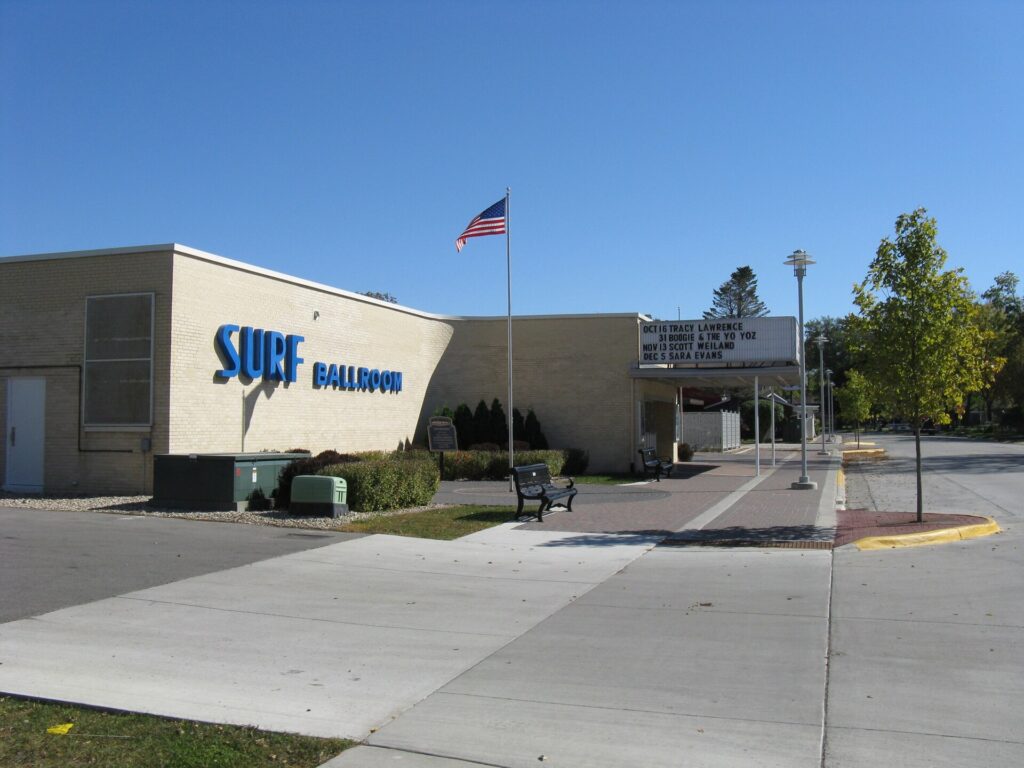
Blue letters spell SURF across a cream brick wall on North Shore Drive. The first Surf Ballroom opened in 1933 and burned in 1947. It was rebuilt across the street and reopened on July 1, 1948.
On February 2, 1959, Buddy Holly, Ritchie Valens and J.P. “The Big Bopper” Richardson played the Surf. They left for the airport right after the show, and their small plane crashed shortly after takeoff. The ballroom closed in 1994. A local businessman bought it, restored it to its 1948 look and reopened it on the anniversary in 1995.
Every February since 1979, the Surf has held a Winter Dance Party tribute. The 2027 Winter Dance Party is already on the ballroom’s calendar for February 4. Clear Lake had 7,687 people in 2020.
Most towns would have torn the building down. Clear Lake kept dancing in it.
2. Mason City, Iowa: The last Frank Lloyd Wright hotel took guests again after 86 years
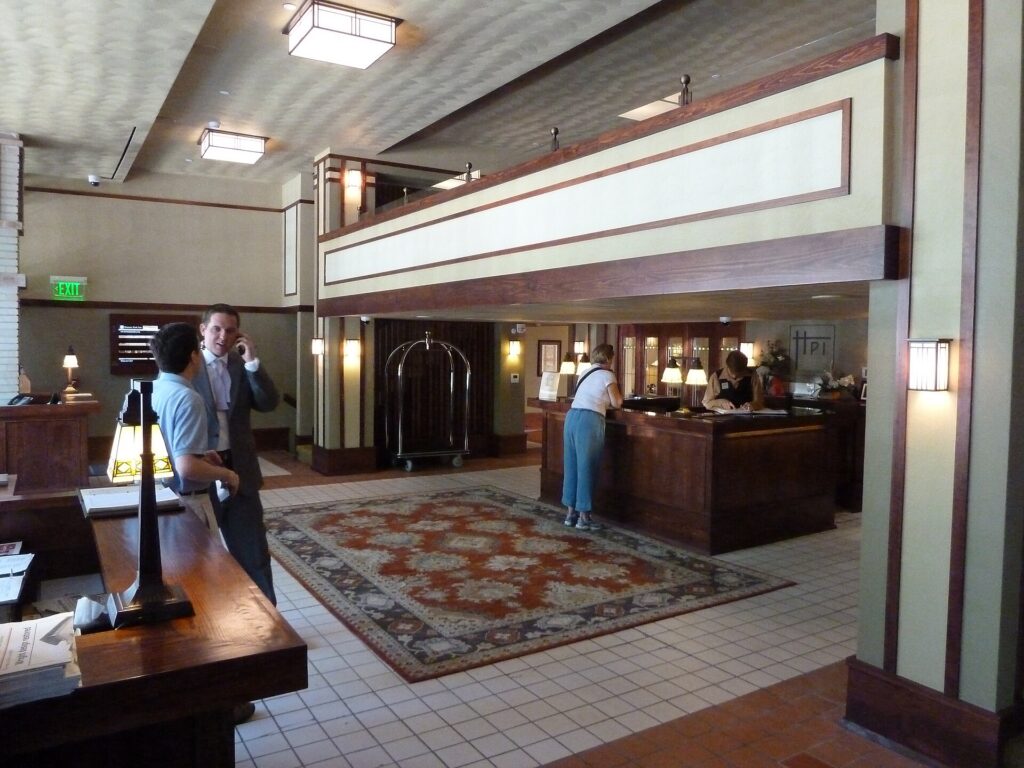
Two lawyers hired a young Chicago-area architect named Frank Lloyd Wright to build a hotel and a bank on the corner of State and Federal. The Park Inn opened in September 1910. It never made much money, and it closed as a hotel in 1925.
For decades the upper floors were cheap apartments. Then a local group, Wright on the Park, restored the building and reopened it as a hotel in August 2011. It calls itself the last remaining hotel in the world designed by Wright, and it is still booking rooms. It sits comfortably among the old hotels that still take in travelers, with a long nap in the middle.
Mason City is also where Meredith Willson grew up. Many of the people in The Music Man were based on folks he knew here, and the 1962 film had its world premiere in town.
The hotel failed in 15 years. The town waited 86 to fix it.
More from American Charm
 People who know their mayor by first name usually love these 8 things a small-town mayor can do that a governor can’t
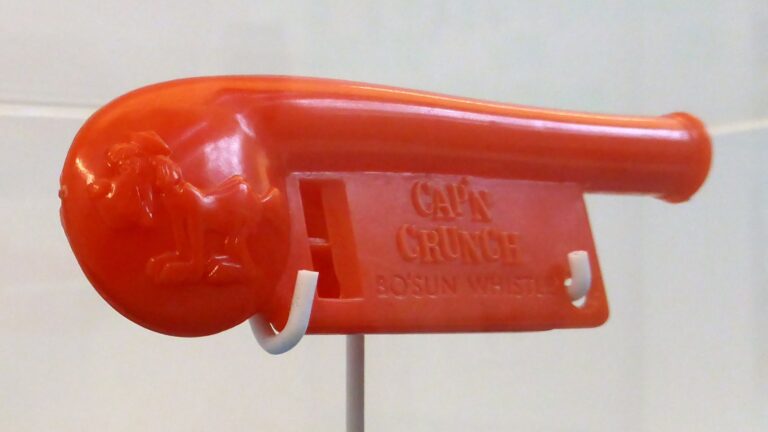 People who dug to the bottom of the cereal box for the prize usually remember these 8, and a few are worth real money now
 People who grew up on these 8 foods usually have no idea they originated in America, each in one hometown
3. Elk Horn, Iowa: A town of 601 shipped a windmill across the ocean in 1976
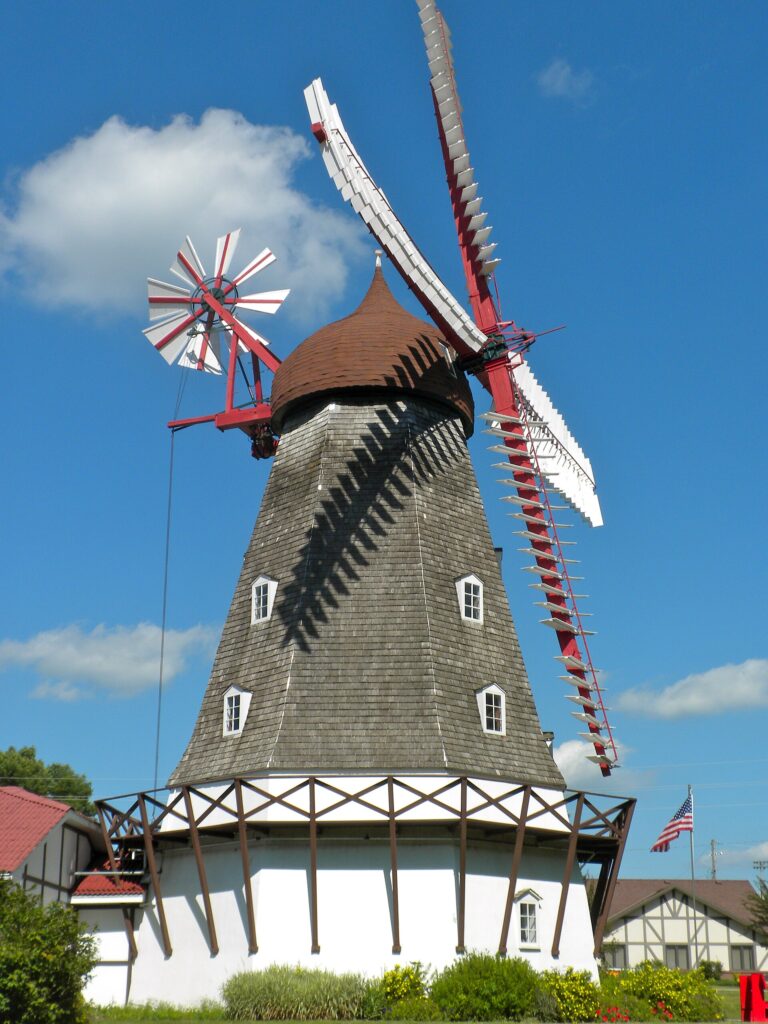
Jens Olesen built a windmill north of Nørre Snede, Denmark, in 1848. By 1975 it hadn’t turned for at least ten years. That year Harvey Sornson of Elk Horn saw it on a trip and came home convinced it could be saved.
The town raised the money. The mill was taken apart, shipped across the Atlantic and arrived in Elk Horn in February 1976. More than 300 volunteers put it back together piece by piece. The windmill’s own history calls it the only working Danish windmill in the United States, and says Denmark banned the export of windmills in 1977.
Elk Horn had 601 people in 2020. The windmill is open daily, and the town holds its Julefest the weekend after Thanksgiving.
Most towns buy a sign that says welcome. Elk Horn bought a windmill.
4. Dyersville, Iowa: The baseball field from the movie is open from sunrise to sunset
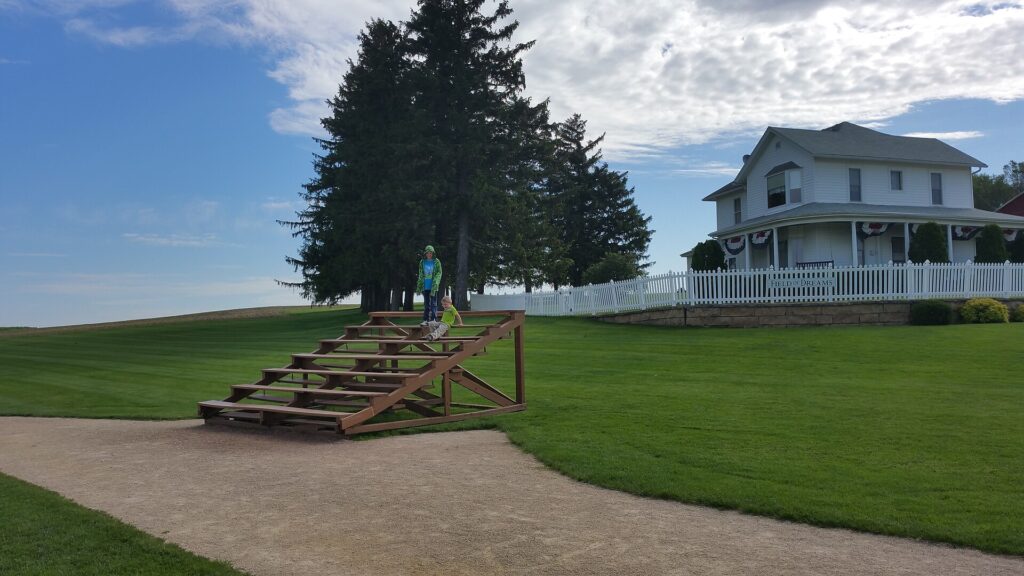
A small set of wooden bleachers sits beside the infield. Behind it is a white farmhouse with a porch. The corn starts where the outfield ends.
Field of Dreams was filmed on a farm near Dyersville and came out in 1989. The diamond stayed. The site says the field is open from sunrise to sunset year-round, weather permitting, and visitors can tour the farmhouse. In 2021 the White Sox and the Yankees played a real Major League game next to it.
Dyersville had another identity long before the movie. It’s the longtime home of the Ertl toy company, and it calls itself the Farm Toy Capital of the World. The National Farm Toy Show comes to town each November. Dyersville had 4,477 people in 2020.
The movie asked people to come. They’re still coming.
5. Riverside, Iowa: The town has been waiting since 1985 for a baby due in 2228
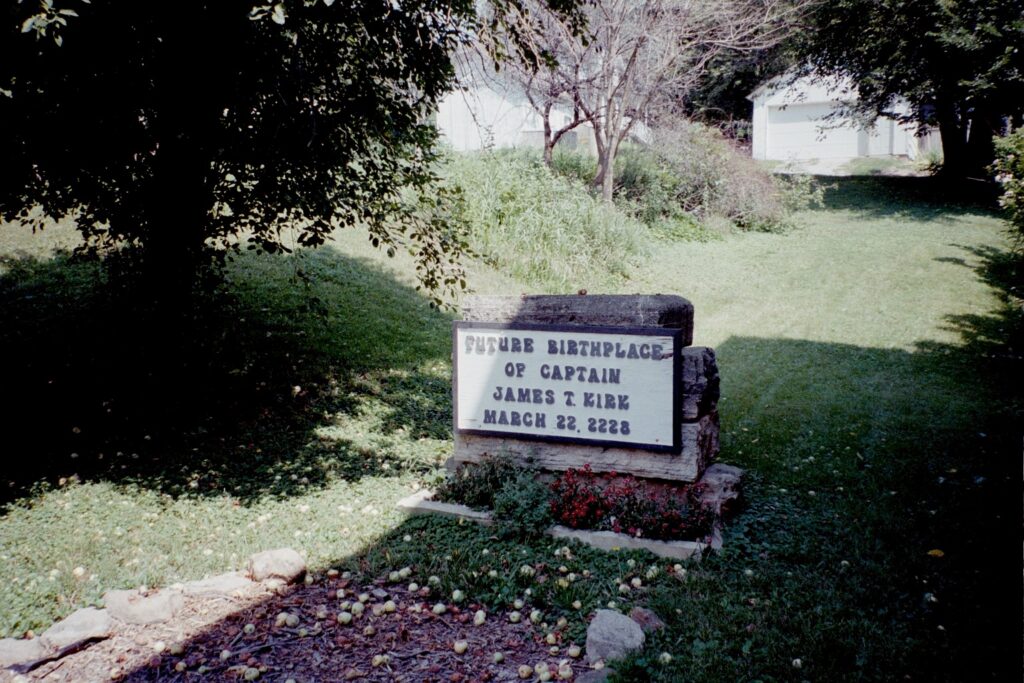
In March 1985, Riverside needed a theme for its town festival. A city council member had read in a Star Trek book that Captain Kirk came from Iowa. He suggested Riverside claim him.
The council agreed, with series creator Gene Roddenberry’s blessing. A marker went up giving the date as March 22, 2228. Years later the show caught up: in Star Trek: Strange New Worlds, Kirk says he was born in Riverside. The city’s own website still greets visitors as the future birthplace of Captain James T. Kirk.
Trekfest, the town festival that started it all, was still going in 2026. Riverside had 1,060 people in 2020.
Most towns brag about who was born there. Riverside brags about who will be.
More from American Charm
 15 New Laws Taking Effect January 1, 2027 That Could Change Your Paycheck, Prescriptions and Shopping
 9 American brands that quietly lost their cultural authority but still hold a place in family memory
 9 everyday American symbols that mean something totally different in other countries, and the famous moments that proved it
6. Le Mars, Iowa: A $25 contest in 1935 gave the town’s ice cream its name
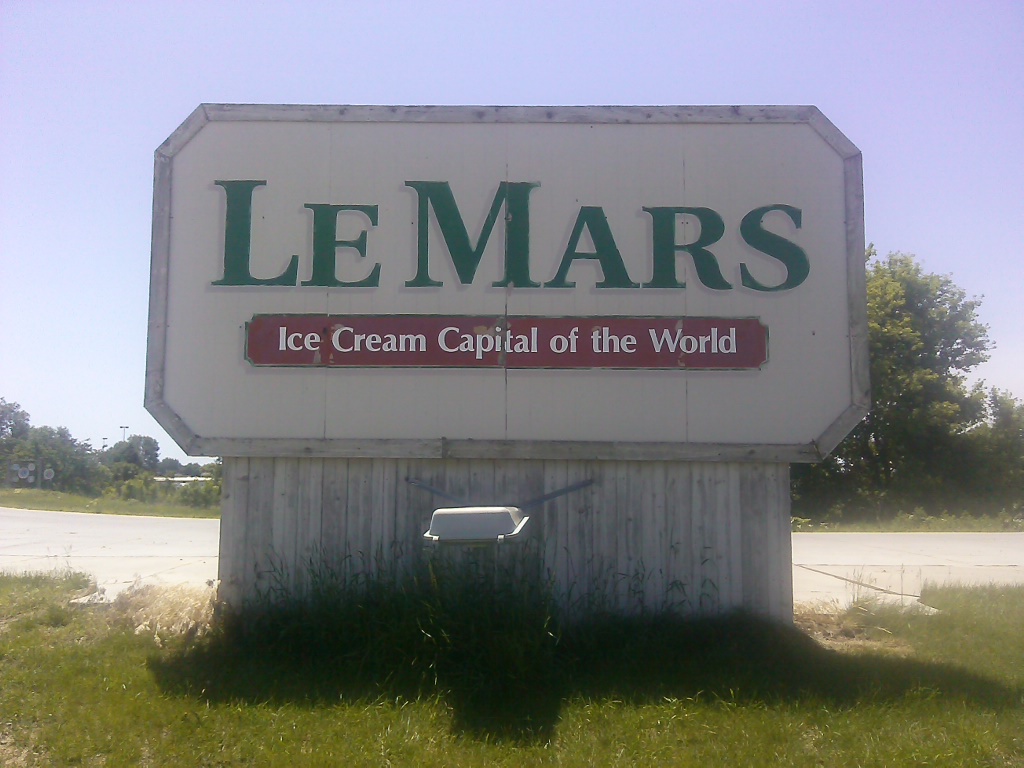
The Wells family started making ice cream in Le Mars in the 1920s, then sold the plant and their name in 1928. In 1935 they wanted back in, so they ran a “Name That Ice Cream” contest in the Sioux City Journal.
The winner took home $25. He suggested Blue Bunny because his son had loved the blue bunnies in the department store windows at Easter. Today the company’s plant dominates the skyline, and the town calls itself the Ice Cream Capital of the World. Ferrero bought Wells in 2022.
Downtown, the Wells Visitor Center and Ice Cream Parlor still scoops at 115 Central Avenue NW. Every June the town throws Ice Cream Days. Le Mars had 10,571 people in 2020.
One little boy liked a store window. A whole town got its name from it.
7. Kalona, Iowa: Amish families have farmed around this town since the 1840s
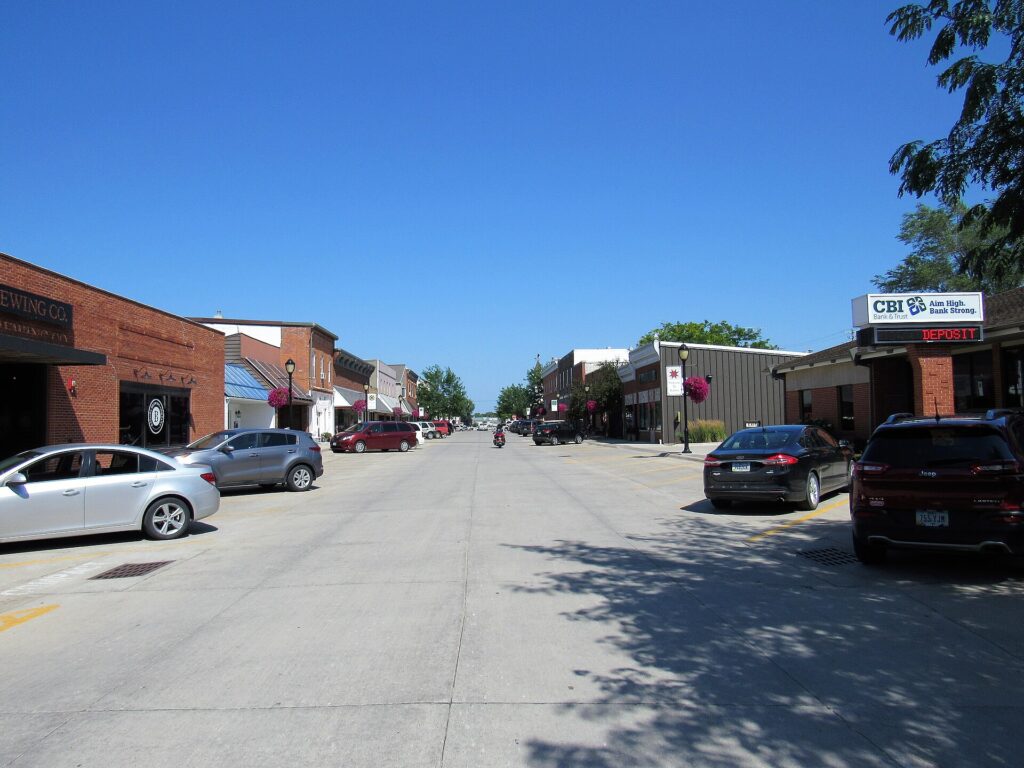
Amish settlers came to the land around Kalona in the 1840s. They were among the first Europeans to farm it. They’re still here.
The settlement around Kalona is one of the largest Amish communities west of the Mississippi, with eleven church districts and roughly 1,200 people. The Kalona New Order Amish are among the most open to technology and use tractors in the fields. Buggies and cars share the roads.
In town, the Kalona Historical Village has gathered 12 historic buildings in one place, and it’s open Monday through Saturday. It also holds the Iowa Mennonite Archives. Kalona had 2,630 people in 2020.
Some towns preserve the old ways in a museum. Kalona has both the museum and the neighbors.
8. Amana, Iowa: Seven villages ate from 55 shared kitchens until 1932
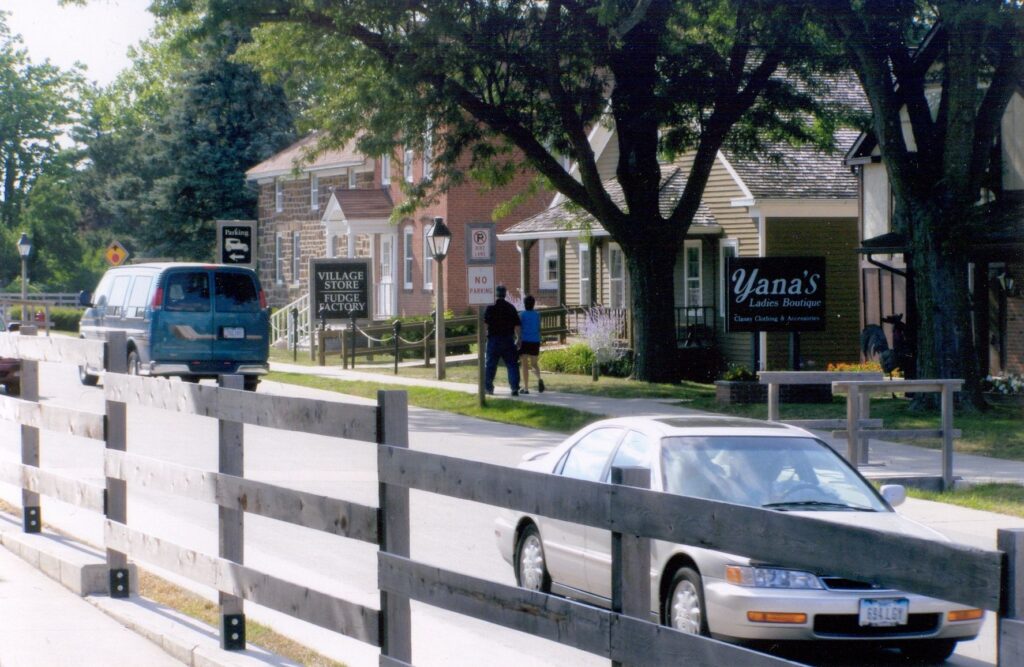
For nearly 80 years, nobody in the Amana Colonies cooked dinner alone. The seven villages had 55 communal kitchens, each with its own garden and its own kitchen boss. The first village was laid out in 1855 by a religious community that had come from Germany by way of New York.
The Great Depression ended it. In 1932 the community split into a church and a for-profit company, a change still known locally as the Great Change. One woolen mill worker turned salesman later started the business that became Amana Refrigeration.
The villages became a National Historic Landmark in 1965. The church still worships in the Middle Amana meeting house, and the Amana Heritage Society runs a communal kitchen museum.
The kitchens closed almost a century ago. People still come to Amana to eat.
More from American Charm
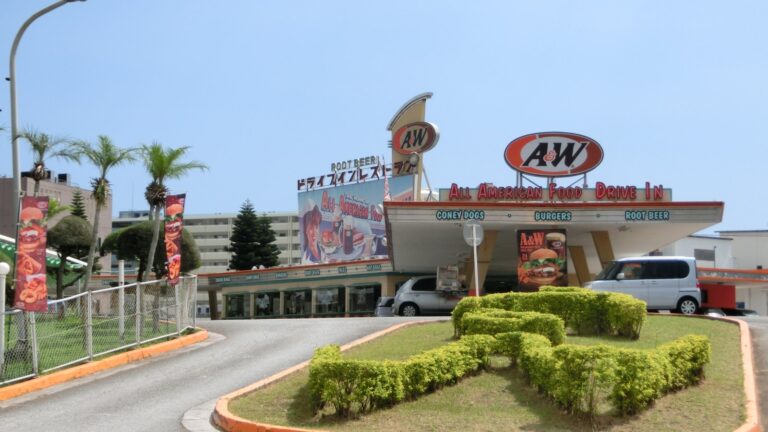 8 American chain restaurants that are way better abroad, where a bucket of fried chicken can mean Christmas
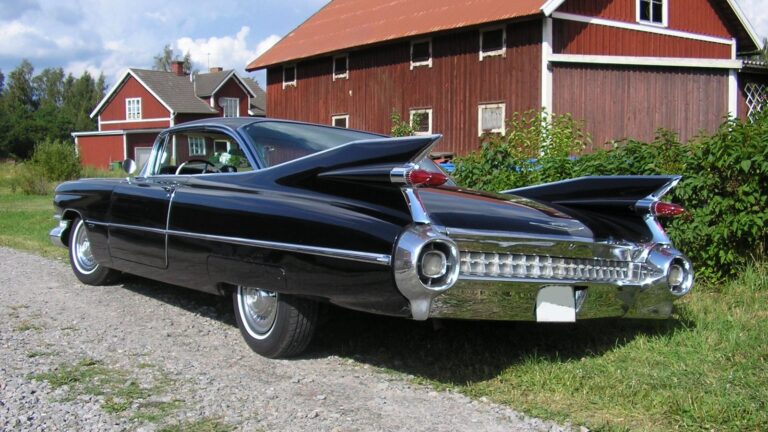 The 10 biggest, heaviest American cars of all time, built when a car’s length was a point of pride
 People who’d pick a creaky floorboard over a keycard usually love these 8 small-town hotels still taking in travelers after 100 years
9. Winterset, Iowa: John Wayne’s hometown has rebuilt one covered bridge twice
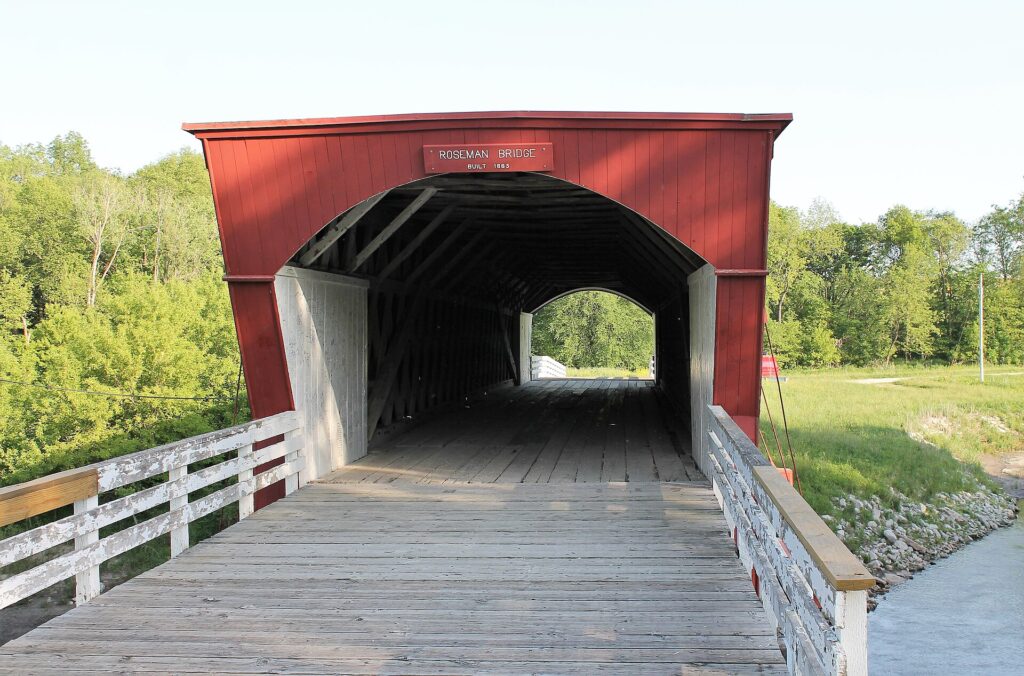
The Roseman Covered Bridge has crossed the Middle River since 1883. It’s one of the bridges in The Bridges of Madison County, the novel and the film. Madison County still has six covered bridges, and Winterset throws a Covered Bridge Festival every October.
The Cedar Bridge, the one on the novel’s cover, has had a harder time. Arson destroyed it in 2002. The county rebuilt it to the same plans in 2004. Arsonists burned it again in 2017, and it was rebuilt again in 2019.
Marion Robert Morrison was born in Winterset on May 26, 1907. The world later knew him as John Wayne. His four-room birthplace has been restored to how it looked in 1907, and the museum beside it is open seven days a week. Winterset had 5,353 people in 2020.
Somebody burned the bridge twice. Winterset built it back twice.
More from American Charm
 People who still stop for every historical marker usually love these 9 American towns that are smaller than their legends
 People who still pull over for hand-painted billboards usually remember these 8 roadside attractions, and every one is still open
 People who’d rather spend a Saturday on Main Street than at a resort usually fall for these 9 small towns in America’s most beautiful states