The marquee lights come on a little before dark. Somebody sweeps the sidewalk in front of the hardware store. Two people stop at the corner to finish a conversation they started at the post office.
Nobody here calls it nostalgia. It’s just the walk home.
Pennsylvania has more of this than people expect. At the 2020 census, about 3.06 million Pennsylvanians lived in rural areas, more than in any state except Texas and North Carolina. Leave the turnpike almost anywhere and the towns get small fast.
It’s one reason Pennsylvania fits so easily among the states where daily life still feels like the 1950s. The malls came anyway. Nobody’s pretending otherwise. But a few Main Streets here simply kept their marquees, their diners and their bandstands.
The buildings are the easy part. Keeping them busy is the trick.
1. Wellsboro, Pennsylvania: The movie house on Main Street opened in 1921 and still sells popcorn
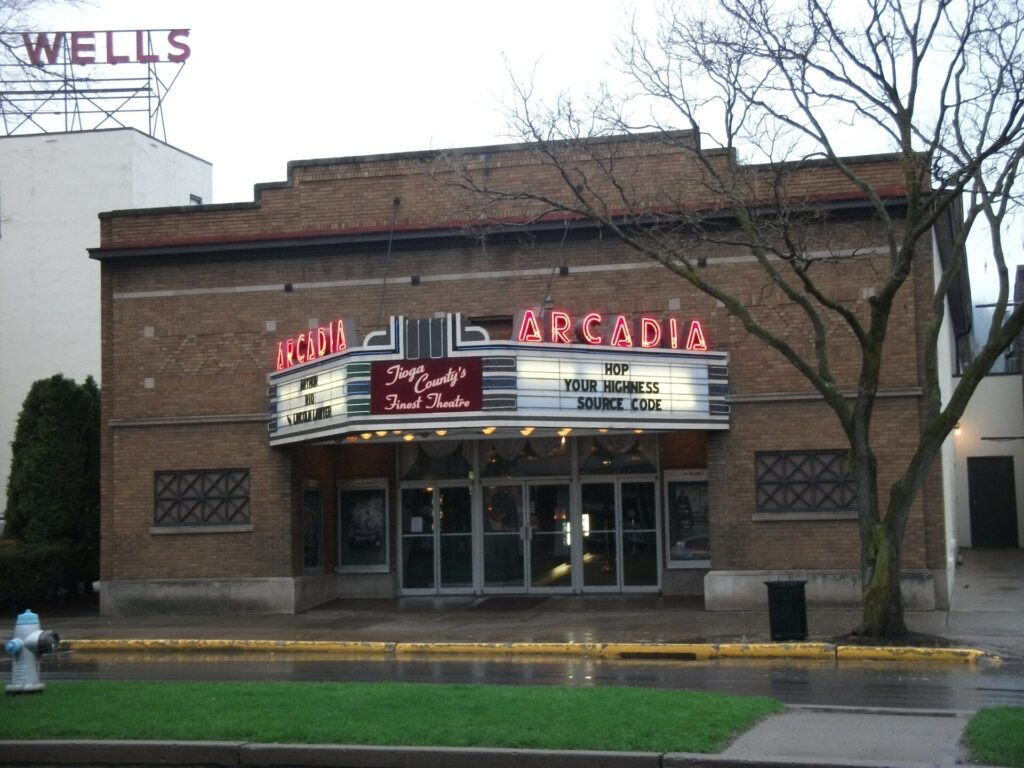
The Arcadia Theatre opened on Main Street in Wellsboro on December 12, 1921. It had 900 seats. Tickets cost 15 and 25 cents, and the first picture was a silent film called The Old Nest.
Frank Dunham bought it in 1958. The theater’s own history says he could usually be found behind the concession stand, dishing out popcorn. In 1987 the company that owns the Penn Wells Hotel, a few doors down, bought the Arcadia. It reopened as a four-screen cinema in 1997 and is still selling tickets in the 2026 holiday season.
At the north end of Main Street, the Wellsboro Diner has stood since 1939. It was built in Massachusetts by the J.B. Judkins Company, and the Sterling name is set into the floor. The local chamber of commerce still describes the town by its wide boulevards with gas lights.
Wellsboro has 3,469 people and four movie screens. Somebody kept buying tickets.
2. Lewisburg, Pennsylvania: The 1941 movie palace on Market Street is still showing films
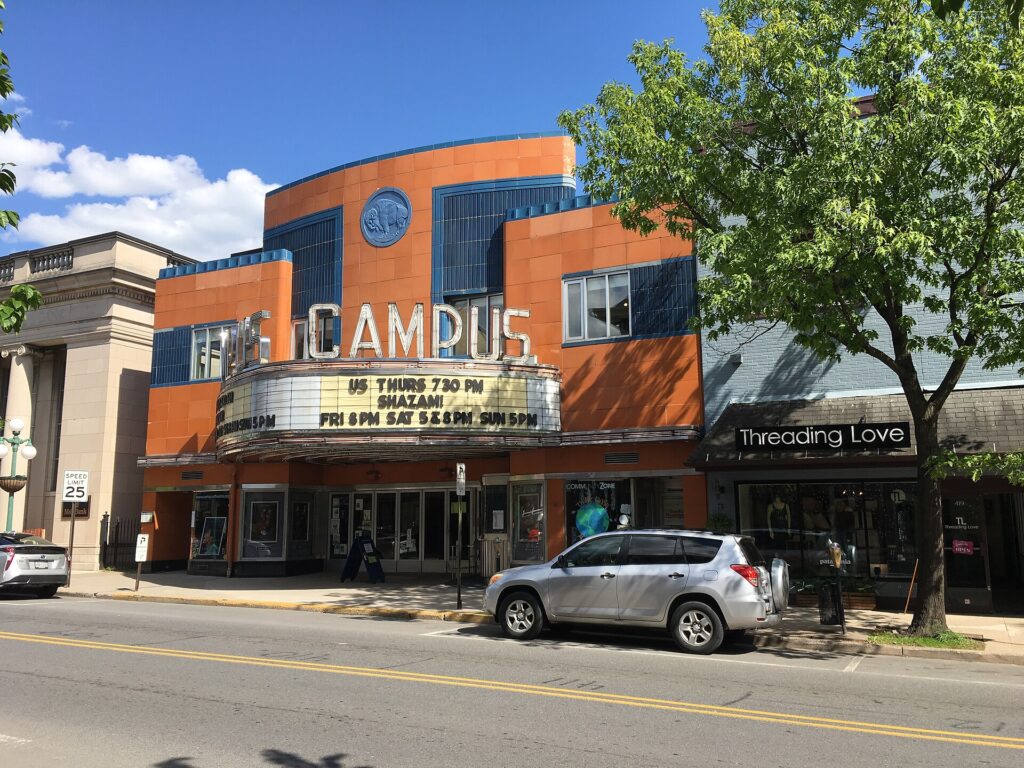
The Campus Theatre opened at 413 Market Street on January 17, 1941. Its orange facade and round buffalo medallion still face the street. The theater calls itself one of a dwindling number of single-screen art deco movie palaces in the country.
In 1953, Harold Stiefel took over as manager. He and his wife, Jacquie, ran it until his death in 1988. Today a nonprofit runs it in partnership with Bucknell University.
Out front stand the town’s cast-iron lampposts, three white globes apiece. The borough is repainting about 680 of them. In May 2026, borough council turned down a resident’s request to paint 20 of them black instead of green.
Most towns argue about parking. Lewisburg debates the color of its lampposts.
More from American Charm
 People who know their mayor by first name usually love these 8 things a small-town mayor can do that a governor can’t
 People who dug to the bottom of the cereal box for the prize usually remember these 8, and a few are worth real money now
 People who grew up on these 8 foods usually have no idea they originated in America, each in one hometown
3. Jim Thorpe, Pennsylvania: Two towns merged in 1954 and named themselves after an Olympian
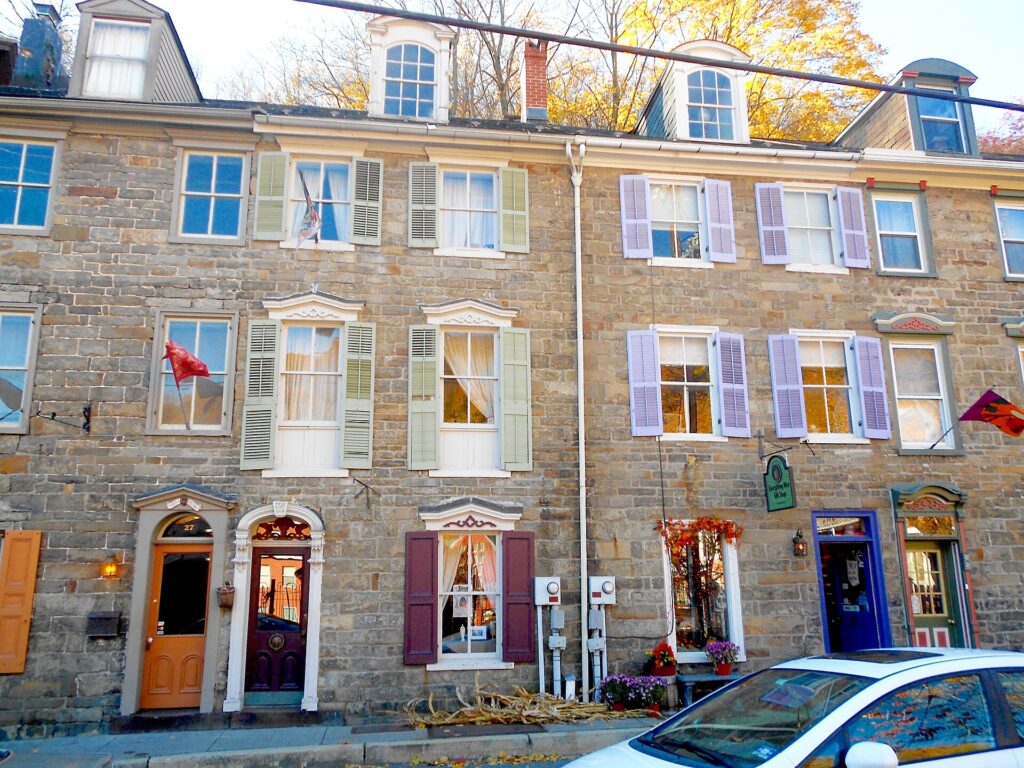
On May 18, 1954, voters in Mauch Chunk and East Mauch Chunk agreed to merge into one borough. They named it Jim Thorpe, after the Olympic champion, even though he had never set foot in the town while he was alive. The new town obtained his remains from his widow and built him a monument.
Three days after the vote, a local family had a baby boy. They had planned to call him Jerry. They were so excited about the new name that they called him Jim Thorpe Kmetz.
Two years later, on Memorial Day 1956, the Asa Packer Mansion began giving tours. Down on Broadway, the Mauch Chunk Opera House, built in 1881, still has live music booked into December 2026. The stone houses of Stone Row still line Race Street.
Most towns are named for their founders. This one chose a man who had never visited.
4. Lititz, Pennsylvania: Visitors still twist pretzels in a stone house from 1784
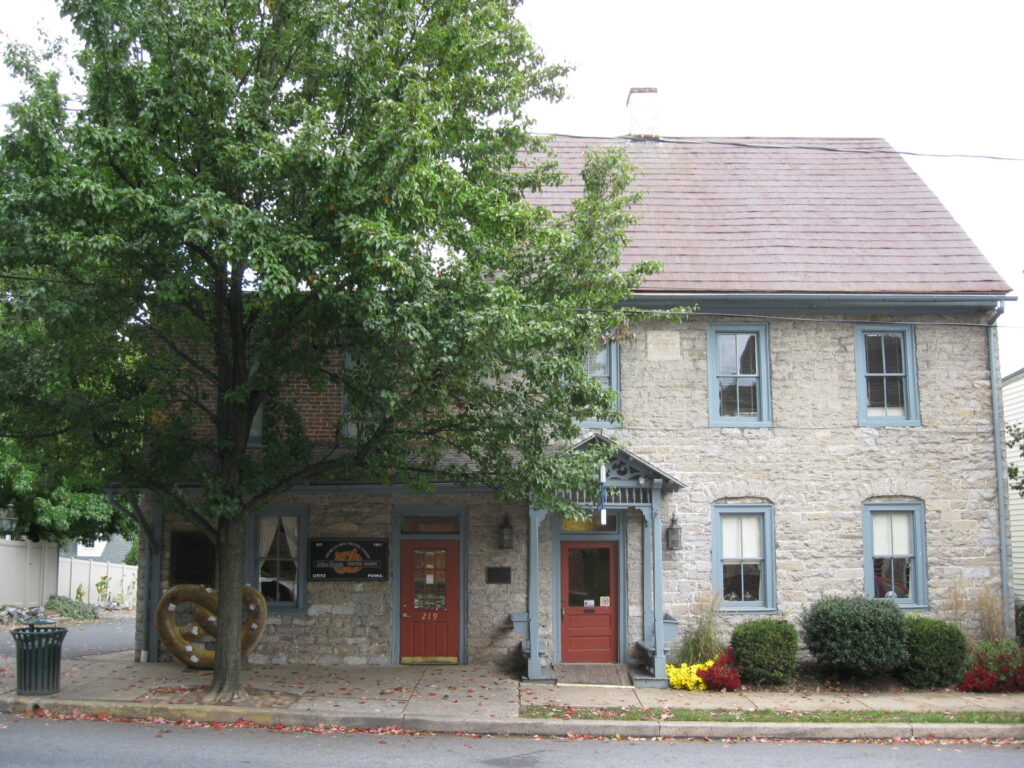
At 219 East Main Street, visitors bend flour-and-water dough into pretzel shapes inside a stone house built in 1784. The tour takes about 25 minutes. Adults pay $6.
Julius Sturgis started his pretzel bakery here in 1861. The bakery bills itself as the first commercial pretzel bakery in America. The house has been on the National Register of Historic Places since 1974.
A few blocks away, the old Wilbur Chocolate factory stopped making chocolate in 2016 and was turned into condos and a hotel. Wilbur’s store in town is still open and selling its Wilbur Buds. Lititz Springs Park held its 209th consecutive Fourth of July celebration in 2026.
The chocolate factory checked out. The chocolate shop never left.
5. Strasburg, Pennsylvania: Railfans bought the old line in 1958 and started running it for fun
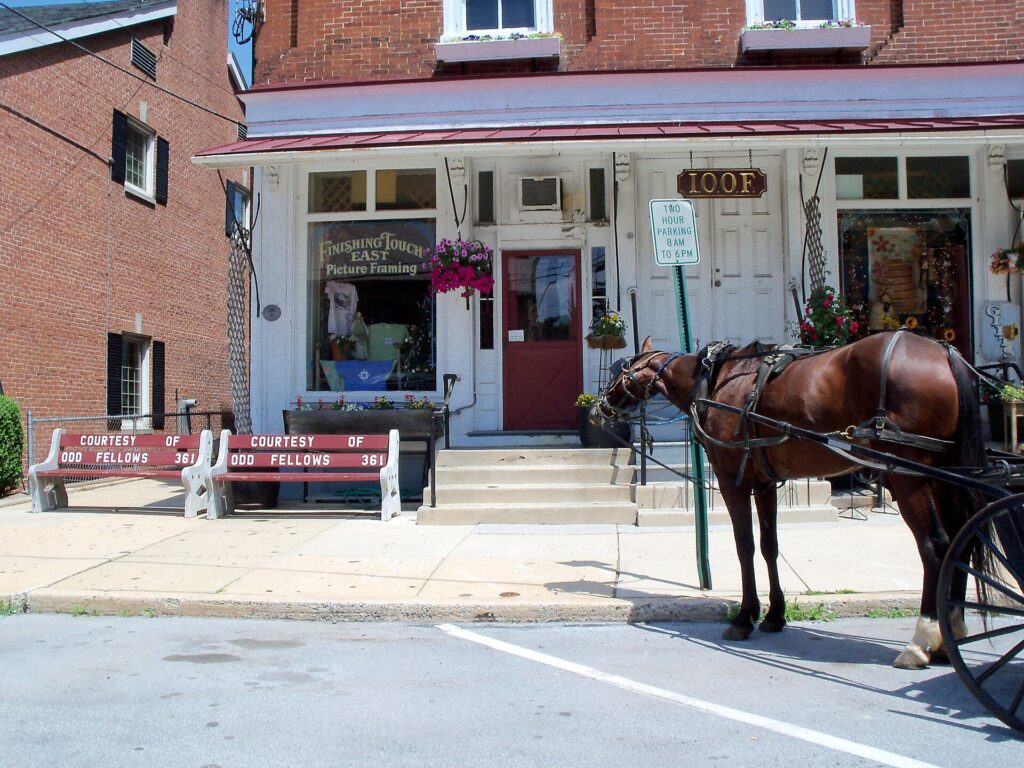
The Strasburg Rail Road was chartered in 1832. In the 1950s a group of railfans pooled their money to buy it. The sale closed on November 1, 1958, and the first tourist excursion ran on January 4, 1959.
The railroad bills itself as America’s oldest short line. After a fall shutdown for track replacement, it reopened in late November 2026 for its Christmas trains, so check the schedule before you drive out.
In 1945, George Groff came home from World War II and built a train layout in his basement on Franklin Street as a Christmas present for his two-year-old son. It kept growing. By its own account, the Choo Choo Barn opened to the public on Thanksgiving Day 1961, with six trains and six animated figures. It’s still open daily on Gap Road.
The line was built to haul freight. Now people ride it just to ride it.
More from American Charm
 15 New Laws Taking Effect January 1, 2027 That Could Change Your Paycheck, Prescriptions and Shopping
 9 American brands that quietly lost their cultural authority but still hold a place in family memory
 9 everyday American symbols that mean something totally different in other countries, and the famous moments that proved it
6. Ligonier, Pennsylvania: The fort was rebuilt in 1953, and Eisenhower came to visit in 1958
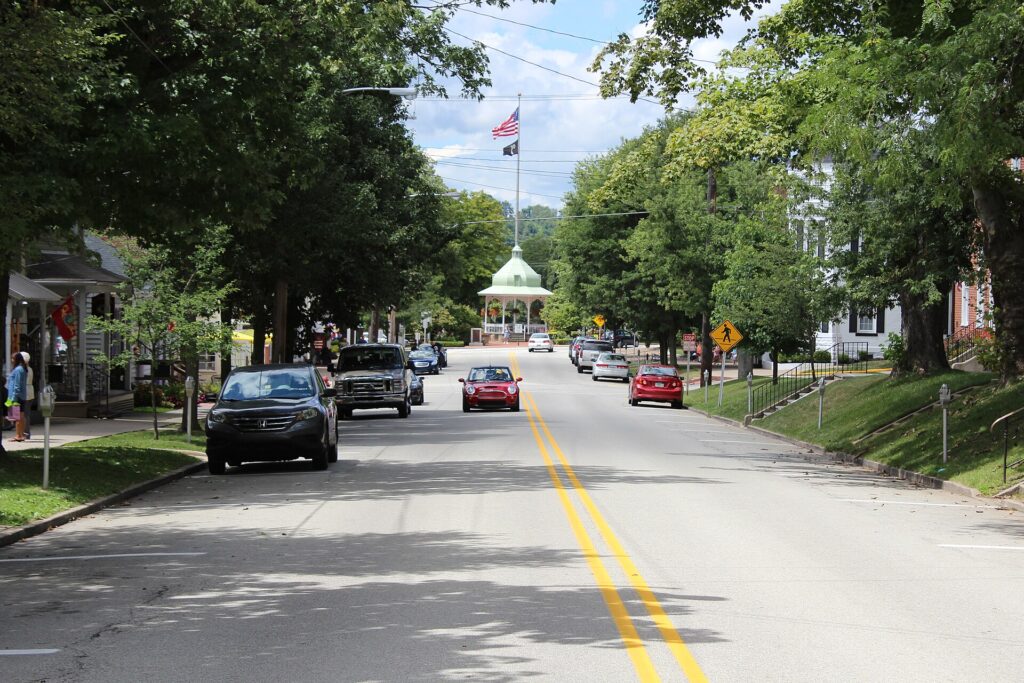
Ligonier’s Diamond used to be a corral for horses and wagons. In 1894 the town turned it into a park with a bandstand. The green-roofed bandstand still sits in the middle of town.
Fort Ligonier went up in 1758. In 1953 it was reconstructed on its original site and opened to the public. President Eisenhower visited in September 1958 for the town’s 200th anniversary, and a museum opened beside the fort in 1962. The fort is open daily from early April through Thanksgiving weekend, and the museum stays open on winter weekends.
The Diamond does the job a town green does in the Vermont villages that never got around to changing. It’s where the town meets. Ligonier had 1,513 people in 2020.
The fort had to be rebuilt to be seen. The Diamond only had to be kept.
7. Millersburg, Pennsylvania: A wooden paddle-wheel ferry still crosses the Susquehanna
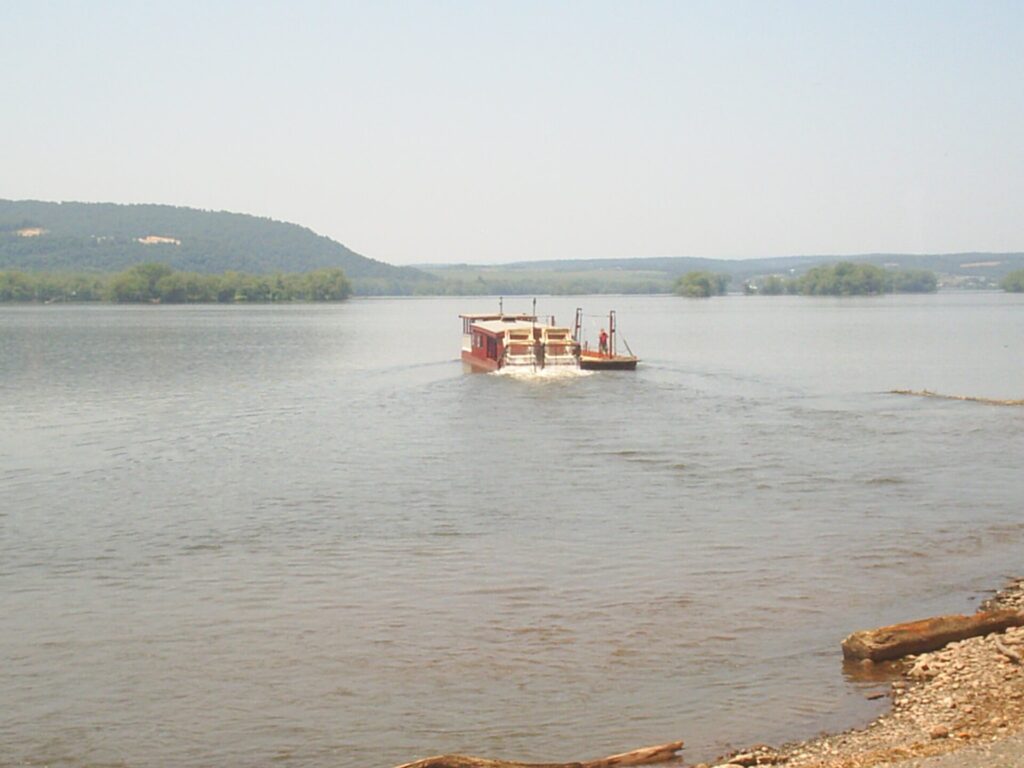
From the landing in Millersburg, the ferry pushes out into the Susquehanna with its stern wheels churning. The trip to the Perry County shore is 4,785 feet and takes about 20 minutes.
The operators call it the last all-wooden, double-sternwheel paddle boat still working in the United States, and they date the crossing to 1817. It has been on the National Register since 2006. “To me, it’s the best job I’ve ever had,” Captain Doug Stoddard told Local21 News in June 2026.
The ferry runs from about May to October, when the river allows. It has closed for the season and plans to reopen in spring 2027. Millersburg, the town of 2,545 at the landing, was laid out around Market Square in 1807.
The ferry looks like the slow way across. Stoddard says the drive around takes about 45 minutes.
8. Punxsutawney, Pennsylvania: The town has been asking a groundhog about winter since 1887
Every February 2, crowds gather early in the morning at Gobbler’s Knob, about two miles southeast of downtown Punxsutawney. In February 2026, Phil saw his shadow, which means six more weeks of winter.
The event formally began in 1887, though the Punxsutawney Spirit newspaper first wrote about it the year before. The town has leaned into the joke ever since. Since 2004, more than 40 six-foot fiberglass groundhogs, the “Phantastic Phils,” have gone up around town.
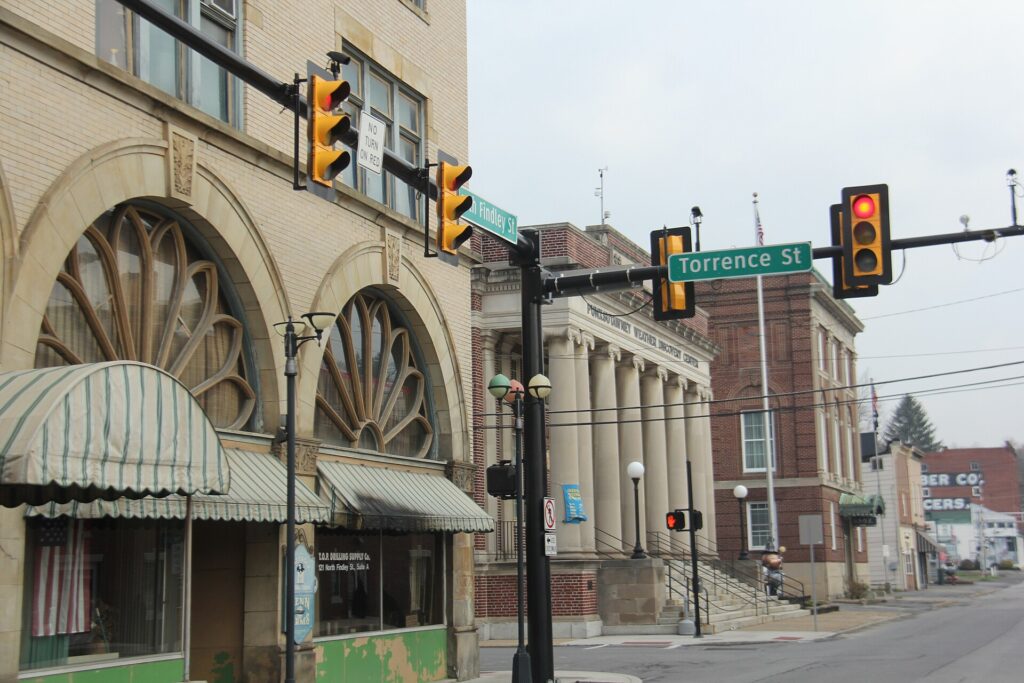
Downtown, the Weather Discovery Center fills the old post office, a Classical Revival building finished in 1914 with a row of stone columns. It’s open Thursday through Sunday, 11 to 3. Punxsutawney had 5,769 people in 2020.
Radar does the real forecasting. Punxsutawney still lets the groundhog go first.
More from American Charm
 8 American chain restaurants that are way better abroad, where a bucket of fried chicken can mean Christmas
 The 10 biggest, heaviest American cars of all time, built when a car’s length was a point of pride
 People who’d pick a creaky floorboard over a keycard usually love these 8 small-town hotels still taking in travelers after 100 years
9. Doylestown, Pennsylvania: The County Theater opened in 1938, and it had air conditioning
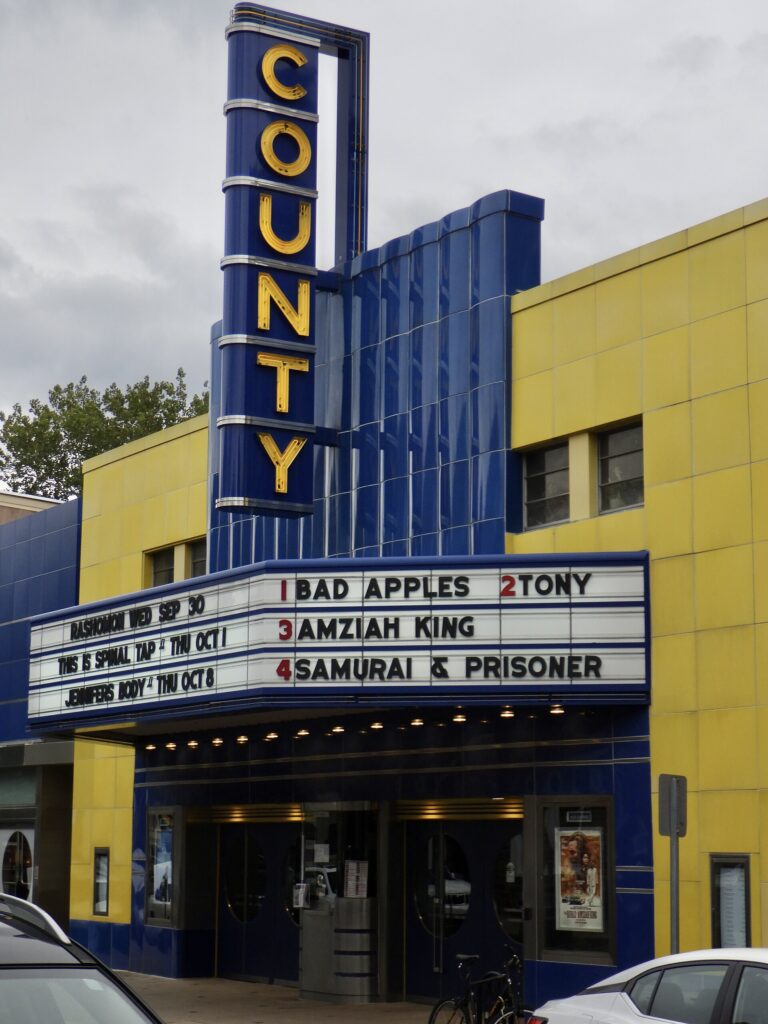
The County Theater’s tall blue-and-yellow sign rises over State Street in Doylestown. The theater opened on September 5, 1938, in a late art deco style. Its own history mentions the bigger selling point: it was air-conditioned.
The theater calls the 1940s, ’50s and ’60s its golden years. By the 1970s, television, shopping centers and multiplexes had caught up with it. A local film society reopened it as a nonprofit on February 5, 1993, and a state grant helped restore the outside in 1998. It’s still showing films, with screenings booked into December 2026.
A few blocks away, the six-story concrete Mercer Museum, finished in 1916, is still open too. Doylestown had about 8,300 people at the last census.
The films change every week. The theater outlasted everything that was supposed to close it.
More from American Charm
 People who still stop for every historical marker usually love these 9 American towns that are smaller than their legends
 People who still pull over for hand-painted billboards usually remember these 8 roadside attractions, and every one is still open
 People who’d rather spend a Saturday on Main Street than at a resort usually fall for these 9 small towns in America’s most beautiful states