The box is small, white and blue, and it sits at the back of the pantry next to the baking soda. Corn muffin mix. Stir in an egg and some milk, and the kitchen smells like Sunday supper.
Most people never wonder where that box comes from. It comes from a town of about 5,500 people west of Ann Arbor, where the family mill has been grinding flour since 1901.
Michigan is full of places like that. Get off the interstate and the state turns into small towns quickly: copper towns, fishing villages, a town settled by one church congregation that never stopped speaking a little German.
They belong with the other places where the clock seems to run a little slow. Nobody in them is trying to stop time. They just never saw a reason to rush it.
The muffin mix is only the start.
1. Chelsea, Michigan: The little blue box of Jiffy mix still comes from this town
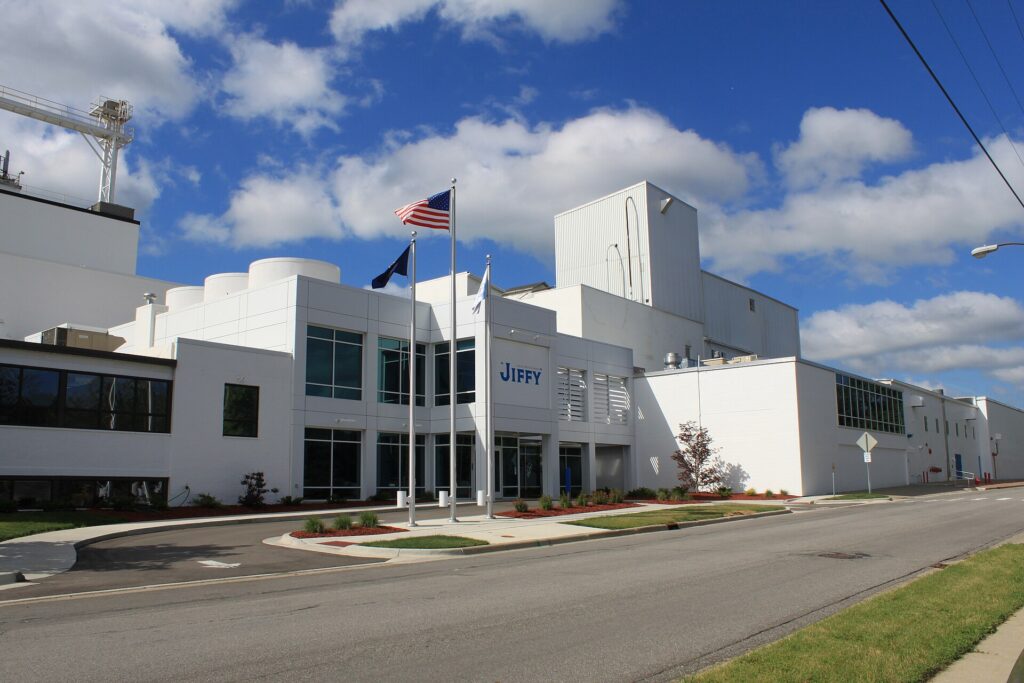
The mill stands on North Street, a block of white towers with one word by the door in blue: JIFFY.
The family had been milling flour here since 1901. In the spring of 1930, Mabel White Holmes came up with a biscuit mix for home cooks. The story goes that she was inspired by the sad biscuits a friend’s single father made for his kids. Jiffy is often credited as the first prepared baking mix sold in America. Her grandson Howdy Holmes, a former Indianapolis 500 driver, has run the company since 1995. In 2015 the plant turned out about 1.6 million boxes a day.
Chelsea has 5,467 people and a downtown on the National Register. In April 2025, about 300 residents formed a human chain to pass 9,100 books to a bookstore’s new location.
The box hasn’t changed much. Neither has the town’s habit of pitching in.
2. Frankenmuth, Michigan: A Christmas store that opened in 1945 now covers more than 7 acres
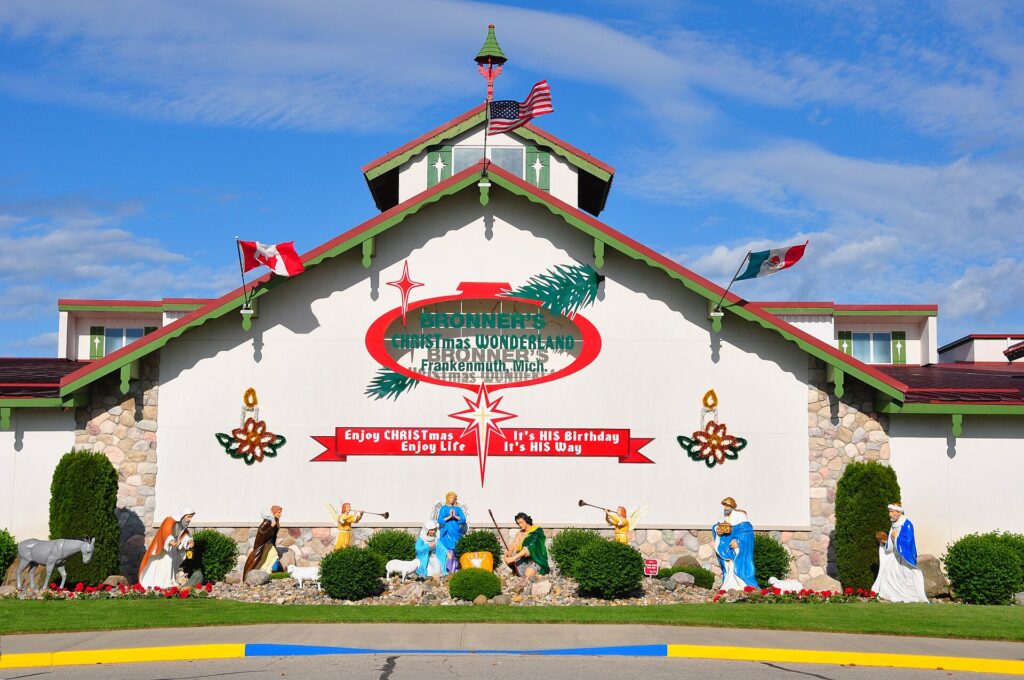
Out front, a life-size nativity scene sits on the lawn under a chalet roof. Inside are about 800 animated figures and more ornaments than most people will see in a lifetime.
Wally Bronner started the business in 1945. Today Bronner’s calls itself the World’s Largest Christmas Store. The building covers 7.35 acres, and about 100,000 lights line its half-mile Christmas Lane. The weekend after Thanksgiving is its busiest of the year, with more than 50,000 visitors.
The town itself goes back to 1845, when Lutheran settlers arrived from Franconia in Bavaria. The name means “courage of the Franconians.” St. Lorenz church still holds a German-language service once a month. Frankenmuth has 4,987 people.
Most towns hang lights for a month. Frankenmuth gave them a half-mile lane.
More from American Charm
 People who dug to the bottom of the cereal box for the prize usually remember these 8, and a few are worth real money now
 People who grew up on these 8 foods usually have no idea they originated in America, each in one hometown
 15 New Laws Taking Effect January 1, 2027 That Could Change Your Paycheck, Prescriptions and Shopping
3. Marshall, Michigan: A judge came home from Hawaii in 1860 and built this house to remember it
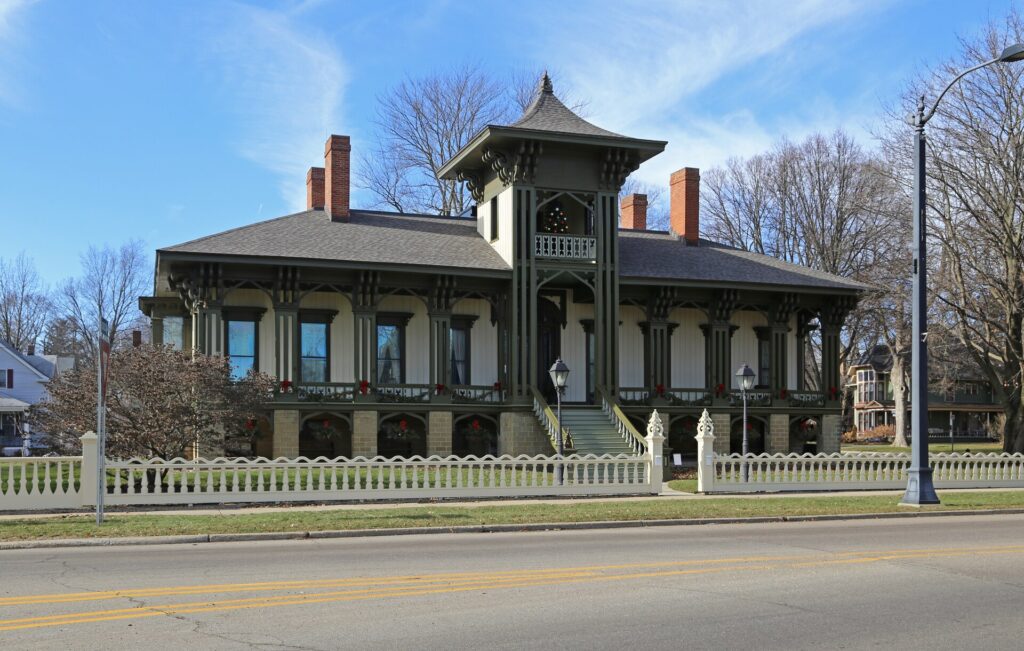
On Kalamazoo Avenue, a pagoda-roofed tower rises over the front steps of a house with a deep veranda and four chimneys. It looks like it took a wrong turn somewhere over the Pacific.
Abner Pratt, a former chief justice of the Michigan Supreme Court, had served as U.S. consul in Hawaii. Back in Marshall, he built the Honolulu House in 1860 to recreate what he missed. The Marshall Historical Society has kept it as a museum since 1961.
The house is one of more than 850 buildings in one of the largest National Historic Landmark districts in the country. In 1847, when slave catchers came for the Crosswhite family, more than 100 neighbors surrounded the house. The deputy arrested the slave catchers instead, and the family escaped to Canada. Marshall has 6,822 people.
Marshall kept its old houses. It also kept the story of the night the town stood up.
4. Calumet, Michigan: The 1900 copper-town theater still raises its curtain in a village of 621
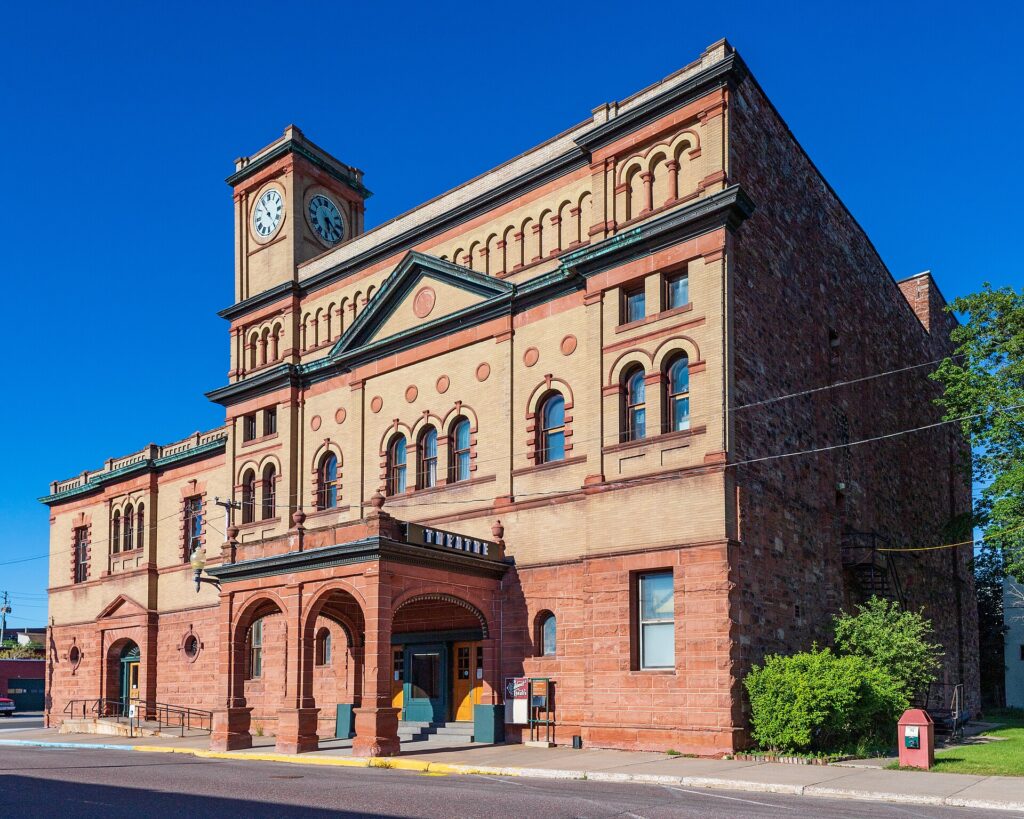
The clock tower and red sandstone arches on Sixth Street look built for a city. In 1900, Calumet nearly was one.
The Calumet and Hecla Mining Company produced more than half of America’s copper from 1871 through 1880. The town built a theater to match, and it opened on March 20, 1900, as one of the first municipal theaters in the country. John Philip Sousa and Sarah Bernhardt played there. Then the copper ran down and the people left. The village sits on about 2,000 miles of empty mine tunnels.
The theater now seats about 700. On November 21, a local dance school stages its own version of The Nutcracker there.
The copper ran out. The curtain still goes up.
5. Leland, Michigan: The fishing shanties of Fishtown still have fishing boats tied up out front

Gray shanties lean over the Leland River. A green fish tug sits at the dock. The gulls know exactly what goes on here.
Commercial fishermen were sailing out of this harbor by 1880, after lake trout and whitefish. They built wooden shacks to clean the catch and fix their gear, and at one time up to eight powered tugs worked from here. People started calling it Fishtown.
Plenty of old fishing villages became gift shops. A few of Fishtown’s shanties did too. But a nonprofit preservation society now keeps the shanties, smokehouses and docks as a working waterfront, and it owns two fish tugs, the Joy and the Janice Sue. Leland, with 410 people, is also where the ferry leaves for the Manitou Islands.
Most fishing villages kept the look. Leland kept the fishing.
More from American Charm
 9 everyday American symbols that mean something totally different in other countries, and the famous moments that proved it
 8 American chain restaurants that are way better abroad, where a bucket of fried chicken can mean Christmas
 The 10 biggest, heaviest American cars of all time, built when a car’s length was a point of pride
6. Charlevoix, Michigan: A builder with no architect’s license left 31 stone houses that look like mushrooms
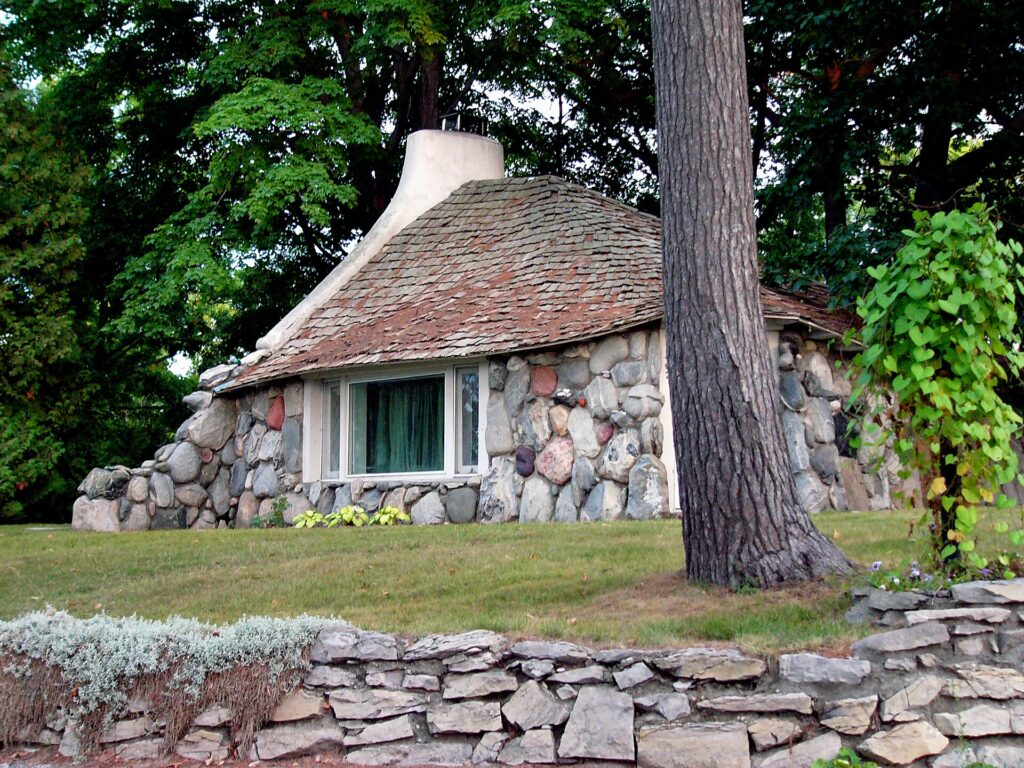
The roof curls like a mushroom cap. The walls are fieldstone, round boulders set in mortar. The door looks a little short for a grown-up.
Earl Young lasted one year in architecture school at the University of Michigan. He sold insurance and real estate instead, and over 52 years he designed and built 31 structures in Charlevoix. He never drew blueprints. Workers got a rough sketch, and he said the stones spoke to him. When people asked which building was his favorite, he always said, “The next one.”
In 1924 he laid out Boulder Park on Lake Michigan with lots starting at $100. Locals call his houses gnome homes, mushroom houses or Hobbit houses. Charlevoix has 2,348 people.
No license. No blueprints. Just the next one.
7. Petoskey, Michigan: The town gave its name to a gray stone that shows its pattern only when wet
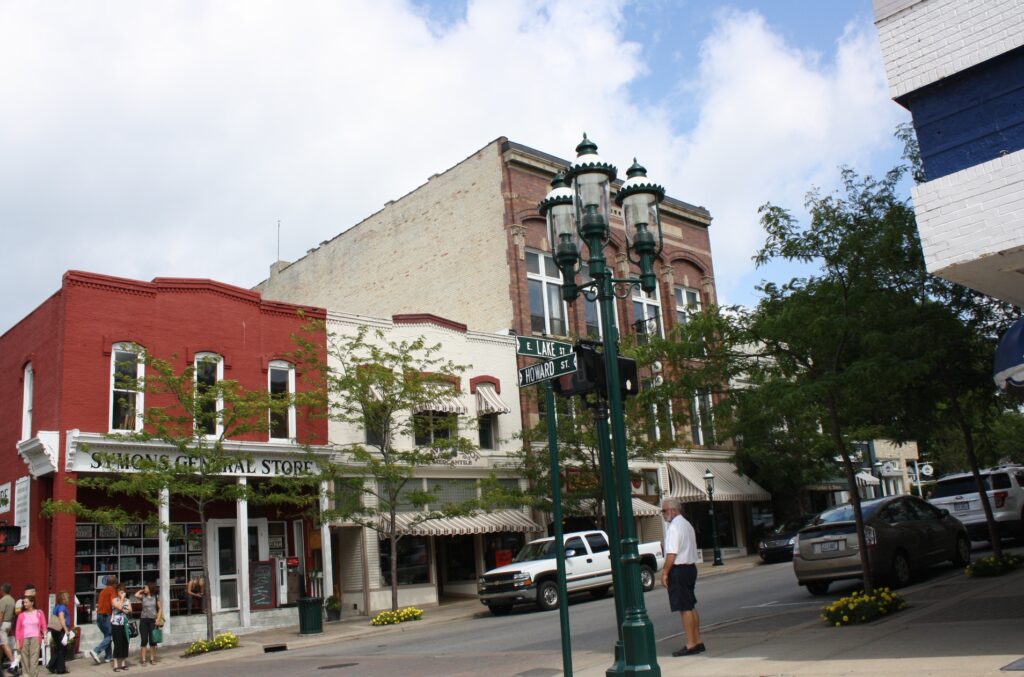
Downtown sits on a hill above Little Traverse Bay, with brick storefronts and a general store on the corner of Lake and Howard. The beach below is where people walk slowly, bent at the waist.
They’re looking for Petoskey stones. Each one is a piece of fossil coral from a reef that grew here about 350 million years ago. Dry, it looks like ordinary limestone. Wet or polished, it shows a pattern of tiny six-sided coral cells. Glaciers broke the stones loose and rolled them smooth.
Michigan made it the state stone in 1965. The stone and the town are both named for Petosega, an Odawa leader who owned land along the bay. Petoskey has 5,877 people.
Dry, it’s just a gray rock. Wet, it’s the reason people walk the beach bent over.
8. Copper Harbor, Michigan: The Army built a fort here in 1844 and found it had nothing to fight
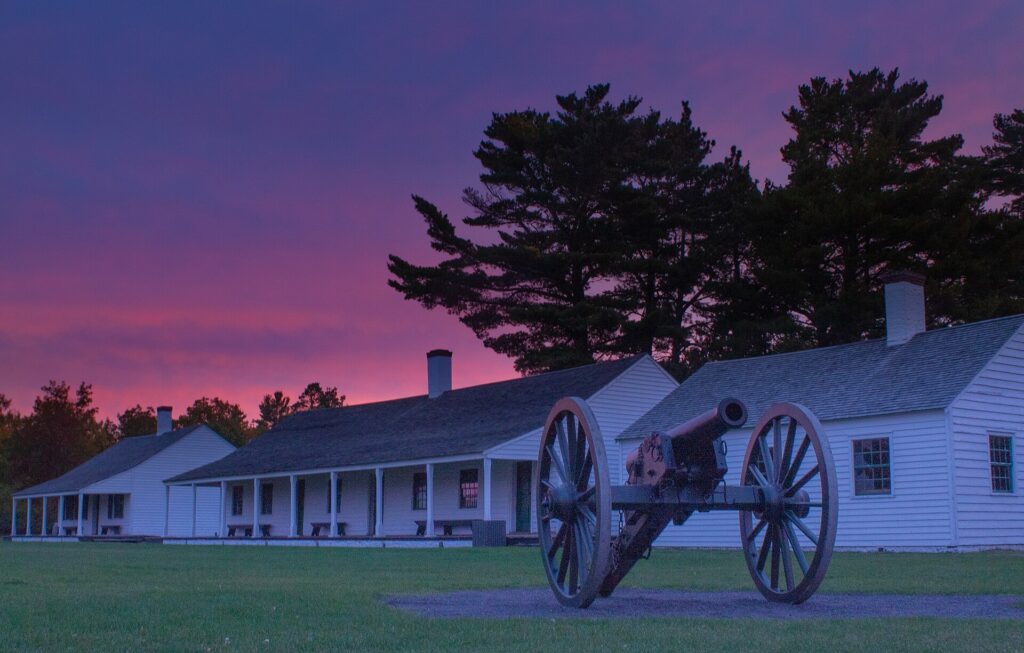
White wooden barracks face a green parade ground, with a cannon out front and pines behind. Lake Superior is a short walk away.
Copper prospectors rushed the Keweenaw Peninsula in the early 1840s, and the government worried about trouble. It sent two infantry companies to build Fort Wilkins in 1844. The trouble never came. When the Mexican War started, the troops shipped out, and by 1846 one caretaker, Sgt. William Wright, was all that was left.
The Army came back briefly after the Civil War and left for good in 1870. It became a state park in 1923, and in summer, costumed staff act out the fort’s last season. Copper Harbor has 136 people and is the northernmost town in Michigan with year-round residents.
The Army sent two companies to keep the peace. The peace kept itself.
More from American Charm
 People who still stop for every historical marker usually love these 9 American towns that are smaller than their legends
 People who still pull over for hand-painted billboards usually remember these 8 roadside attractions, and every one is still open
 People who’d rather spend a Saturday on Main Street than at a resort usually fall for these 9 small towns in America’s most beautiful states