The tires leave the asphalt and hit wood. For a few seconds the sound changes to a hollow rumble under the car, and the light goes dim and striped through the gaps in the siding.
Then you’re out the other side, and the road is just a road again.
Covered bridges were never built to be pretty. The roof was there to keep rain and snow off the wooden trusses underneath, so the bridge would last for generations instead of a few hard winters. It worked better than anybody planned.
We’ve written about places where locals swear the clock runs slower, and a covered bridge may be the purest version of that idea. These nine run from 1825 to 2008, from a brook in upstate New York to a river canyon in California.
The roof was the practical part. The stories came later.
1. East Springfield, New York: The Hyde Hall Bridge has crossed Shadow Brook since 1825
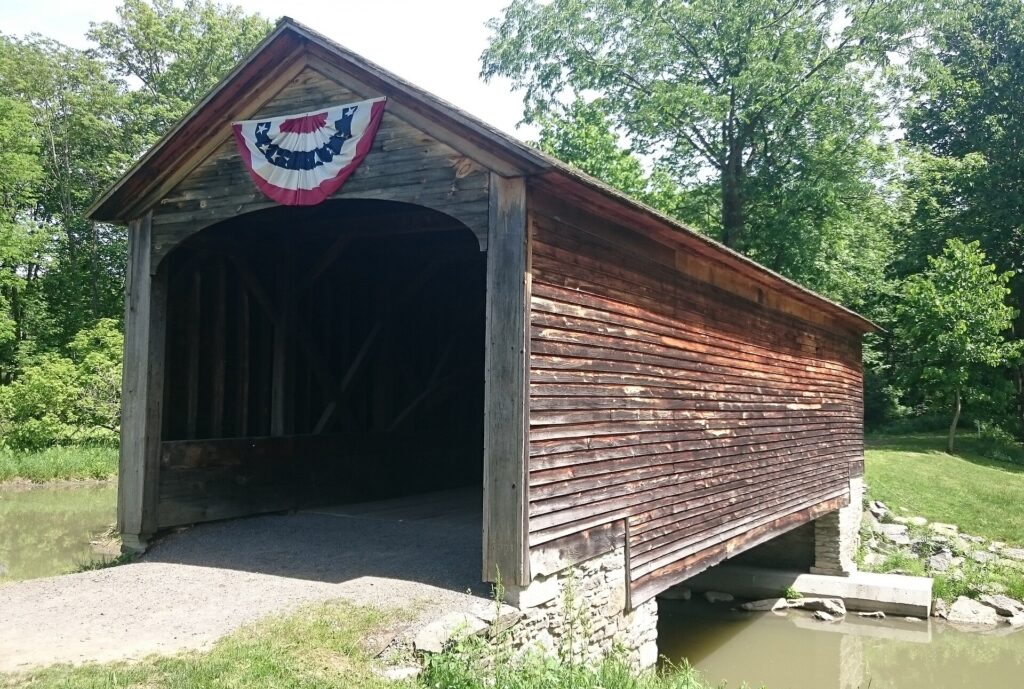
A small wooden bridge sits over a brook in Glimmerglass State Park, on the east shore of Otsego Lake north of Cooperstown. It is only 53 feet long. You could walk it in a dozen steps.
It was built for the private estate of Hyde Hall, a country mansion, by a master carpenter named Cyrenus Clark, with a second carpenter and a stonemason helping. He used a Burr arch truss, a design that would show up on covered bridges across the country. The State of New York renovated it in 1967. Today the mansion and the bridge are both inside the park, and the state lists the covered bridge as open to visitors.
With the possible exception of the Hassenplug Bridge in Pennsylvania, also dated 1825, it is the oldest documented covered bridge still standing in the United States. It is one of 29 historic covered bridges left in New York.
It was built for one family’s carriages. It outlasted nearly every bridge of its day.
2. Philippi, West Virginia: The 1852 bridge still carries U.S. 250 traffic
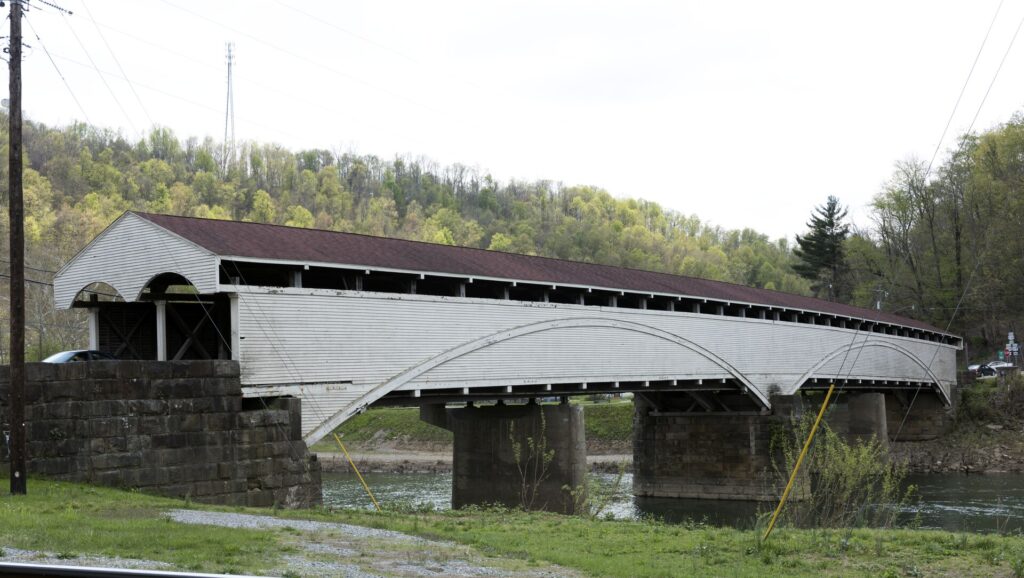
Two arched doorways sit side by side at each end, one for each lane. Cars still drive through them every day.
Lemuel Chenoweth won the contract in 1852 with a plain hickory model. When the bidders gathered in Richmond, he set his model across two chairs and stood on it, then invited the others to do the same with theirs. Nobody did. In June 1861, after the Battle of Philippi, troops from both sides used the bridge, and Union soldiers slept in it for a while.
In February 1989, gasoline that overflowed at a nearby filling station ran down to the bridge, and a passing car set it alight. The rebuild took until 1991. It is the only covered bridge on the U.S. numbered highway system, and state highway officials call it a vital link for U.S. 250 traffic. Drivers can still see the original burnt trusses on the way through.
Two armies crossed it in 1861. U.S. 250 still does.
More from American Charm
 People who still sit on the bench outside the general store usually feel at home in these 7 Tennessee towns
 People who still save Friday night for the fish fry usually feel at home in these 9 Wisconsin small towns
 People who still know which back road beats the interstate usually love these 8 Kentucky towns that held on to their history
3. Bridgeport, California: The longest single wooden span in the world reopened in 2021
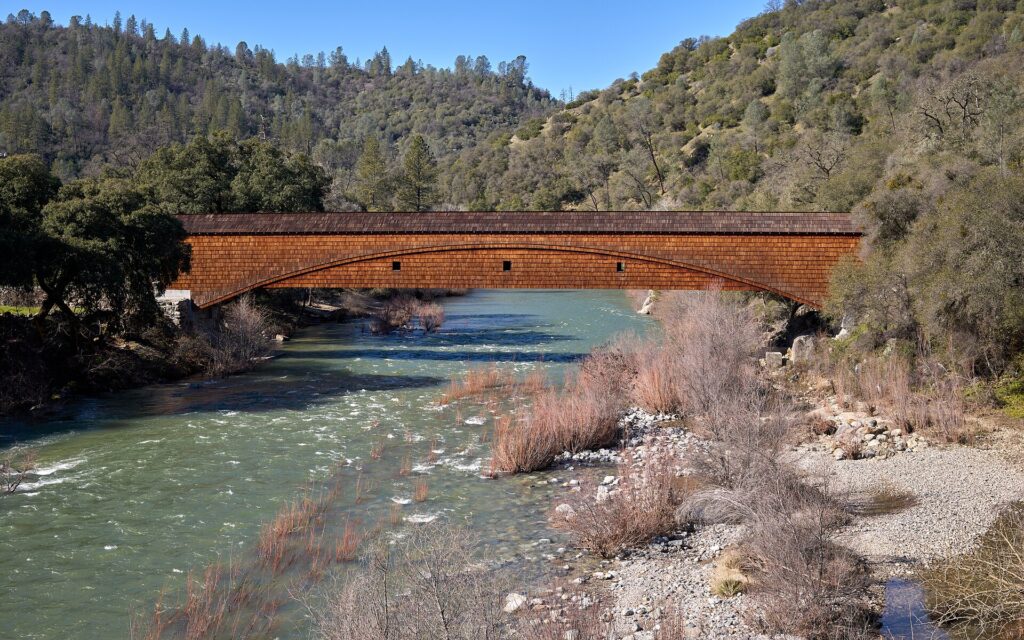
A shingled bridge crosses the South Yuba River in the Sierra foothills. A long wooden arch curves along each side, like the ribs of a boat.
David John Wood built it in 1862 with lumber from his own mill in Sierra County. It was part of the Virginia Turnpike, a toll road that hauled freight toward the silver mines of Nevada’s Comstock Lode. It closed to cars in 1972, and to walkers in 2011, because of structural problems. The state set aside $1.3 million for repairs in 2014, and the bridge reopened to people on foot in November 2021.
It has the longest clear single span of any wooden covered bridge left in the world. It sits in South Yuba River State Park, where day use runs $10 per vehicle.
It was built for freight wagons. It came back for hikers.
4. Windsor, Vermont: The toll into New Hampshire was cheaper than the toll back
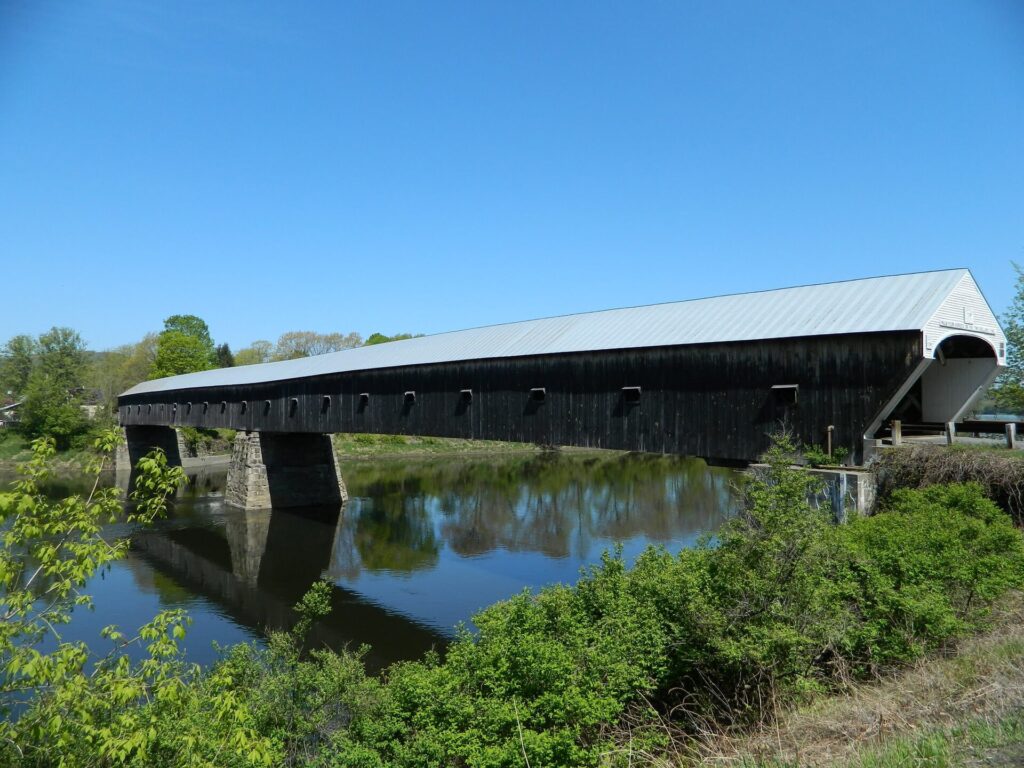
A long dark bridge rests on stone piers across the Connecticut River. Vermont is at one end. New Hampshire is at the other.
The Cornish-Windsor bridge was built in 1866 for $9,000, the fourth bridge on the spot. It was a toll bridge until 1943. Windsor was a temperance town and Cornish was not, so walkers paid 2 cents to cross into New Hampshire and 3 cents to come back. Our list of New Hampshire towns that still look like old postcards ends in Cornish, and the bridge is a big reason why.
At about 449 feet, it is the longest wooden covered bridge in the country and has the longest single covered span that still carries cars. This fall, crews have been replacing worn deck planks, closing it on weekdays, likely through the end of November.
Going over cost two cents. Coming home cost three.
5. Medora, Indiana: The longest historic covered bridge in America was nearly torn down
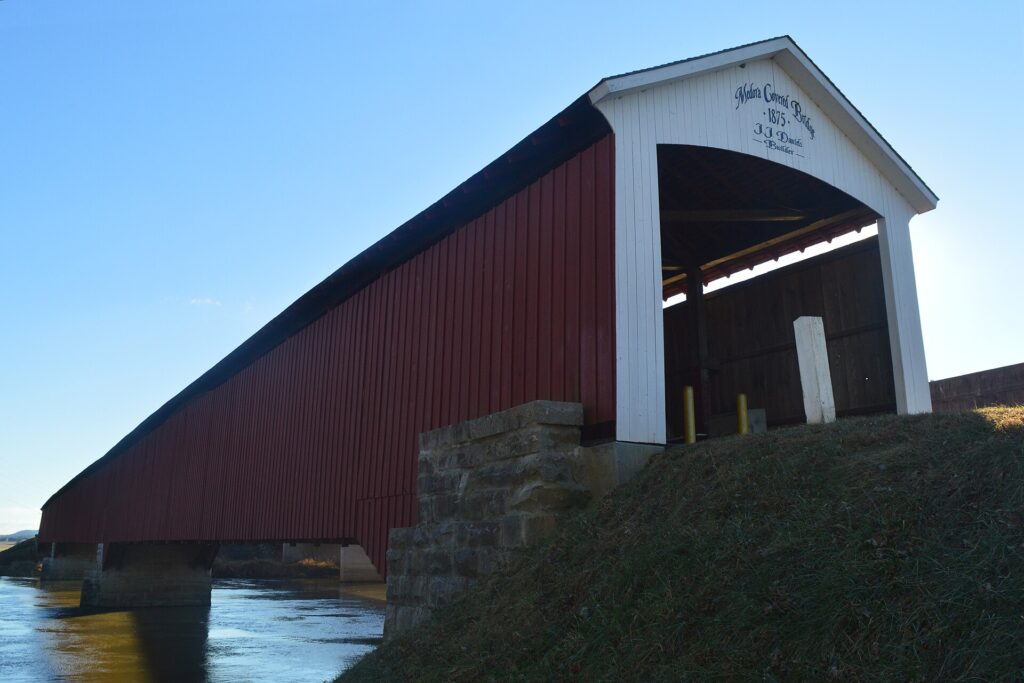
A red bridge with white portals runs 461 feet over the East Fork of the White River. A modern bridge beside it took the traffic away decades ago.
J.J. Daniels built it in 1875 in nine months, for $18,142. Before that, people crossed by ferry. Until 1935 it carried U.S. Route 50. In 1968 it was scheduled for demolition once a new bridge opened, but an order from Governor Edgar Whitcomb saved it in 1971. It closed to cars in 1973.
Its clear span is 431 feet 10 inches, the longest of any historic covered bridge in the United States. A rehabilitation finished in 2011 kept the entire original truss in place. Today it is open to people who want to walk through.
The plan was to tear it down. One signature kept it standing.
More from American Charm
 People who still order root beer at a walk-up window usually feel at home in these 9 Ohio small towns
 People who still wave at every pickup on a gravel road usually love these 9 Iowa towns that kept their stories
 People who still read the marquee on the way down Main Street usually feel at home in these 9 Pennsylvania small towns
6. Elizabethton, Tennessee: The man who built the bridge made five dollars on it
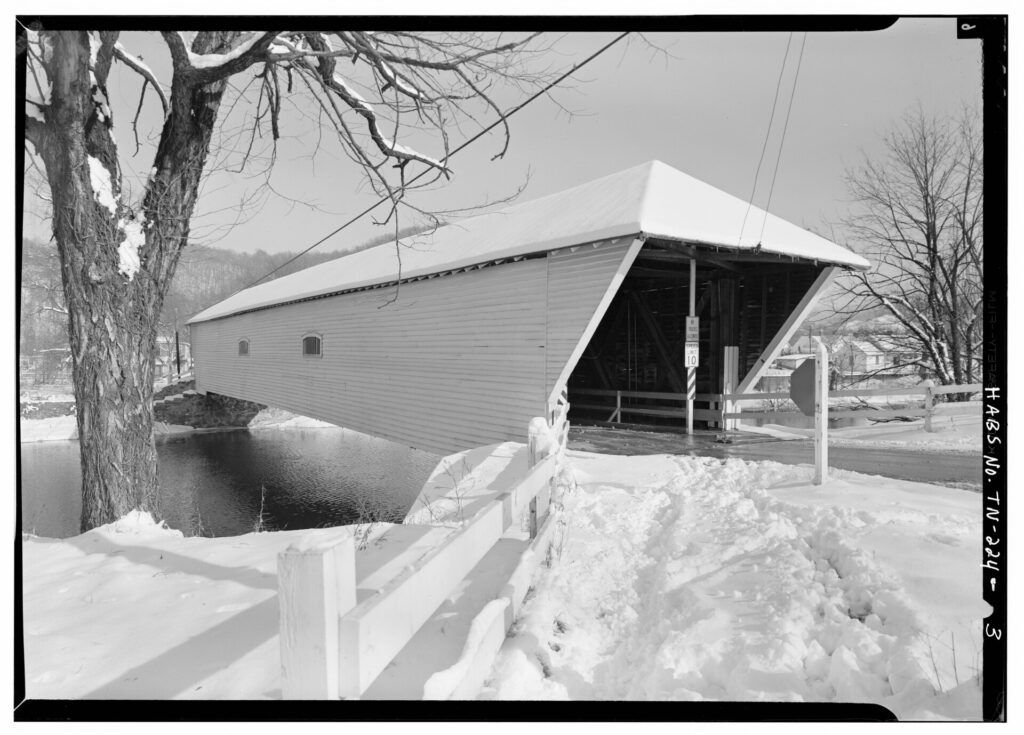
A white bridge crosses the Doe River in the middle of town, connecting 3rd Street and Hattie Avenue. Cars stay off it now, but walkers and bicycles still cross.
In 1882, Carter County approved $3,000 for a bridge, then couldn’t find a qualified contractor to build it. A local doctor, E.E. Hunter, took the contract and hired Thomas Matson, a railroad engineer, to design it. Hunter called it his “five dollar bridge,” because that was his profit.
In the flood of 1901, logs from a lumber operation and a barn slammed into its supports. It was the only major bridge in the area to survive. The bridge is 134 feet long, and it still links a city park with walking trails to the downtown business district.
The doctor cleared five dollars. The town got a bridge that beat the flood.
7. Winterset, Iowa: Roseman Bridge became famous in a novel 109 years after it was built
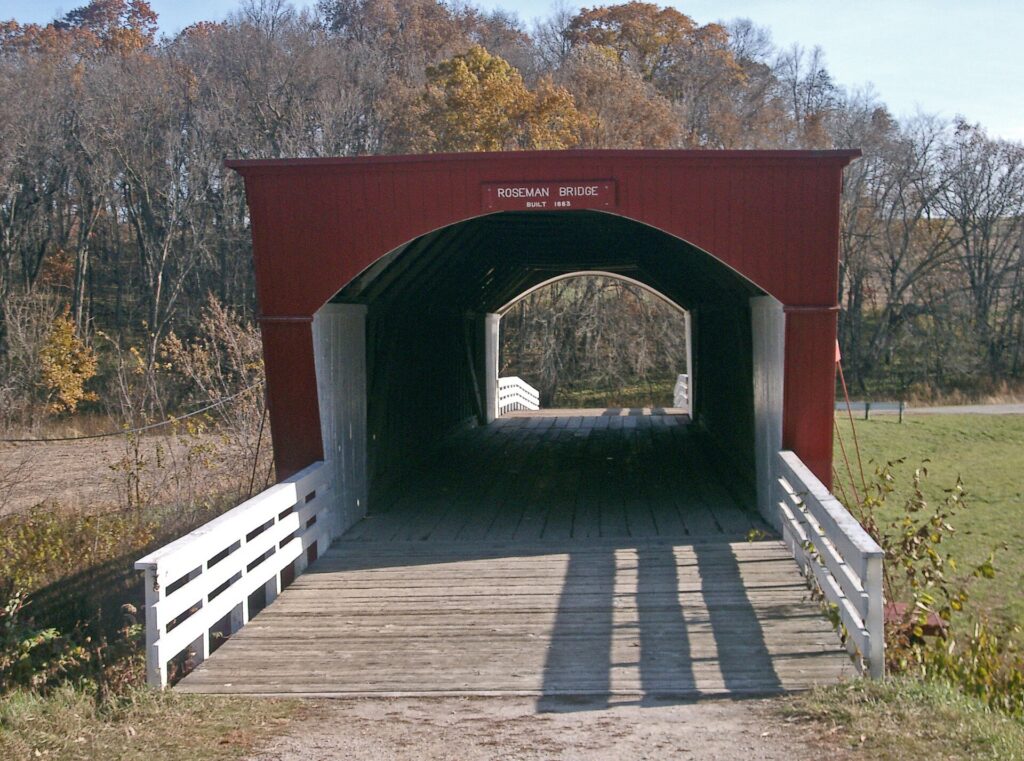
A red bridge with white railings sits on a quiet road southwest of Winterset. The name is painted over the entrance.
Madison County built it over the Middle River in 1883. It cost $2,930, and it was one of the last two covered bridges the county put up, even after it had started building iron ones. It was renovated in 1992, the same year Robert James Waller’s novel The Bridges of Madison County came out, with this bridge in a starring role. The 1995 film put it on movie screens.
It was added to the National Register of Historic Places in 1976. Unlike many old covered bridges, it has no modern bridge running alongside it.
The county built it for farm wagons. A love story made it famous.
8. Westfir, Oregon: A lumber company built it for log trucks in 1944
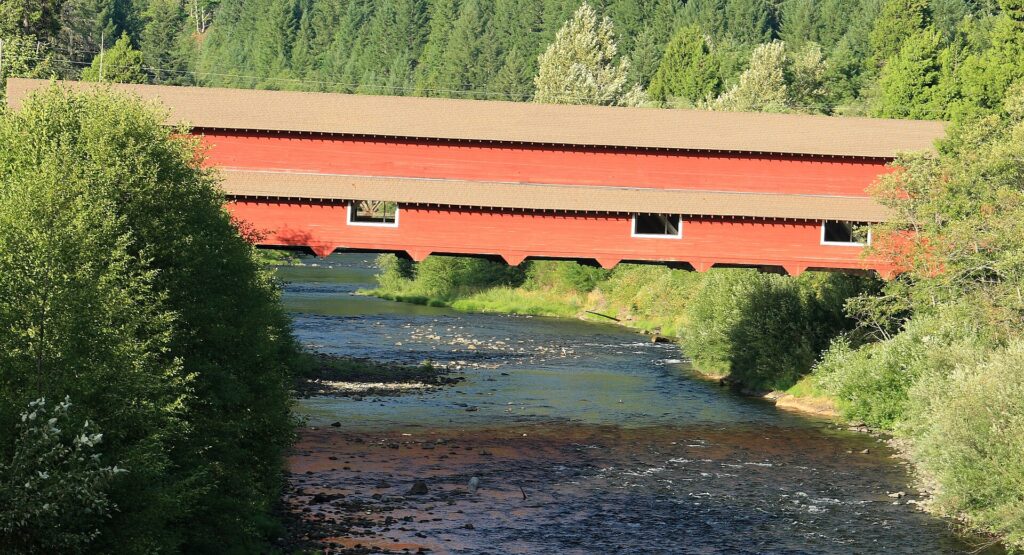
A long red bridge crosses a clear mountain river at the edge of the Willamette National Forest. A covered walkway runs along one side.
The Westfir Lumber Company built it in 1944, after the old bridge washed away, to carry log trucks and lumber trucks to its mill. The company offices sat across the river in a building that is now a bed and breakfast, and it still has the walk-in safe. The mill burned in the early 1980s. Lane County took over the bridge in 1992 after a tax foreclosure and shored it up the next year.
At 180 feet, it is the longest covered bridge in Oregon, and the only one west of the Mississippi with its own pedestrian walkway. Most Christmas seasons, it is strung with lights.
The mill is gone. The bridge it built is still working.
More from American Charm
 People who still plan their October around the county fair usually love these 9 Maine towns that never hurried to change
 People who keep Jiffy mix in the pantry usually love these 8 small Michigan towns that kept their old ways
 People who still send Christmas cards by mail usually fall for these 9 New England towns that keep December old-fashioned
9. Ashtabula, Ohio: The longest covered bridge in America opened in 2008
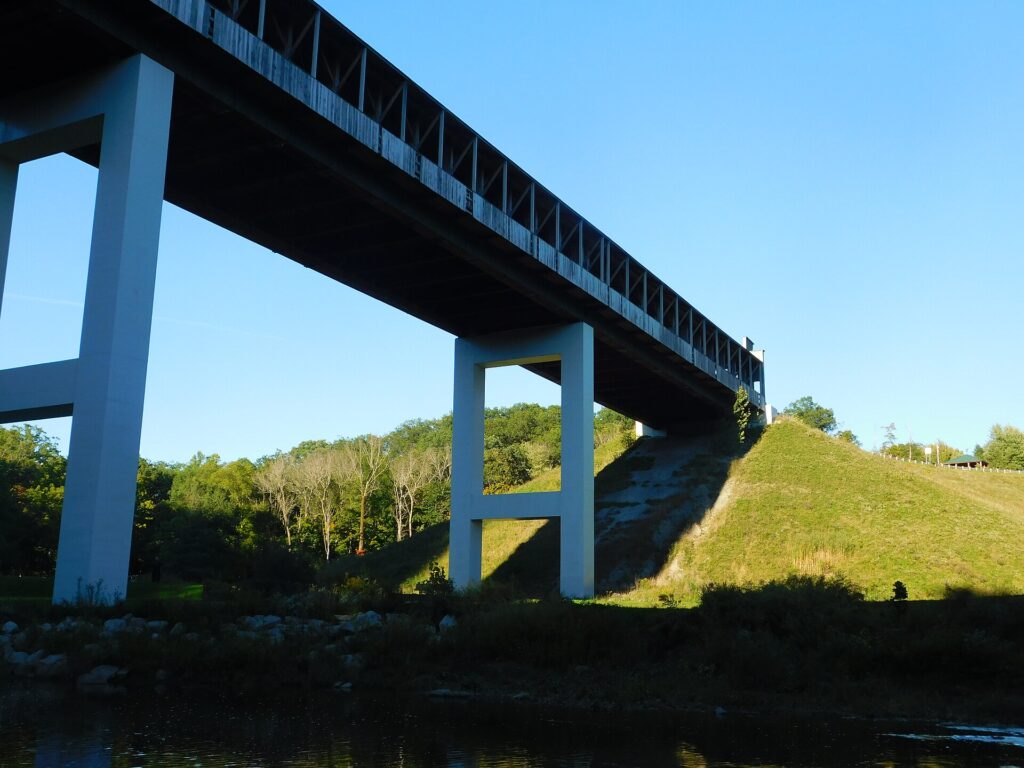
The bridge runs 613 feet across the Ashtabula River gorge, more than 93 feet above the water. Two lanes of cars go through it, with a walkway on each side.
The idea came in 1995 from John Smolen, then the Ashtabula County engineer, when the old steel bridge on the site was wearing out. That steel bridge had replaced a covered bridge from 1867. The new one cost about $7.78 million and was framed with Douglas fir or yellow pine timbers. It was dedicated on August 26, 2008, and opened to traffic that October.
It took the title of longest covered bridge in the country from the Cornish-Windsor bridge. It is one of 17 covered bridges in Ashtabula County that you can still drive through.
Most covered bridges are leftovers. This one was a choice.
More from American Charm
 People who pick a counter stool over a booth usually love these 7 small town diners that rolled out of a factory
 People who know their mayor by first name usually love these 8 things a small-town mayor can do that a governor can’t
 People who’d pick a creaky floorboard over a keycard usually love these 8 small-town hotels still taking in travelers after 100 years