There’s a bench out front of the general store, and somebody is usually on it. A cold bottle of soda, a screen door that slaps shut, a truck idling at the only stop sign in town.
Nobody on that bench is in a hurry. That’s sort of the point.
Tennessee is full of places like that once you leave the interstate. One is older than the state itself. One was built by an English author for young men who weren’t used to farm work. One lost much of its farmland to a lake and refused to blow away.
We once rounded up American towns where the clock seems to run slower. Tennessee has a few of its own.
The bench is the least of what they kept.
1. Jonesborough, Tennessee: The state’s oldest town still gathers everyone under the tents
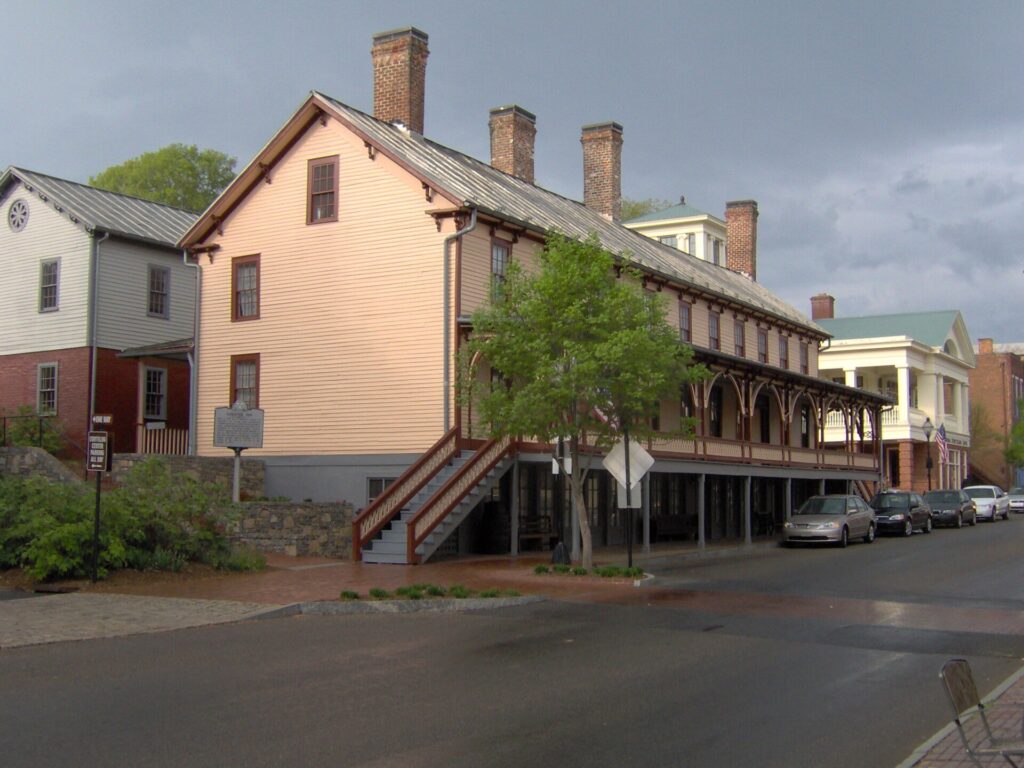
The Chester Inn has stood on Main Street since 1797. Jonesborough itself is older. It was founded in 1779, 17 years before Tennessee became a state, and it calls itself Tennessee’s oldest town.
In October 1973, a high school journalism teacher named Jimmy Neil Smith held a storytelling festival here. Hay bales and wagons were the stages, and tellers and listeners together numbered no more than 60. The National Storytelling Festival now draws close to 11,000 people a year to tents pitched around town.
The 54th festival is set for October 1 to 3, 2027. Closer to home, the town lights its Christmas tree on November 27. About 5,860 people live here.
It started with 60 people on hay bales. The hay bales were the only thing that didn’t last.
2. Greeneville, Tennessee: A president’s tailor shop is kept inside a brick building of its own
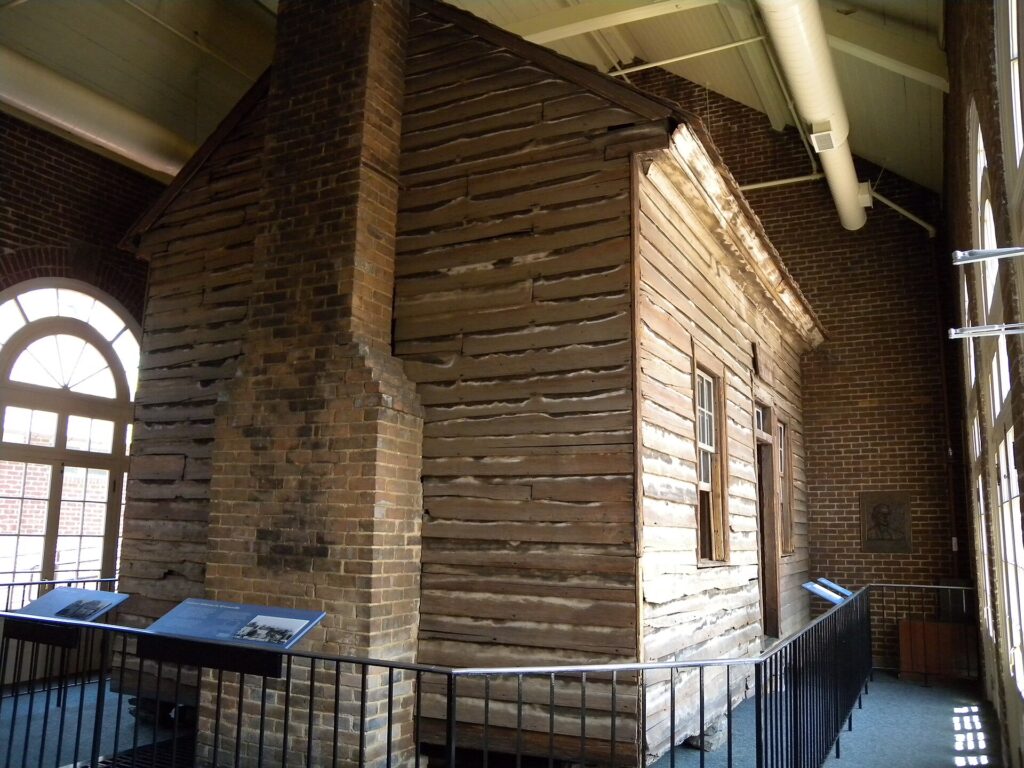
The building is one small room of weathered wood. Since 1923 it has sat inside a brick memorial building the state put up around it, to protect it from wear and tear.
Andrew Johnson came to Greeneville in 1826 and bought the shop when the town’s tailor was ready to retire. The National Park Service says he paid people to read to him while he sewed. Neighbors and students came by to argue about the issues of the day, and they talked him into running for office. He was elected alderman, and later he became the 17th president.
The site is open daily through November and Wednesday through Sunday from December to March, and it closes on Thanksgiving. Greeneville has about 15,500 people.
He went in to sew coats. He came out a politician.
More from American Charm
 People who pick a counter stool over a booth usually love these 7 small town diners that rolled out of a factory
 People who know their mayor by first name usually love these 8 things a small-town mayor can do that a governor can’t
 People who dug to the bottom of the cereal box for the prize usually remember these 8, and a few are worth real money now
3. Rugby, Tennessee: An English author built a village here for younger sons in 1880
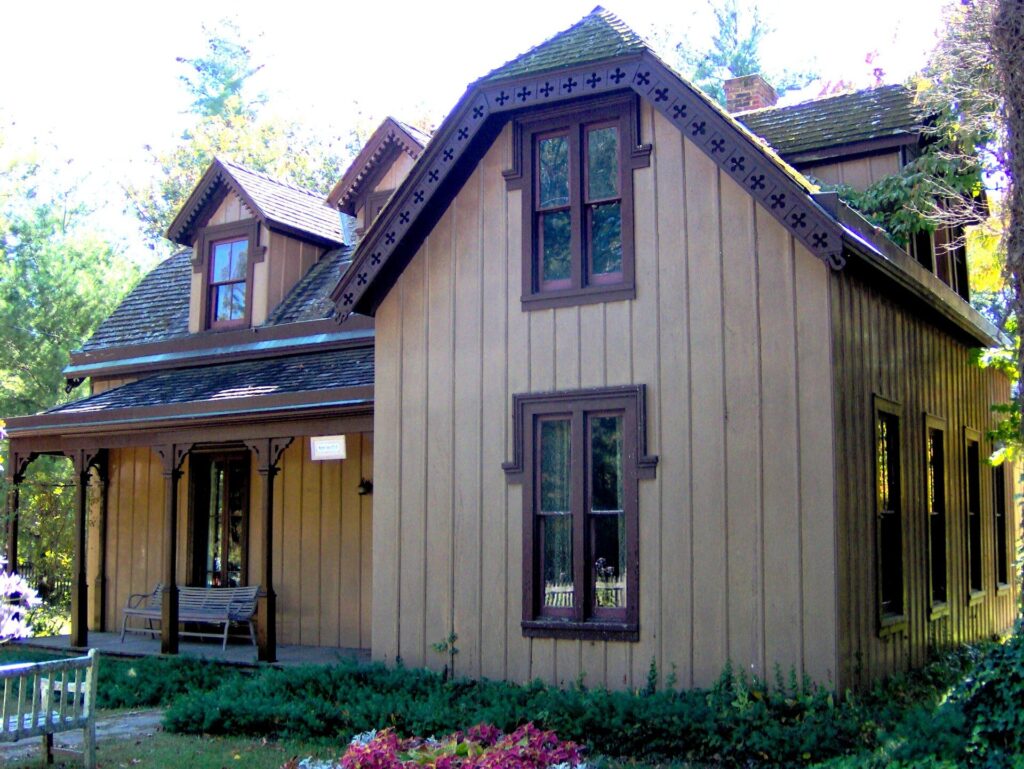
Thomas Hughes wrote Tom Brown’s School Days. In 1880 he opened a colony on the Cumberland Plateau for the younger sons of English families, who had little to inherit at home.
Alcohol was banned. Tennis and croquet courts went in early. By 1884 the village had more than 400 residents. But the soil was poor, typhoid struck in 1881, and lawsuits over land titles dragged on. By late 1887 most of the original colonists had died or moved away.
The Thomas Hughes Library, built in 1882, still holds most of its original 7,000 books. The oldest dates to 1687. A preservation group formed in 1966 now runs the place, and Christmas at Rugby fills the first two Saturdays of December, the 5th and 12th this year.
The colony didn’t make it. The village did.
4. Townsend, Tennessee: The lumber town gave its forest to the Smokies
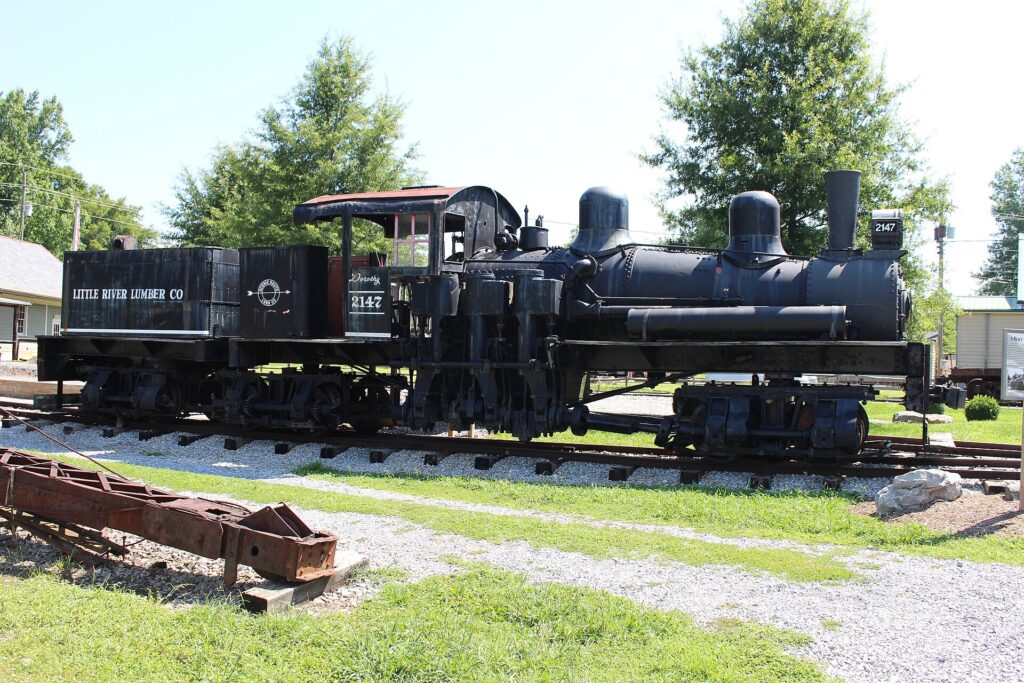
A black steam engine sits on a short piece of track at the edge of town. It hauled logs once. Now it just gets its picture taken.
In 1900, a Pennsylvania lumberman named W. B. Townsend bought 86,000 acres along the Little River. He built a sawmill and a railroad, and the town that grew around the mill took his name. Then in 1926 he sold 76,000 acres of his land at base price toward what became Great Smoky Mountains National Park.
Townsend was chartered in 1921 and had 550 people in 2020. The railroad museum is closed for the off-season until April, except for its Christmas at the Museum day on December 6.
The lumberman came for the trees. He left most of them to everyone else.
5. Granville, Tennessee: The 1880 general store still serves supper with bluegrass on Saturdays
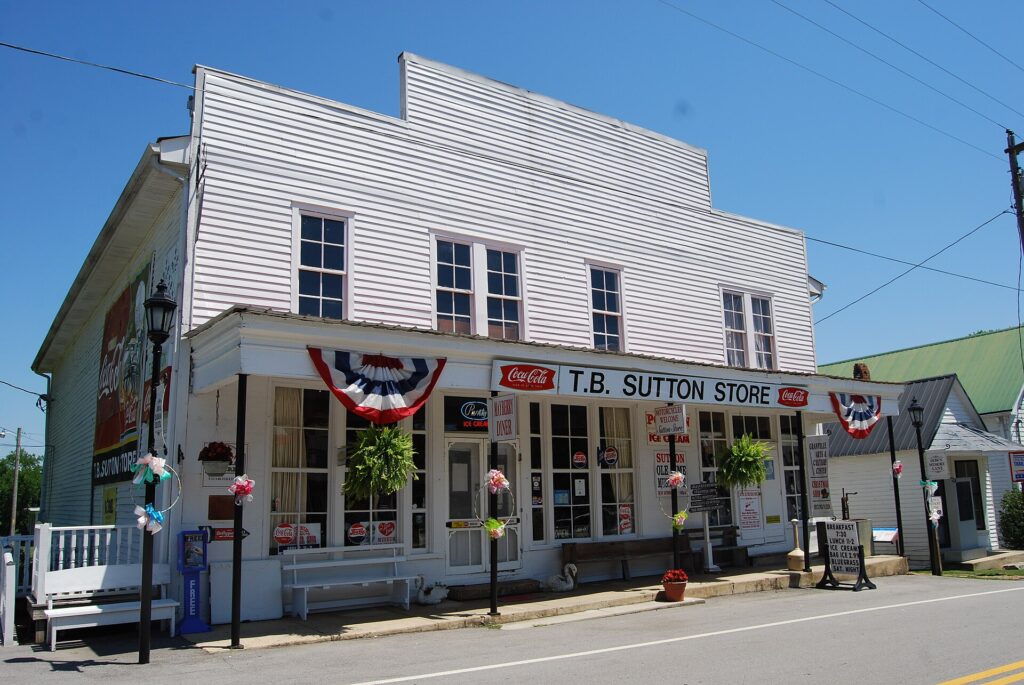
The T.B. Sutton General Store went up in 1880. Red, white and blue bunting hangs over the porch, and there’s a bench under the windows.
It sat empty for about 30 years. Then Harold and Beverley Sutton, no relation to the original owner, bought it and fixed it up. In 2007 they gave it to Historic Granville, which runs it as a store, restaurant and music hall. Breakfast and lunch are served Wednesday through Saturday, and on Saturdays there’s a family-style dinner with a bluegrass show, by reservation.
Granville needed the help. When the Cordell Hull Dam went in during the early 1970s, the lake that formed took much of the town’s farmland, and much of Granville emptied out. Now the lake surrounds it on three sides, and its Christmas season runs through December 31, with the Country Christmas festival on December 12.
The lake took the farms. The town kept the store.
More from American Charm
 People who grew up on these 8 foods usually have no idea they originated in America, each in one hometown
 15 New Laws Taking Effect January 1, 2027 That Could Change Your Paycheck, Prescriptions and Shopping
 People who grew up near Amish country usually know these 9 things about Amish home life that most visitors never learn
6. Bell Buckle, Tennessee: A town of 410 throws a festival for RC Cola and a MoonPie
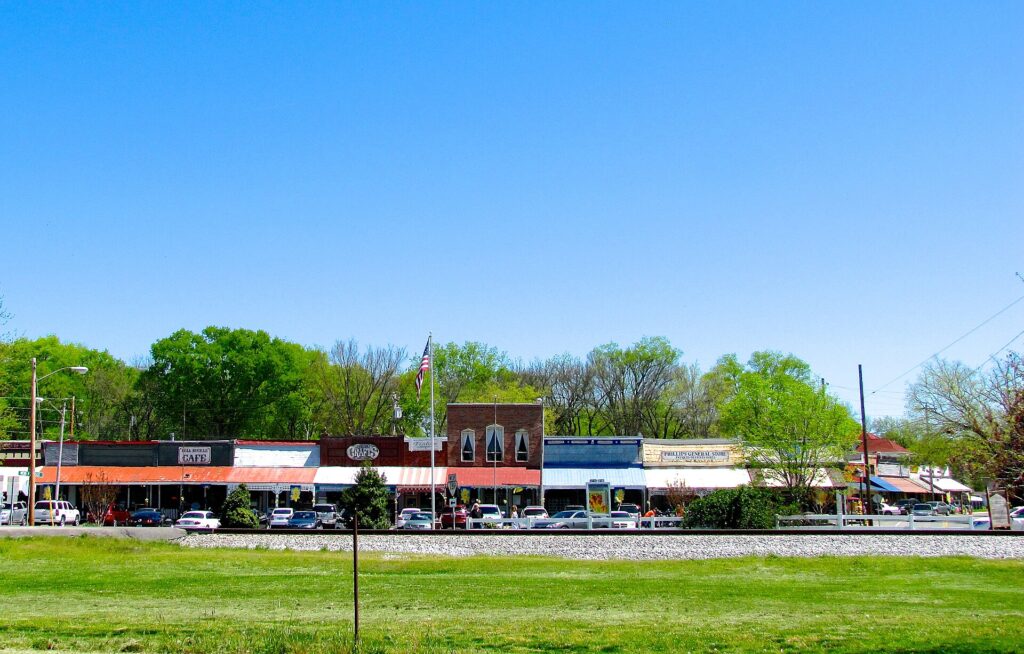
Bell Buckle’s main block is one short row of old storefronts. The town grew up after the railroad came through in 1852, and for years it was the main stockyard between Nashville and Chattanooga.
Nobody knows for sure where the name came from. The local chamber of commerce tells of a tree found carved with a bell and a buckle. And in June 1940, during Army maneuvers, a tank from George S. Patton’s Second Armored Division ran into the two-story town hall and brought it down.
These days the big event is sweeter. The town of 410 throws a festival for RC Cola and MoonPies. The next one is set for June 19, 2027.
Most towns put up a statue to their history. Bell Buckle hands out snack cakes.
7. Lynchburg, Tennessee: Jack Daniel’s whiskey is made in a dry county
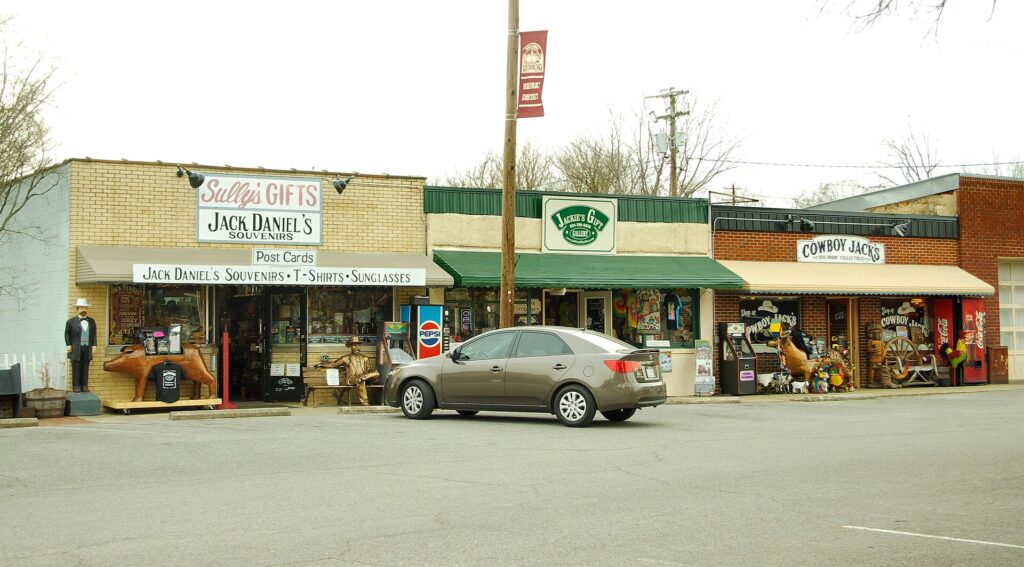
The shops around Lynchburg’s courthouse square sell souvenirs with a famous black label. The county around them is dry.
That has held even with the Jack Daniel’s distillery right in town. Tasting is allowed on the distillery grounds. Its water comes from a spring flowing out of a cave at the foot of a limestone cliff, and the limestone filters out the iron. The bottle says the business was established in 1866. Jack Daniel’s biographer cites registration papers dated 1875.
More than a quarter-million people visit each year. Several distillery tours end with a whiskey tasting, and lunch at Miss Mary Bobo’s is booked separately. The courthouse dates to 1885, rebuilt after a fire in 1883 burned nearly half the town.
The whiskey ships all over the world. Back home, the county is still dry.
More from American Charm
 People who sing along to country radio usually love these 9 country singers who “couldn’t sing,” and know why it worked
 9 American brands that quietly lost their cultural authority but still hold a place in family memory
 9 everyday American symbols that mean something totally different in other countries, and the famous moments that proved it