The screen door slaps shut. Somebody at the walk-up window orders a root beer and a hot dog, and the kid at the counter calls out a number. Out front, the benches are painted a red nobody would choose today.
Nobody in line thinks of it as retro. It’s just supper.
Ohio didn’t make our list of states where daily life still moves at a 1950s pace. A few of its towns make a good case anyway.
The interstate works. Nobody’s arguing that. But get off it in Ohio and you find lake resorts, old canal ports and river towns that never got around to tearing much down.
One was built by a religious commune. One raised a man who walked on the Moon. People live in all of them.
The root beer is the least surprising part.
1. Geneva-on-the-Lake, Ohio: Eddie’s Grill has been feeding the Strip since 1950

When Eddie’s Grill opened on Lake Road in 1950, a hot dog cost 15 cents. Eddie Sezon was 17. As a high school junior, he had written to the Richardson Root Beer company to ask about a franchise. Dairy Queen came along in 1952.
The town was a resort long before that. In 1869 two men opened a picnic ground and beach here, and Geneva-on-the-Lake grew into what’s called Ohio’s first summer resort. Its main drag, known as the Strip, is still lined with restaurants and arcades. Just 916 people lived in the village in 2020.
In September 2026, News 5 Cleveland reported that Sezon, now 94, still works at the grill every day of the season.
The prices have changed. The man behind the counter hasn’t.
2. Lakeside, Ohio: Families have been playing shuffleboard here since 1928
Lakeside has 26 outdoor shuffleboard courts, with awnings for shade. In summer, attendants hand out the cues and discs.
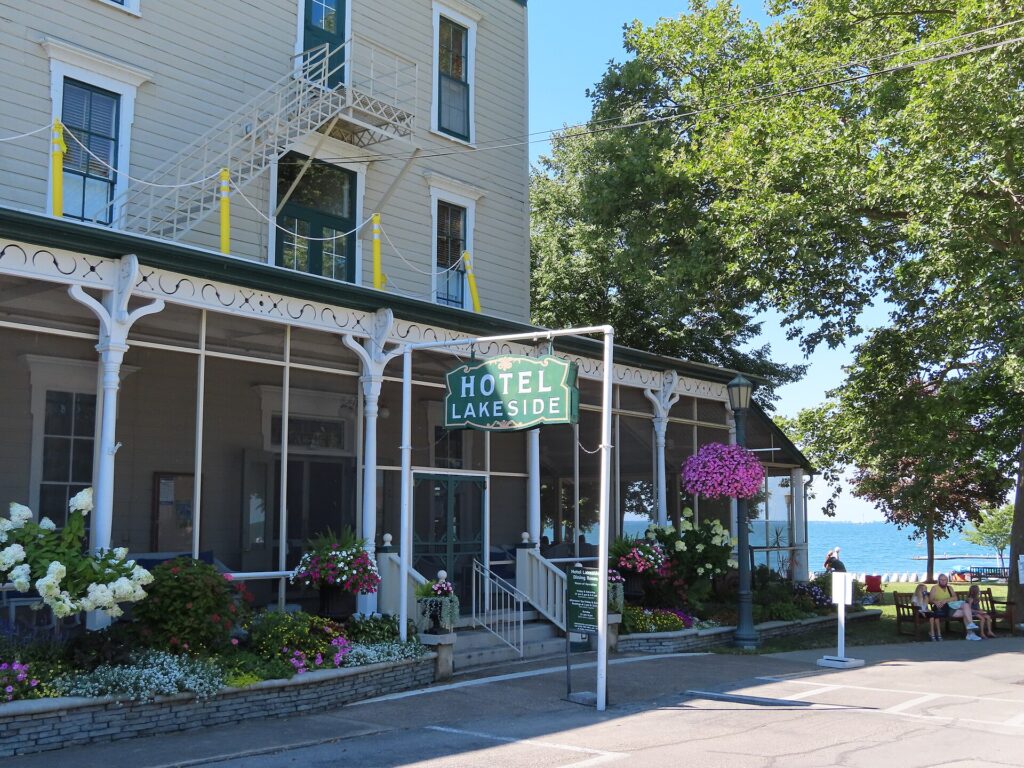
The place began in 1873 as a Methodist camp meeting on the Lake Erie shore. It soon became a Chautauqua, a summer town built around lectures, music and worship. The first part of Hotel Lakeside went up in 1875. Most of the cottages are Victorian, and the community is run by the Lakeside Association, not a mayor. It had 668 residents in 2020.
A Daily Chautauqua Pass covers the shuffleboard, and Lakeside says its courts welcome more than 30,000 players each summer.
Most resorts sell thrills. Lakeside sells a slow afternoon.
More from American Charm
 People who pick a counter stool over a booth usually love these 7 small town diners that rolled out of a factory
 People who know their mayor by first name usually love these 8 things a small-town mayor can do that a governor can’t
 People who dug to the bottom of the cereal box for the prize usually remember these 8, and a few are worth real money now
3. Sugarcreek, Ohio: The Swiss Festival has taken over downtown every fall since 1953

At the top and bottom of every hour, a tiny wooden band and dancers come out of a clock about 24 feet tall. It stands in the middle of Sugarcreek, a village of 2,373.
Swiss immigrants arrived in the early 1830s and made cheese from the milk of nearby Amish dairy farms. In the 1950s they started a fall festival. It drew so many visitors that in 1965 local business owners began giving downtown its Swiss chalet look. The festival’s organizers say it has run every fall since 1953.
The clock came later. It was built for the Alpine Alpa restaurant in nearby Wilmot and appeared on the cover of the Guinness Book of World Records in 1977. Walnut Creek Cheese bought it and gave it to the village in 2012.
The town decided to look Swiss in 1965. The cheese was Swiss long before that.
4. Granville, Ohio: The Buxton Inn has been taking in travelers since 1812

Orrin Granger opened the Buxton Inn on East Broadway in 1812. For a time it also served as the village post office. It took its name from Major Horton Buxton, who bought it in 1865, and it now covers five buildings around a courtyard.
The last few years were rough. A kitchen fire in 2022 forced repairs, and in 2024 the inn went up for sale. A Worthington developer, Kevin Showe, bought it in 2026, and the inn held its grand reopening on Sept. 23, 2026. Overnight stays are back, and the inn says dining is returning.
Granville, home to Denison University and 5,946 people, has other habits. The village banned alcohol in 1874 and stayed dry until 1974.
Inns this old usually end up as museums. This one went back to making beds.
5. Zoar, Ohio: 172 people still live in the village a religious commune built in 1817

In the center of Zoar sits a flower garden laid out according to the Book of Revelation. The old Zoar Store now serves as an information center and gift shop.
German religious dissenters, the Society of Separatists of Zoar, founded the village in 1817. They held all property in common. To pay off their land, members dug part of the Ohio and Erie Canal for wages from the state. The society voted to disband in 1898, and its buildings were split among the residents.
Much of the original layout survives, and it became a National Historic Landmark district in 2016. In 2023 the Army Corps of Engineers finished a $14 million levee repair that protects the village. Historic Zoar Village opened for its 2026 season on April 4, and the Zoar Store keeps its doors open Wednesday through Sunday all the way through December.
The commune ended in 1898. The village never did.
More from American Charm
 People who grew up on these 8 foods usually have no idea they originated in America, each in one hometown
 15 New Laws Taking Effect January 1, 2027 That Could Change Your Paycheck, Prescriptions and Shopping
 People who sing along to country radio usually love these 9 country singers who “couldn’t sing,” and know why it worked
6. Milan, Ohio: Thomas Edison was born here, and the town mostly stopped growing soon after
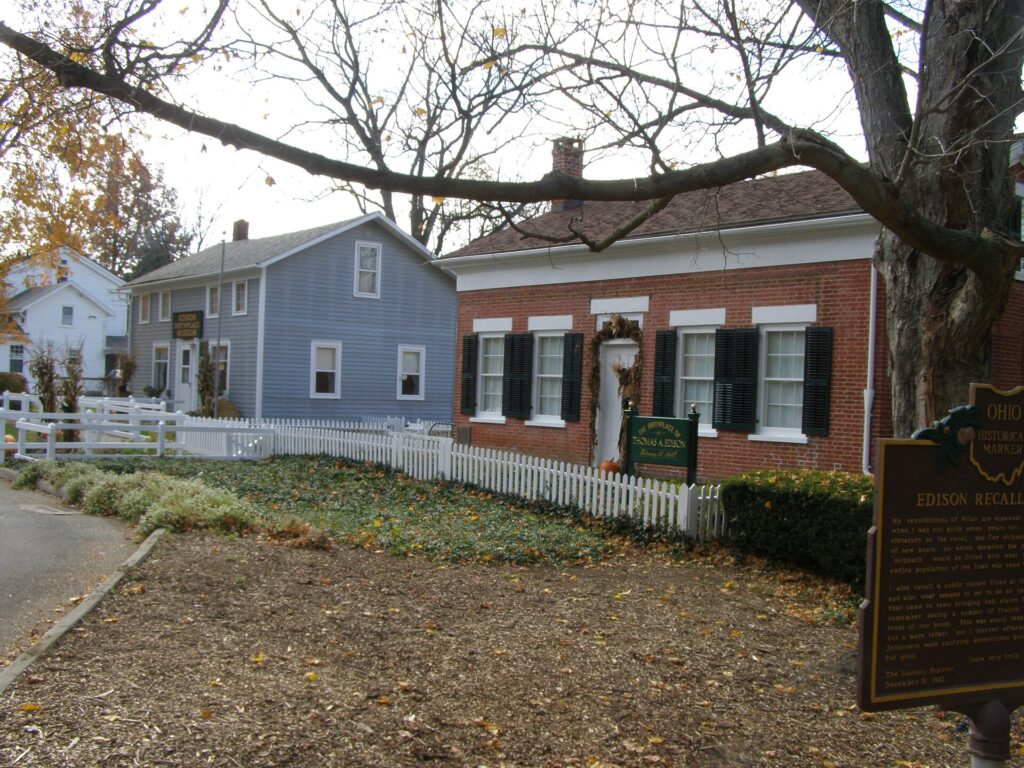
Thomas Edison was born on February 11, 1847, in a small brick house his father had built. The bed his mother used is still in the sitting room. The family moved to Michigan in 1854.
Milan was booming then. The Milan Canal opened to Lake Erie on July 4, 1839, and for 15 years or more the village was one of the busiest ports on the Great Lakes, shipping farm harvests east. About 60 ships were built here. Canal backers kept the railroads out, and in 1868 a flood wrecked the canal’s feeder dam. Growth largely stopped. That left a village of canal-era Greek Revival houses with the feel of the Vermont villages that never got around to changing. About 1,370 people live there today.
The birthplace museum, closed for the 2025 season, has candlelight tours scheduled for December 2026.
The railroad skipped Milan. That’s why the houses are still standing.
7. Wapakoneta, Ohio: Neil Armstrong could fly a plane here before he had a driver’s license

A small yellow Aeronca Champion is on display inside the museum. It’s the kind of plane Neil Armstrong first learned to fly.
His family settled back in Wapakoneta in 1944. He went to Blume High School and took flying lessons at the local airfield. He earned a student pilot certificate on his 16th birthday and soloed soon after, all before he had a driver’s license.
On July 21, 1969, with Armstrong still on the Moon, Ohio’s governor proposed a museum in his hometown if locals matched the state’s money. More than 9,000 people in the area donated within the first year, raising $528,313.55. The museum opened on July 20, 1972. The city has about 10,000 residents.
The town raised him first. Then it raised the money.
8. Clifton, Ohio: The mill dates itself to 1802, a year before Ohio was a state
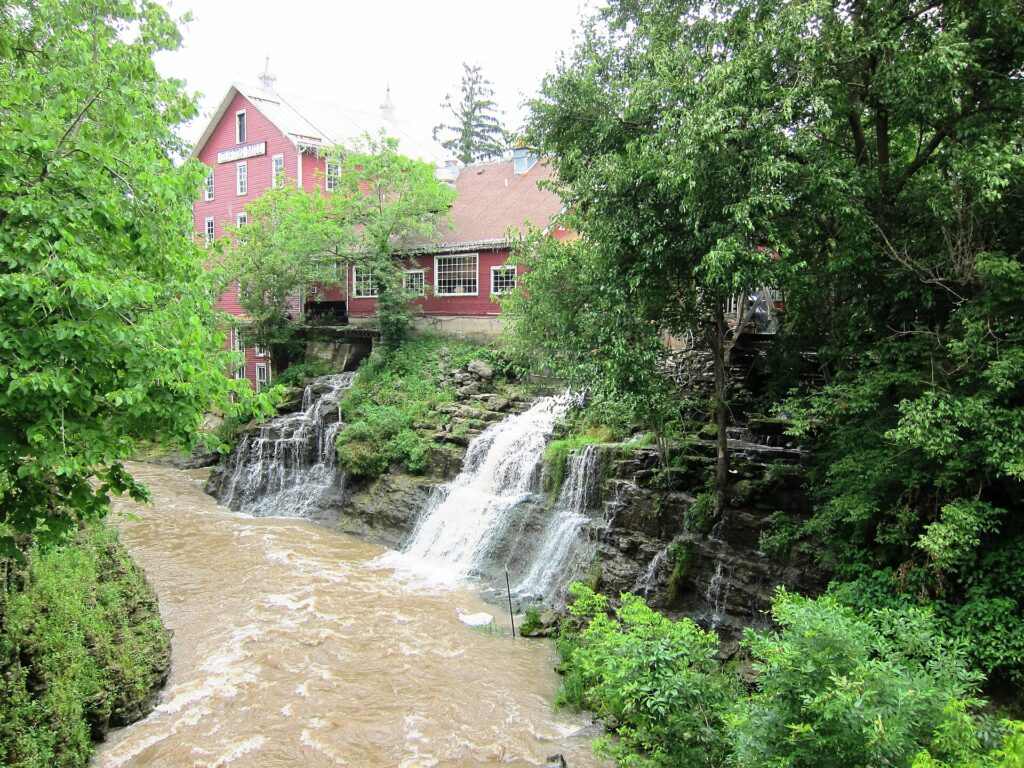
The red mill sits right on the edge of the Little Miami River gorge, with the water falling past its foundation. Its restaurant serves breakfast, and the shop sells pancake mix to take home.
The mill dates its start to 1802 and calls itself one of the largest water-powered mills still in operation. The Satariano family bought it in 1987 and put up about 100,000 Christmas lights soon after. The display now runs to millions of bulbs across the mill, the gorge, the trees and the bridges.
Up the street, the Clifton Opera House dates to 1893. The mill says the lights resume on November 27, 2026.
Clifton has 131 residents. Every December, it has millions of lights.
More from American Charm
 9 American brands that quietly lost their cultural authority but still hold a place in family memory
 9 everyday American symbols that mean something totally different in other countries, and the famous moments that proved it
 8 American chain restaurants that are way better abroad, where a bucket of fried chicken can mean Christmas
9. Ripley, Ohio: A lantern on the hill once told people crossing the river where to go
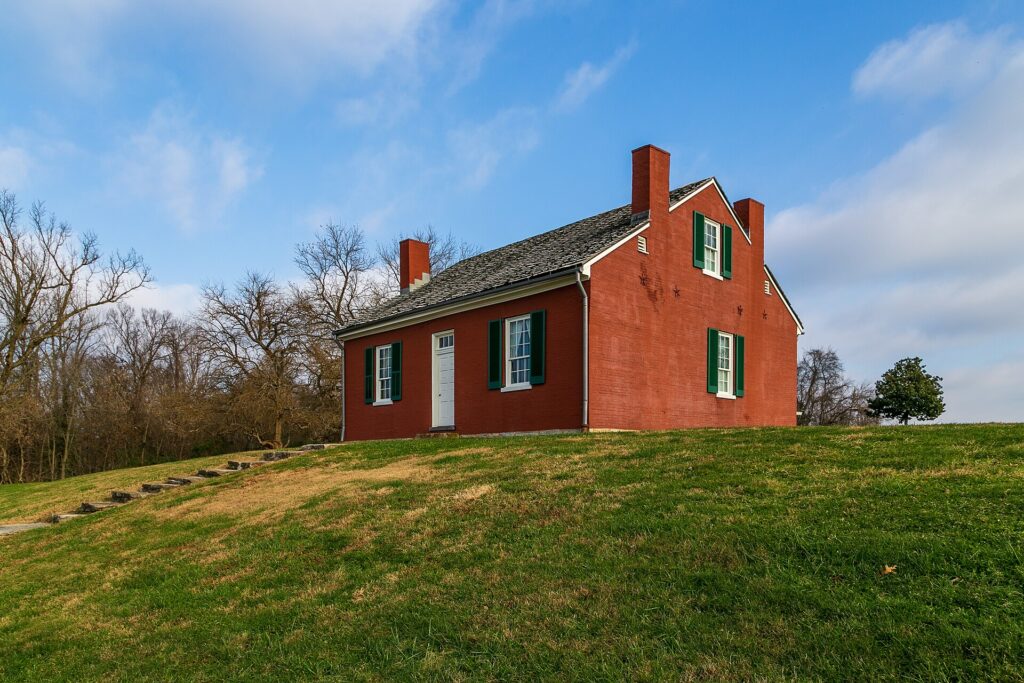
The John Rankin House is a plain brick house, built in 1828 on a hill above Ripley. It looks down on the town, the Ohio River and the Kentucky shore.
Kentucky was a slave state. Rankin, a Presbyterian minister, used a lantern on a flagpole to signal people escaping across the river, then sheltered them. He is estimated to have helped more than 2,000 people reach freedom. Harriet Beecher Stowe’s visit with him supplied part of the story that became Uncle Tom’s Cabin.
The state bought the house in 1938, and the Ohio History Connection runs it from spring through October. In May 2026, the Rankin House and the nearby John P. Parker House were added to a three-state Underground Railroad heritage tourism program. Many of Ripley’s abolitionists lived down on Front Street by the river. The town has 1,591 residents.
From town, it was just a light on a hill. From the river, it was a way north.
More from American Charm
 People who grew up during the Cold War never knew about these 11 secret American military bases hidden in plain sight
 People who’ve mailed care packages to a base usually recognize these 11 military bases so large they have their own ZIP codes
 People who bring the broken part along usually notice these 9 things about the worst home improvement stores and better ones