It’s a little after five on a Friday. The parking lot behind the tavern is already full, and the host is writing names on a clipboard. Inside, there’s perch or cod, a scoop of coleslaw, a slice of rye bread and a long wait nobody seems to mind.
Nobody calls it a tradition. It’s just Friday.
The habit goes back a long way. Catholic settlers skipped meat on Fridays, and the lakes were full of fish. During Prohibition, plates of fried fish helped taverns around the state stay afloat. The beer came back. The fish never left.
Wisconsin didn’t make our list of states where daily life still moves at a 1950s pace. A few of its towns make the case anyway.
The interstate works. Nobody’s arguing that. But get off it here and you find lake harbors, old mill towns and Main Streets where the week still bends around a Friday supper.
The fish is the least surprising part.
1. Port Washington, Wisconsin: The whole lakefront turns into one fish fry
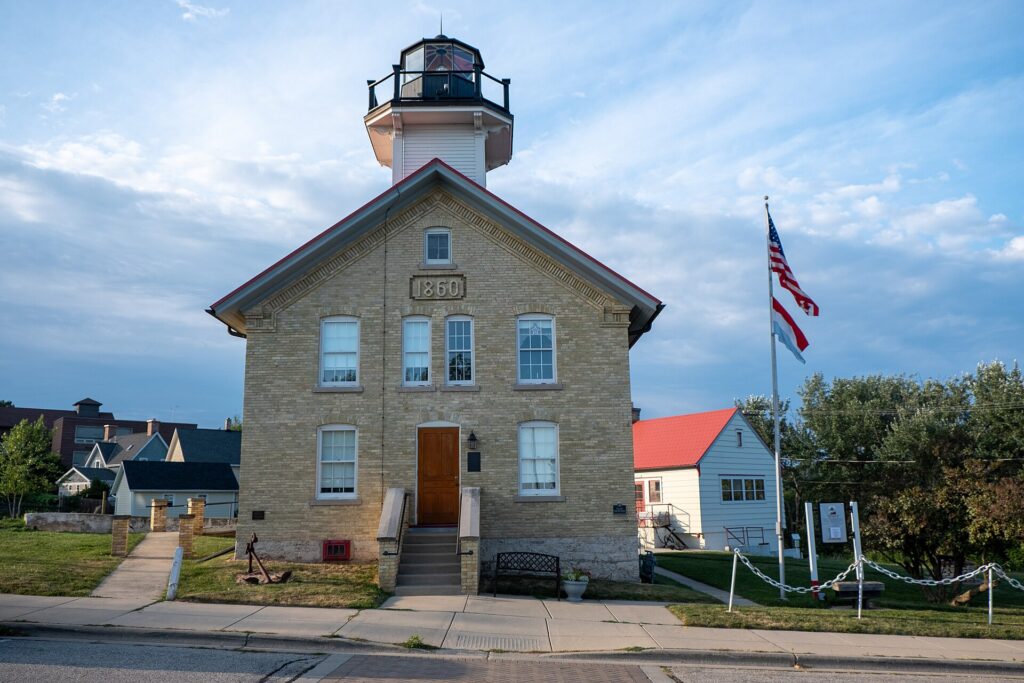
Every July, Port Washington sets up fryers by the harbor on Lake Michigan. Fish Day started in 1964, and for decades it was billed as the world’s largest one-day outdoor fish fry. In 2013, a Milwaukee TV station put the haul at about 10,000 pounds of fish in one day.
It runs three days now and ends with fireworks over the lake. Organizers have stopped chasing the record and now call it “Port’s Largest Fundraiser”. Kiwanis, Lions, Rotary and a church men’s club staff the booths and put the money back into town projects and scholarships. The 2026 edition ran in mid-July.
The title went away. The fryers didn’t.
2. Fish Creek, Wisconsin: The fish boil still ends with a burst of flame
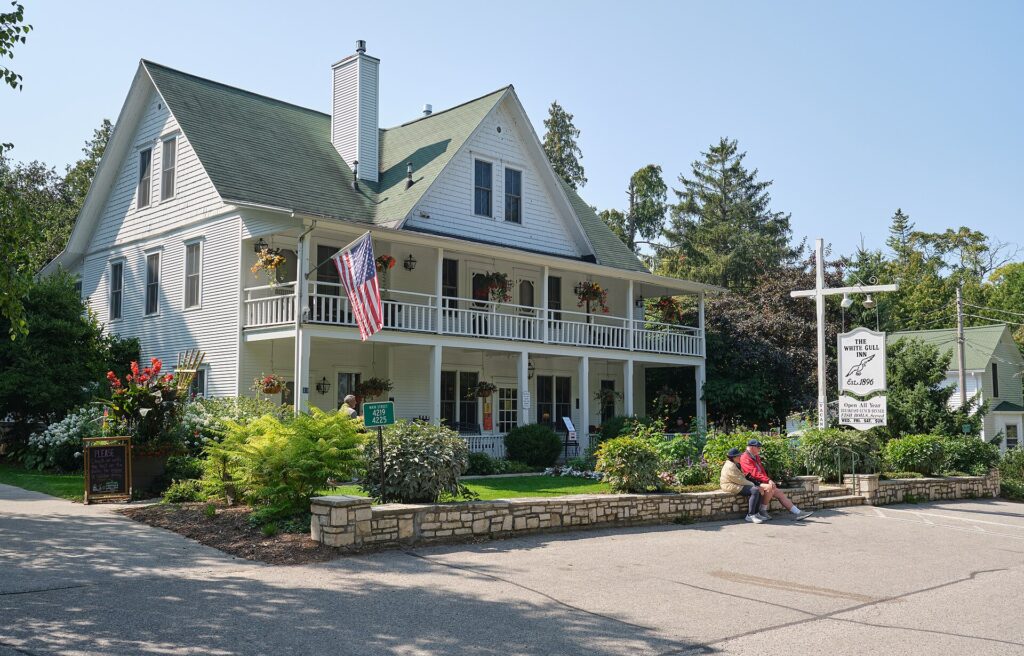
Door County does Friday fish its own way. At the White Gull Inn, the kettle hangs over an open fire outside. Lake Michigan whitefish and small red potatoes go in with nothing but salt.
When the fish is done, the master boiler tosses a little kerosene on the flames. The fire roars up, the pot boils over, and the fish oils spill off the top. Then it’s served with coleslaw, bread and cherry pie. The inn says its boil started in 1959, is served on Friday nights all winter, and cost $28.75 for adults in 2026. The inn itself says it dates to 1896.
Most kitchens try to keep things from boiling over. This one sells tickets to it.
More from American Charm
 People who pick a counter stool over a booth usually love these 7 small town diners that rolled out of a factory
 People who know their mayor by first name usually love these 8 things a small-town mayor can do that a governor can’t
 People who dug to the bottom of the cereal box for the prize usually remember these 8, and a few are worth real money now
3. Mineral Point, Wisconsin: The town made a contest out of Friday night
For four Fridays in March 2026, Mineral Point ran a “Pub Swim.” Diners worked their way through six local fish fries for prizes, from the Midway bowling alley to the brewery hotel on Commerce Street.
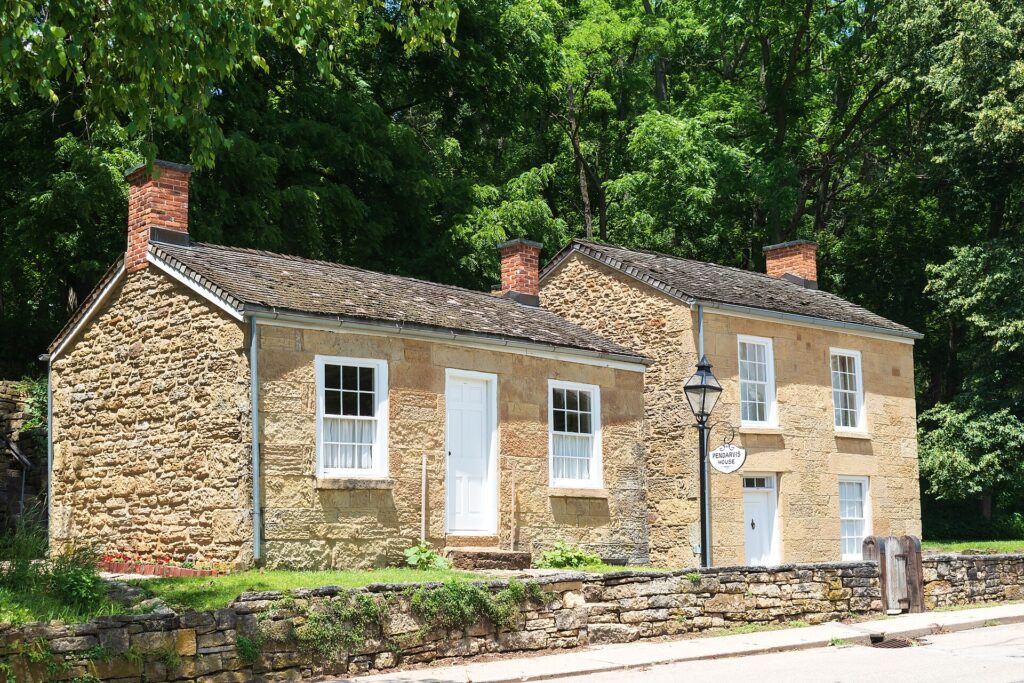
The town has fed people well for a long time. It was settled in 1827 by lead miners, many of them from Cornwall. In 1935, Robert Neal and Edgar Hellum bought an old stone cottage for $10 and started saving the miners’ houses. They served Cornish pasties and saffron cake out of it for 35 years. In 1971 the cottages became Pendarvis, a state historic site, open Thursday to Sunday in season.
The first cottage cost $10. The pasties paid for the rest.
4. Ephraim, Wisconsin: The ice cream parlor opened its 120th season

The red-and-white awning on Water Street goes up every May. Wilson’s opened its 2026 season on May 14 with Door County cherry ice cream back on the menu.
The business traces its start to 1906, when candy maker Oscar Wilson came up from Milwaukee. The current building went up in 1910, and the Wilson family ran it for 51 years. Today it bills its root beer as home-brewed and keeps jukeboxes playing the classics. It’s a cousin of the drugstore counters where American favorites were born.
Ephraim, with 345 people in 2020, was founded in 1853 as a Moravian religious community. It stayed dry until 2016.
The village didn’t need a bar for most of its history. It had a soda fountain.
5. Stoughton, Wisconsin: The town says the coffee break started here

Stoughton has a Coffee Street. The town says that’s where the coffee break began, around 1880.
Here’s the story. The Gunderson tobacco warehouse at Main and Coffee hired seasonal workers who lived nearby. They could slip home during a shift, where a pot was always on the stove. “So began today’s coffee break,” the town’s chamber says. The town still holds a Coffee Break Festival every August.
The Opera House opened on February 22, 1901, with seats for about 600. By 1953 it was painted a dull gray and damaged by roof leaks. It closed, and the clock tower came down in 1961. In the 1980s, residents raised the money to restore it, and it has shows booked into early 2027.
Stoughton didn’t invent coffee. It just made sitting down with a cup a habit.
More from American Charm
 People who grew up on these 8 foods usually have no idea they originated in America, each in one hometown
 15 New Laws Taking Effect January 1, 2027 That Could Change Your Paycheck, Prescriptions and Shopping
 People who grew up near Amish country usually know these 9 things about Amish home life that most visitors never learn
6. New Glarus, Wisconsin: Residents have staged Wilhelm Tell since 1938
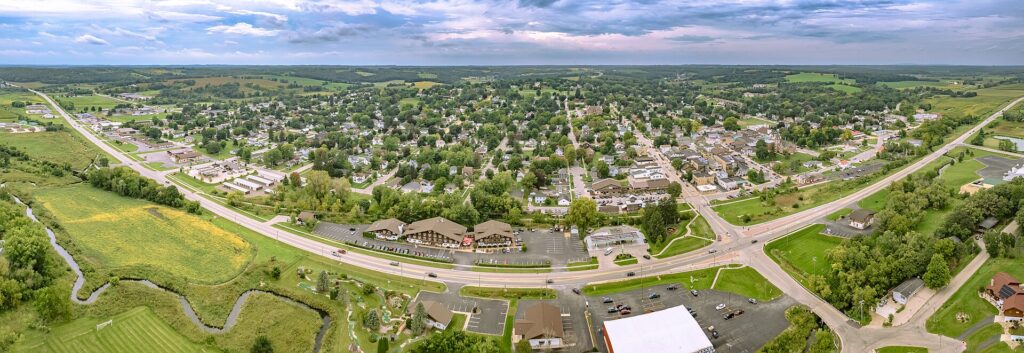
On August 15, 1845, 108 settlers from the canton of Glarus in Switzerland reached the hills of southern Wisconsin. They named the place after home.
The village of about 2,300 still hangs onto that. Since 1938, residents have put on the Wilhelm Tell pageant themselves, outdoors in the woods east of town. The Swiss Historical Village fills 14 buildings with artifacts of the settlers’ 19th-century life, and it ran its 2026 season from late May to October. The chamber of commerce keeps a list of Friday fish fries around town.
Most towns hire actors. New Glarus casts its neighbors.
7. Cedarburg, Wisconsin: The 1864 woolen mill is full of shops now
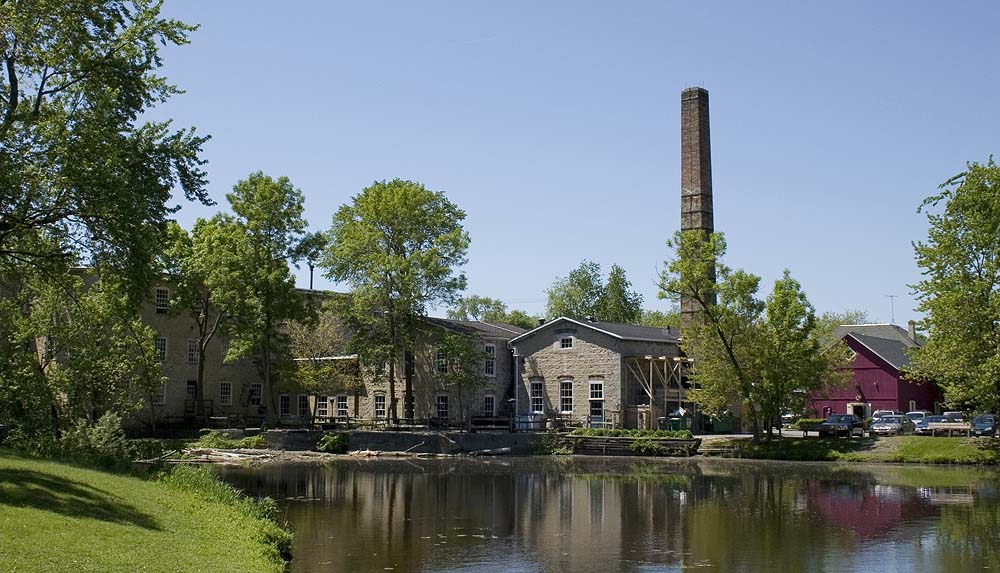
A brick smokestack still stands over the mill pond on Cedar Creek. The stone mill below it dates to 1864, and for years it turned out wool.
It closed in the late 1960s. Instead of coming down, it filled up with a winery, then shops and restaurants. Today it’s Cedar Creek Settlement, and it’s been on the National Register since 1978.
About three miles north, in the Town of Cedarburg, stands a lattice-truss bridge from 1876. The Wisconsin Historical Society lists it as the last original covered bridge in the state. The city’s Strawberry Festival was on the calendar again for June 27 and 28, 2026.
The mill stopped making wool. Cedarburg never stopped using it.
8. Hayward, Wisconsin: You can stand in the mouth of a giant muskie
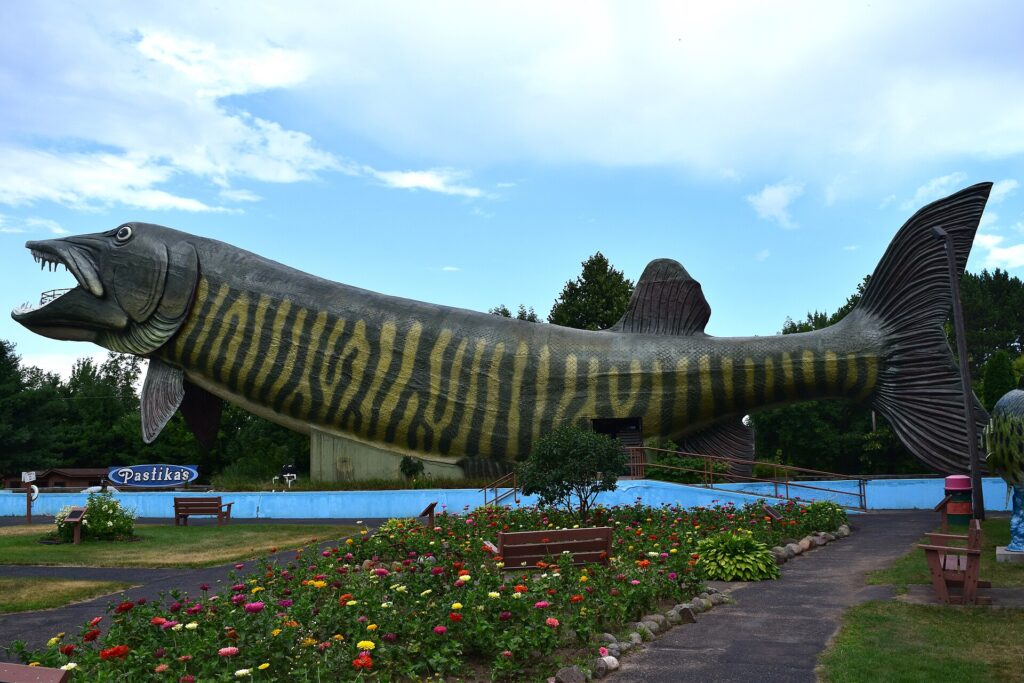
In Hayward, a fish half a city block long leaps out of a flower bed. It’s fiberglass, concrete and steel, about four and a half stories tall.
It’s the centerpiece of the Fresh Water Fishing Hall of Fame, founded in 1960. The open jaw holds about 20 people and looks out over Lake Hayward. The grounds are open from mid-April through October, and adult admission is $9.95.
The town has about 2,500 people. The Lumberjack World Championships, held since 1960 at the Lumberjack Bowl, an old log-holding pond, ran again in July 2026.
Every town has a fish story. Hayward built one you can walk into.
More from American Charm
 People who sing along to country radio usually love these 9 country singers who “couldn’t sing,” and know why it worked
 9 American brands that quietly lost their cultural authority but still hold a place in family memory
 9 everyday American symbols that mean something totally different in other countries, and the famous moments that proved it
9. Pepin, Wisconsin: Laura Ingalls Wilder was born up the road

About seven miles northwest of Pepin, a log cabin sits alone in a field. Laura Ingalls Wilder was born on this ground on February 7, 1867. It was thick hardwood forest then, the setting of Little House in the Big Woods.
The cabin is a replica of the one in the book, kept up by a local memorial society. On four summer weekends in 2026, reenactors showed visitors how a family lived in a cabin like it in the 1870s. In the village, the Laura Ingalls Wilder Museum is open daily from May through October.
Pepin sits on Lake Pepin, a wide stretch of the Mississippi, with 731 people.
The big woods are farmland now. The little house came back anyway.
More from American Charm
 People who spent ’90s Saturdays at the mall usually remember these 9 food court staples, and every one is still around
 8 American chain restaurants that are way better abroad, where a bucket of fried chicken can mean Christmas
 People who grew up during the Cold War never knew about these 11 secret American military bases hidden in plain sight