The interstate gets you there fast. The two-lane road beside it takes its time, slowing down for every courthouse square and every railroad crossing.
Plenty of Kentucky drivers still take the slow road on purpose. It goes past a tavern that dates itself to before statehood, a motel shaped like a ring of tepees and a café where a man in a white suit once fried chicken for strangers.
Bardstown already turned up on our list of small towns that still feel like the past. The rest of Kentucky has more where that came from.
Some of these towns were built by a railroad. One was built by a religious community that didn’t believe in marriage. One was bypassed by the highway and kept serving chicken anyway.
All of them kept the thing that made them.
1. Bardstown, Kentucky: The Old Talbott Tavern has fed travelers on Court Square since the 1700s
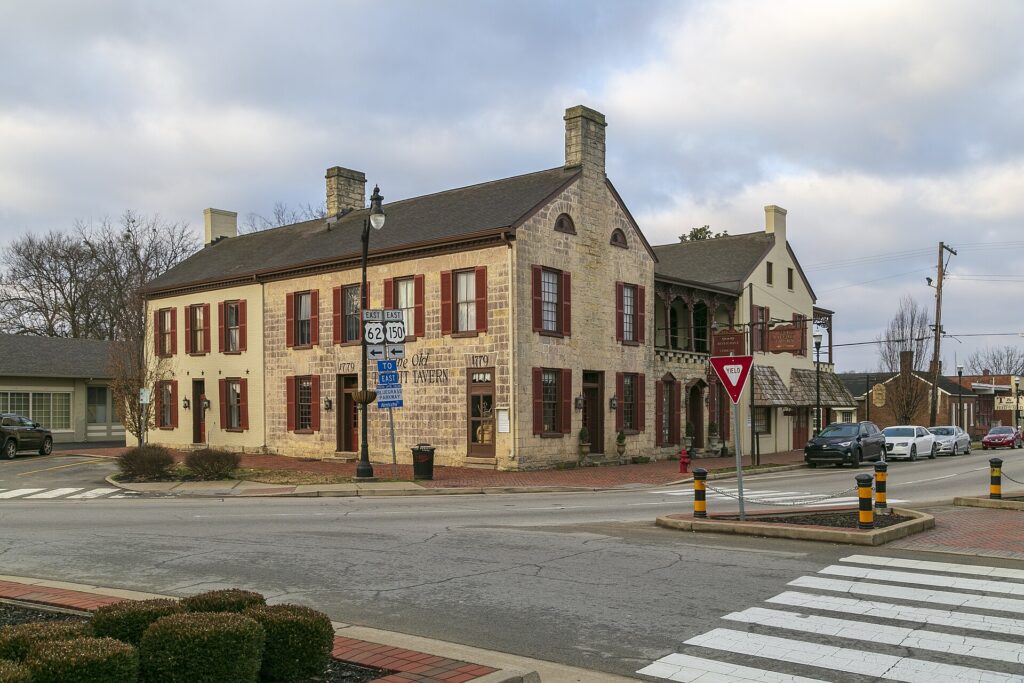
The stone walls of the Old Talbott Tavern are two feet thick. The tavern dates itself to 1779, back when Bardstown sat near the end of the stagecoach road from Philadelphia and Virginia.
A long list of travelers passed through. The exiled Louis-Philippe of France stayed here in 1797, and a member of his party painted murals on the walls. A fire in 1998 badly damaged the roof, the second floor and those murals. The tavern reopened in November 1999.
Today it serves lunch and dinner, and it still rents six rooms, each named for a famous visitor. Bardstown, a town of 13,567, is also home to My Old Kentucky Home State Park, and its bourbon festival promoters trademarked the phrase Bourbon Capital of the World.
The stagecoaches stopped coming. The travelers never did.
2. Midway, Kentucky: Kentucky’s first railroad town still lets the freight trains roll through downtown
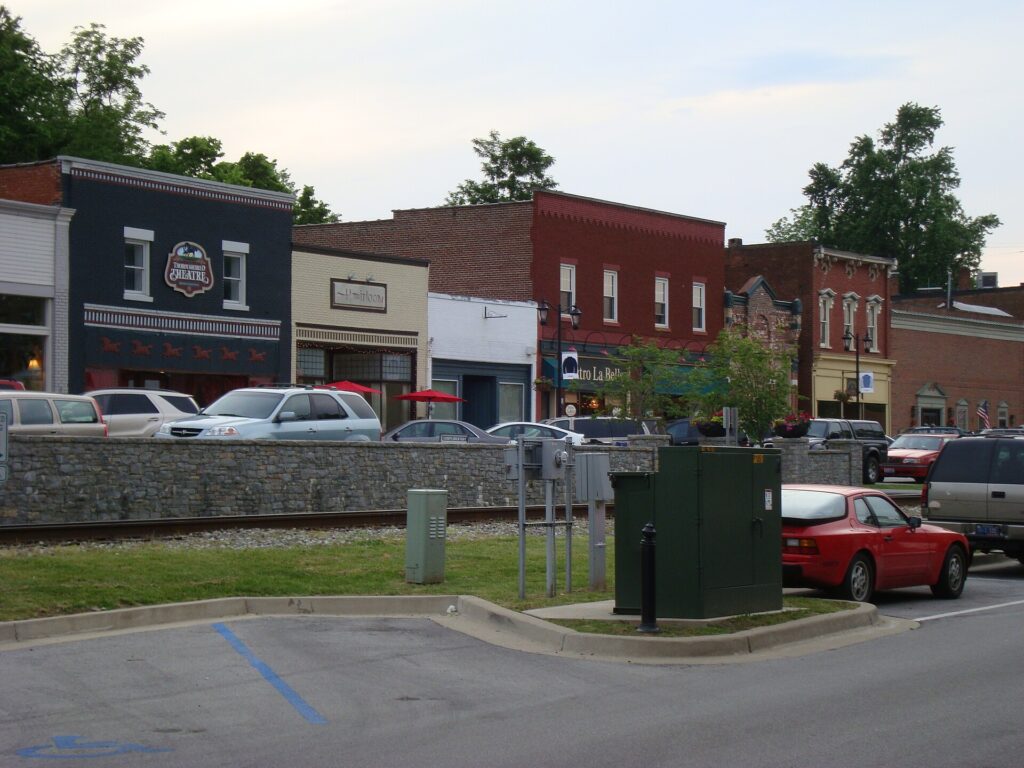
In Midway, the tracks run right through the middle of downtown, with shops and restaurants lined up along them.
That was the whole idea. In 1835 the Lexington and Ohio Railroad bought a 216-acre farm halfway between Lexington and Frankfort and laid out a town on it. A state historical marker calls Midway the first Kentucky town established by a railroad, and many of its streets were named for railroad officials.
The city says up to 30 trains a day rumbled through town in the 1930s and ’40s. The passenger trains faded away, but freight trains still use the tracks. In 2003, with downtown in decline, the city began a streetscape renovation through the Kentucky Main Street program. Midway had 1,741 residents in 2020.
Most towns hide the railroad behind a warehouse. Midway put it on Main Street.
More from American Charm
 People who pick a counter stool over a booth usually love these 7 small town diners that rolled out of a factory
 People who know their mayor by first name usually love these 8 things a small-town mayor can do that a governor can’t
 People who dug to the bottom of the cereal box for the prize usually remember these 8, and a few are worth real money now
3. Harrodsburg, Kentucky: The first permanent settlement in Kentucky was laid out here in 1774
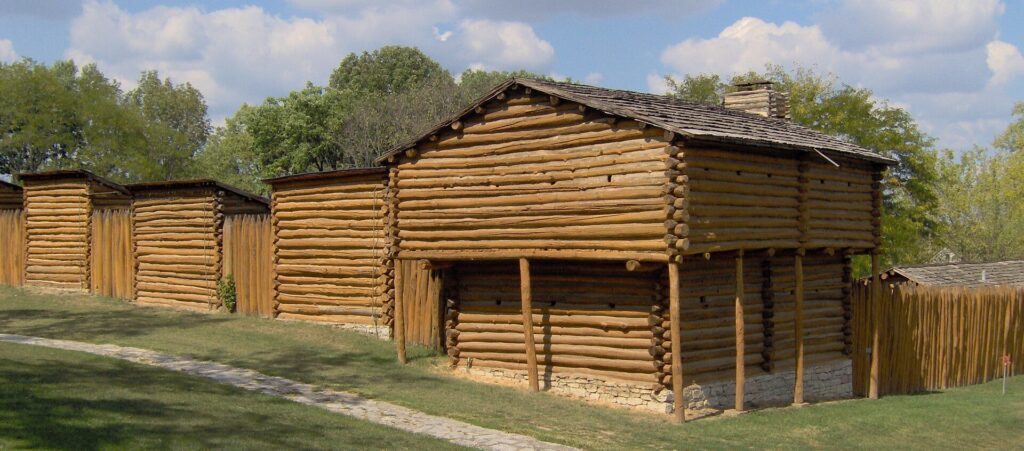
The log blockhouses and stockade at Old Fort Harrod State Park are a reconstruction. The real fort stood nearby, under what is now the parking lot.
James Harrod and a company of about 30 men laid out the settlement on June 16, 1774, after traveling down the Monongahela and Ohio rivers by canoe. They abandoned it that year after a man was killed and came back the next spring. When the colonies declared independence, it was one of three settlements in present-day Kentucky.
The park was dedicated in 1934 by Franklin D. Roosevelt, who honored Harrodsburg as the oldest permanent American settlement west of the Appalachians. Inside the park, a brick building shelters the log cabin where Abraham Lincoln’s parents were married. The town has 9,064 residents.
The fort is a copy. The town around it is the real thing.
4. Pleasant Hill, Kentucky: A Shaker village that ran out of Shakers in 1910 still welcomes overnight guests
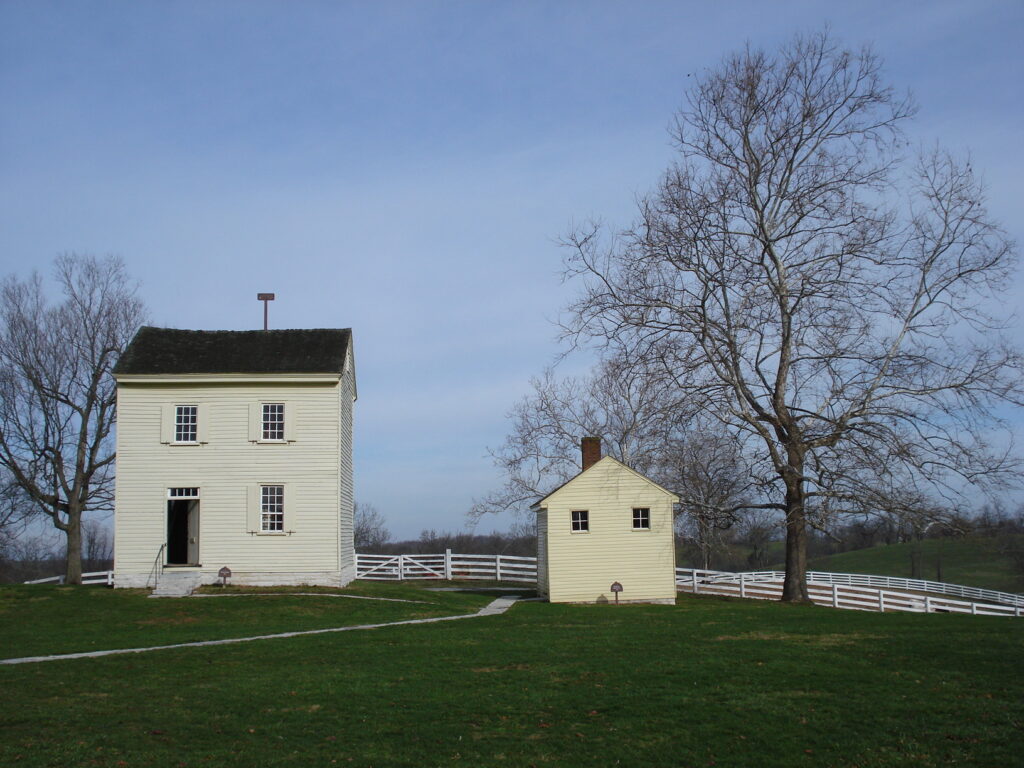
At Pleasant Hill, the buildings are plain on purpose. No trim, no fuss, just good proportions and very straight lines.
The Shakers who built them shared all their property and didn’t marry, so they grew only by bringing in converts. The community began in 1805 and once had almost 500 members. By 1900 only 34 were left, and the society dissolved in 1910. A visitor in 1857 wrote that a hired man had spent twelve years building their stone fences, about forty miles of them.
In 1961 a group of Lexington-area residents set out to save the place. Shaker Village now spreads across about 3,000 acres, and guests sleep in rooms spread through 13 restored Shaker buildings.
The Shakers didn’t plan on a future. Their buildings got one anyway.
5. Berea, Kentucky: A college founded in 1855 still doesn’t charge its students tuition
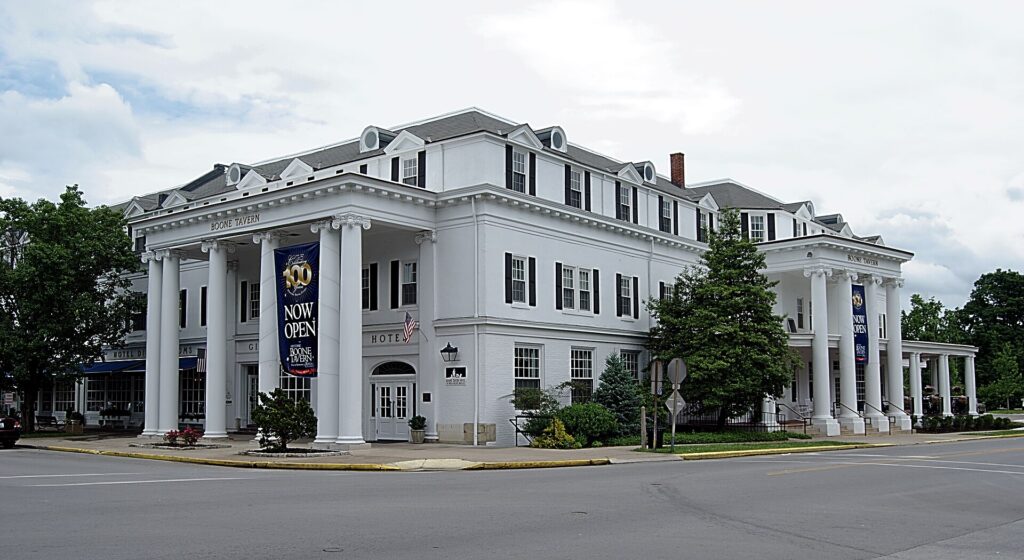
At the Boone Tavern Hotel, the student busing tables may be majoring in chemistry. The hotel opened in 1909 and belongs to Berea College, where every student works on campus at least 10 hours a week.
An abolitionist named John G. Fee founded the college in 1855. It became the first college in the South to teach Black and white students, and men and women, together. A 1904 state law forced it to segregate, and it resumed integration in 1950.
The college says it has covered tuition for every student for more than a century. Students also make brooms, pottery and woven goods through its Student Craft program. Berea, a town of 15,539, is best known for its art festivals.
Most colleges send the bill home. Berea sends the students to work.
More from American Charm
 People who grew up on these 8 foods usually have no idea they originated in America, each in one hometown
 15 New Laws Taking Effect January 1, 2027 That Could Change Your Paycheck, Prescriptions and Shopping
 People who sing along to country radio usually love these 9 country singers who “couldn’t sing,” and know why it worked
6. Corbin, Kentucky: The Colonel’s original café still serves chicken in his old dining room
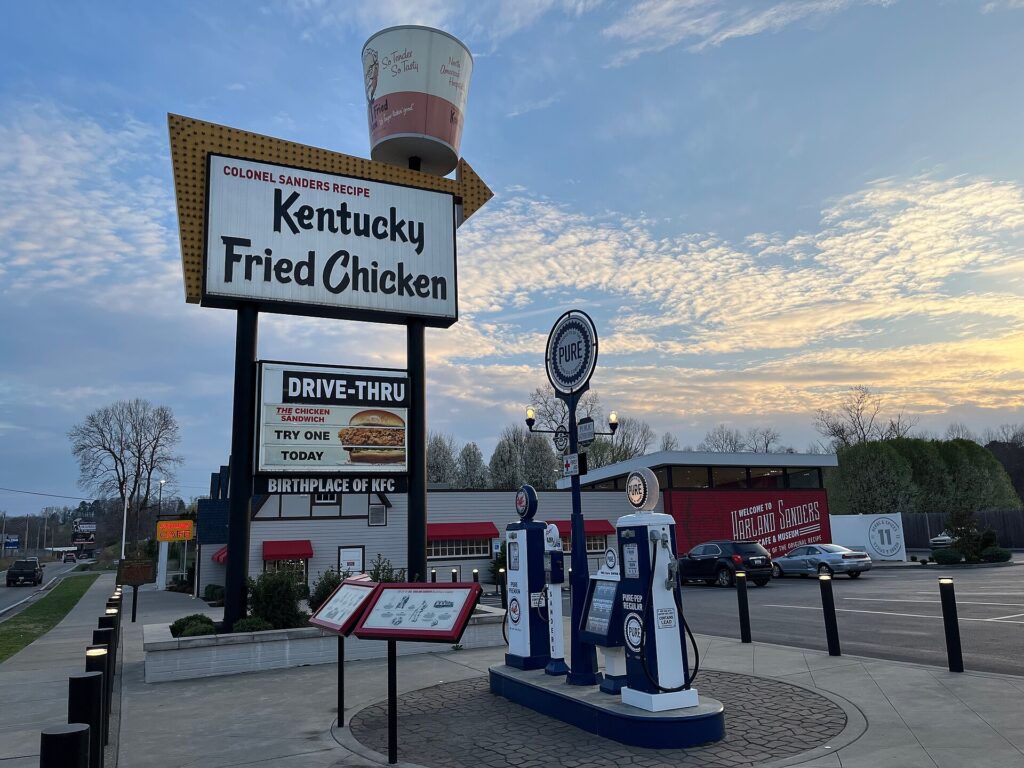
Harland Sanders moved to Corbin in 1930 and ran a service station on U.S. 25. He fed hungry travelers at his own dining table in the back, which sat six.
By 1937 his café seated 142. It burned two years later, and he rebuilt it with a motel next door. Inside the café he set up a model motel room so diners could see what they’d get if they stayed the night. Then the highway was rerouted, and later Interstate 75 went around town. Sanders sold the café in 1956 and went on the road selling franchises.
The building reopened as a museum in 1990. The café says visitors can still eat in the Colonel’s dining room and see his kitchen and the model motel room. Corbin has 7,856 residents.
The highway left Corbin behind. The chicken went everywhere.
7. Cave City, Kentucky: Travelers have been sleeping in concrete wigwams here since 1937
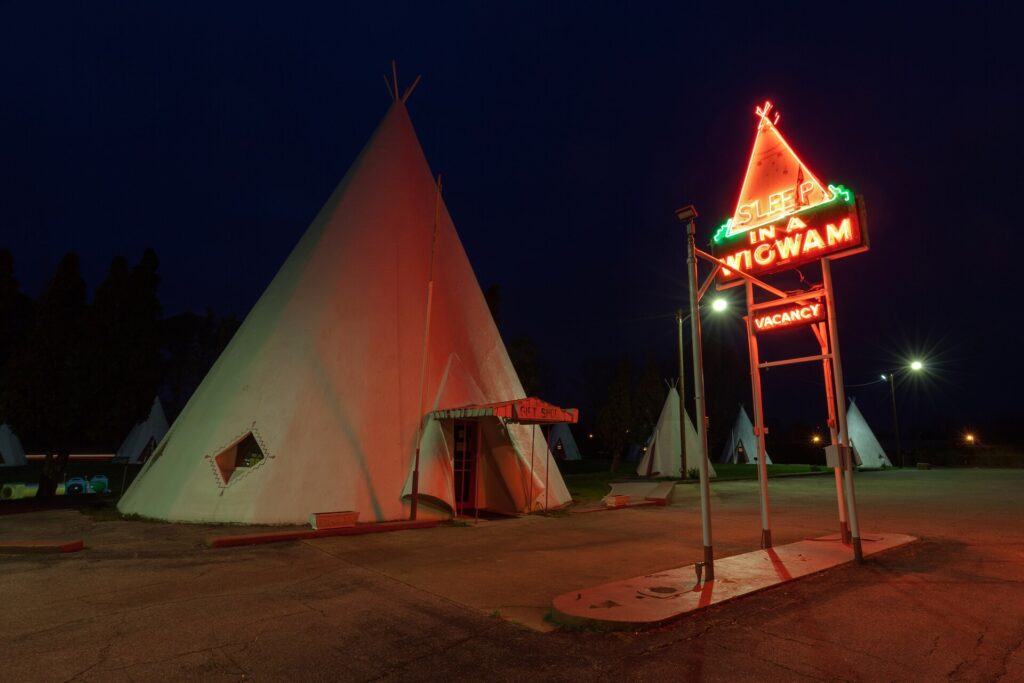
The neon sign out front says it plainly: Sleep in a Wigwam. Behind it, 15 white tepee-shaped rooms stand in a half circle, each about 32 feet tall.
Frank Redford patented the design in 1936 and built this one in 1937 on U.S. 31W, close to Mammoth Cave National Park. Seven Wigwam Villages once stood across the country. Only three survive, and this is the oldest. Its glowing sign belongs with the motel signs that became roadside landmarks.
The motel still takes reservations and says its restored rooms keep the original cane and hickory furniture. Cave City, a town of 2,356, was named for a cave inside its own limits, not the famous one down the road.
Some motels try to look old. This one never had to try.
8. Hodgenville, Kentucky: Fifty-six steps lead up to the cabin where Lincoln’s story begins
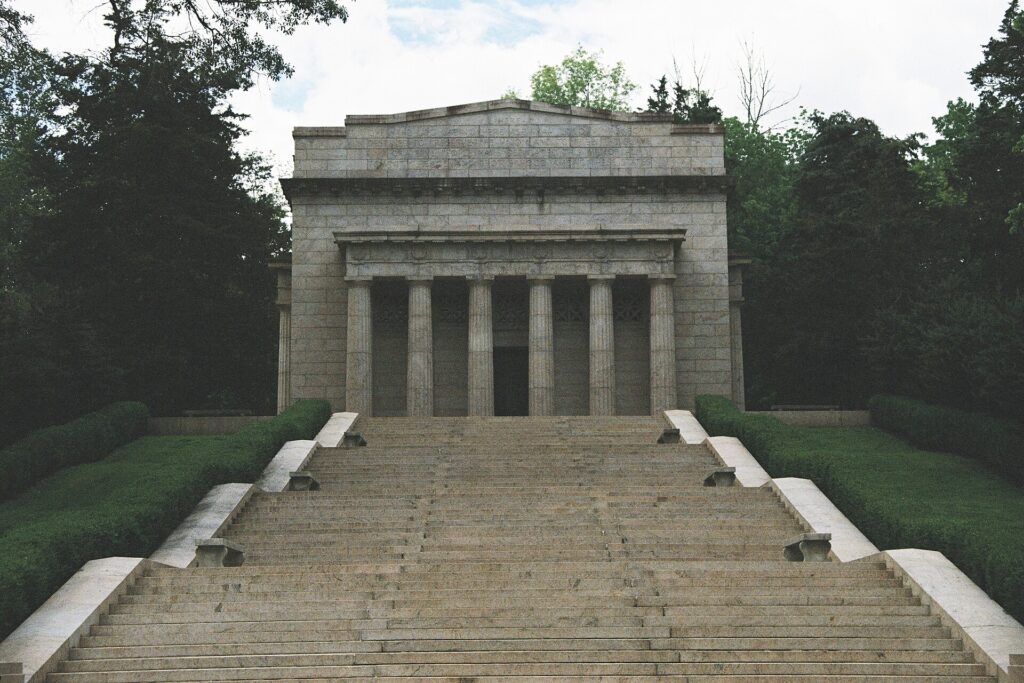
There are 56 steps up to the memorial building, one for each year of Abraham Lincoln’s life. Inside sits a small log cabin standing in for the one where he was born.
Lincoln was born on February 12, 1809, on the Sinking Spring farm south of town. Exactly 100 years later, Theodore Roosevelt laid the memorial’s cornerstone, and William Howard Taft dedicated it in 1911. The original cabin was taken apart long ago, and the logs in the symbolic cabin date mostly to the 1840s.
Downtown, two bronze statues on the town square show Lincoln as a boy and as a grown man. Hodgenville has 3,235 residents. The birthplace is open daily except New Year’s Day, Thanksgiving and Christmas.
He lived here only two years. The town has been telling his story ever since.
More from American Charm
 9 American brands that quietly lost their cultural authority but still hold a place in family memory
 9 everyday American symbols that mean something totally different in other countries, and the famous moments that proved it
 8 American chain restaurants that are way better abroad, where a bucket of fried chicken can mean Christmas