The third stair creaks. There’s a guest register on the front desk, a radiator ticking somewhere down the hall and a tall window that looks out on Main Street. Downstairs, somebody is playing the piano.
Nobody at the desk calls it historic. It’s just the hotel.
A lot of travelers already go looking for the classic hotels that still take bookings, the big names with pools and parking garages. These eight go back further, and they sit in small towns and county seats where the hotel is still part of the main street.
Every one opened more than a century ago. Every one still rents rooms. A few of them had some close calls along the way.
The rooms have been updated. The stories haven’t.
1. Rhinebeck, New York: The Beekman Arms has been taking in travelers since 1766

The Beekman Arms sits on the corner where Route 9 meets Route 308, in a village of about 2,700 people. The tavern moved to this spot in 1766, where the King’s Highway crossed the Sepasco Trail.
The corner mattered. When winter froze the Hudson, the road was the only way through, and the inn worked as a stagecoach stop with stables for changing horses. George Washington and Alexander Hamilton were among the Revolutionary leaders it hosted.
Franklin Roosevelt lived up the road in Hyde Park. He ended every campaign, for governor and for president, with a speech from the inn’s front porch. The owners say the property has operated continuously since 1766, and they call it America’s oldest operating inn.
Washington stopped here once. The inn never really stopped at all.
2. Lebanon, Ohio: Twelve presidents have walked into the Golden Lamb
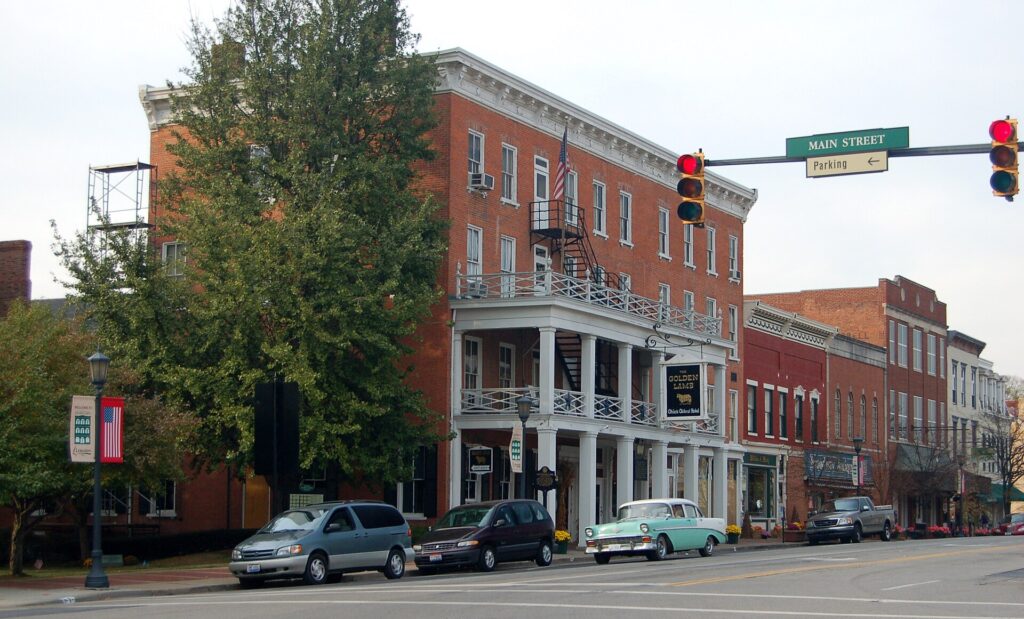
It started in 1803 as a log tavern, licensed as “a house of Public Entertainment” on Lebanon’s main street. The brick building that stands there now grew out of an 1815 rebuild.
The name came from the signboard. It showed a golden lamb so travelers who couldn’t read would know where to stop. Lebanon sat on the road between Cincinnati and Columbus, so plenty of them did.
It’s considered the oldest hotel in Ohio. Twelve presidents have visited, from William Henry Harrison to George W. Bush, along with Charles Dickens, Mark Twain and Harriet Beecher Stowe. In 1927 the inn was redone with Shaker furniture. It still keeps 17 guest rooms alongside its dining rooms, and the inn counts 223 years and counting in town.
The lamb on the sign was for people who couldn’t read. It still tells everyone where to stop.
More from American Charm
 People who dug to the bottom of the cereal box for the prize usually remember these 8, and a few are worth real money now
 People who grew up on these 8 foods usually have no idea they originated in America, each in one hometown
 15 New Laws Taking Effect January 1, 2027 That Could Change Your Paycheck, Prescriptions and Shopping
3. Nevada City, California: A gold rush hotel that rode out two town fires
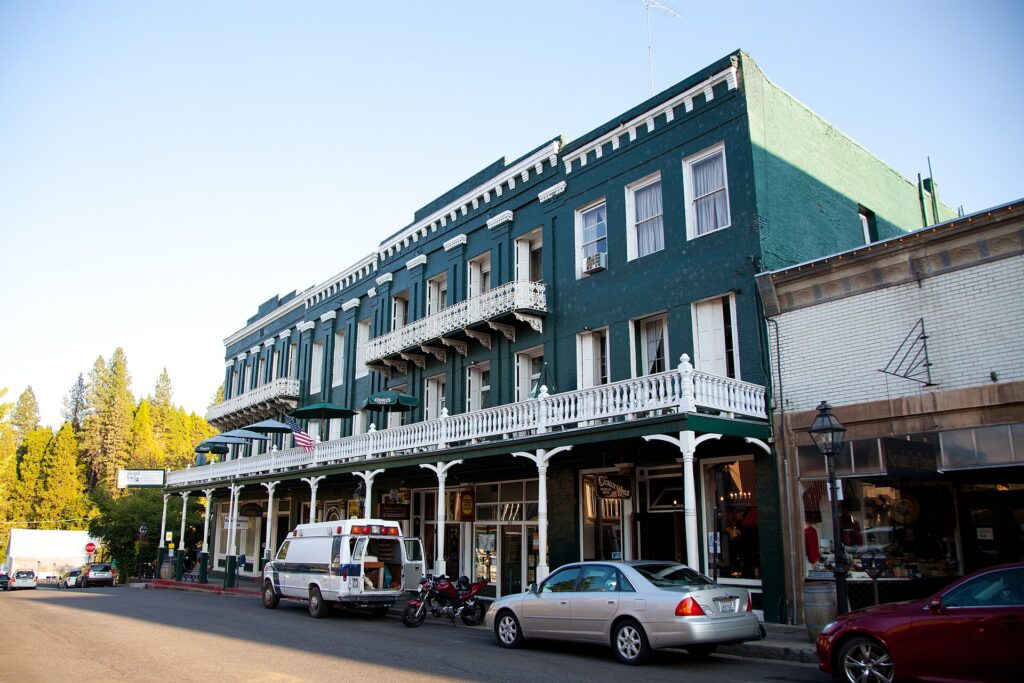
In 1856 the building was three storefronts with rooms upstairs, built for a dentist named Bicknell. A gun shop took one end.
That summer a fire swept Nevada City and left Bicknell Block standing. The owners of a hotel that burned leased the whole building, and on August 20, 1856, they reopened it as the National Exchange Hotel. For years it was the town’s center for news and travel.
Another fire shut it down in 1863. It reopened the next April. Electricity and central heating came in 1925. Nevada City has about 3,150 people now, and the hotel is counted among the oldest still operating west of the Rockies.
The gold rush ended a long time ago. The front desk never got the message.
4. Cimarron, New Mexico: Lincoln’s chef built a hotel with bullet holes in the ceiling
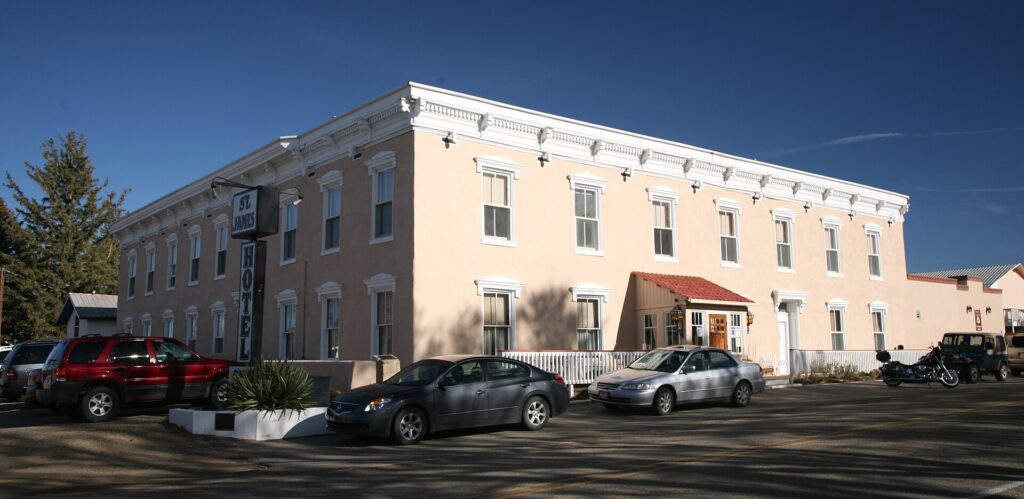
Henry Lambert had cooked for Abraham Lincoln. He came west looking for gold, found little and opened a restaurant and saloon instead. In 1872 he built the place that became the St. James, in Cimarron on the Santa Fe Trail.
It got a reputation fast. People around town used to ask, “Who was killed at Lambert’s last night?” Wyatt Earp, Annie Oakley and Buffalo Bill Cody all stayed there. Jesse James is said to have always taken Room 14.
In 1901 Lambert’s sons replaced the roof and found it full of bullet holes. A double layer of hardwood had kept the people sleeping upstairs safe. The dining room ceiling still holds about twenty of them. Today Cimarron has fewer than 800 people, and the hotel rents 12 restored rooms in the old building.
The ceiling took the bullets. The guests got a good night’s sleep.
5. Buffalo, Wyoming: The Occidental kept its back bar, its tin ceilings and its bullet holes
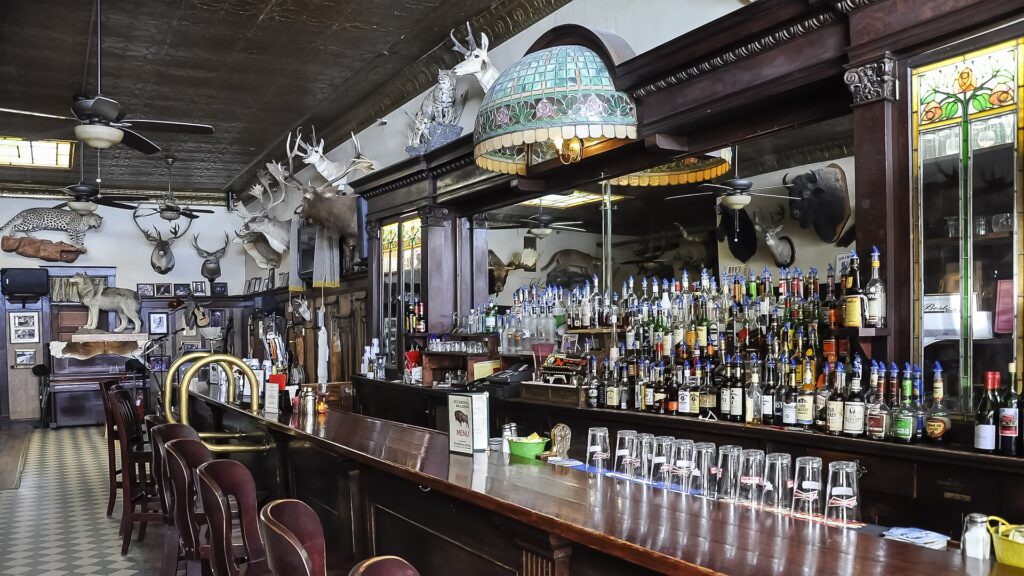
The Occidental opened in 1880 near the Bozeman Trail, at the foot of the Bighorn Mountains. The hotel’s own history lists Buffalo Bill Cody, Teddy Roosevelt and Calamity Jane among its early guests.
In 1908 the rough barroom was replaced with what the hotel calls one of the most elegant saloons in Wyoming, with a stained glass back bar and an embossed tin ceiling. Then the Depression hit, and by the 1980s the building was run down and looked headed for demolition.
In 1997 a new owner bought it and spent ten years restoring it. The hotel says the ceilings, the back bar and even the bullet holes in the saloon are original. Buffalo has about 4,400 people, and the saloon still books live music three nights a week.
Most hotels like it got torn down. This one got dusted off.
More from American Charm
 People who still stop for every historical marker usually love these 9 American towns that are smaller than their legends
 People who still pull over for hand-painted billboards usually remember these 8 roadside attractions, and every one is still open
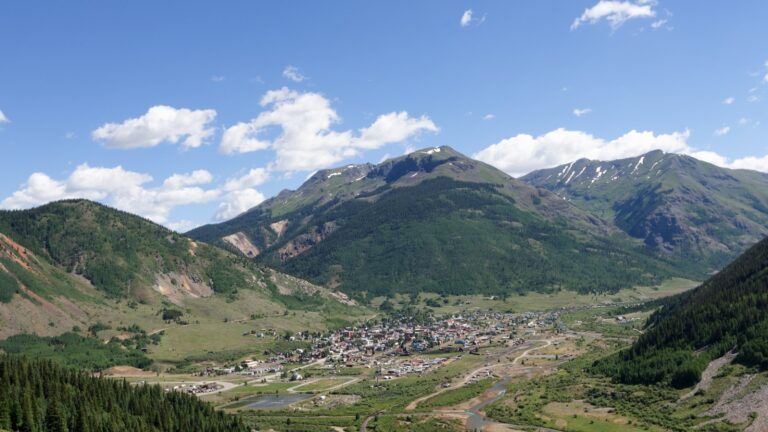 People who’d rather spend a Saturday on Main Street than at a resort usually fall for these 9 small towns in America’s most beautiful states
6. Eureka Springs, Arkansas: The Crescent has been a resort, a college and a fake cancer hospital
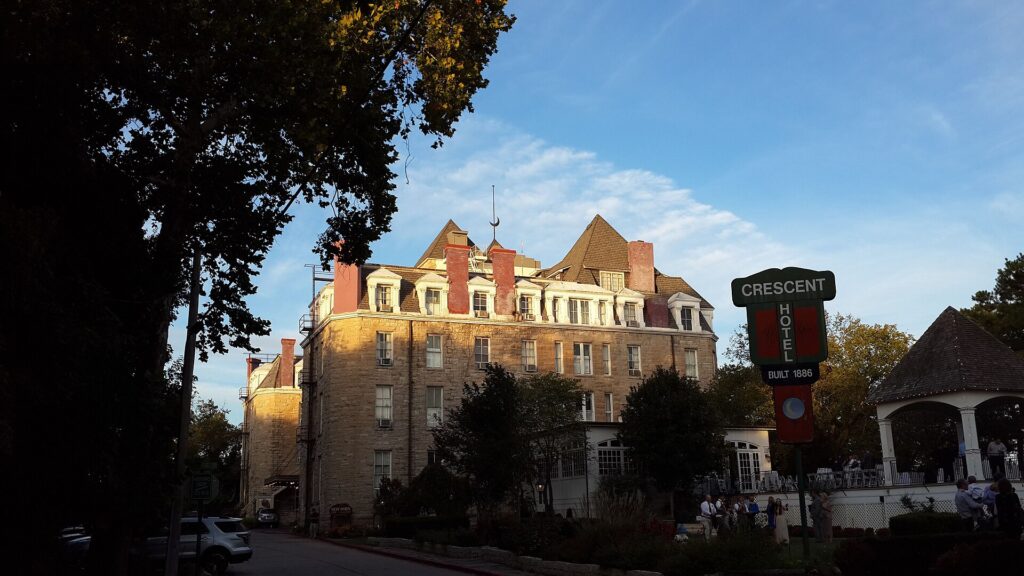
The Crescent went up in 1886 on a hilltop over Eureka Springs, with electricity and elevators, both new luxuries then. Business was rough, and in 1908 it became a college and conservatory. The school closed in 1934.
In 1937 a radio personality named Norman Baker bought it and turned it into a hospital, though he had no medical training. His cancer “cure” was mostly the local spring water. Federal mail fraud charges followed in 1940, and he served four years in prison. In 2019 workers digging behind the hotel found about 500 old medicine bottles from his time there.
New owners bought it in 1997 and spent six years restoring it. The town has about 2,200 people, and the hotel calls itself America’s most haunted. Every holiday season it fills up with Christmas trees and lights.
The Crescent has had a strange century. It decorates for the holidays anyway.
7. Durango, Colorado: Louis L’Amour always asked for the room over the saloon
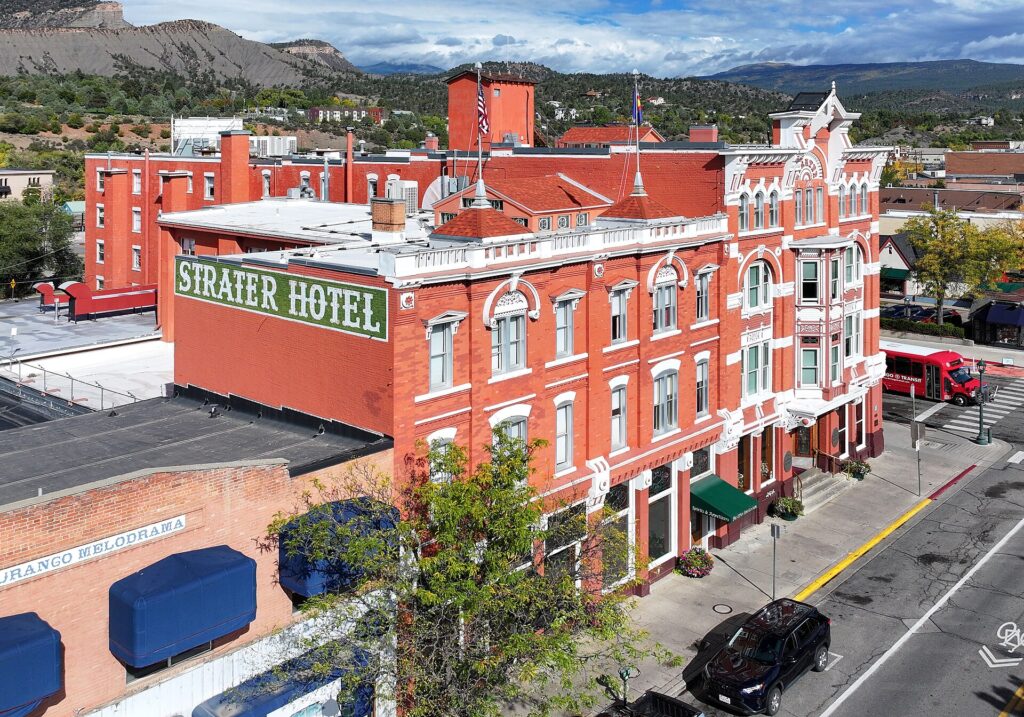
Henry Strater was a pharmacist whose family came to Durango from Cleveland. He talked his father and brothers into building a grand hotel, and it opened in 1887 at a cost of $70,000.
He kept his pharmacy in the corner of the building. When the manager raised his rent, Strater got so angry he opened a rival hotel. The Strater is the one still standing on Main Avenue, with 88 rooms full of Victorian walnut antiques.
The western writer Louis L’Amour always asked for Room 222, right above the Diamond Belle Saloon. He said the honky-tonk piano helped set the mood, and he wrote several of his Sackett novels at the hotel. The room carries his name now. Durango has about 19,000 people.
Most writers want quiet. L’Amour wanted the piano.
8. Livingston, Montana: The Murray was built in 1904 for people stepping off the train
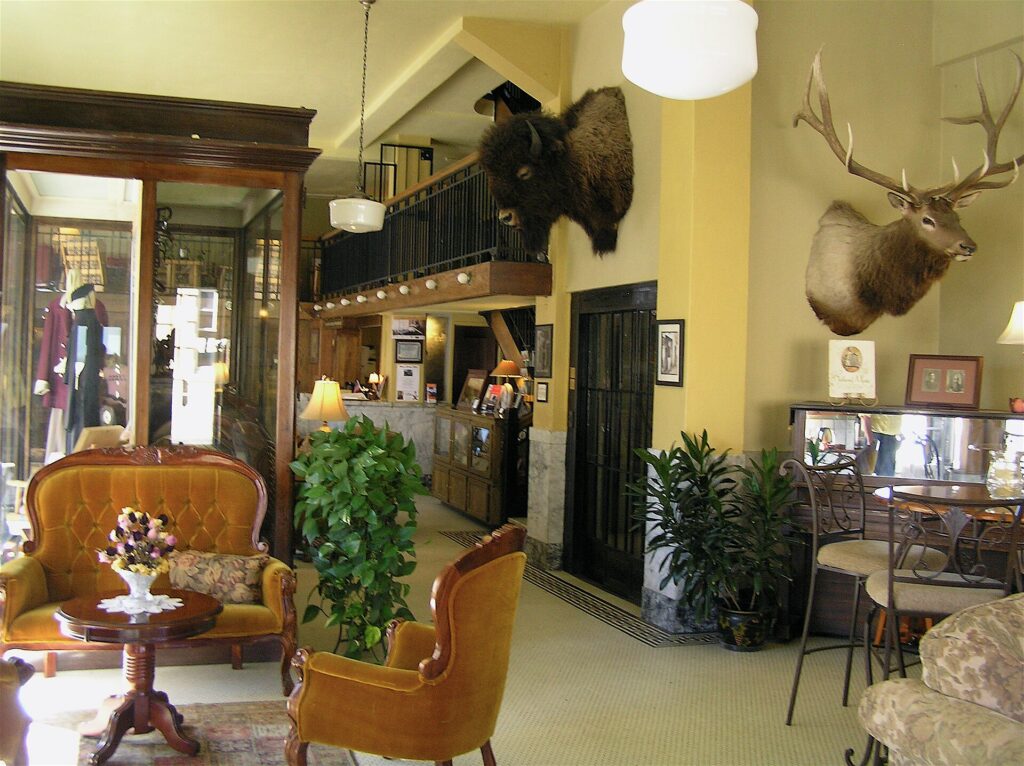
The hotel opened in 1904 as the Elite, right across from the Northern Pacific depot. It was one of thirteen hotels built in downtown Livingston between 1884 and 1914 for railroad travelers.
It had a hand-cranked Otis elevator by 1905, the only elevator in town at the time. In the 1920s the hotel grew to four floors, and the Murray family took it over and put their name on it. Business dropped in the 1960s as rail travel faded and the interstates came through.
Some guests stayed a long time. The director Sam Peckinpah lived in a three-room suite there from 1979 to 1984, and a suite is still named for him. Livingston has about 8,000 people, and the Murray rents 30 rooms and suites.
The trains brought the first guests. The town kept them coming.
More from American Charm