The coffee comes before the menu does. Somebody slides onto the third stool from the end, the one that wobbles a little, and the cook nods without turning around. The ceiling curves overhead like the inside of a railroad car.
It looks like a train. It never ran on rails.
For most of the last century, diners were built in factories in Massachusetts and New Jersey, then shipped out whole by truck or rail and set down on a corner lot. The Jerry O’Mahony company of Elizabeth, New Jersey, alone turned out some 2,000 of them between 1917 and 1952.
Most are gone now. Many of the survivors sit in places a lot like the towns that pushed back against the chains: small, stubborn and fond of their own Main Street.
The chains are fast. Nobody’s arguing that. But a few of these old cars are still frying eggs every morning.
The building is the least of it.
1. Natick, Massachusetts: Casey’s Diner fits ten people and has since 1922
Ten stools, an oak counter and two original wooden doors. That’s all of Casey’s Diner, which measures about 10 by 20 and a half feet. The Worcester Lunch Car Company built it in 1922 as a lunch cart on wheels.
Fred Casey bought it in 1927 and moved it to Natick, across from the town common. In 1977 it was moved again, to South Avenue, to make room for a bank parking lot. The diner was listed on the National Register of Historic Places in 1999. The family says it has passed from father to son for four generations.
The order to know is the steamed hot dog “all around,” with mustard, relish and raw onion tucked under the dog in a steamed bun. Casey’s is known for the snap on the first bite.
The bank got its parking lot. Natick kept its hot dogs.
2. Biddeford, Maine: The Palace Diner has never lived anywhere else
The Palace Diner sits at 18 Franklin Street. The Pollard Company built it in Lowell, Massachusetts, in 1927, and it was set down in Biddeford.
It has stayed there its whole life. The diner’s own history says it is one of only two Pollard cars left in America. Greg Mitchell and Chad Conley reopened it in March 2014 as its sixth set of owners, and they gave the building its first renovation in over a decade in 2021.
These days it opens every morning at seven and closes at two. Breakfast and lunch, the way a lunch car was meant to run.
Six owners in almost a hundred years. The address never changed once.
More from American Charm
 People who still stop for every historical marker usually love these 9 American towns that are smaller than their legends
 People who still pull over for hand-painted billboards usually remember these 8 roadside attractions, and every one is still open
 People who’d rather spend a Saturday on Main Street than at a resort usually fall for these 9 small towns in America’s most beautiful states
3. Oakley, Utah: A diner from the 1939 World’s Fair ended up in the mountains
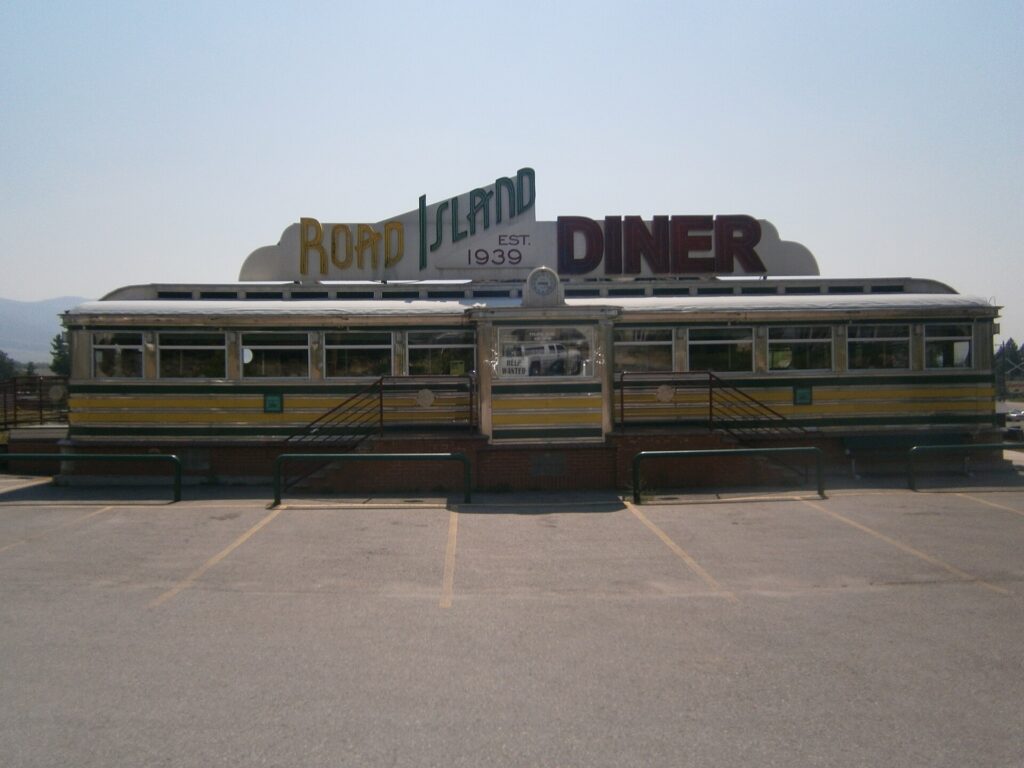
Diner No. 1107 rolled out of the O’Mahony factory in Elizabeth, New Jersey, in 1939 and went straight onto display at the New York World’s Fair. Then it went to work. It spent 14 years in Fall River, Massachusetts, and then decades in Middletown, Rhode Island, as Tommy’s Deluxe Diner.
In 2007 it was trucked across the country to Oakley, Utah, a town of about 1,600 in the Kamas Valley, 45 miles east of Salt Lake City. The diner’s history says the trip took three months, with a police escort. It opened in July 2008 and was listed on the National Register in 2009. It closed for a stretch in 2021 and has since reopened as the Oakley Diner, open daily.
It is said to be the only prewar streamlined diner of its kind west of the Mississippi.
It was built for the East. The West kept it.
4. Littleton, New Hampshire: The town watched its first diner arrive by rail in 1930
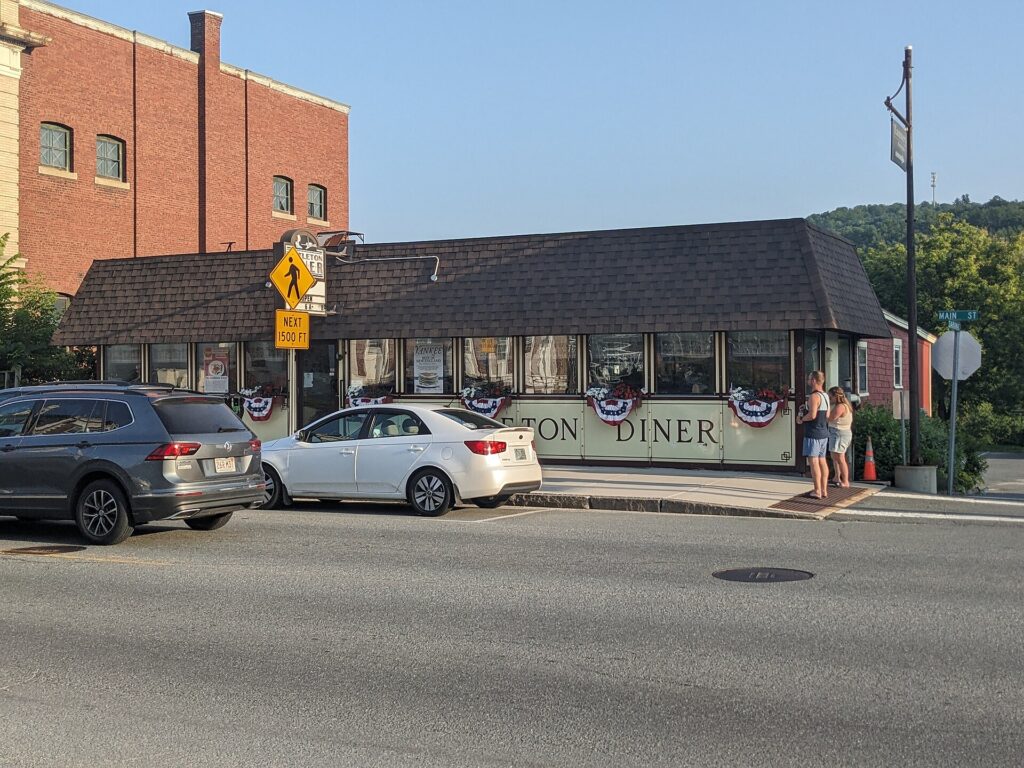
In January 1930, the Littleton Courier reported that workmen were putting in a foundation on Main Street, next to the Masonic Temple, for a “parlor car” diner. Eugene and Stella Stone opened it that summer.
Ten years later they sold the first car and put a new Sterling diner on the same spot. The diner’s history says the new car seated 30 at first, and it has stayed at 145 Main Street ever since. The current owners, Chris and Patti Williford, bought it in 2003. The corned beef hash is made in house.
With New Hampshire holding the first presidential primary, the diner says it has become a popular stop for visiting politicians from across the country. It fits right in among the New Hampshire Main Streets that still look like postcards.
The candidates come and go. The hash stays.
5. Bennington, Vermont: A former college regular brought the Blue Benn back
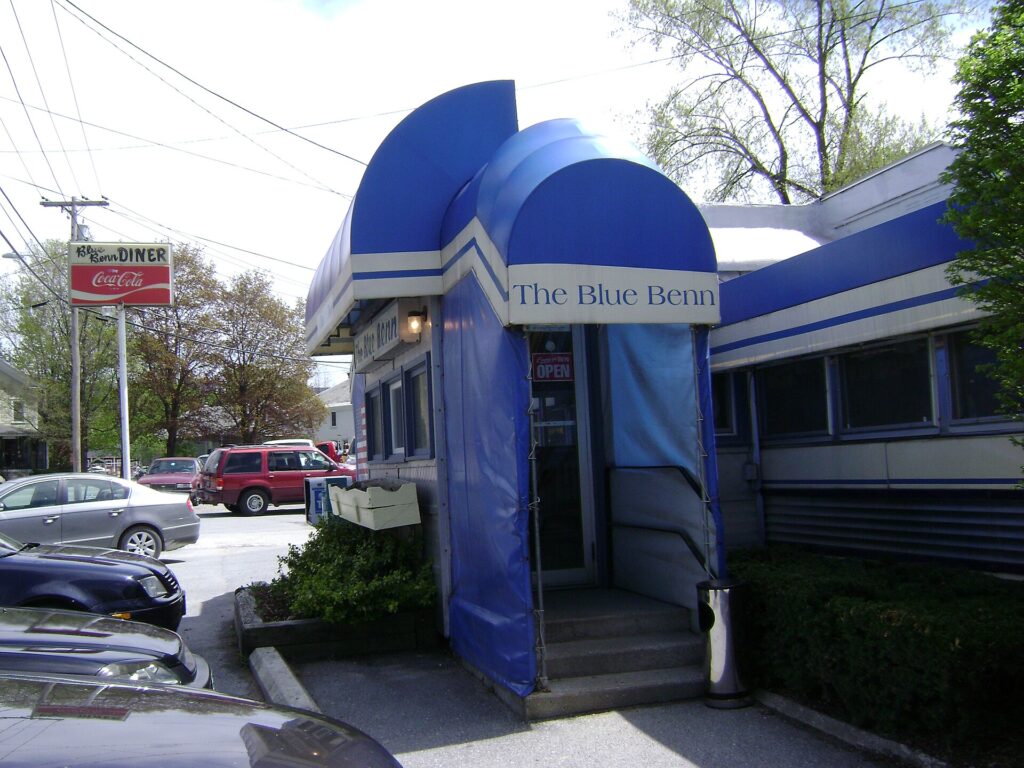
The Blue Benn was built by the Paterson Vehicle Company of New Jersey, the maker known as Silk City, and assembled on North Street in Bennington in 1948.
Sonny and Marylou Monroe bought it in 1973. Sonny ran the grill and became known for health foods on a diner menu, like a falafel and a “Nutburger.” The family ran it for 47 years, until the pandemic closed it and Marylou decided to retire. The diner’s own story says John Getchell, who had eaten there as a Bennington College student, moved to town to reopen it and keep the Monroe menu.
He had left his elbow marks on that 1948 counter like thousands of others. He came back to stand behind it.
The town nearly lost it. A customer saved it.
More from American Charm
 People who dug to the bottom of the cereal box for the prize usually remember these 8, and a few are worth real money now
 9 small towns in Vermont where a Saturday morning still looks the way it did in 1955
 15 New Laws Taking Effect January 1, 2027 That Could Change Your Paycheck, Prescriptions and Shopping
6. Gardner, Massachusetts: The Blue Moon started life as Miss Toy Town
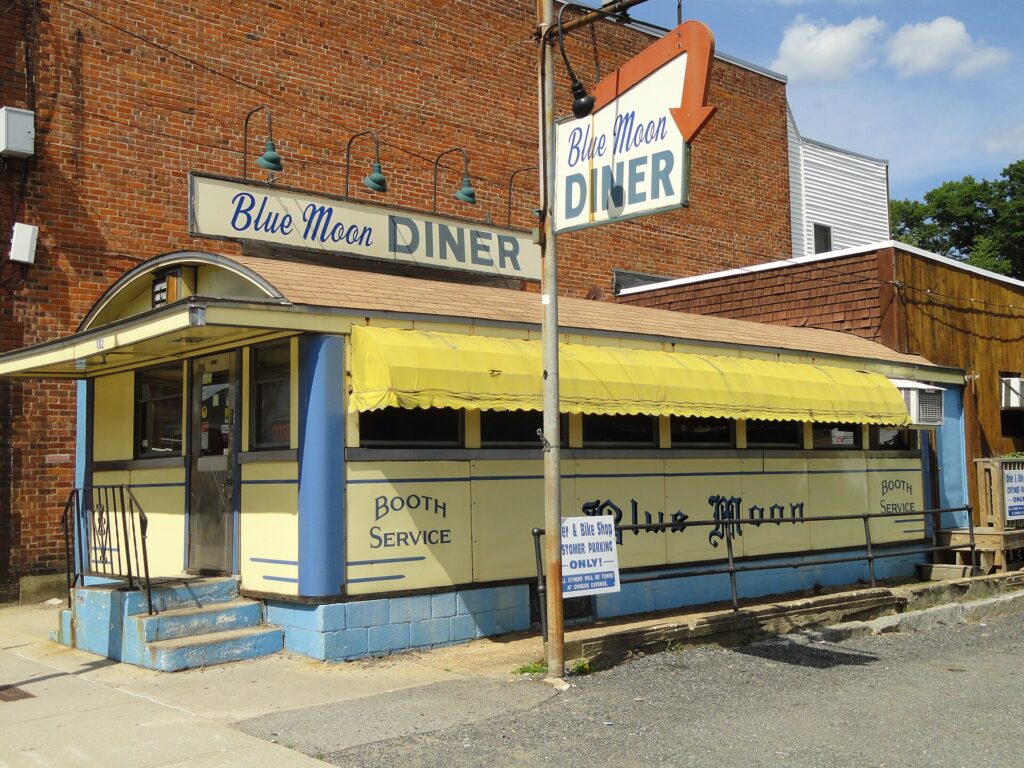
Worcester Lunch Car No. 815 was built in 1949 and went first to Winchendon, a town known as Toy Town, where it opened as the Miss Toy Town. In 1954 it moved to Main Street in Gardner.
It ran as Bernier’s Diner, then reopened as the Blue Moon in 1978. Hollywood found it in 1991, when School Ties filmed there. It was listed on the National Register in 2003, and Kathy and Robert Wright bought it in 2022.
Inside, not much has moved. A marble counter, fourteen stools and wooden booths along the wall, under a barrel ceiling.
It has had three names. The stools stayed put.
7. Red Hook, New York: The Village Diner was the first diner in the state on the National Register
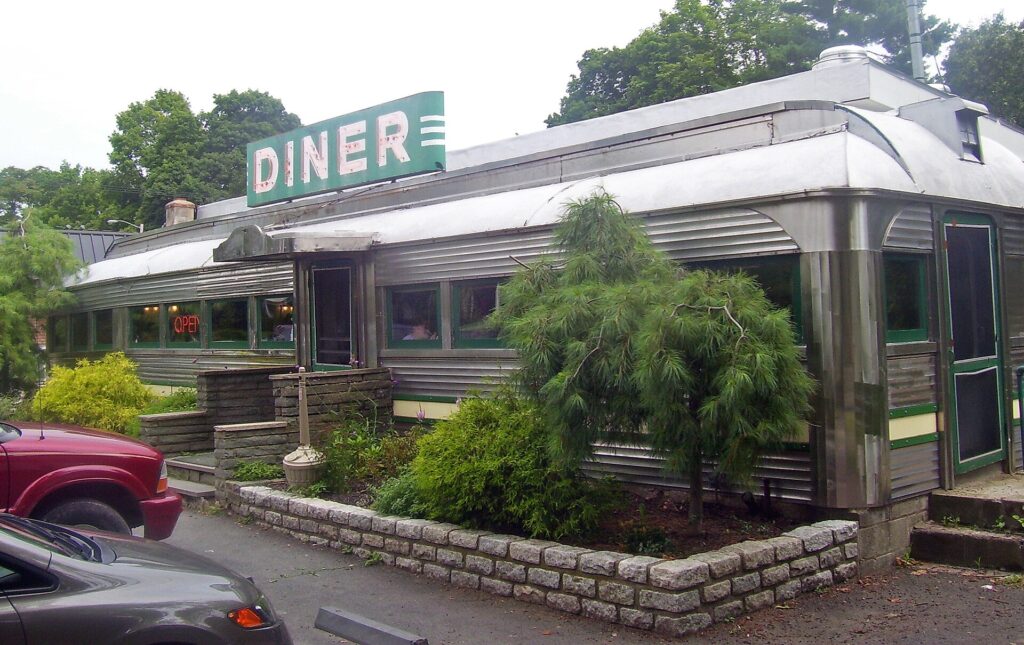
Stainless steel, curved corners and a sign on the roof that just says DINER. The Village Diner sits on North Broadway, which is also U.S. Route 9.
Its story starts in 1925, when a Kingston man bought a diner, set it up on Route 9 and called it the Halfway Diner, because he figured it sat about halfway between New York City and Albany. It moved with the traffic: to Red Hook, then out toward the new Taconic Parkway, then back again in 1957. The car itself carries a builder’s plate stamped 5113, the thirteenth diner Paterson Vehicle built in 1951. In 1988 it became the first diner in New York listed on the National Register, and the fourth in the country.
Sixteen stools still face the counter. It’s closed Mondays.
The diner followed the road for thirty years. Then the road came back to it.
More from American Charm
 13 Small Towns in New Hampshire Where Main Street Still Looks Like a 1950s Postcard
 People who grew up on these 8 foods usually have no idea they originated in America, each in one hometownPeople who still stop for every historical marker usually love these 9 American towns that are smaller than their legends