1. Route 66 Seligman, Arizona
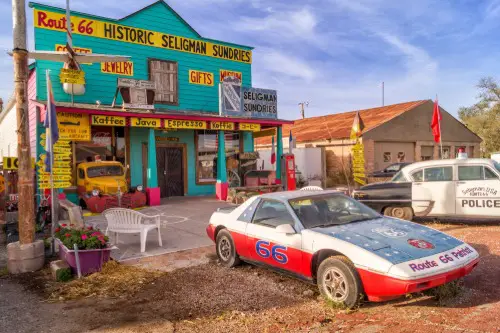
Seligman sits right on historic Route 66, and its main drag feels like a living time capsule. Neon motel signs, classic diners, and souvenir shops lean fully into mid-20th-century road trip culture. When Interstate 40 bypassed the town in the 1970s, through-traffic dried up almost overnight. What remains is a center that survives by preserving the past rather than racing toward the future.
Walking through downtown feels like stepping into an old postcard that still functions. Classic cars sometimes line the curb, but most visitors arrive with smartphones and GPS. The businesses depend on nostalgia tourism while operating in a modern economy. It’s not frozen in time, just carefully holding onto it.
2. Deadwood, South Dakota
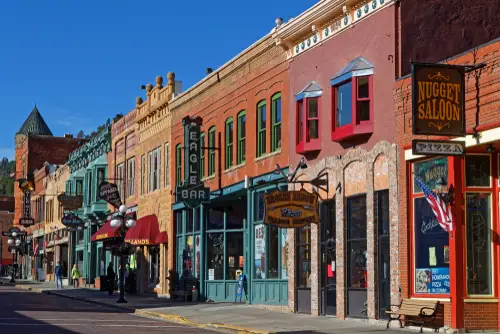
Deadwood’s downtown still looks like a frontier boomtown carved into the Black Hills. Gold rush wealth in the late 1800s filled its streets with miners, gamblers, and historic legends. Today, restored brick buildings and wooden boardwalks preserve that rough-and-tumble aesthetic. Yet inside many of those buildings are modern casinos and digital slot machines.
State laws protect the historic look of the district, keeping signage and architecture period-appropriate. At the same time, tourism and gaming revenue keep the town economically alive. You can watch a staged Old West shootout, then grab Wi-Fi at a coffee shop next door. The mix of preservation and present-day convenience creates a strange, charming tension.
3. Galena, Illinois
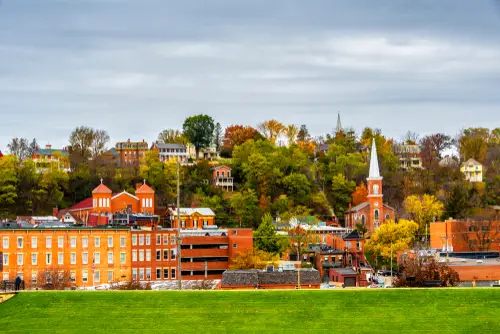
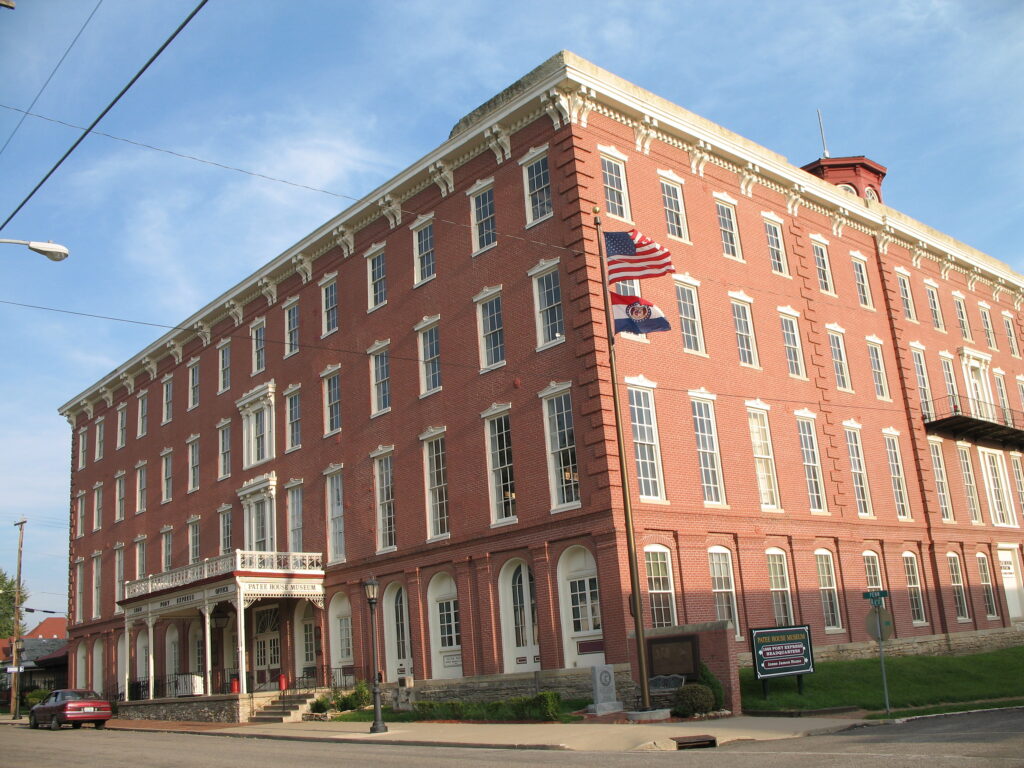
Galena’s downtown is packed with 19th-century brick storefronts that once served a booming lead-mining economy. When mining declined, growth slowed and the architecture remained largely untouched. That preservation later turned the town into a heritage tourism favorite. Main Street still follows its original curve along the Galena River.
Modern boutiques, restaurants, and galleries now fill those historic spaces. Horse-drawn carriage tours pass parked SUVs and EV chargers. The town feels visually anchored in the 1800s but functionally rooted in the 2020s. It’s a place where the past supplies the atmosphere and the present pays the bills.
4. Harpers Ferry, West Virginia
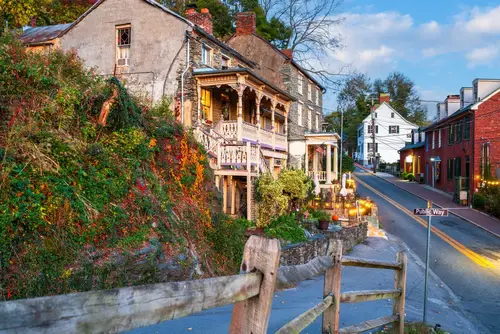
Harpers Ferry’s lower town looks much like it did in the 1800s, tucked between rivers and steep hills. The area played major roles in industry, westward expansion, and John Brown’s 1859 raid. Many original buildings still stand, now preserved within a national historical park. Stone streets and narrow storefronts set a distinctly pre-modern tone.
Tourists wander through museums using digital tickets and smartphone guides. Cafés and gift shops operate inside centuries-old structures. Floods and restoration efforts have shaped what survives and what feels reconstructed. The result is a downtown that lives in two eras at once.
5. Bisbee, Arizona
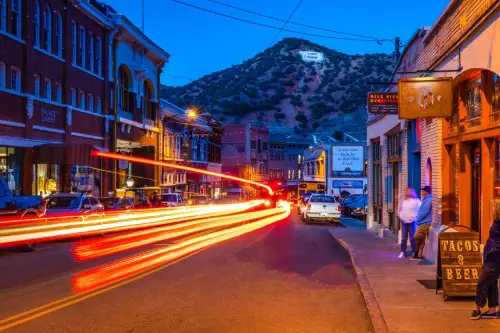
Bisbee began as a booming copper mining town carved into the Mule Mountains. Its steep streets and tightly packed buildings reflect early 20th-century industrial growth. When mining declined, the town avoided large-scale redevelopment. That left its historic core largely intact.
Today, artists, retirees, and remote workers fill former saloons and boarding houses. Vintage signage hangs over coffee shops and galleries. The stair-stepped layout resists modern sprawl and big-box development. It feels preserved not by policy alone, but by geography and circumstance.
6. Jim Thorpe, Pennsylvania
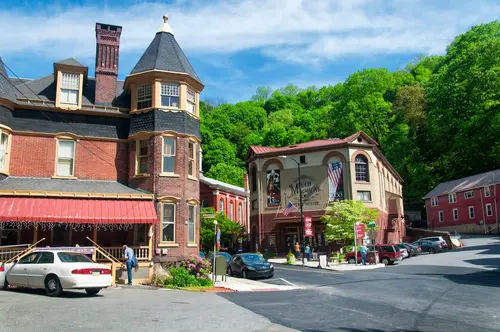
Jim Thorpe’s downtown sits in a narrow valley lined with ornate Victorian architecture. The town prospered during the coal and railroad era of the 1800s. Grand buildings and a historic train station still define the streetscape. Its compact layout feels built for a different pace of life.
Tourism now drives the economy with rail excursions and outdoor recreation. Old storefronts house modern eateries and specialty shops. Seasonal festivals bring crowds that fill the historic sidewalks. The town feels balanced between preservation and reinvention.
7. Virginia City, Nevada
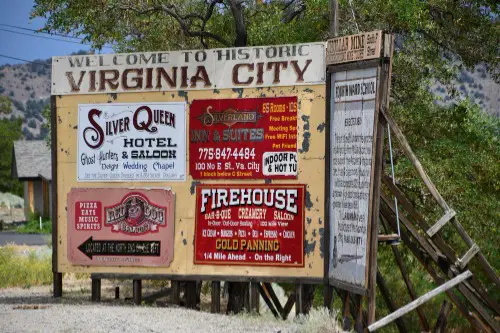
Virginia City exploded in size after silver was discovered in the Comstock Lode. Wealth poured in quickly, shaping a dense and ornate downtown. When mining declined, population and investment fell just as fast. Much of the original streetscape survived because little replaced it.
Today, wooden sidewalks and historic saloons define the main corridor. Tourists browse gift shops where miners once crowded bars. Modern safety codes exist behind carefully preserved facades. The town feels like a stage set that still functions as a community.
8. St. Augustine, Florida
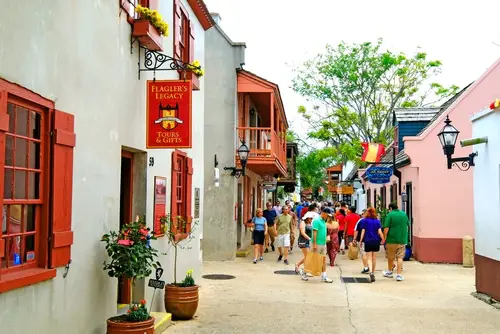
St. Augustine claims the title of the oldest continuously inhabited European-established settlement in the continental U.S. Spanish colonial architecture shapes its historic core. Narrow streets and stone fortifications reflect centuries-old planning. Preservation rules protect the district’s historic character.
Shops sell ice cream and beachwear inside buildings older than the United States itself. Tour trolleys share roads with regular commuter traffic. Visitors take selfies where soldiers once stood watch. The city center feels layered rather than frozen.
9. Port Townsend, Washington
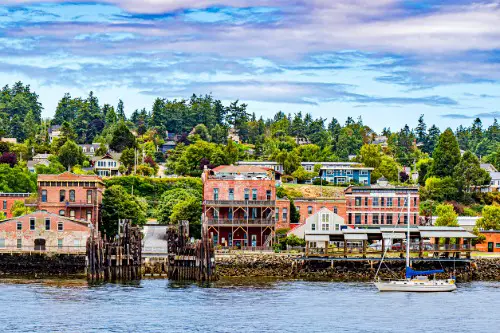
Port Townsend flourished in the late 1800s as a Pacific port of entry. Ambitious construction produced grand Victorian commercial blocks. An economic downturn halted major development before modernization reshaped downtown. Many historic buildings remained simply because growth stalled.
Today, bookstores, cafés, and arts venues occupy those preserved structures. Maritime industries mix with tourism and remote work culture. The waterfront hosts both historic ships and modern marinas. The town center feels like a preserved ambition still adapting to new realities.
10. Eureka Springs, Arkansas
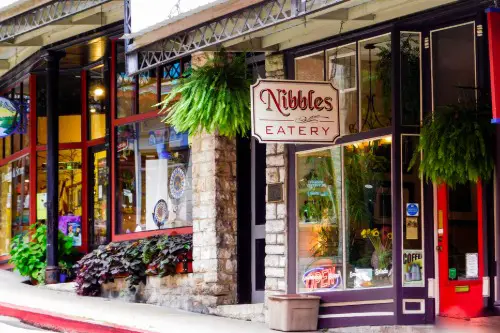
Eureka Springs grew as a Victorian spa town built around natural springs. Its steep terrain led to winding streets and tightly clustered buildings. Architectural preservation kept chain development largely out of downtown. The historic district still feels dense and old-fashioned.
Modern hospitality fills those preserved buildings with hotels, restaurants, and galleries. Public art and festivals bring contemporary energy to historic streets. The absence of typical suburban sprawl heightens the time-warp feeling. It’s a place where design choices slowed visual change.
11. Annapolis, Maryland
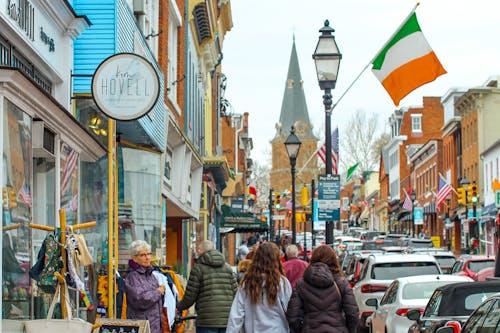
Annapolis served as a colonial capital and retains much of its 18th-century street plan. Brick buildings and narrow lanes define the downtown core. Historic preservation protects views and architectural character. Government and maritime heritage still shape daily life.
The U.S. Naval Academy brings modern military presence and steady activity. Restaurants and boutiques operate within centuries-old structures. Sailboats dock alongside modern yachts in the harbor. The center feels both ceremonial and contemporary.
12. Santa Fe, New Mexico
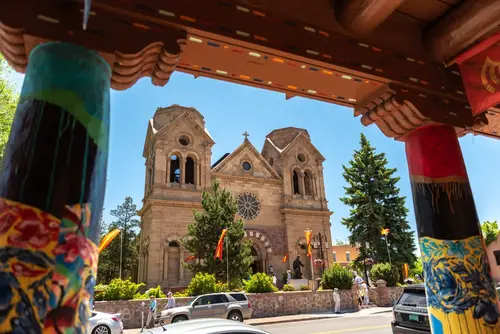
Santa Fe enforces architectural styles that echo Pueblo and Spanish colonial design. Adobe-inspired facades give the city center a cohesive historic look. Strict building codes maintain that visual identity. Walking downtown feels distinct from most American cities.
Inside those earth-toned walls are modern galleries, restaurants, and tech-enabled businesses. Indigenous art markets share space with contemporary exhibitions. Tourism and government employment anchor the local economy. The city lives comfortably in its past while operating in the present.
This post American Town Centers That Feel Stuck Between Past and Present was first published on American Charm.