
1. Kitty Hawk, North Carolina
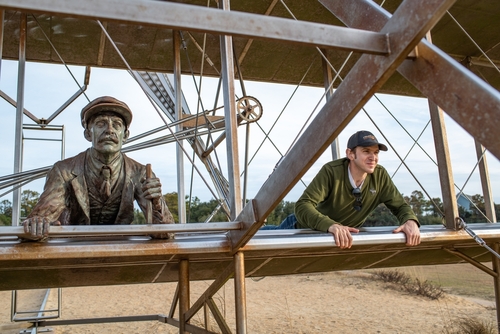
Kitty Hawk is a small Outer Banks town that played an outsized role in aviation history. In 1903, the Wright brothers conducted their powered flight experiments nearby at Kill Devil Hills. The area’s steady winds and soft sand made it ideal for early aircraft testing. What looked like a quiet coastal stretch became the birthplace of modern flight.
Today, the town itself remains modest in size and population. Visitors come for beaches, dunes, and a handful of historic sites. Yet the breakthroughs made there reshaped global transportation and warfare. It’s hard to stand on that shoreline and not feel the scale of what started there.
2. Harpers Ferry, West Virginia
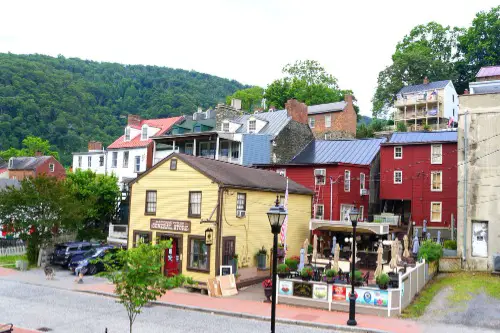
Harpers Ferry sits at the meeting point of the Potomac and Shenandoah Rivers. Its location made it strategically vital for transportation and industry in the 19th century. In 1859, abolitionist John Brown launched his raid on a federal armory there. The event intensified national tensions that led toward the Civil War.
The town changed hands multiple times during the war because of its strategic value. Today it’s a small, scenic community with preserved historic streets. Museums and trails quietly tell stories that shaped the nation’s trajectory. Its scale feels intimate, but its history echoes loudly.
3. Roswell, New Mexico
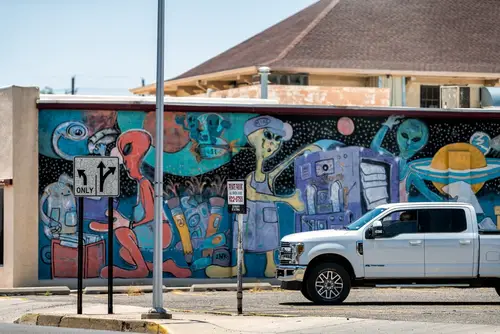
Roswell is a modest southeastern New Mexico city with an unusual place in pop culture. In 1947, debris from a crashed high-altitude balloon was recovered nearby. The military initially described it as a “flying disc,” then clarified it was part of a classified project. That sequence sparked decades of UFO speculation and conspiracy theories.
The incident helped turn Roswell into a global symbol of extraterrestrial lore. Alien museums, festivals, and themed businesses now shape its tourism identity. Beyond that, it remains a quiet desert city with ranching and aerospace ties. Few places show how one moment can redefine a town’s image so completely.
4. Selma, Alabama
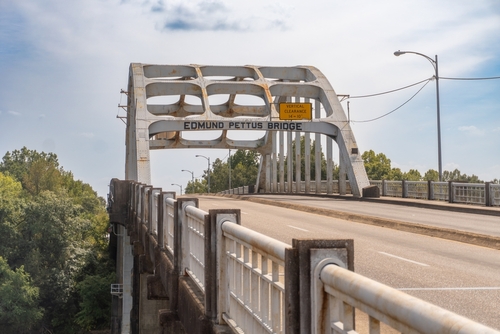
Selma became a focal point of the Civil Rights Movement in 1965. Activists organized voting rights marches that began there and crossed the Edmund Pettus Bridge. Violent responses to peaceful protesters drew national attention. Televised coverage influenced public opinion across the country.
Those events helped build momentum for the Voting Rights Act of 1965. Today, Selma is a small city with preserved landmarks and memorials. Visitors walk the same streets where pivotal demonstrations occurred. Its population size feels small compared to its national impact.
5. Gettysburg, Pennsylvania
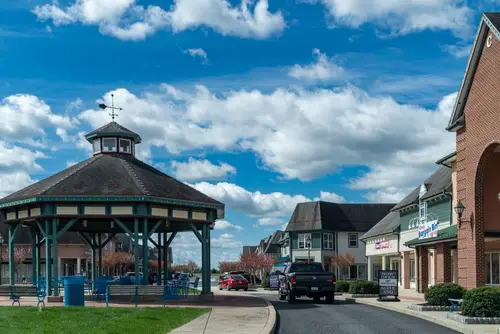
Gettysburg was a quiet agricultural town before the Civil War arrived. In July 1863, it became the site of one of the war’s largest and deadliest battles. Tens of thousands of soldiers fought across its fields and ridges. The battle marked a turning point in the conflict.
President Abraham Lincoln later delivered the Gettysburg Address there. That short speech reshaped how Americans understood the war’s purpose. Today, the borough remains small and walkable. Its preserved landscape carries immense historical weight.
6. Deadwood, South Dakota
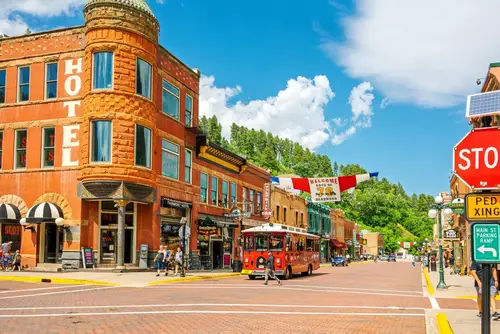
Deadwood sprang up during the Black Hills gold rush in the 1870s. Prospectors, gamblers, and entrepreneurs flooded the area almost overnight. Figures like Wild Bill Hickok and Calamity Jane became tied to its identity. Lawlessness and fortune-seeking defined its early years.
The boom faded, but the legends endured. Much of the town is preserved as a National Historic Landmark District. Today it relies on tourism and gaming rather than mining. Its frontier stories loom larger than its modern footprint.
7. Monowi, Nebraska
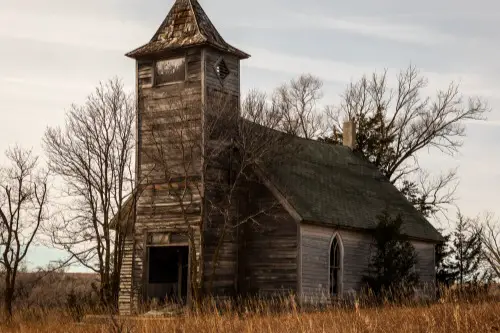
Monowi is one of the smallest incorporated communities in the United States. For years, it has had a population of just one resident. That resident serves as mayor, clerk, librarian, and bartender. The situation turns local governance into a one-person operation.
Despite its size, Monowi has become internationally known. Documentaries and news features spotlight its unusual civic setup. A tiny dot on the map became a symbol of rural population decline. Its story resonates far beyond Nebraska.
8. Centralia, Pennsylvania
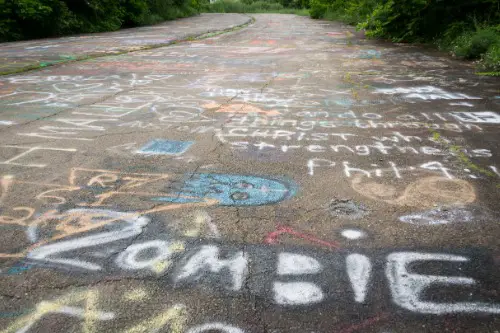
Centralia was once a typical coal mining town in eastern Pennsylvania. In 1962, an underground mine fire ignited and began spreading beneath it. The fire has burned for decades and made the ground unstable. Hazardous gases and sinkholes followed.
Most residents relocated through government programs over time. Streets remain, but nearly all structures were demolished. The near-abandonment turned Centralia into a case study in environmental disaster. Its small size contrasts with the scale of the ongoing fire.
9. Truth or Consequences, New Mexico
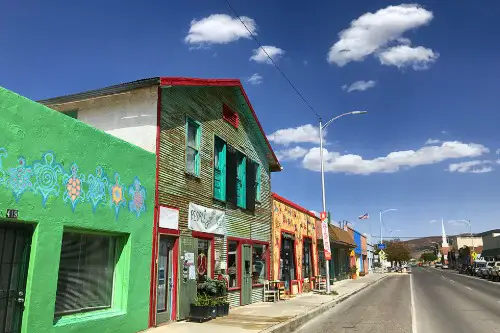
Truth or Consequences began as a hot springs resort town called Hot Springs. In 1950, it renamed itself after a popular radio quiz show. The host promised to broadcast from whichever town adopted the show’s name. Local leaders agreed, creating one of America’s most unusual place names.
The publicity stunt worked and put the town on the national map. Annual events still celebrate the show’s legacy. Beyond the name, it remains a small spa and retirement community. Its branding decision became a lasting cultural footnote.
10. Nome, Alaska
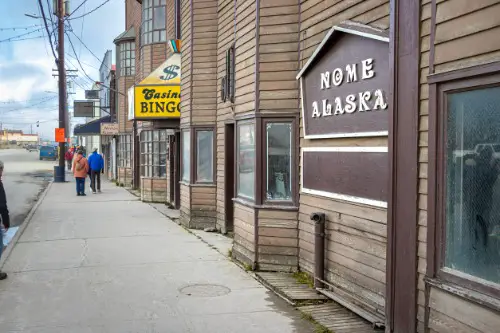
Nome is a remote city on Alaska’s western coast with a gold rush past. In 1925, it became central to a life-saving public health effort. A diphtheria outbreak threatened the town during a brutal winter. Dog sled teams relayed antitoxin across nearly 700 miles.
The effort inspired what became known as the Serum Run. It later influenced the creation of the Iditarod Trail Sled Dog Race. Nome’s population remains small and geographically isolated. Its emergency story became part of national lore.
11. Los Alamos, New Mexico
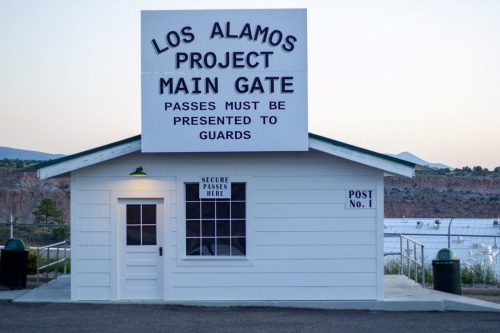
Los Alamos was a quiet mesa community before World War II. The U.S. government selected it as a secret site for the Manhattan Project. Scientists gathered there to develop the first atomic weapons. The work changed global politics and warfare permanently.
The town operated under strict secrecy during the project. Entire neighborhoods were built to support researchers and families. Today it functions as a scientific community anchored by a national laboratory. Its small size belies its global impact.
12. Woodstock, New York
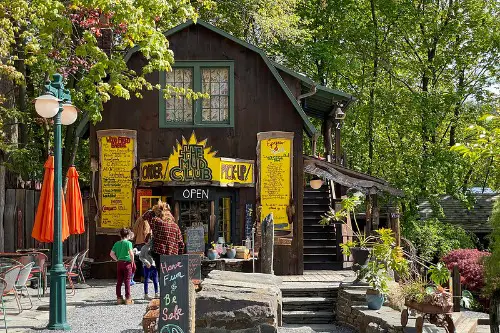
Woodstock is widely associated with one of the most famous music festivals in history. The 1969 Woodstock Music & Art Fair shaped popular culture and the counterculture movement. Despite the name, the festival itself was held in Bethel, New York. Woodstock had already built a reputation as an arts community.
That cultural identity tied the town permanently to the event’s legacy. Visitors still arrive expecting a connection to the festival spirit. Galleries, shops, and music venues keep the creative atmosphere alive. A small town name became shorthand for an era.
This post The Story Behind These Places Is Bigger Than Their Size Suggests was first published on American Charm.

