
1. Springfield, Illinois & Springfield, Massachusetts
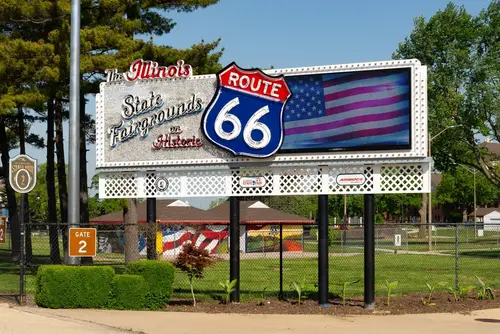
These two Springfields sit nearly a thousand miles apart, but they share the same literary naming legacy. Many American towns called Springfield were named for the fictional hometown of characters in early American literature and popular culture. The name sounded pleasant, pastoral, and quintessentially American to 18th- and 19th-century settlers. As a result, it became one of the most reused town names in the country.
Both cities grew into important regional hubs with state-level influence. Springfield, Illinois became the state capital and is closely tied to Abraham Lincoln’s life and career. Springfield, Massachusetts developed as a manufacturing center and is known for the Springfield Armory. The subtle connection is a shared name that reflects how cultural storytelling shaped American geography.
2. Portland, Maine & Portland, Oregon
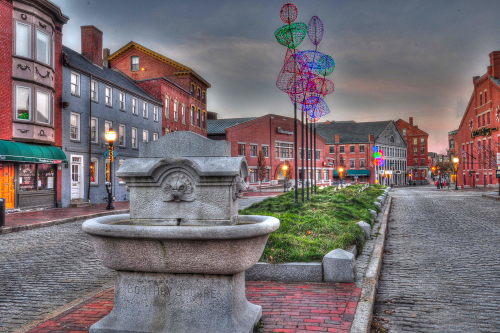
These Portlands share a name that was decided by a literal coin toss. In 1845, the founders of Portland, Oregon flipped a coin to decide whether the city would be named Boston or Portland. The winner chose to honor Portland, Maine, his hometown. A simple moment of chance permanently linked two cities on opposite coasts.
Both cities are major cultural centers within their regions. Each is known for waterfront scenery, strong food culture, and creative communities. Visitors often compare their walkable downtowns and maritime histories. Their shared name traces back to a small decision that still echoes today.
3. Kansas City, Missouri & Kansas City, Kansas

These neighboring cities share not just a name, but a metropolitan identity that crosses state lines. Kansas City, Missouri was founded first and became the larger economic center. Kansas City, Kansas developed directly across the river and state border. Over time, the two grew together into one continuous urban area.
Sports teams, businesses, and residents often identify simply with “Kansas City.” The state line matters legally, but daily life flows across it seamlessly. Major highways and neighborhoods connect without obvious breaks. The subtle link is a shared civic identity split by an invisible boundary.
4. Texarkana, Texas & Texarkana, Arkansas
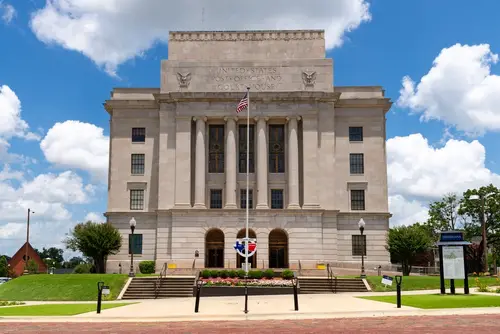
Texarkana exists as two separate cities that function like one. The name itself blends Texas, Arkansas, and nearby Louisiana. State Line Avenue literally divides the Texas and Arkansas sides. Some buildings even sit in both states at once.
Residents cross the border daily without thinking about it. Local services, commerce, and culture overlap naturally. The twin cities share infrastructure but operate under different state laws. Their connection is geographic, legal, and deeply practical.
5. Bristol, Tennessee & Bristol, Virginia
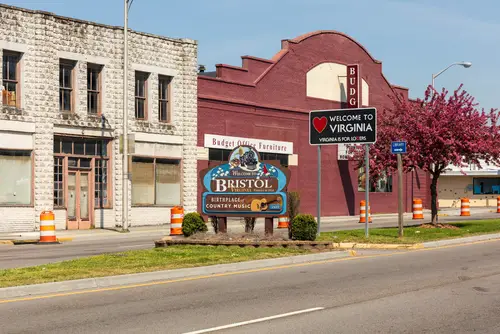
Bristol is famously known as “a good place to live” on both sides of State Street. That street doubles as the Tennessee–Virginia border. Like Texarkana, the two cities operate separately but feel unified. Residents casually step between states while shopping or dining.
Bristol is also recognized as an important birthplace of country music. Historic recording sessions there shaped the genre’s early commercial success. The twin-city setup adds to its unique identity. Music history and geography intertwine in everyday life.
6. Dakota Dunes, South Dakota & North Sioux City, South Dakota
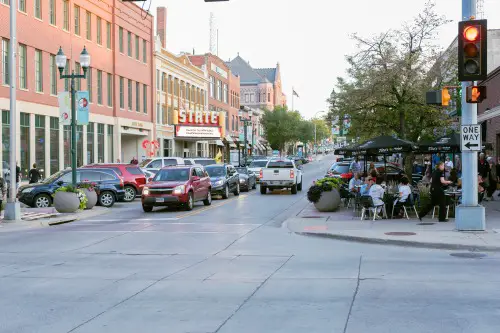
These neighboring communities are part of the larger Sioux City metro area. While both are in South Dakota, their daily rhythms tie closely to nearby Iowa and Nebraska. Many residents commute across state lines for work. The metro identity outweighs strict state geography.
Subtle connections show up in media markets and shared infrastructure. Schools, healthcare, and retail networks serve the broader tri-state region. Maps show borders clearly, but lived experience blurs them. The connection is regional life over political lines.
7. Rome, Georgia & Rome, New York
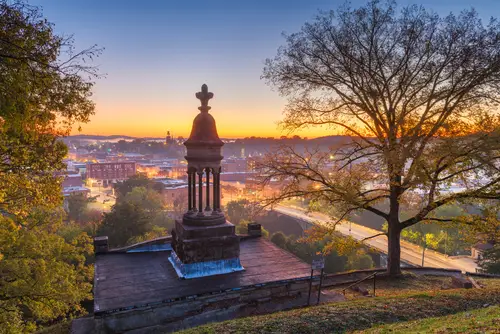
Both Romes were named after the famous Italian capital during a period when classical names were fashionable. Early American settlers often borrowed European place names to convey culture and prestige. The naming trend linked distant towns through shared historical references. It was a subtle way to import identity from abroad.
Each city developed its own regional importance over time. Rome, Georgia grew as a manufacturing and medical hub in northwest Georgia. Rome, New York became associated with early American military history and the Erie Canal corridor. Their shared name reflects a broader naming pattern across U.S. expansion.
8. Athens, Georgia & Athens, Ohio
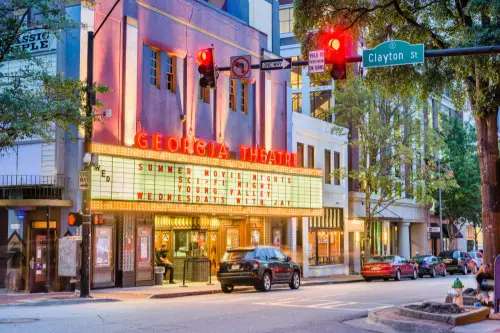
These cities share a classical name tied to education and culture. Athens, Georgia is home to the University of Georgia. Athens, Ohio hosts Ohio University, one of the nation’s oldest public universities. Both became college towns shaped by campus life.
The name “Athens” was intentionally chosen to evoke the intellectual legacy of ancient Greece. Academic identity became central to each city’s character. Walkable streets, student populations, and arts scenes define daily life. The subtle link is education woven into their civic DNA.
9. Columbus, Ohio & Columbus, Georgia
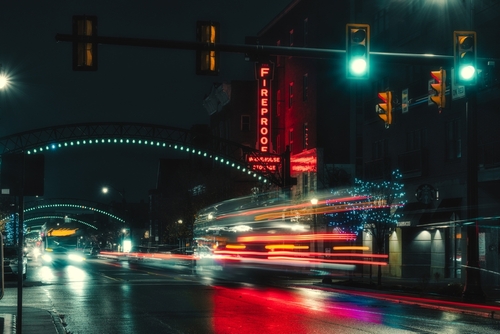
Both cities were named after Christopher Columbus during a wave of patriotic place-naming. The explorer’s name became widely used across American geography. Settlers favored it as a symbol of discovery and national identity. Multiple states adopted it independently.
Each Columbus grew into a major regional center. Columbus, Ohio became the state capital and a large economic hub. Columbus, Georgia developed as a military and manufacturing city along the Chattahoochee River. Their connection reflects shared naming traditions rather than shared borders.
10. Franklin, Tennessee & Franklin, Massachusetts
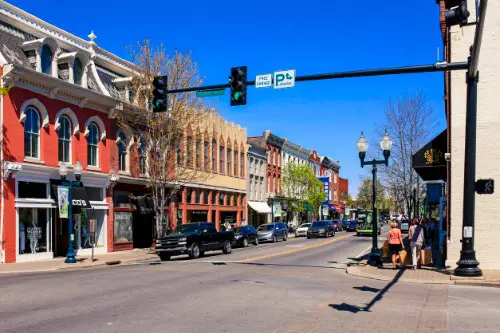
These Franklins were both named in honor of Benjamin Franklin. His legacy made his name a popular choice for towns across the country. Communities used it to signal civic pride and Enlightenment ideals. The shared name ties them to a founding-era figure.
Franklin, Massachusetts has a strong historical link to education and public libraries. Franklin, Tennessee became known for Civil War history and later suburban growth. Despite different regional stories, both reflect admiration for the same historical figure. A shared namesake quietly connects them.
11. Jackson, Mississippi & Jackson, Wyoming

These two Jacksons share a presidential namesake in Andrew Jackson. The name spread widely across the U.S. during the 19th century. Communities adopted it to honor the general and later president. The pattern created matching city names across distant states.
Jackson, Mississippi grew into a Southern state capital with deep civil rights history. Jackson, Wyoming developed as a gateway town to national parks and mountain tourism. Their economies and landscapes differ dramatically. The subtle connection is historical naming influence spanning very different regions.
This post Something Subtle Connects These Towns Across Different States was first published on American Charm.

