
1. Antelope Canyon
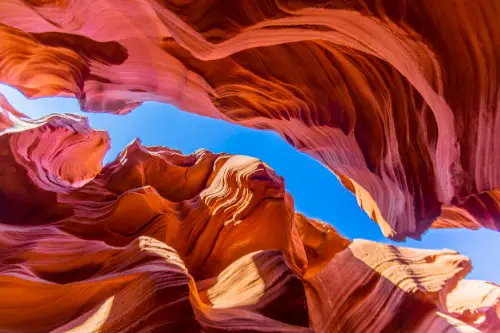
Walking through Antelope Canyon feels like stepping inside a CGI light tunnel. The narrow sandstone walls twist into silky curves that glow orange, pink, and gold as sunlight filters down from above. Beams of light slice through the openings at certain times of day, creating those iconic spotlight columns you’ve probably seen in photos. It’s the kind of place that makes you instinctively whisper, even though you’re outdoors.
The canyon was carved by flash floods over thousands of years, which smoothed the rock into its flowing, wave-like shapes. It sits on Navajo land near Page, Arizona, and can only be visited with a licensed guide. The constantly shifting light means it never looks the same twice, even if you visit on the same day. Photographers plan entire trips around catching the midday sunbeams at just the right angle.
2. Bonneville Salt Flats
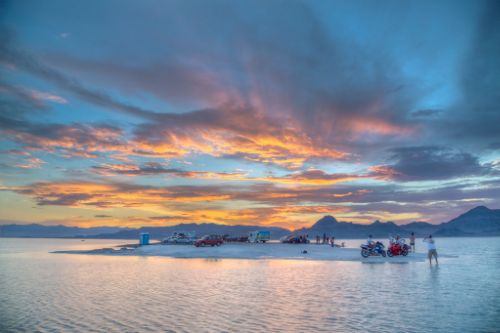
The Bonneville Salt Flats look like a giant mirror dropped in the middle of the desert. After rain, a thin layer of water turns the white salt crust into a flawless reflection that blurs the line between earth and sky. On dry days, the ground stretches out like an endless sheet of cracked marble. Either way, it feels less like a landscape and more like a surreal visual effect.
This otherworldly stretch covers over 30,000 acres in northwestern Utah. The flats formed when an ancient lake evaporated, leaving behind a dense layer of salt minerals. The pancake-flat surface is so smooth that land speed records are tested here. It’s why race cars, motorcycles, and filmmakers all flock to the same stark, silent expanse.
3. Thor’s Well
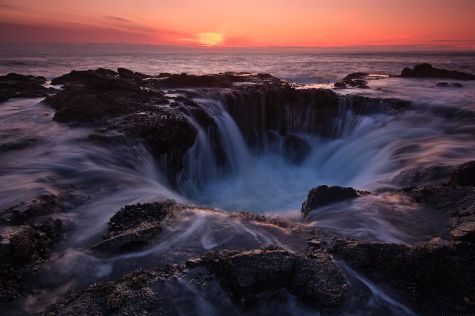
Thor’s Well looks like a bottomless drain swallowing the Pacific Ocean. Waves crash over the rocky shoreline and rush straight into the circular hole, exploding upward in dramatic bursts of spray. From the right angle, it genuinely resembles a portal to another world. The constant motion makes it feel alive and slightly dangerous.
You’ll find it along the Oregon coast near Cape Perpetua. It’s actually a collapsed sea cave carved by relentless wave erosion. Timing is everything, since the well is most dramatic at high tide or during storms. Visitors have to watch their footing carefully because rogue waves can surge unexpectedly.
4. The Wave
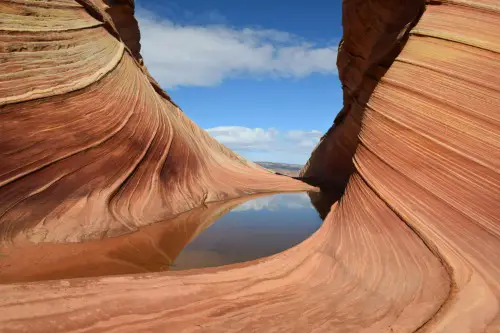
The Wave looks like a frozen ocean made of stone. Bands of red, orange, and cream sandstone ripple across the landscape in perfectly sculpted curves. The patterns are so precise that they seem digitally rendered. Every step reveals new swirls that feel mathematically designed.
This formation sits in the Coyote Buttes North area on the Arizona–Utah border. It was shaped by wind and water erosion over millions of years. Access is strictly limited through a permit lottery to protect the fragile rock. That exclusivity only adds to its almost-mythical reputation.
5. Badlands National Park
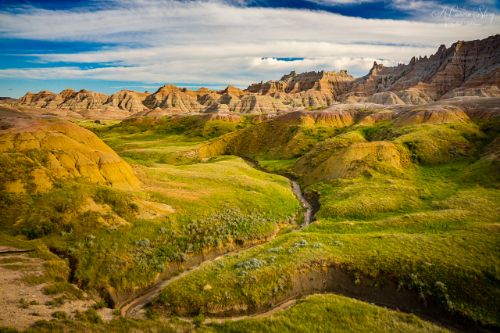
Badlands National Park looks like a matte painting from an old Western or sci-fi epic. Jagged ridges, striped rock layers, and sharp spires stretch across the horizon in dusty reds and pale grays. The terrain feels rugged and alien at the same time. Sunrises and sunsets crank up the color contrast to unreal levels.
Located in South Dakota, the park preserves one of the richest fossil beds in the world. Wind and water carved the dramatic formations from sediment laid down by ancient seas. Bison and bighorn sheep roam the mixed-grass prairie above the cliffs. It’s a rare place where prehistoric geology and living wildlife share the same frame.
6. Fly Geyser
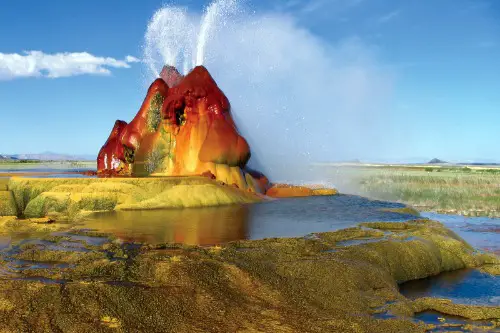
Fly Geyser looks like a neon prop from a fantasy film. Mineral-rich water sprays from the ground and builds colorful terraces in shades of red, green, and orange. Steam rises constantly, giving the whole scene a dreamlike haze. It’s wildly vibrant against the muted desert around it.
The geyser formed accidentally in 1964 after a geothermal drilling project. Dissolved minerals have continued stacking into otherworldly cone shapes ever since. It sits on private land in Nevada’s Black Rock Desert but can be visited on guided tours. The vivid colors come from heat-loving algae thriving in the hot water.
7. Hamilton Pool Preserve
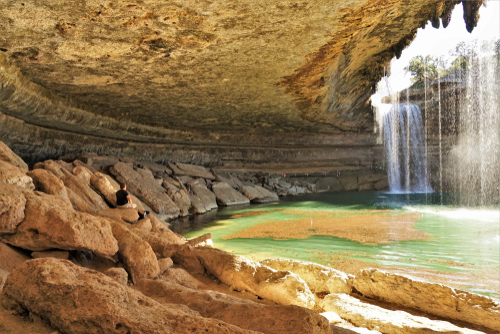
Hamilton Pool Preserve feels like a secret lagoon hidden in an adventure movie. A jade-green pool sits beneath a massive limestone overhang that curves like a natural dome. A thin waterfall spills over the edge, especially after rain. Ferns and moss soften the rock, making the whole place feel tucked away from time.
The preserve lies west of Austin, Texas, and formed when an underground river collapsed thousands of years ago. Swimming is sometimes restricted depending on water quality and conditions. The short hike in adds to the sense of discovery. It’s a cool, shaded escape in the middle of Texas heat.
8. Mendenhall Ice Caves
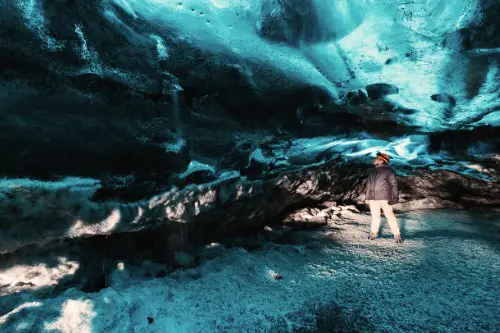
The Mendenhall Ice Caves look like glowing blue crystal tunnels. Light filters through dense glacier ice, turning the interior into electric shades of sapphire and turquoise. The ceilings ripple with trapped air bubbles and frozen textures. It feels like walking through a living sculpture made of light and ice.
These caves form within the Mendenhall Glacier near Juneau, Alaska. Meltwater constantly reshapes the tunnels, so their size and layout change every year. Access can be dangerous and often requires experienced guides and proper gear. The fragile beauty is temporary, which makes every visit unique.
9. Bryce Canyon National Park
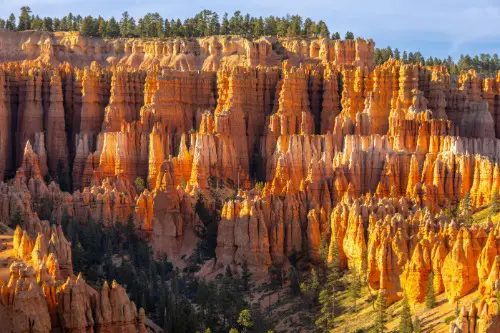
Bryce Canyon National Park looks like a natural amphitheater filled with stone skyscrapers. Thousands of thin rock spires, called hoodoos, rise in dense clusters across the landscape. Their orange and pink tones shift dramatically with the angle of the sun. From above, it resembles an enormous fantasy city carved from clay.
The park sits at high elevation in southern Utah. Frost wedging and erosion sculpted the hoodoos over millions of years. Scenic overlooks make it easy to take in the scale without strenuous hiking. At night, the dark skies turn it into a prime stargazing destination.
10. Great Sand Dunes National Park and Preserve
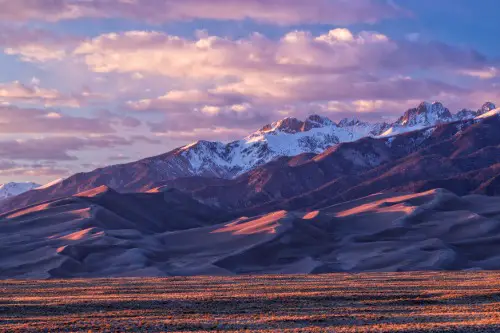
Great Sand Dunes National Park looks like a slice of the Sahara dropped beside the Rocky Mountains. Massive dunes roll across the valley, some towering over 700 feet tall. Wind reshapes the ridges daily, so the surface always looks freshly sculpted. Snowcapped peaks in the background make the contrast feel almost unreal.
The park sits in southern Colorado and protects the tallest dunes in North America. Seasonal creeks create temporary beaches at the base of the sand. Visitors can sandboard and sled down the steep slopes. The mix of desert, wetlands, forest, and alpine tundra packs multiple ecosystems into one view.
11. Devils Tower National Monument
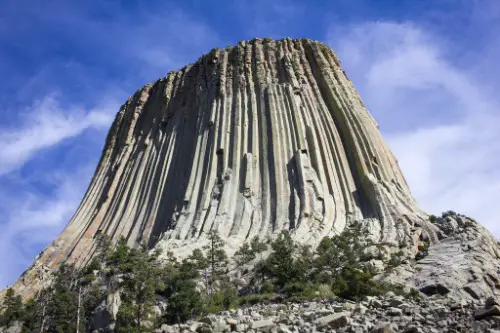
Devils Tower rises from the landscape like a perfectly designed movie prop. The massive stone column features vertical cracks that make it look carved by giant tools. Its flat summit and isolated position give it a mysterious presence. You half expect a spaceship to hover overhead.
Located in northeastern Wyoming, it was the first U.S. national monument. The formation is an igneous intrusion exposed by erosion of the surrounding rock. Many Native American tribes consider it sacred. Rock climbers scale its sheer sides during permitted seasons.
12. Havasu Falls
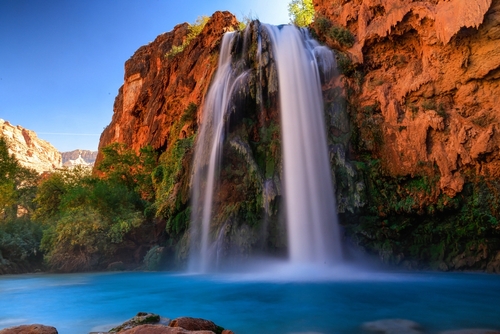
Havasu Falls looks like someone cranked the saturation up to maximum. Bright turquoise water plunges over red canyon walls into vivid blue-green pools below. The color contrast feels almost edited, but it’s completely natural. Palm trees and travertine terraces add to the oasis vibe.
The falls are located on the Havasupai Reservation within the Grand Canyon region of Arizona. The striking water color comes from high concentrations of dissolved calcium carbonate. Reaching it requires a challenging hike and advance permits. That effort keeps the experience feeling remote and unforgettable.
This post U.S. Spots That Look Like Movie Sets — But Are Completely Real was first published on American Charm.

