1. Savannah
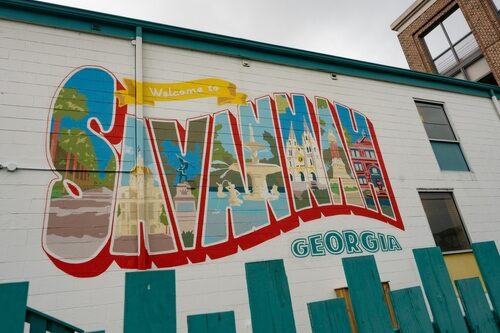
There’s a softness to Savannah that sneaks up on you the moment you start walking. The historic district is shaded by massive live oaks draped in Spanish moss, and the light filters through in a hazy green glow. Streets unfold around intimate garden squares, so you keep wandering into quiet pockets with benches and fountains. It feels less like a rigid city grid and more like a sequence of outdoor living rooms.
That layout subtly changes how you move through the day. Instead of rushing from block to block, you drift from square to square and slow your pace without trying. The architecture stays low and cohesive, with wrought-iron balconies and pastel stucco that never overwhelms the eye. Even the air feels gentler thanks to coastal humidity and all that tree cover.
2. Santa Fe
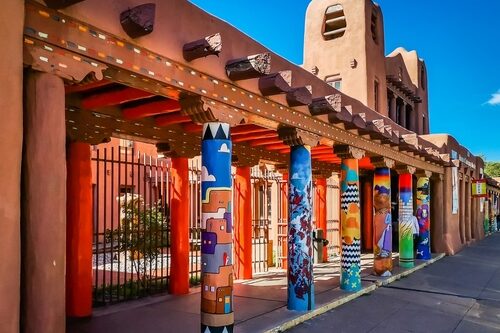
Santa Fe feels unified in a way most American towns don’t. Nearly every building follows Pueblo Revival and Territorial architectural styles, with rounded adobe forms and earth-tone colors. The skyline stays low, so big Western skies always feel close and present. You notice texture everywhere, from wooden vigas to hand-plastered walls.
The color palette quietly shapes your mood. Warm clay reds and sandy beiges reflect sunlight in a way that feels calming rather than glaring. Even modern storefronts blend into the historic look, so nothing visually interrupts your stroll. It creates a rare sense that the whole town agreed on an aesthetic.
3. Mackinac Island
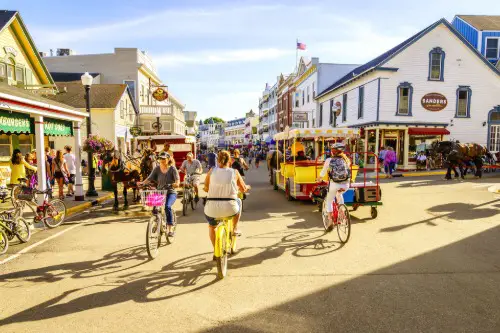
The first thing you notice is what you don’t hear. Cars are banned on Mackinac Island, so the loudest sounds are bicycle wheels, horse hooves, and wind off Lake Huron. Streets feel calmer without engines or traffic signals competing for attention. It’s like everyday life has been turned down a few notches.
That quiet changes how people interact with the place. You smell lilacs in spring and lake air in summer without exhaust in the mix. Travel happens by foot, bike, or carriage, which naturally slows conversations and sightseeing. The absence of cars makes the island feel suspended in time.
4. Charleston
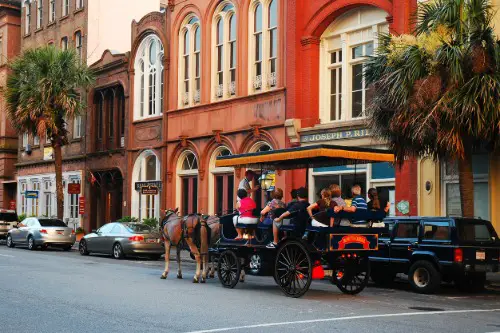
Charleston carries itself with a kind of polished ease. Historic homes sit close to the street with long side porches designed to catch coastal breezes. Pastel facades and black shutters reflect heat while giving the streets a soft, cohesive look. Narrow lanes and hidden courtyards make wandering feel intimate.
Water is never far away, and that proximity shapes the atmosphere. Marsh हवा and tidal creeks bring a faint briny scent that mingles with jasmine in warm months. Church steeples rise above the skyline instead of glass towers, keeping the city feeling grounded. Even busy areas feel measured rather than rushed.
5. Carmel-by-the-Sea
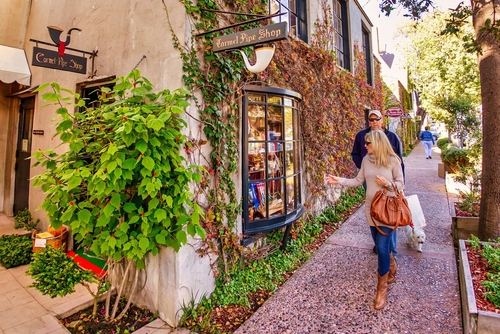
Carmel-by-the-Sea feels like a storybook that happens to sit on the Pacific. Many cottages have whimsical architecture with curved roofs, arched doors, and fairytale proportions. There are no house numbers on street-facing homes, and mail is picked up at a central post office. Commercial signage is understated, keeping storefronts charming rather than flashy.
The town’s relationship with nature quietly sets the tone. Cypress trees twist dramatically along the coastline, shaped by steady ocean winds. White-sand beaches sit steps from downtown without high-rise development blocking views. The result is a place that feels intentionally small and carefully preserved.
6. New Harmony
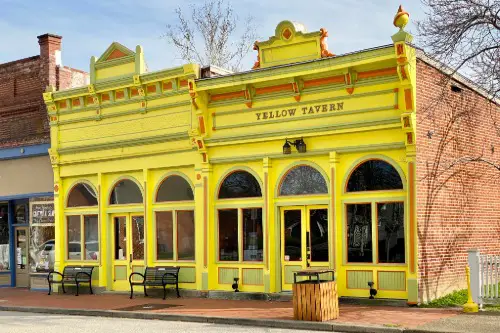
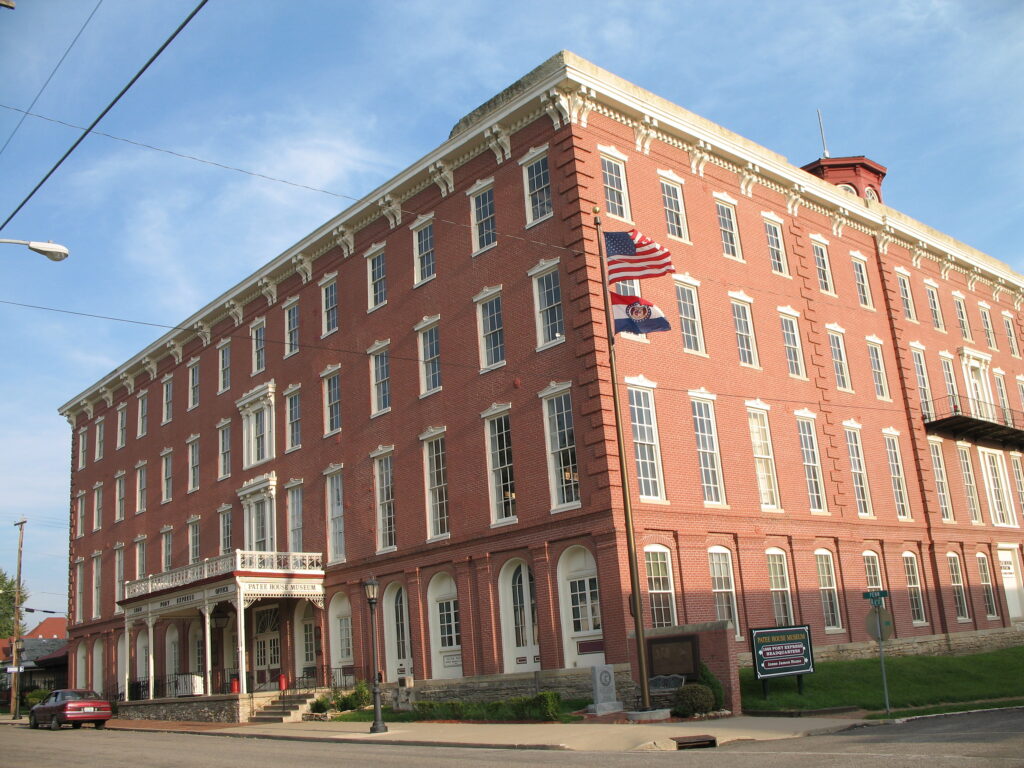
New Harmony feels unusually thoughtful for a small Midwestern town. It was founded as a 19th-century utopian community, and that experimental spirit still lingers. Tree-lined streets are wide and walkable, with historic brick buildings spaced comfortably apart. Public gardens and quiet gathering spots seem designed for reflection.
You sense planning rather than sprawl. Landmarks like the Roofless Church create contemplative spaces that invite you to pause. Traffic stays light, and commercial development feels restrained. The town feels purposefully calm instead of accidentally quiet.
7. Taos
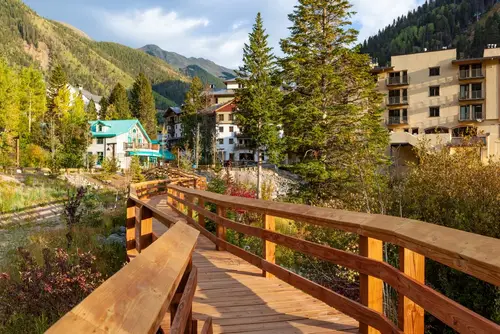
Taos blends art, history, and landscape in a seamless way. Adobe buildings echo the forms of the surrounding desert and mountains. The historic plaza remains a social hub, framed by low structures and shaded walkways. You’re constantly aware of the high-desert light, which feels crisp and intensely clear.
Creative energy hums without feeling showy. Galleries and studios appear in modest spaces rather than flashy districts. The nearby Taos Pueblo, continuously inhabited for centuries, reinforces a deep sense of place. It all makes the town feel rooted rather than curated.
8. St. Augustine
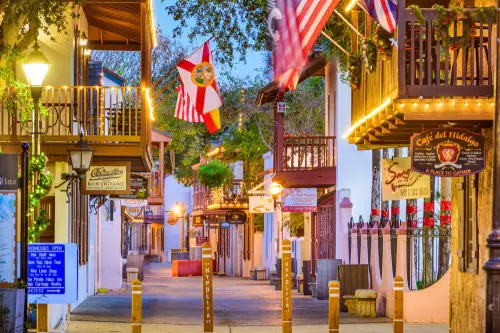
St. Augustine carries layers of history you can see at street level. Spanish colonial architecture mixes with narrow pedestrian lanes and stone forts. The street plan predates most American cities, so it feels organically arranged instead of grid-strict. Balconies and courtyards create shaded pockets along busy paths.
Coastal humidity softens the edges of everything. Palms sway above centuries-old masonry without looking out of place. Horse-drawn carriages still roll through the historic district, adding gentle background rhythm. The past feels integrated into daily life rather than staged.
9. Galena
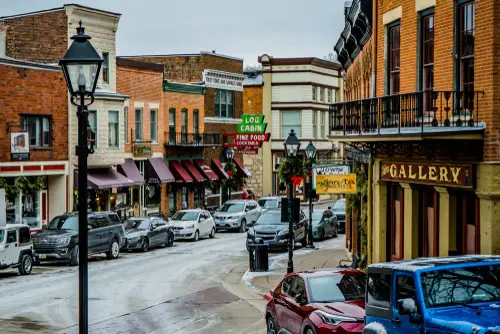
Galena feels tucked into its landscape instead of built over it. The downtown follows the curve of the Galena River, with 19th-century brick buildings climbing gentle hillsides. Main Street slopes noticeably, giving storefront views a layered look. You get a sense of elevation change almost everywhere you walk.
Preservation plays a quiet but powerful role. A large share of buildings are maintained in historic condition, keeping materials and details consistent. Modern development stays mostly out of sight from the center. The town feels cohesive rather than pieced together.
10. Port Townsend
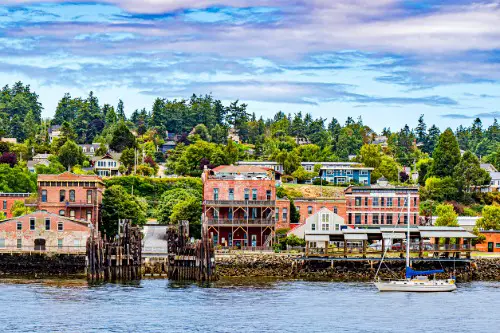
Port Townsend pairs maritime grit with Victorian elegance. Historic seaport buildings feature ornate facades left from a 19th-century economic boom. The waterfront stays active with working boats, not just sightseeing vessels. Sea air and weathered wood textures make the town feel tactile.
Cloud cover and coastal light soften the scenery. The Olympic Mountains rise in the distance without dominating the skyline. Independent bookstores and cafes fill preserved brick structures. It feels creative and practical at the same time.
11. Telluride
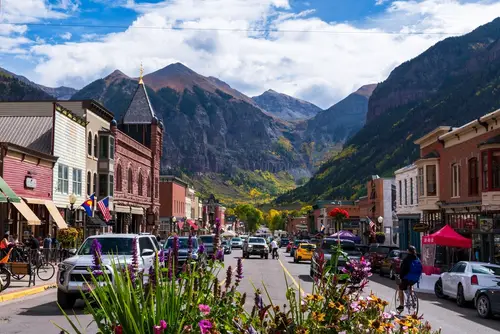
Telluride’s setting does most of the talking. The town sits in a box canyon surrounded by steep, forested peaks on three sides. Streets follow a simple grid, but towering mountains frame every view. The scale of nature makes buildings feel secondary in a comforting way.
There’s also a visual consistency that keeps things grounded. Historic wooden storefronts line the main street with restrained signage. Modern development stays low-profile and carefully placed. Even festivals feel intimate because the valley naturally contains the crowds.
12. Beaufort
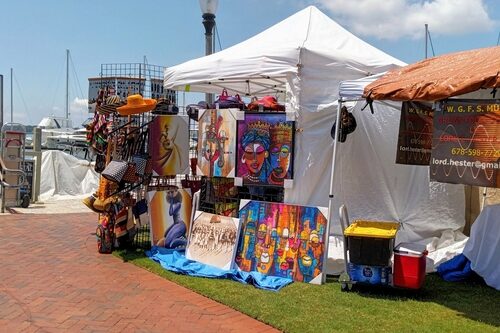
Beaufort moves at a tide-influenced rhythm. The town sits along coastal waterways where marsh grasses shift color with the light. Antebellum homes with deep porches face the water, positioned to catch breezes. Streets remain shaded and residential rather than commercial-heavy.
Sound travels differently near the marsh. You hear birds, boat motors, and wind through reeds more than traffic. Waterfront parks feel woven into daily routines instead of separated as attractions. The atmosphere leans reflective without trying to be quaint.
13. Eureka Springs
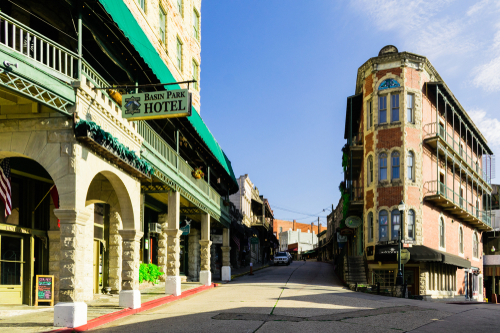
Eureka Springs feels delightfully irregular. Streets curve with the Ozark hills instead of flattening them into a grid. Victorian buildings stack along slopes, creating layered sightlines and unexpected stairways. You’re often entering shops at different elevations on the same block.
That terrain shapes behavior in subtle ways. Walking requires a slower pace and more attention to footing. Cars take winding routes that make distances feel longer than they are. The town’s natural contours make exploration feel like discovery rather than navigation.
This post Something Subtle Makes These American Towns Feel Different was first published on American Charm.