
1. Sault Ste. Marie, Michigan

Sault Ste. Marie occupies Michigan’s Upper Peninsula right beside the Canadian border. While it’s internationally split from its Ontario twin, it also sits at the edge of state jurisdiction and federal waterways. The Soo Locks and St. Marys River define daily life here. Borders are simply part of the scenery.
The city’s layout revolves around crossings and customs routes. Shipping traffic and tourism depend on that boundary geography. Locals grow used to passports, bridges, and jurisdiction lines. It’s a place where borders feel ordinary and constant.
2. Bristol, Tennessee
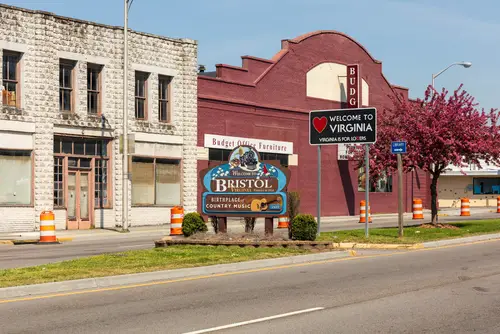
Bristol sits right against Bristol, Virginia, with the state line running straight down the middle of town. The dividing line follows State Street, which locals treat like any other main road. Homes, shops, and restaurants line both sides with barely a visual cue that you’ve changed states. It feels more like crossing an invisible seam than a border.
The twin cities proudly call themselves “A Good Place to Live,” and they truly function as one community. Bristol is also recognized as the birthplace of country music, adding cultural weight to its quirky geography. The Bristol Motor Speedway nearby pulls fans from both states in massive numbers. Living here means your daily routine casually hops between Tennessee and Virginia.
3. Kansas City, Missouri
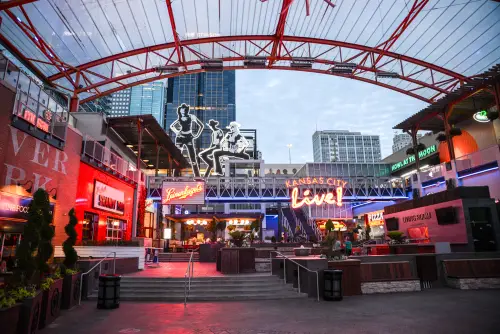
Kansas City, Missouri, presses right up against Kansas City, Kansas, forming one of the largest bi-state metro areas in the country. The state line slices through neighborhoods, commercial districts, and even school boundaries. Major roads carry you back and forth so smoothly you may not notice the switch. It’s a metropolitan area with two state identities.
The Missouri side is home to most of the skyline and historic districts. Cross west and you’re instantly in Kansas with different taxes and laws. Sports loyalties, jobs, and nightlife spill freely across the border. Residents often joke they live in one state and do everything else in the other.
4. Union City, Indiana
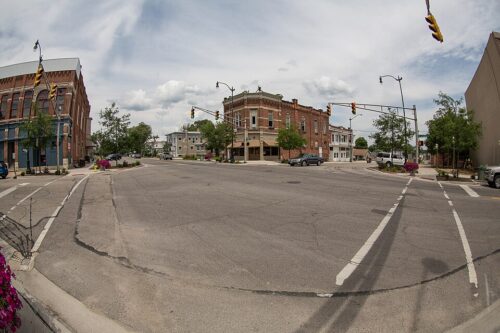
Union City, Indiana, directly adjoins Union City, Ohio, forming a perfectly matched pair. The towns share a name, a continuous street grid, and a blended local culture. The state line runs between them, but you’d never guess it by looking. It feels like one small town politely split in two.
Neighbors commute across the border for work, school, and shopping every day. Community events and services often involve both sides. Even emergency services coordinate closely because the boundary is so tight. The duplication of the town name makes the geography extra charming.
5. Texhoma, Oklahoma
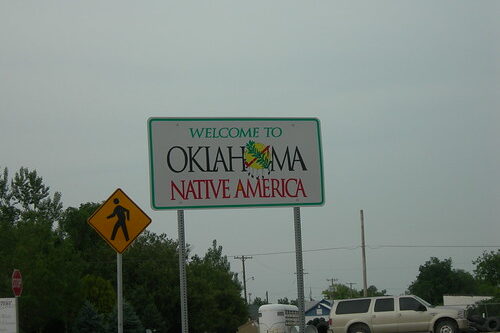
Texhoma sits on the Oklahoma–Texas border and pairs with Texhoma, Texas. The main street effectively doubles as the state line. Businesses and homes face each other from opposite states like friendly rivals. It’s small-town life with a bi-state twist.
The shared name reflects the blended identity of the two communities. Daily errands can involve crossing jurisdictions without any ceremony. Local governance is separate, but community ties are strong. It’s a quiet example of how borders don’t always divide people.
6. Beloit, Wisconsin
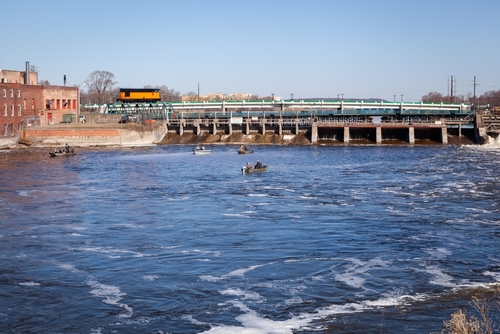
Beloit sits immediately north of the Illinois line, hugging South Beloit, Illinois. The two cities connect via bridges and arterial roads over the Rock River. To visitors, the urban area reads as one continuous place. Only welcome signs hint you’ve crossed a state boundary.
Residents frequently live in one state and work in the other. Retail corridors and neighborhoods blend right into each other. The river setting gives both sides a shared landscape and economy. It’s a seamless borderland community in the Midwest.
7. Texarkana, Texas
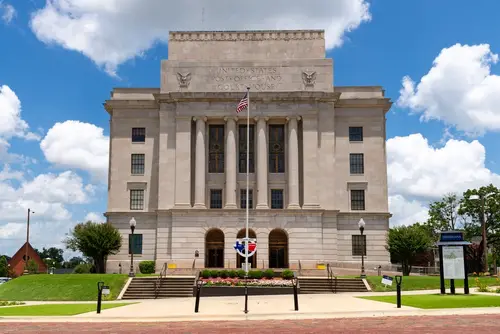
Texarkana is famous for being split cleanly down the middle by the Texas–Arkansas state line. The city shares its name and urban core with Texarkana, Arkansas, making it feel like one place with two governments. Streets, neighborhoods, and businesses seamlessly straddle the border. You can literally stand with one foot in each state.
The most iconic example is the U.S. Post Office and Federal Courthouse that sits directly on State Line Avenue. One side of the street is Texas, and the other is Arkansas, which makes for great photo ops. Residents cross state lines constantly without giving it much thought. It’s a daily life version of living in two places at once.
8. Calexico, California
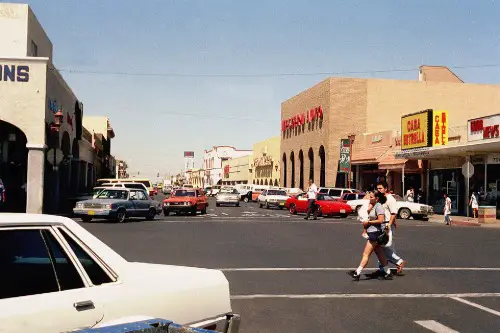
Calexico rests along California’s southern edge at the Mexican border. Its name literally blends “California” and “Mexico,” reflecting its cross-border identity. The city connects directly with Mexicali, forming a dense international metro area. Border infrastructure is woven into everyday routines.
Commerce, culture, and families span both sides of the line. Ports of entry sit minutes from neighborhoods and schools. Spanish and English mix naturally in daily conversation. Geography shapes everything from traffic patterns to local cuisine.
9. Nogales, Arizona
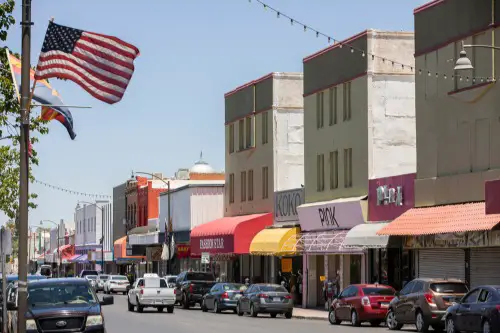
Nogales sits on Arizona’s border and pairs with Nogales, Sonora, just across Mexico. A fence and ports of entry mark the boundary, but the cities share deep historical ties. Streets on both sides line up almost perfectly. The urban fabric feels continuous despite national differences.
Cross-border trade drives the local economy. Families and businesses often maintain connections on both sides. The twin-city layout makes the border highly visible yet deeply familiar. It’s a daily lesson in how lines on maps meet real life.
10. Bluefield, West Virginia

Bluefield sits against Bluefield, Virginia, forming another same-name border pair. The towns share infrastructure, media markets, and community institutions. A short drive can move you between states without fanfare. The Appalachian setting gives both sides a shared backdrop.
Local pride embraces the twin-city identity. Events and services often draw residents from both states. The downtown areas feel like extensions of each other. It’s a mountain-region version of a split-but-united town.
11. Delmar, Maryland
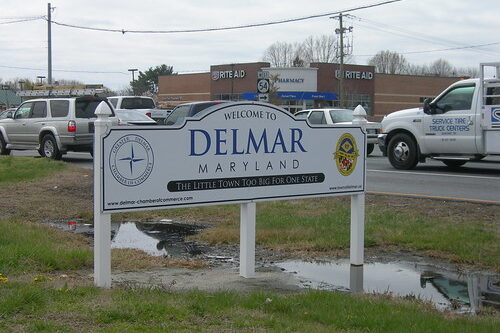
Delmar sits directly on the Maryland–Delaware line, and its name combines both states. The boundary runs straight through town along State Street. Buildings, homes, and businesses line either side of the divide. It’s a literal case of a border running through Main Street.
Markers embedded in the street show exactly where the line falls. Residents casually cross it while walking to shops or visiting neighbors. The shared name reinforces a blended identity. It’s a small but perfect example of America’s line-straddling towns.
This post This Strange Pattern Shows Up in Towns All Across America was first published on American Charm.

