1. St. Augustine
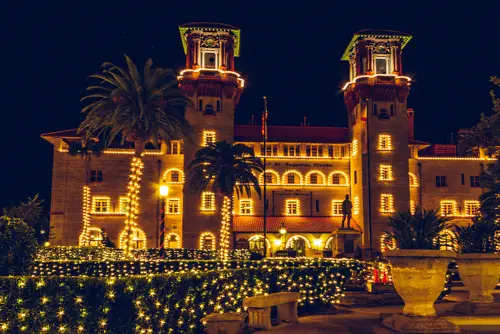
Walking through St. Augustine feels like stepping onto a cobblestone set from another century. Founded in 1565, it’s the oldest continuously inhabited European-established city in the U.S., and it wears that history proudly. Spanish colonial architecture, stone forts, and narrow streets make modern life feel like a quiet afterthought. You half expect a galleon to appear on the horizon.
The star attraction is the Castillo de San Marcos, a 17th-century Spanish stone fortress that still dominates the waterfront. Horse-drawn carriages clip-clop past centuries-old buildings that now house cafés and small shops. The historic district is compact, which makes wandering feel intimate and unhurried. It’s easy to lose track of time here in the best possible way.
2. Williamsburg
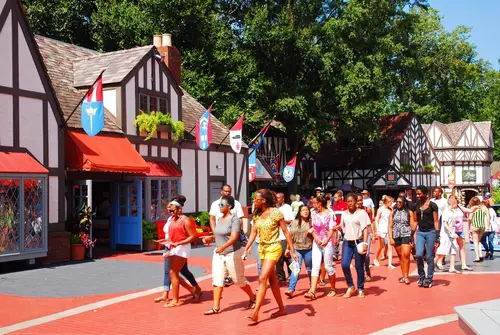
Williamsburg is basically a living snapshot of colonial America. Much of the city is preserved as Colonial Williamsburg, where restored 18th-century buildings line tidy streets. Costumed interpreters demonstrate trades like blacksmithing and printing as if the Revolution were still brewing. It feels immersive rather than staged.
You can tour the Governor’s Palace, step inside historic taverns, and watch reenactments on the village green. Modern traffic gives way to brick paths and period details that make everything feel deliberate. The town played a central role in early American politics and education, and that legacy is tangible. History isn’t behind glass here, it’s happening around you.
3. Deadwood
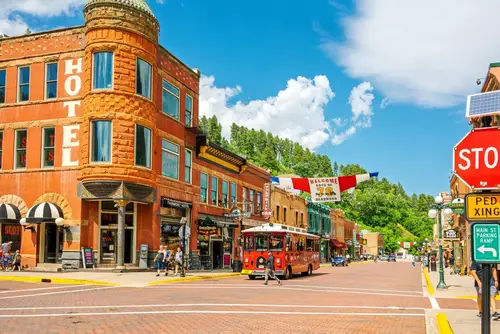
Deadwood leans fully into its Wild West roots without feeling gimmicky. The entire town is a National Historic Landmark, packed with 19th-century buildings and saloons. Legends like Wild Bill Hickok and Calamity Jane actually walked these streets. That frontier grit still defines the place.
Historic Main Street looks much like it did during the Black Hills Gold Rush. You can visit preserved gambling halls and old hotels with ornate woodwork and tin ceilings. The surrounding hills add to the sense of isolation that once shaped boomtown life. It’s easy to picture stagecoaches rolling in with prospectors and big dreams.
4. Tombstone
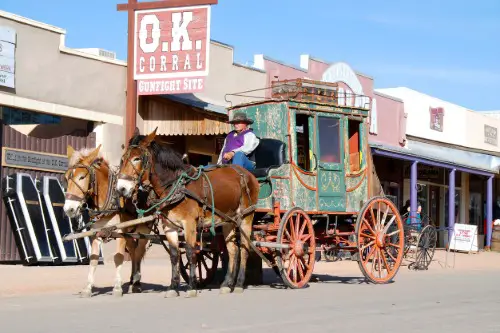
Tombstone proudly calls itself “The Town Too Tough to Die,” and it earns the nickname. This former silver mining town is famous for the 1881 Gunfight at the O.K. Corral. Wooden boardwalks and Old West storefronts make the setting feel straight out of a sepia photograph. The desert landscape seals the illusion.
Many original structures still stand, including the Bird Cage Theatre and the O.K. Corral site. Daily reenactments bring the town’s most famous showdown to life. You’ll hear spurs jingling more often than car horns. It’s theatrical, yes, but rooted in real frontier history.
5. Mackinac Island
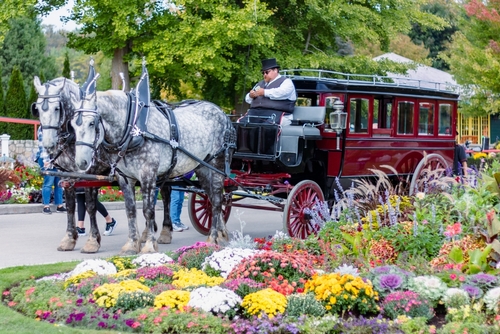
Mackinac Island feels delightfully out of sync with the modern world. Cars are banned, so transportation comes by bicycle, foot, or horse-drawn carriage. Victorian architecture and a grand lakeside setting create an old-fashioned resort atmosphere. The slower pace is instantly noticeable.
The island became a popular vacation spot in the late 19th century, and many buildings date to that era. The Grand Hotel’s sweeping porch is one of the most iconic sights in the Midwest. Fudge shops and historic inns line the charming downtown streets. It’s nostalgia wrapped in fresh lake air.
6. Galena
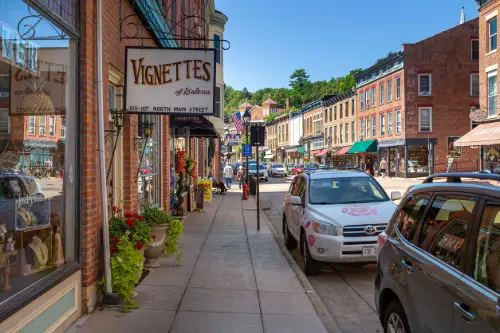
Galena looks like a preserved slice of the 1800s tucked into rolling hills. Once a booming lead mining town, it prospered long before modern highways bypassed it. Its Main Street is lined with beautifully kept Italianate and Federal-style buildings. The whole place feels carefully paused in time.
Ulysses S. Grant lived here before the Civil War, and his home is now a historic site. Brick sidewalks and vintage storefronts make casual strolls feel cinematic. The surrounding countryside adds to its tucked-away charm. It’s the kind of town where history feels comfortably close.
7. Jim Thorpe
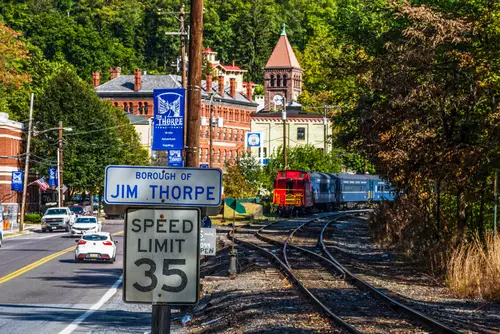
Jim Thorpe sits dramatically in a narrow mountain gorge, which adds instant old-world atmosphere. The town flourished in the 19th century thanks to coal and railroads. Victorian architecture climbs the hillsides in layers of ornate detail. It feels both grand and cozy at the same time.
The Lehigh Gorge Scenic Railway still runs through town, echoing its industrial heyday. Historic mansions and a stately opera house anchor the downtown. The town was renamed in honor of the famed Native American athlete Jim Thorpe. Its setting and preservation make it feel wonderfully timeless.
8. Bisbee
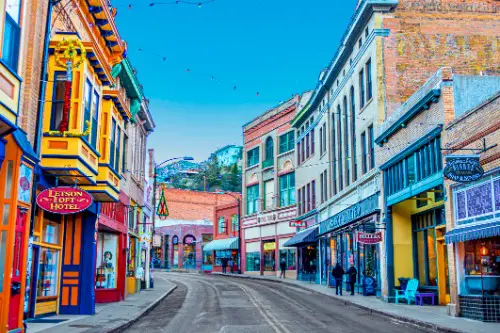
Bisbee began as a copper mining town and never lost its quirky character. Colorful historic buildings cling to steep hillsides in a way that feels almost European. Staircases and narrow streets replace big boulevards. The layout alone slows you down.
Many original structures from the early 1900s remain in active use. Vintage signage, art galleries, and old storefronts give downtown a lived-in historic feel. The surrounding desert mountains heighten the sense of remoteness. It feels like a creative community that time politely forgot.
9. Ferndale
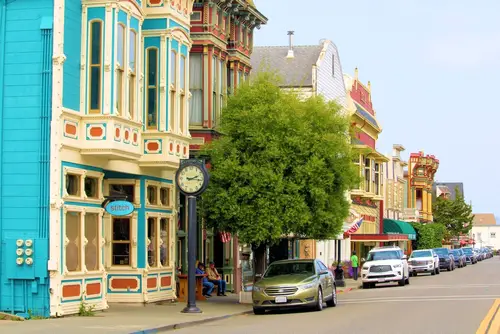
Ferndale looks like a perfectly preserved Victorian postcard. Its Main Street is famous for ornate “Butterfat Palaces” built during the dairy boom. Decorative woodwork and bright paint colors make every building eye-catching. There’s a cheerful elegance to the whole town.
The surrounding dairy farms and coastal landscapes keep development low-key. Many buildings date back to the late 19th century and are carefully maintained. Even the local cemetery is a historic landmark with ocean views. It’s quiet, charming, and distinctly old-fashioned.
10. Eureka Springs
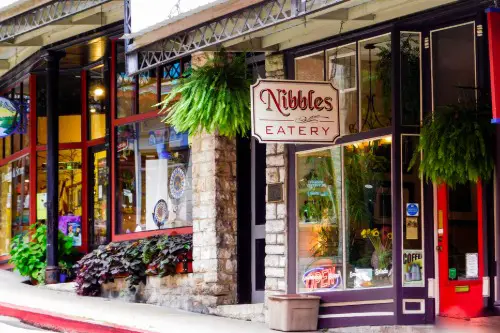
Eureka Springs feels like a Victorian mountain resort that never modernized in a rush. The entire downtown is on the National Register of Historic Places. Steep winding streets are lined with preserved 19th-century buildings and stone staircases. There’s no grid system, which makes exploring feel organic and old-world.
The town boomed as a spa destination thanks to its natural springs. Grand historic hotels and bathhouses still define the skyline. Local shops occupy beautifully restored storefronts with wrought-iron balconies. It’s eclectic, walkable, and charmingly stuck in another era.
11. Cape May
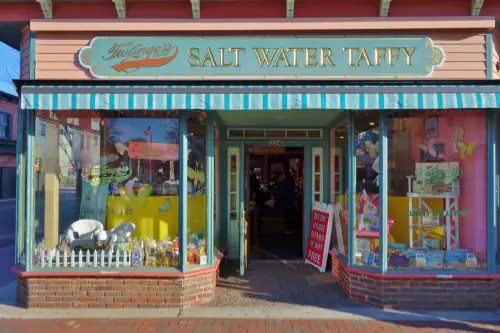
Cape May is one of the country’s best-preserved Victorian seaside towns. Colorful gingerbread-trimmed homes line leafy streets near the beach. The architecture dates largely to the late 1800s after a major fire reshaped the town. It feels elegant without feeling stuffy.
Horse-drawn carriages and historic inns add to the nostalgic atmosphere. The beachfront promenade keeps commercial development at a tasteful distance. Many homes operate as bed-and-breakfasts filled with period furnishings. It’s a coastal getaway with serious time-capsule charm.
12. Harpers Ferry
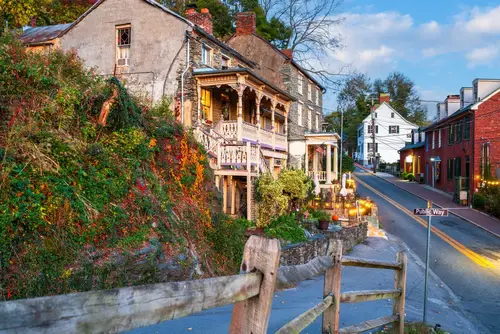
Harpers Ferry sits at the dramatic meeting point of the Potomac and Shenandoah rivers. The small town played an outsized role in American history, especially during the Civil War. Much of it is preserved as part of Harpers Ferry National Historical Park. Historic brick buildings cluster tightly along narrow streets.
John Brown’s 1859 raid took place here, and key sites are carefully preserved. Railroad bridges and old industrial structures highlight its transportation legacy. The surrounding mountains create a secluded, storybook setting. It feels like a place where history lingers in the landscape.
13. Natchitoches
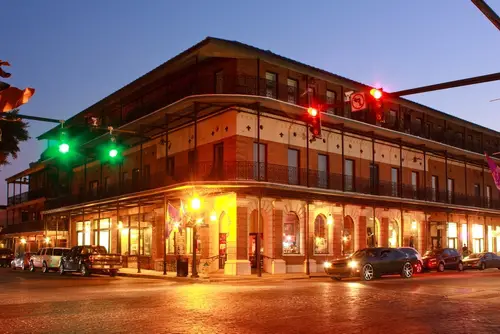
Natchitoches is the oldest permanent settlement in the Louisiana Purchase territory. Founded in 1714, it blends French, Spanish, and Creole influences. Wrought-iron balconies and brick streets give the downtown a distinctly Old World feel. The Cane River adds an unhurried waterfront backdrop.
Historic plantations and preserved townhouses tell the story of early colonial life. The National Historic Landmark District anchors the charming downtown. Festivals and local shops keep the area lively without modern overdevelopment. It’s graceful, atmospheric, and deeply rooted in the past.
14. Virginia City
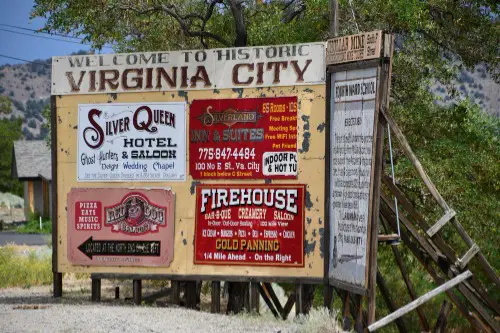
Virginia City boomed during the Comstock Lode silver strike and still looks the part. Wooden sidewalks and Old West saloons line the main street. Many original 19th-century buildings remain intact and in use. The high desert setting reinforces its frontier feel.
Historic churches, theaters, and mining structures preserve its boomtown story. Steam trains and museum exhibits bring the silver rush era to life. The town embraces preservation over modernization. It’s one of the most immersive Old West experiences in the country.
This post American Towns That Feel Like They’re Frozen in Time was first published on American Charm.