1. Film Canisters
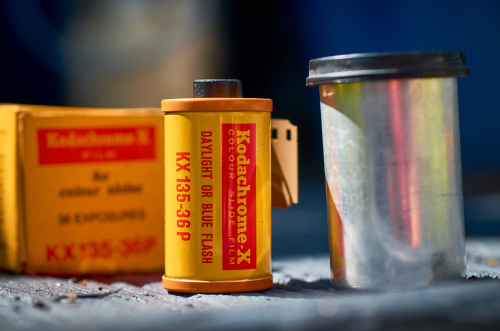
If you took photos in the 1980s, you probably had a few small plastic film canisters lying around. These containers held rolls of 35mm photographic film before they were loaded into a camera. Once the roll was finished, you removed it and brought it to a photo lab for development. The process usually took days rather than seconds.
People often repurposed the empty canisters for small storage. They were perfect for holding coins, matches, or tiny household items. Because digital photography eliminated film rolls entirely, these containers have largely disappeared from everyday life. Many younger people have never handled one outside of a classroom demonstration.
2. Floppy Disks
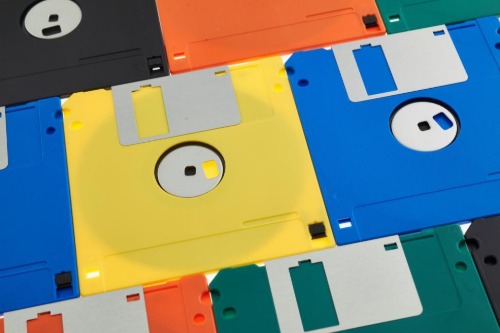
If you used a computer in the 1980s, chances are you carried your work around on floppy disks. These thin, square plastic disks—most famously the 5.25-inch and later the 3.5-inch version—were the main way people stored and transported digital files. Programs, school reports, and simple games all lived on them. The name “floppy” actually came from the flexible material used in the earlier versions.
What makes them almost unrecognizable to younger generations is how little they could hold. A common 3.5-inch floppy stored about 1.44 megabytes of data, which is less space than a single modern smartphone photo. In the 1980s, though, that felt perfectly normal because software and files were tiny by today’s standards. People often kept labeled boxes full of disks sitting next to their computer.
3. Rolodex Card Files
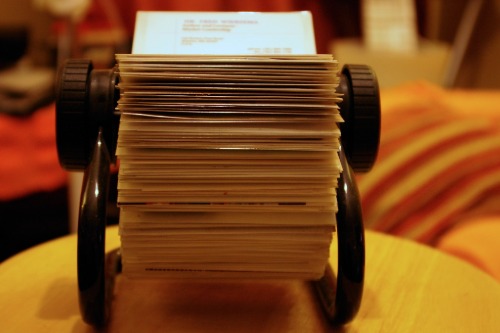
A Rolodex sat on countless office desks throughout the 1980s. It was a rotating card file that stored contact information on small index cards. Each card might hold a person’s phone number, company, mailing address, and notes. Turning the wheel flipped through contacts quickly.
For professionals, it was essentially the analog version of a contacts app. Salespeople, executives, and administrators depended on it to manage large networks of business relationships. The size of someone’s Rolodex was sometimes jokingly treated as a sign of their professional influence. Today, with smartphones storing thousands of contacts automatically, the device feels surprisingly unfamiliar.
4. Pagers (Beepers)
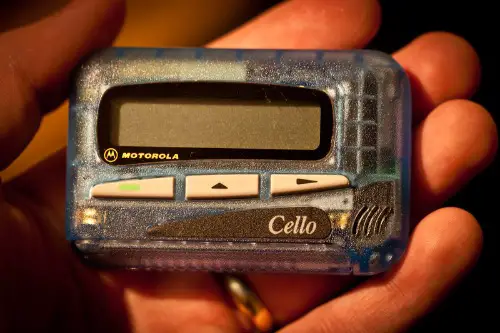
Pagers, often called “beepers,” were small electronic devices that received short numeric messages. In the 1980s they were especially common among doctors, emergency workers, and business professionals. When someone needed to reach you, they would call your pager number and enter digits through a keypad. The device would then beep and display the number on its screen.
Most messages were simply a phone number telling you who to call back. That meant finding the nearest payphone or landline to return the call. It was one of the earliest forms of mobile communication before cell phones became widespread in the 1990s. For younger generations used to instant messaging, the idea of being summoned by a string of numbers seems almost strange.
5. VCRs and VHS Tapes
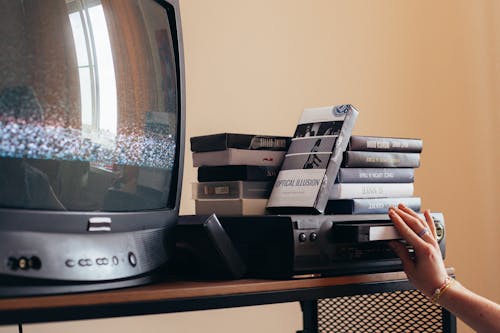
Video Cassette Recorders, or VCRs, were a centerpiece of home entertainment in the 1980s. These machines played VHS tapes, which were large plastic cartridges containing magnetic videotape. Families used them to watch rented movies from local video stores or to record television programs. It was one of the first times viewers could choose when to watch something instead of relying on broadcast schedules.
The act of “programming the VCR” became a running joke because it could be complicated. You had to enter the channel, start time, and end time correctly using the machine’s buttons and digital clock. If you got it wrong, you might record hours of static or miss the show entirely. Today’s on-demand streaming makes that whole process feel like ancient technology.
6. Dot Matrix Printer Paper with Perforated Edges
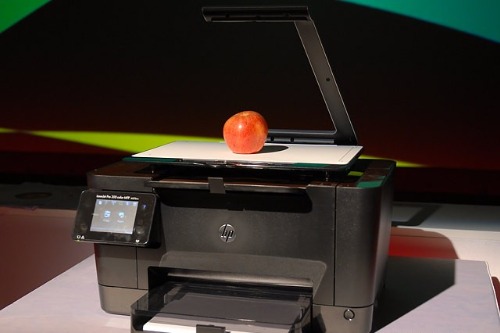
Early personal computers often printed using dot matrix printers. These machines produced text by striking tiny pins against an ink ribbon to form characters from dots. The printers used continuous feed paper that had perforated strips with holes running down both sides. Those holes allowed the printer’s tractor feed mechanism to pull the paper through.
After printing, you had to tear off the perforated edges and separate each page along dotted lines. The sound of a dot matrix printer was loud and distinctive, filling offices and computer labs with a buzzing clatter. Despite the noise and relatively low print quality, they were affordable and reliable for the time. Most younger people today have never handled that type of paper or printer.
7. Audio Cassette Tapes
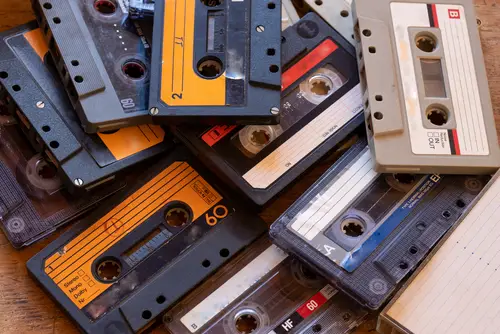
Before playlists and streaming, music fans relied heavily on audio cassette tapes. These small plastic rectangles held magnetic tape that stored sound and were played in cassette decks, boom boxes, and car stereos. In the 1980s they became the dominant personal music format in the United States. They were portable, relatively durable, and easy to copy at home.
One of their defining cultural roles was the “mixtape.” People recorded songs from the radio or other tapes to create custom mixes for road trips, parties, or friends. If the tape got tangled, you could fix it with a pencil by manually winding the reels. That hands-on experience is something younger listeners raised on streaming services rarely encounter.
8. Payphones
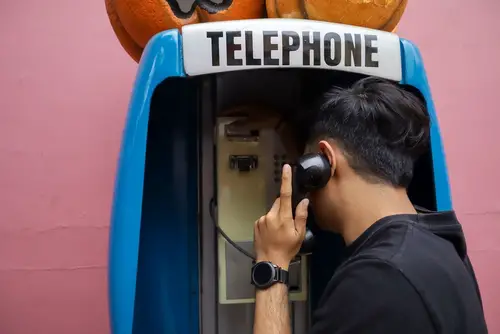
Payphones were once a normal part of everyday public infrastructure. You could find them on street corners, in shopping malls, at gas stations, and inside restaurants. To make a call, you inserted coins—typically quarters—into the machine. Long-distance calls cost more and required additional coins or special billing methods.
If you were out and needed to contact someone, a payphone was often your only option. People sometimes carried pocketfuls of change specifically for emergencies or quick check-ins. Some even memorized important phone numbers because they couldn’t rely on a digital contact list. With smartphones now everywhere, payphones have become rare sights.
9. TV Antennas (“Rabbit Ears”)
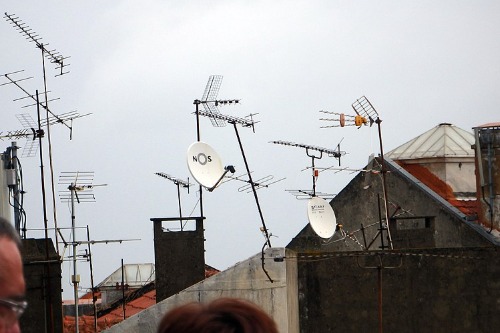
Many American households in the 1980s still relied on over-the-air television signals. Indoor antennas, commonly called “rabbit ears,” sat on top of television sets. They had two adjustable metal rods that you moved around to improve reception. Getting a clear picture often required patience and experimentation.
Family members sometimes stood near the TV holding the antenna in just the right position. Someone across the room might shout, “Don’t move, it’s perfect right there!” because shifting the antenna could bring back static. Cable television was expanding in the decade, but antennas were still extremely common. For people raised on digital cable and streaming, the ritual of adjusting rabbit ears can feel oddly primitive.
10. Typewriter Correction Fluid
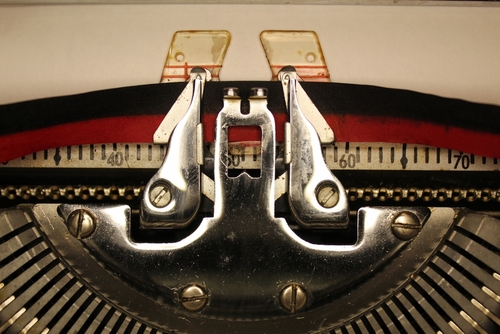
Before word processors became widespread, many documents were typed on typewriters. Mistakes were inevitable, and correction fluid was the quick fix. The white liquid was brushed over a typing error to cover it up. Once it dried, you could type the correct letter or word on top.
One well-known brand even became synonymous with the product. Office desks and student backpacks often contained a small bottle of the stuff. The strong smell and careful dabbing process were part of everyday typing. Modern editing tools make instant corrections so easy that younger generations rarely think about how tricky fixing a typo used to be.
11. Walkman Cassette Players
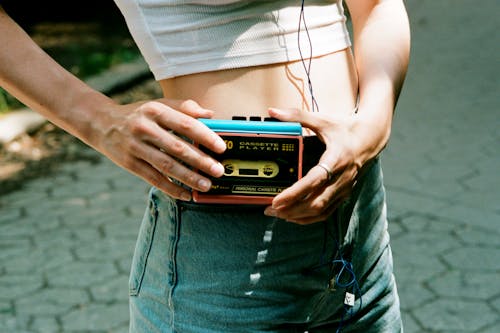
Portable music changed dramatically when the Walkman became popular in the 1980s. This small cassette player let people listen to their favorite tapes through lightweight headphones while walking, commuting, or exercising. It ran on AA batteries and clipped onto a belt or slipped into a pocket. For many listeners, it was their first truly personal music experience.
The device helped define the idea of carrying your own soundtrack through daily life. Joggers, students, and travelers all embraced the freedom of private listening. However, you still had to flip the cassette halfway through the album to hear the other side. Compared to today’s phones holding millions of songs, the process feels surprisingly manual.
12. Telephone Address Books
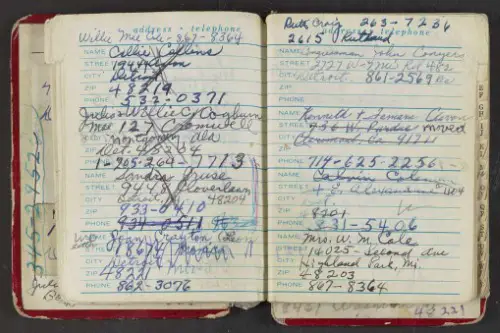
Long before smartphones stored contacts automatically, many households kept a physical telephone address book. These small books listed names alphabetically with handwritten phone numbers and addresses. Families often kept them near the kitchen phone or in a desk drawer. They were essential for remembering how to reach relatives, friends, and local services.
Updating the book was a regular chore when someone moved or changed numbers. People crossed out old entries, squeezed new numbers into margins, or rewrote pages entirely. Some books even had decades of notes layered across the same pages. For younger generations used to searchable contact lists, flipping through handwritten pages feels like a completely different era.
This post Objects People Used Daily in the 1980s That New Generations Barely Recognize was first published on American Charm.