
1. 3D Doritos (Original Version)
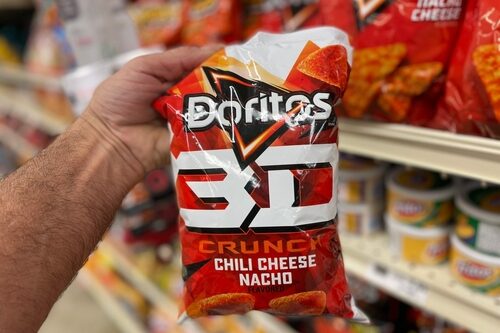
3D Doritos launched in the late 1990s as puffed, hollow versions of the classic tortilla chip. Their crunchy shell and airy interior made them feel completely different from regular Doritos. Kids loved shaking the bag to hear them rattle around before pouring out a handful. The unusual shape also made them a frequent snack during school lunches and sleepovers.
Frito-Lay discontinued the original 3D Doritos in the early 2000s. While a new version returned in 2020, many fans say the texture and flavor don’t match the original product. The newer version is closer to a puffed corn snack than the classic crunchy shell. Because of that difference, people who grew up with the original still see it as a lost snack.
2. Crystal Pepsi
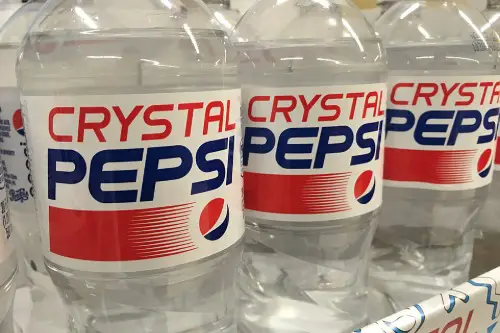
If you were a kid in the early ’90s, Crystal Pepsi probably felt like the future in a bottle. Introduced by Pepsi in 1992, the soda was clear but tasted like cola, which was meant to signal purity and a “clean” alternative to darker sodas. The novelty alone made it a lunchroom conversation starter and a staple at convenience stores for a brief moment. For a lot of American kids, cracking open a bottle felt like participating in a strange little soda experiment.
The excitement didn’t last long. Many consumers found the mismatch between the clear color and cola flavor confusing, and sales dropped quickly. Pepsi discontinued it in 1994 after the initial hype faded. Although it occasionally resurfaces as a limited-time nostalgia release, it’s nothing like the ubiquitous product many kids briefly grew up seeing everywhere.
3. Jell-O Pudding Pops
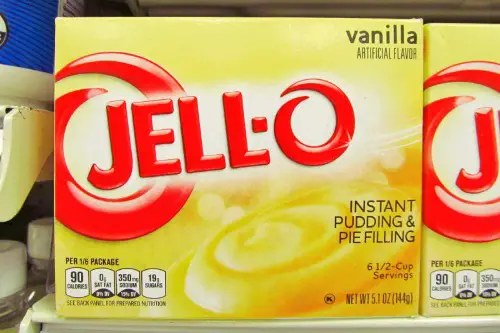
Jell-O Pudding Pops were a freezer staple in the 1980s and early 1990s. Marketed heavily during the Bill Cosby Jell-O era, these chocolate and vanilla frozen treats had a dense, creamy texture that felt richer than a typical popsicle. Parents liked them because they were easy to store and portion out after dinner. Kids liked them because they tasted like frozen pudding on a stick.
Production stopped in the early 2000s after sales declined and manufacturing became complicated. Popsicle briefly brought back a similar product in 2004, but fans widely agreed it didn’t taste the same. Without the original formula and marketing push, the treat quietly faded from grocery freezers. Today they mostly live on in nostalgic conversations about childhood desserts.
4. McDonald’s Fried Apple Pie (Original Version)
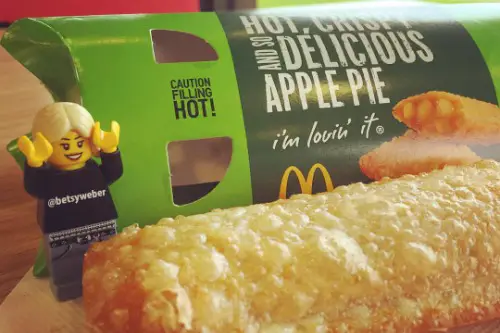
For decades, McDonald’s served apple pies that were literally deep-fried. The original version, introduced in 1968, had a blistered, crispy crust and piping-hot apple filling that often required a few minutes of cooling before eating. Kids growing up in the ’70s, ’80s, and early ’90s remember the crunchy shell and the warning that the filling was basically lava. It became one of the most recognizable fast-food desserts in America.
In 1992, McDonald’s switched to a baked version to reduce fat and calories. While the baked pie still exists, many fans insist it never matched the texture of the fried original. The change marked a broader shift in fast-food chains responding to health concerns in the early ’90s. For people who grew up before the switch, the fried pie is still considered the superior version.
5. Butterfinger BB’s
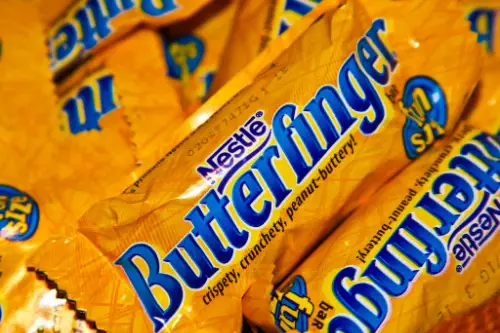
Butterfinger BB’s were essentially tiny spherical versions of the classic Butterfinger candy bar. Nestlé introduced them in 1992, and they quickly became popular movie-theater candy. The bite-size pieces made it easy for kids to pour them into their mouths by the handful. Their crunchy peanut-butter center and chocolate coating made them feel like a new twist on a familiar candy.
They disappeared in 2006 when Nestlé discontinued the product. Manufacturing challenges and shifting product priorities reportedly contributed to the decision. Fans spent years asking for their return, especially after nostalgia discussions spread online. Ferrero later introduced Butterfinger Bites in 2019, but longtime fans say they’re not quite the same.
6. Squeezit Drinks
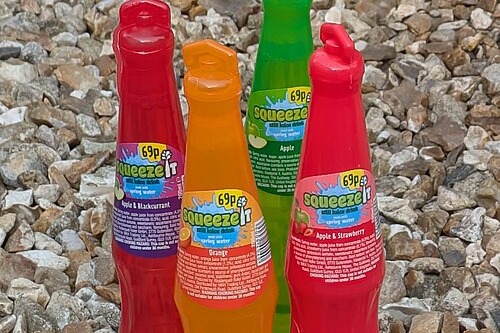
Squeezit drinks were a quintessential lunchbox beverage in the late ’80s and ’90s. Sold in colorful plastic bottles shaped so kids could squeeze the juice into their mouths, the drinks leaned heavily into bright colors and cartoon branding. Flavors like Berry B. Wild made them feel playful and a little chaotic. For kids trading snacks at school, a Squeezit was often a prized item.
General Mills discontinued the line in 2001 as sugary kids’ drinks began facing criticism and changing market trends. At the same time, juice boxes and sports drinks were becoming more popular alternatives. The distinctive bottles also became harder to justify in an era increasingly concerned about packaging waste. As a result, Squeezits quietly vanished from grocery store shelves.
7. Hi-C Ecto Cooler (Original Run)
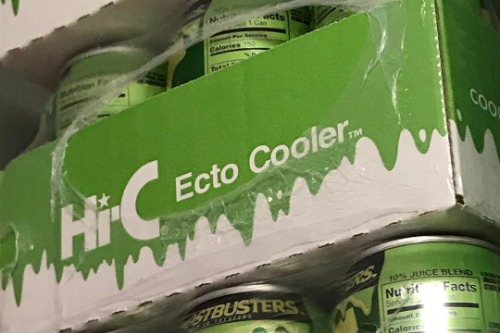
Hi-C Ecto Cooler became a pop-culture phenomenon after its release in 1987. The citrus-tangerine drink was originally tied to the animated Ghostbusters series and featured Slimer on the packaging. Kids loved the bright green color and the novelty of drinking something tied to a popular cartoon. It quickly became one of the most recognizable juice box flavors of the late ’80s and ’90s.
Even after the Ghostbusters branding faded, the drink continued for years under slightly altered packaging. Coca-Cola eventually discontinued the flavor in 2001 as part of broader product updates. Although it briefly returned for the 2016 Ghostbusters movie, the comeback was limited. For many people who grew up in that era, Ecto Cooler is one of the most requested nostalgia revivals.
8. Surge Soda
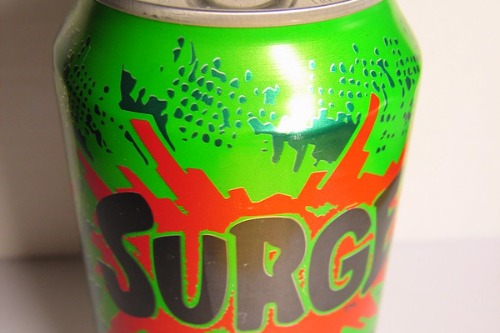
Surge was Coca-Cola’s attempt in the 1990s to compete with Mountain Dew. Released in the U.S. in 1997, the citrus soda was heavily marketed to teenagers with edgy commercials and extreme-sports imagery. Kids and teens loved the bright green color and intense sweetness. It quickly became a recognizable option in school vending machines and convenience stores.
Despite strong initial interest, Coca-Cola discontinued Surge in the U.S. in 2003 after sales declined. The brand developed a cult following online, with fans campaigning for its return. Coca-Cola briefly revived it in limited distribution starting in 2014, mainly through online sales and select stores. Even so, it’s far from the mainstream presence it once had.
9. PB Max Candy Bar
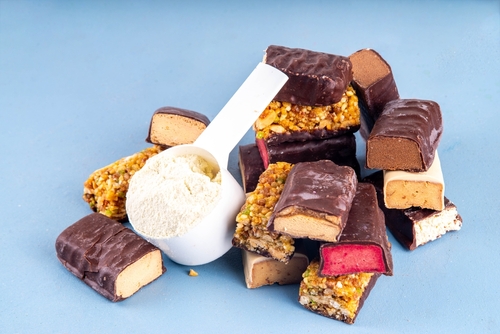
PB Max was a peanut butter and cookie candy bar covered in chocolate. Mars launched it in 1989, and it quickly developed a loyal following thanks to its crunchy graham cookie base and thick peanut butter layer. For many kids in the early ’90s, it felt like a candy bar version of a peanut butter dessert. It also stood out because it was much larger and thicker than most candy bars.
Despite reportedly selling well, Mars discontinued PB Max in 1994. The commonly cited explanation is that members of the Mars family personally disliked peanut butter. Because the company is privately controlled, the decision stuck even with fan demand. As a result, PB Max became one of the most famous “why did they discontinue that?” candies.
10. Reebok Pump Omni Lite (Original Craze)
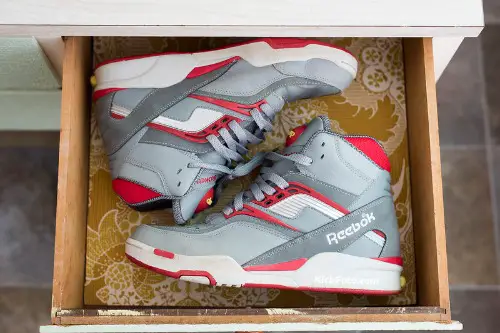
In 1989, Reebok introduced the Pump system, which allowed wearers to inflate the tongue of their sneakers for a tighter fit. Kids growing up around that time remember the novelty of pressing the little basketball pump on the shoe. The Reebok Pump Omni Lite became especially famous after appearing in the 1991 NBA Slam Dunk Contest. For a moment, these shoes felt like futuristic sports gear.
The hype cooled as other sneaker technologies took over in the mid-1990s. While Reebok occasionally releases retro versions today, the Pump craze itself faded. The inflated-tongue gimmick no longer dominates playgrounds or basketball courts. For many people who were kids at the time, the sound of that tiny pump is instantly nostalgic.
11. Nickelodeon Magazine
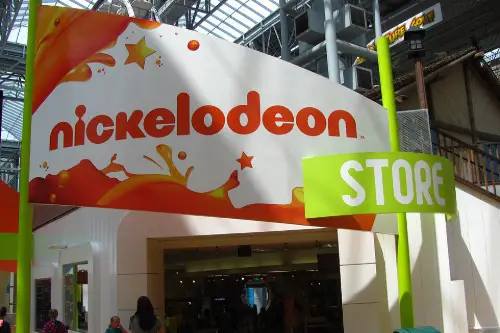
Nickelodeon Magazine launched in 1993 and quickly became a staple for kids who loved the TV channel. The magazine mixed comics, slime-themed jokes, celebrity interviews, and behind-the-scenes looks at shows. Many kids remember flipping through the goofy layouts or mailing in drawings and letters hoping to be featured. It felt like a physical extension of Nickelodeon’s quirky TV personality.
The publication ended in 2009 as print magazines struggled against the rise of digital entertainment. Kids were increasingly getting content from websites, streaming video, and social media. Without the same advertising support and readership, the magazine couldn’t keep up. For people who grew up with it, though, the smell of those glossy pages is still a nostalgic trigger.
12. McDonald’s Arch Deluxe
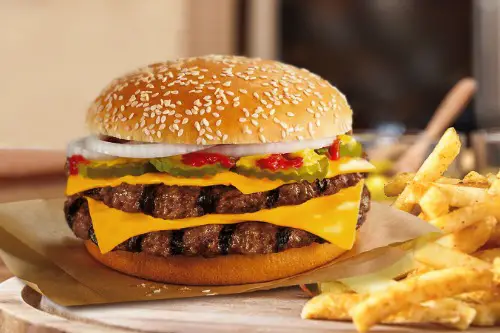
The Arch Deluxe debuted in 1996 as McDonald’s attempt to create a burger for adults. The company spent around $100 million promoting it, making it one of the most expensive fast-food launches ever at the time. The burger featured a potato flour bun, peppered bacon, lettuce, tomato, and a mustard-mayo sauce. Kids often noticed the ads because they jokingly suggested the burger was “too sophisticated” for them.
Despite the marketing push, sales never met expectations. Customers were confused by the messaging and often stuck with familiar menu items. McDonald’s quietly discontinued the Arch Deluxe by the early 2000s. Today it’s remembered as one of the company’s most famous fast-food flops.
13. Planters Cheez Balls
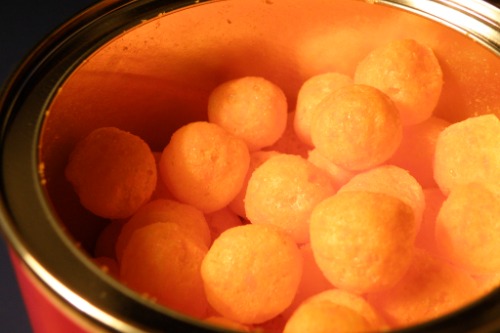
Planters Cheez Balls were a lunchbox icon for decades. The bright orange cheese puffs came packed in a distinctive blue metal canister that rattled around in pantries across America. Kids loved dumping a handful into a bowl during after-school TV time or munching them straight from the container. They were salty, messy, and almost guaranteed to leave neon dust on your fingers.
In 2006, Kraft discontinued them along with Cheez Curls as part of a broader product reshuffle. Fans complained loudly online, which only highlighted how embedded the snack had been in childhood memories. Planters briefly revived Cheez Balls in 2018 for nostalgic shoppers, but they still aren’t nearly as common as they once were. For many Americans, the original canister remains a vivid symbol of 1990s snacking.
This post Products Americans Grew Up With That Practically Disappeared was first published on American Charm.