
1. Faneuil Hall Marketplace, Boston, Massachusetts
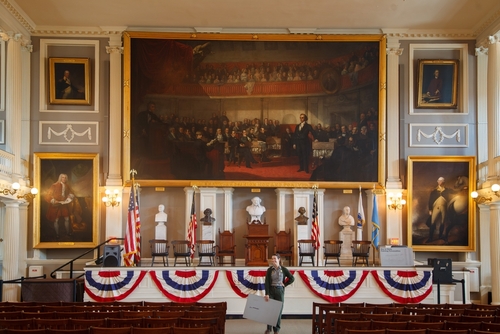
Faneuil Hall in Boston played a central role in the American Revolution. Known as the “Cradle of Liberty,” it hosted speeches by Samuel Adams and other patriots. In the 1970s, the surrounding area was redeveloped into a festival marketplace. Today, Quincy Market is filled with food stalls and chain retailers.
The historic meeting hall still stands, but much of the surrounding district feels like an open-air mall. Street performers entertain crowds browsing for lobster rolls and branded merchandise. The architecture is authentic, yet the retail mix often leans heavily commercial. For some visitors, the revolutionary spirit is harder to sense amid the shopping bags.
2. French Quarter, New Orleans, Louisiana
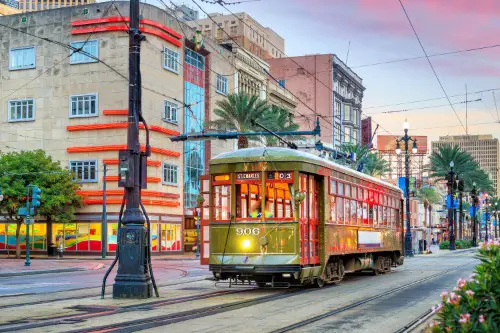
The French Quarter in New Orleans is undeniably iconic, with its wrought-iron balconies and centuries-old architecture. It’s also one of the most heavily commercialized historic districts in the country. Bourbon Street in particular has become synonymous with neon-lit bars, daiquiri stands, and cover bands rather than the neighborhood’s Creole roots. What was once a residential and cultural heart of the city can now feel like a nonstop party zone designed for visitors.
That doesn’t mean the history isn’t there—it absolutely is. Landmarks like St. Louis Cathedral still anchor the district in its 18th-century origins. But between the souvenir megastores and chain-owned attractions, it can take real effort to find the quieter courtyards and historic homes. Many locals argue that short-term rentals and tourism-focused businesses have shifted the balance away from community life.
3. Times Square, New York City, New York
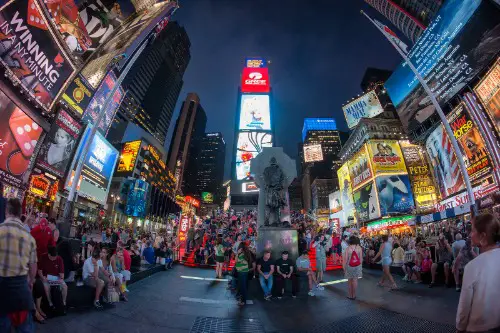
Times Square in New York City has long been a crossroads of American culture. Once known for historic theaters and gritty character, it’s now dominated by digital billboards and global retail brands. The area’s transformation accelerated in the 1990s, when redevelopment projects pushed out many small businesses. Today, it feels more like a corporate theme park than a preserved historic district.
You can still find Broadway’s historic theaters tucked into the glow. But most street-level experiences revolve around flagship chain stores and costumed characters posing for tips. Even longtime New Yorkers tend to avoid the area unless they’re seeing a show. It’s a vivid example of how commercial success can overshadow historic texture.
4. Hollywood Boulevard, Los Angeles, California
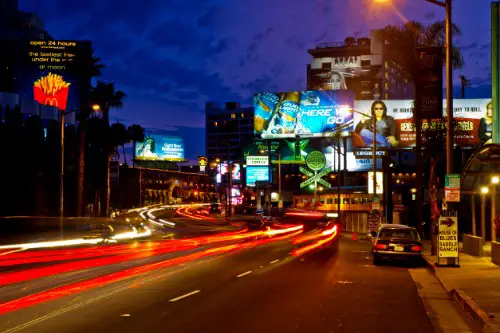
Hollywood Boulevard in Los Angeles is packed with film history, from classic movie palaces to the Walk of Fame. The stars embedded in the sidewalk still draw millions every year. Yet much of the boulevard is lined with souvenir shops selling plastic Oscars and celebrity T-shirts. The atmosphere often feels more carnival-like than cinematic.
Historic venues like the TCL Chinese Theatre remain architectural gems. Still, the surrounding blocks are crowded with tour kiosks and aggressive street vendors. The commercialization can make it difficult to appreciate the area’s early-20th-century glamour. Visitors expecting old Hollywood elegance sometimes leave surprised by the sheer volume of tourist traps.
5. River Walk, San Antonio, Texas
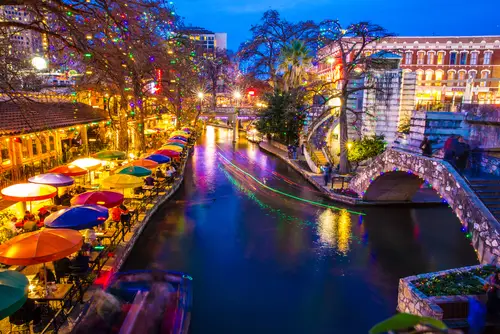
The San Antonio River Walk in San Antonio began as a Depression-era public works project. Over time, it evolved into one of the most visited historic districts in Texas. Today, much of the river’s edge is lined with national restaurant chains and branded attractions. The historic charm can feel secondary to the dining and entertainment complex vibe.
The nearby The Alamo anchors the district in Texas history. But boat tours and brightly lit patios sometimes overshadow the city’s deeper Spanish colonial roots. While the setting is undeniably beautiful, the concentration of tourist-focused businesses shapes the experience. It can feel carefully curated for consumption rather than contemplation.
6. Savannah Historic District, Savannah, Georgia
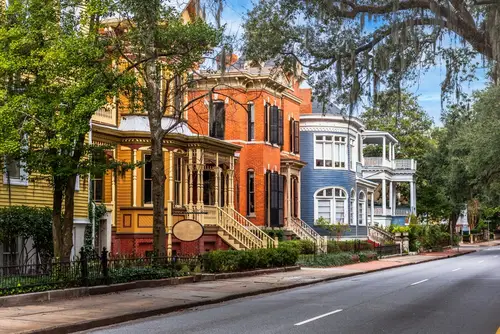
The Savannah Historic District in Savannah is famous for its grid of leafy squares and preserved 18th- and 19th-century homes. It’s one of the largest National Historic Landmark Districts in the country. In recent years, tourism has surged dramatically. Boutique hotels, ghost tours, and party buses now dominate many blocks.
River Street in particular is packed with candy shops and souvenir stores. While the cobblestones and cotton warehouses remain, the atmosphere can feel curated for visitors. Short-term rentals have also changed the residential character of some areas. The district still charms, but it increasingly operates as a tourism engine.
7. Old Town, Key West, Florida
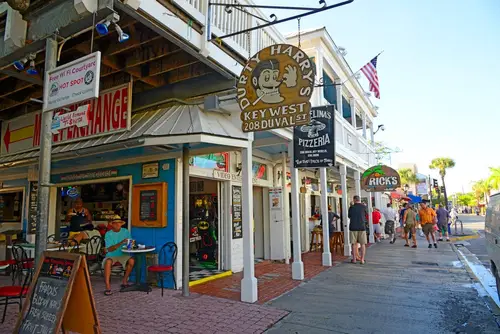
Old Town Key West in Key West features pastel conch houses and literary history. It’s home to the Ernest Hemingway Home and Museum, a major draw for fans of the author. Yet Duval Street has become synonymous with bar crawls and souvenir T-shirts. Cruise ship traffic brings in large waves of day-trippers.
The historic architecture is still intact and carefully preserved. But much of the retail landscape caters directly to tourists. Restaurants and bars often outnumber everyday services for residents. The laid-back island vibe sometimes competes with a spring-break energy.
8. Pike Place Market Historic District, Seattle, Washington
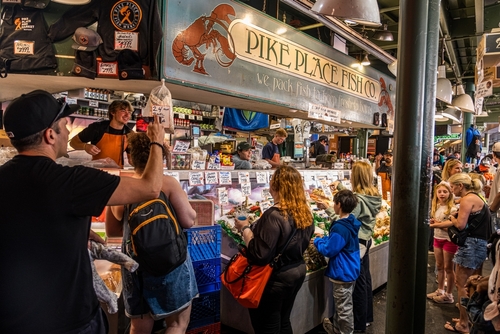
The Pike Place Market Historic District in Seattle has operated since 1907. It was founded to connect local farmers directly with consumers. Today, the famous fish-throwing tradition draws constant crowds. Many stalls now sell souvenirs alongside produce and seafood.
The original market mission still exists, but it shares space with global coffee tourism tied to the nearby Starbucks brand’s first store. Long lines form for photos and branded mugs. The district balances authenticity with spectacle. On busy days, the spectacle often wins.
9. Beale Street Historic District, Memphis, Tennessee
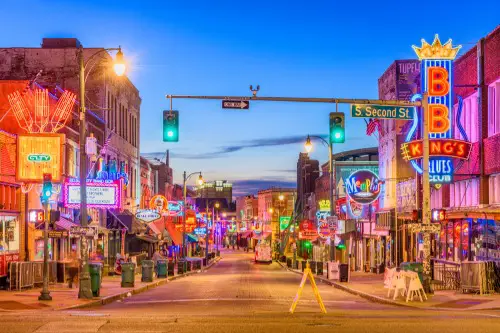
Beale Street Historic District in Memphis is deeply tied to blues history. Legends like B.B. King once performed here. In the late 20th century, major redevelopment efforts revived the area. The street is now packed with themed bars and souvenir shops.
Live music still pours out of doorways nightly. But many venues cater primarily to tourist expectations of what Beale Street should sound like. Corporate sponsorships and cover charges shape the experience. The district’s musical legacy sometimes feels packaged for easy consumption.
10. Old City, Philadelphia, Pennsylvania
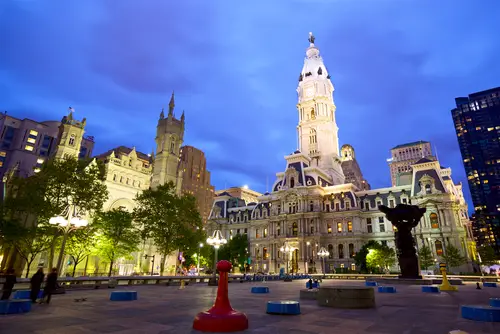
Old City in Philadelphia includes some of the nation’s most important Revolutionary-era sites. Independence Hall and the Liberty Bell draw millions each year. The concentration of historic landmarks is remarkable. So is the density of souvenir shops selling tri-corner hats and colonial-themed trinkets.
The area around Market Street is heavily oriented toward visitors. Chain restaurants and tour companies line the sidewalks. While preservation efforts are strong, daily life can feel secondary to tourism. It’s a place where history is always on display—and often for sale.
11. St. Augustine Historic District, St. Augustine, Florida
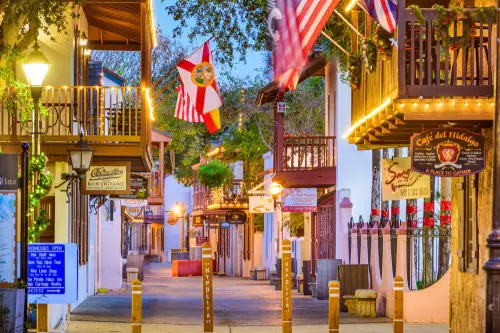
The St. Augustine Historic District in St. Augustine is often called the oldest continuously inhabited European-established city in the United States. Spanish colonial architecture and narrow streets define its character. In peak season, those streets are packed shoulder to shoulder. Trolley tours and themed attractions are everywhere.
Landmarks like Castillo de San Marcos remain powerful reminders of the city’s 17th-century origins. Yet much of St. George Street is lined with candy stores, novelty shops, and ticket booths. The experience can feel closer to a historical theme park than a living town. The history is real, but so is the heavy layer of commercialization wrapped around it.
This post Historic Districts That Feel Overcommercialized was first published on American Charm.

