
1. Saugus Cafe
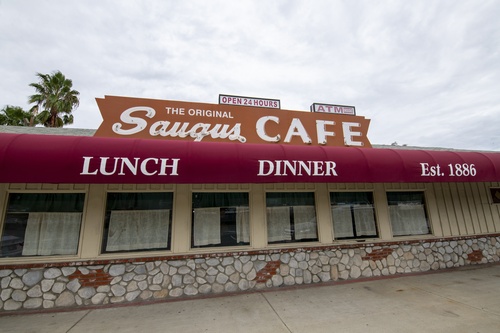
This unassuming diner opened in 1887 and claims to be California’s oldest continuously operating restaurant. Its Western storefront sits just off the old highway routes north of Los Angeles. Wooden interiors and vintage photos preserve its frontier-era atmosphere. It feels like a place where time politely slowed down.
The cafe belongs here because it fed travelers long before modern road trips were a thing. Stagecoach passengers, railroad workers, and motorists all passed through its doors. Despite fires and ownership changes, it keeps serving classic American comfort food. It’s living roadside history you can taste.
2. Cadillac Ranch
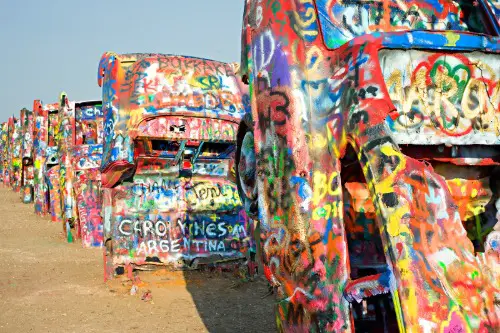
Ten Cadillacs nose-down in a dusty Texas field sounds like a prank, but it’s actually one of America’s most famous public art installations. Created in 1974 by the art collective Ant Farm, the cars are buried at the same angle as the Great Pyramid of Giza. Visitors are encouraged to bring spray paint and leave their mark, so the colors change constantly. From the highway, it still looks wonderfully weird and unmistakable.
It earns its spot because it represents the rebellious spirit of roadside Americana. Unlike many attractions that faded away, this one thrives on participation and reinvention. The site has been relocated once but carefully preserved in its original formation. It’s proof that even counterculture art can become a durable highway landmark.
3. Salvation Mountain
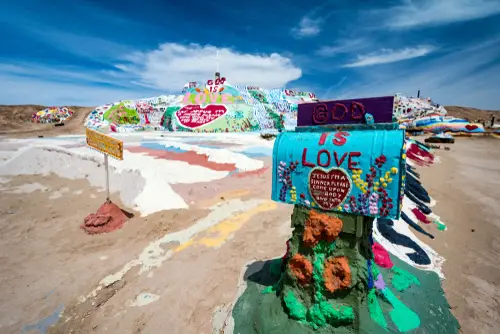
Rising from the desert like a melted rainbow, this hand-built hillside monument is impossible to ignore. Leonard Knight spent decades covering the adobe-and-straw structure with layers of donated paint. Biblical messages and bright folk-art patterns coat every surface you can see. It feels less like a stop and more like stepping inside someone’s lifelong passion project.
Its survival is remarkable because the desert climate is brutal on handmade structures. Volunteers now help maintain the site so it doesn’t crumble away. The mountain remains a symbol of outsider art and personal devotion rather than commercial tourism. You’re witnessing one man’s vision that simply refused to disappear.
4. South of the Border
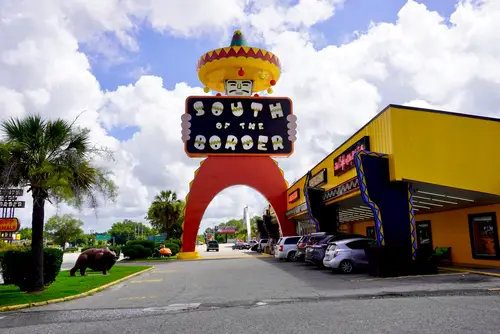
Miles before you reach it, the billboards start counting down like a carnival barker on the interstate. This sprawling roadside complex opened in 1949 and grew into a neon-drenched rest stop empire. There’s a giant sombrero-shaped observation tower you can ride to the top. The whole place leans hard into retro roadside spectacle.
It makes the list because it’s a surviving example of mid-century highway marketing on a grand scale. Family-owned for decades, it still feels defiantly old-school despite modern traffic patterns. The architecture and signage haven’t been sanitized into something generic. It’s loud, strange, and proudly stuck in its era.
5. Wall Drug
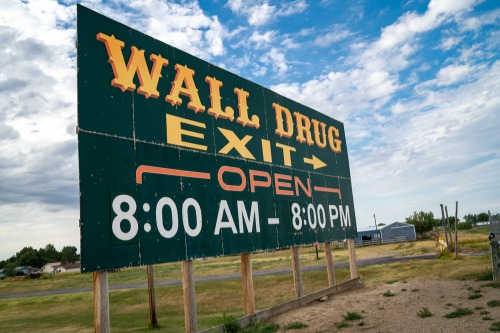
What started as a tiny pharmacy in 1931 turned into one of the most famous roadside stops in America. Free ice water signs lured overheated travelers off the highway during the Dust Bowl years. Today the complex stretches across an entire block with shops, cafes, and quirky attractions. Western murals and cowboy statues make it feel like a movie set.
It belongs here because it shows how simple hospitality built a highway legend. The original drugstore still operates inside the larger maze of storefronts. Travelers still pose by the giant jackalope statue just like earlier generations did. It’s a living case study in classic Americana marketing that never really faded.
6. Blue Whale of Catoosa
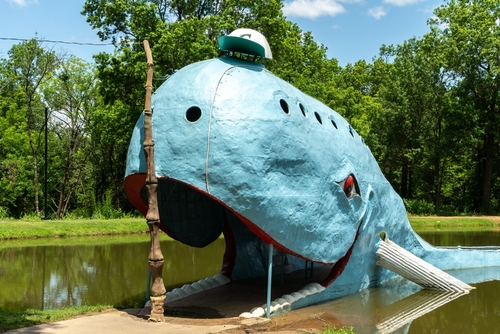
This cheerful blue giant looks like it swam straight out of a children’s storybook. Built in the early 1970s by Hugh Davis as an anniversary gift, it became an unexpected Route 66 icon. Families once swam in the pond beside it during summer road trips. The whale’s wide grin still welcomes visitors today.
It stands out because it wasn’t designed as a commercial attraction at first. The structure survived decades of neglect before restoration efforts brought it back. Its simple, handmade charm feels refreshingly sincere. It’s a reminder that roadside landmarks don’t need corporate polish to endure.
7. Lucy the Elephant

Imagine pulling over and realizing the building itself is a six-story elephant. Built in 1881, this wooden colossus predates the automobile era entirely. Visitors can climb inside and look out from howdah-style viewing platforms. The seaside setting makes it feel both whimsical and slightly surreal.
Its longevity alone makes it extraordinary. Lucy survived hurricanes, neglect, and even a relocation to avoid demolition. Ongoing preservation keeps the structure safe for tours. Few roadside attractions can claim 19th-century origins and still welcome guests.
8. The Cabazon Dinosaurs
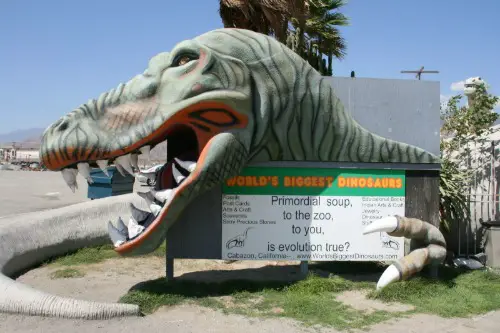
Two massive prehistoric giants rise beside the freeway, impossible to miss. Built in the 1960s by a sculptor who owned a nearby diner, they were meant to draw hungry drivers off the road. Dinny the Dinosaur and Mr. Rex became pop culture fixtures over time. Their concrete bodies have appeared in movies, music videos, and road trip photos for decades.
They make the list because they’re classic examples of architecture as advertisement. Despite ownership changes, the dinosaurs still stand guard over the desert highway. Visitors can walk inside one of them for exhibits and views. It’s kitschy marketing turned enduring landmark.
9. Mystery Spot
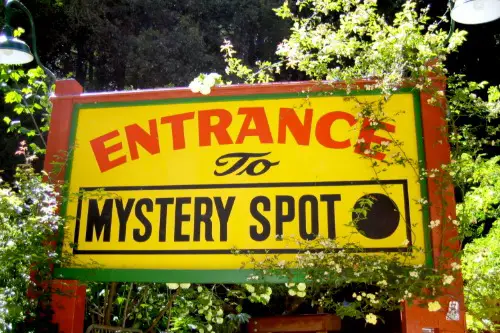
Gravity seems optional at this quirky hillside attraction opened in 1940. Inside the tilted cabin, balls roll uphill and people appear to lean at impossible angles. Guided tours lean into the weirdness without fully explaining it. The experience feels like a carnival funhouse dressed as a science puzzle.
Its staying power comes from embracing old-school roadside curiosity. It hasn’t tried to modernize into a flashy theme park. The simple wooden structures preserve its mid-century charm. Travelers still line up for the same mind-bending photos their grandparents took.
10. Corn Palace
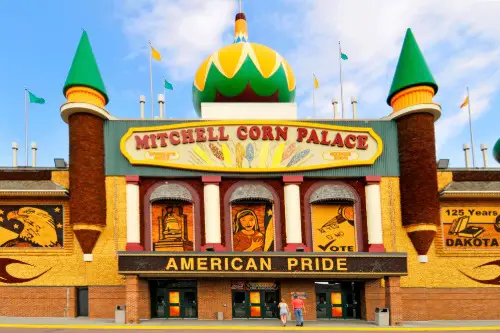
Yes, it’s exactly what it sounds like, a palace decorated with corn and grains. The Moorish-style building has been covered in crop murals since the late 1800s. Every year new designs are created using naturally colored corn and grasses. It’s part folk art, part agricultural celebration.
This stop matters because it’s deeply tied to local farming culture. The tradition continues annually, making it both historic and living art. Festivals, concerts, and events keep the space active year-round. It turns regional pride into something wonderfully visual.
11. Petrified Forest National Park Painted Desert Inn
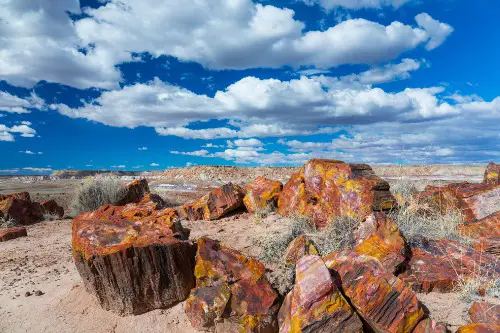
This adobe-style inn looks like it grew naturally from the desert mesas around it. Originally built in the 1920s and later redesigned in Pueblo Revival style, it served early automobile tourists. Hand-painted murals decorate the interior walls. Large windows frame sweeping views of the Painted Desert.
It earns a place for representing early National Park roadside architecture. The building has been carefully restored as a historic landmark rather than replaced. Visitors can walk through and imagine cross-country travel before interstates existed. It’s a quieter, more contemplative highway relic.
12. Wigwam Motel
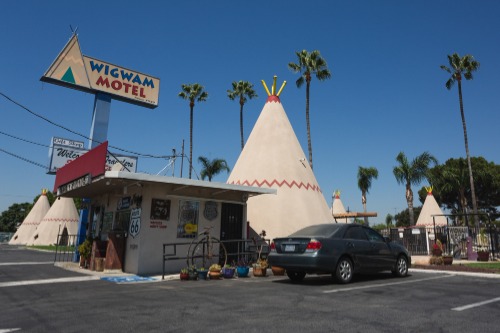
Pulling off the highway in Holbrook feels like slipping into a Technicolor postcard from the 1950s. This motel’s concrete teepees aren’t replicas slapped together for Instagram, they’re part of a rare surviving chain of Wigwam Villages built for early road trippers. You can still book a room and sleep inside one of the wigwam-shaped units. The neon sign flickers on at dusk just like it did for families cruising Route 66 generations ago.
What makes it special is that it’s both kitsch and authentic at the same time. The motel has been carefully preserved, so the layout and structures match their mid-century design. Classic cars often park outside the units, adding to the time-capsule effect. It’s a tangible reminder of when the journey itself was the vacation.
This post Nearly Forgotten Stops Along America’s Highways That Still Stand was first published on American Charm.

