The bell over the door rings. The man behind the counter looks up, nods and goes back to his crossword. He already knows what you came in for.
That kind of store used to be on every Main Street. In a lot of towns it’s gone now, replaced by a parking lot and a sign you could see from the interstate.
Some towns fought to keep theirs. We’ve written about towns that voted to keep the big chains out. These Virginia towns did it a quieter way. Somebody bought the old store, saved the old theater or kept the old fair going, and their neighbors kept showing up.
These eight run from the Blue Ridge to the Eastern Shore. None of them is big. All of them still have a reason to drive downtown.
The coffee is good. The company is better.
1. Floyd, Virginia: The country store still fills up on Friday nights
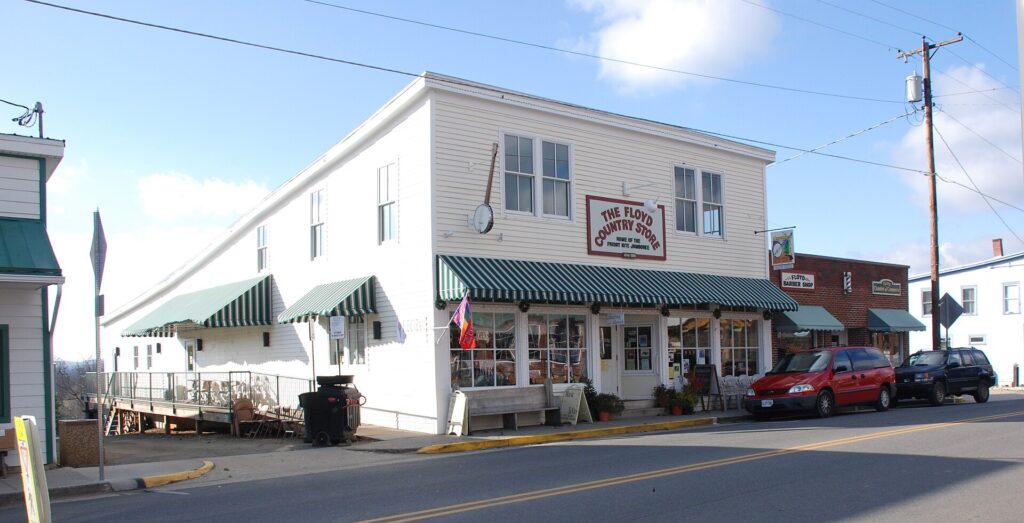
A white clapboard store sits on the corner, with striped awnings and benches out front. On Friday nights the music spills out the door and down the sidewalk.
The Floyd Country Store started as Farmer’s Supply in 1910. In the 1980s, when it was Cockram’s General Store, the owner began keeping it open on Friday evenings for people who wanted to play string-band music. That became the Friday Night Jamboree. The building later fell on hard times and was condemned, until new owners bought it and brought it back. In fair weather, jam sessions with banjos and fiddles fill the driveways along South Locust Street.
In 2024, the store celebrated 40 years of Friday Night Jamborees. About 450 people live in Floyd.
The store sells groceries. Friday night is why people drive in.
2. Abingdon, Virginia: The theater took vegetables for tickets in 1933
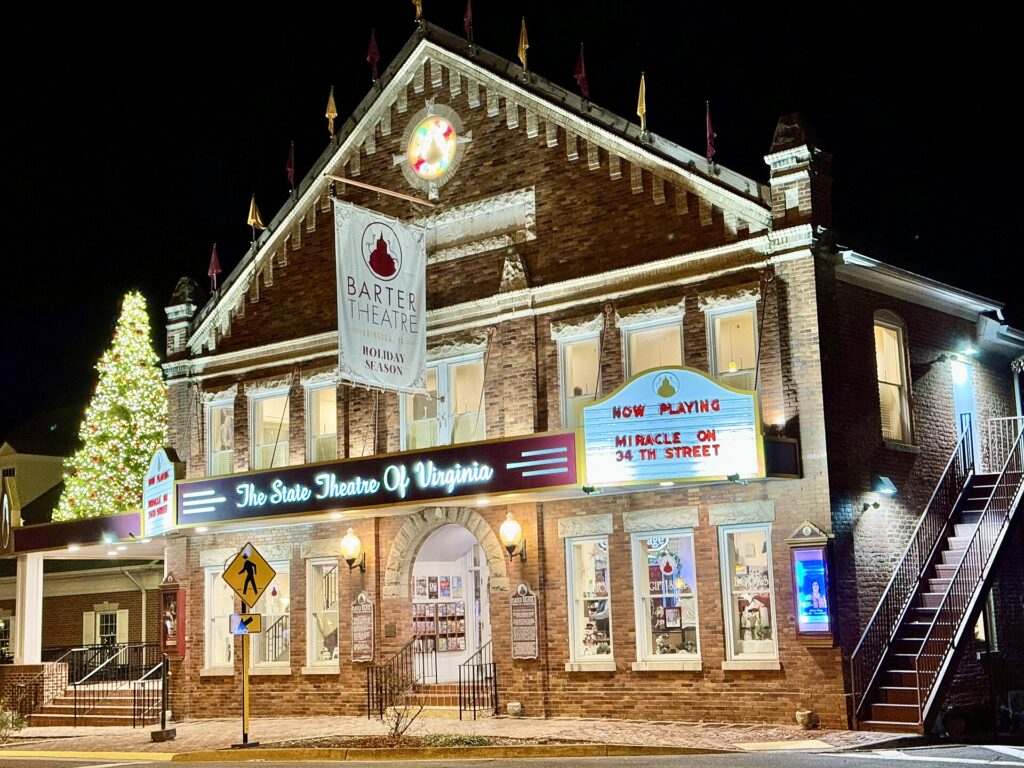
A brick theater glows on Main Street, in a building that started out as the town hall in 1831. The marquee says what’s playing. The name over the door says how it started.
In 1933, in the worst of the Depression, Robert Porterfield brought about twenty out-of-work actors to his part of Virginia. Farmers here had crops they couldn’t sell. So the Barter Theatre let people pay with food. A ticket was 30 cents, or the same value in goods. The first audience came carrying cakes, fruit, vegetables, poultry and a live pig. “With vegetables that you cannot sell,” Porterfield said, “you can buy a good laugh.”
It is now the longest-running professional Equity theater in the United States, and the state theater of Virginia. About 8,400 people live in Abingdon.
The tickets cost more now. The idea hasn’t changed much.
More from American Charm
 People who pick a counter stool over a booth usually love these 7 small town diners that rolled out of a factory
 People who know their mayor by first name usually love these 8 things a small-town mayor can do that a governor can’t
 People who dug to the bottom of the cereal box for the prize usually remember these 8, and a few are worth real money now
3. Galax, Virginia: A one-night lodge fundraiser turned 90 this year
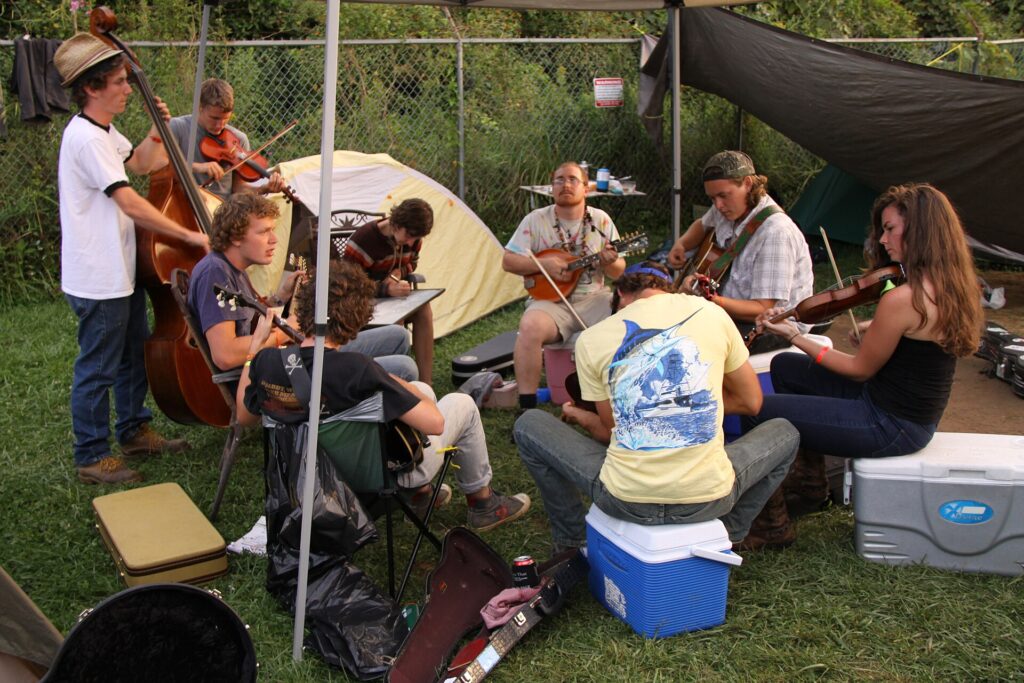
Every August, lawn chairs circle up between the tents at Felts Park. Somebody starts a fiddle tune, and the jam goes on until two or three in the morning.
The Old Fiddlers’ Convention began in 1935 as a one-night fundraiser for the Galax Moose Lodge, held at the high school. The lodge still runs it. The town itself was chartered in 1906 and named for galax, an evergreen plant that people in the Blue Ridge gathered and sold. A railroad official suggested the name. By the 1960s, Galax had six furniture factories.
In August 2026, the 90th convention drew musicians from about 40 states and three countries. Around 6,700 people live in Galax.
It was meant to pay a lodge’s bills. Now it brings in fiddlers from 40 states.
4. Lexington, Virginia: The neighbors bought the drive-in
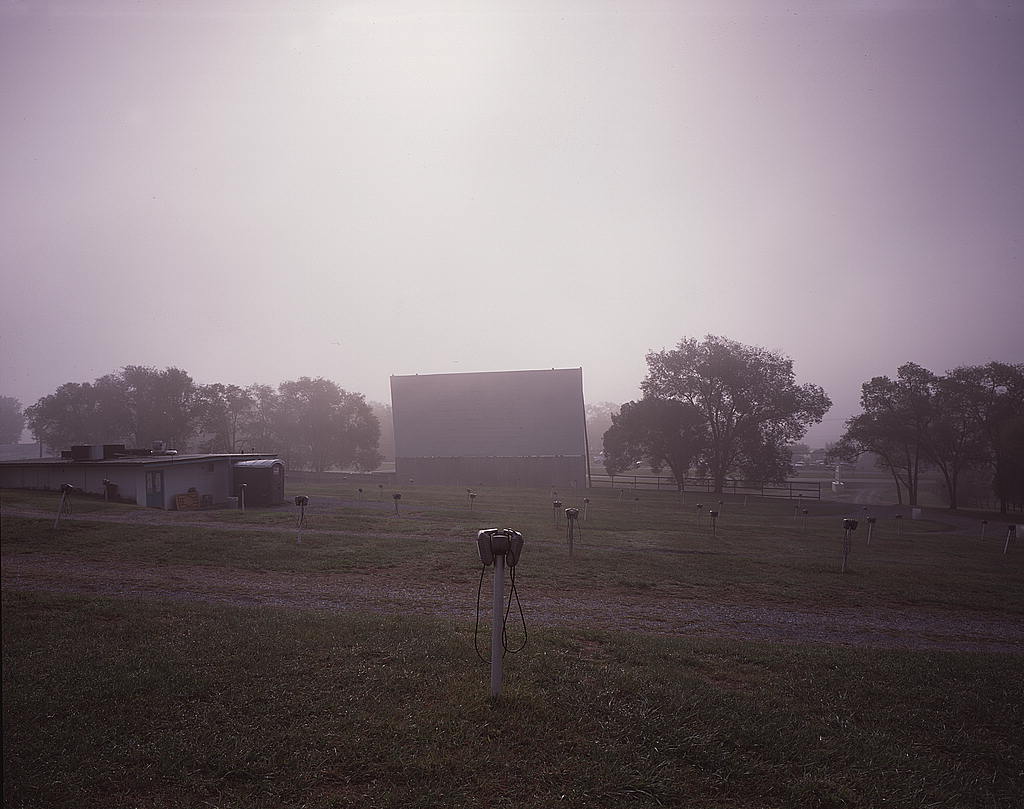
Rows of speaker posts stand on a grassy lot on Route 11, facing a big white screen. In season, the cars still line up in rows on Friday night.
It opened in August 1950 as the Lee Drive-In. Sebert Hull of Buena Vista bought it in 1957, and he and his wife ran it for four decades. After he died, it went dark for the summer of 1999. That fall, a group of local fans calling themselves Hull’s Angels decided to buy it themselves. They raised $75,000 from about 600 donors and reopened in the summer of 2000.
Today it is one of only two nonprofit drive-ins in the country. It shows family movies on weekends from March through October, so it’s dark this time of year. Lexington, home to Washington and Lee and VMI, has about 7,300 people.
Nobody could make it pay. So the town stopped trying to make it pay.
5. Washington, Virginia: The legend says George laid it out, and the legend is wrong
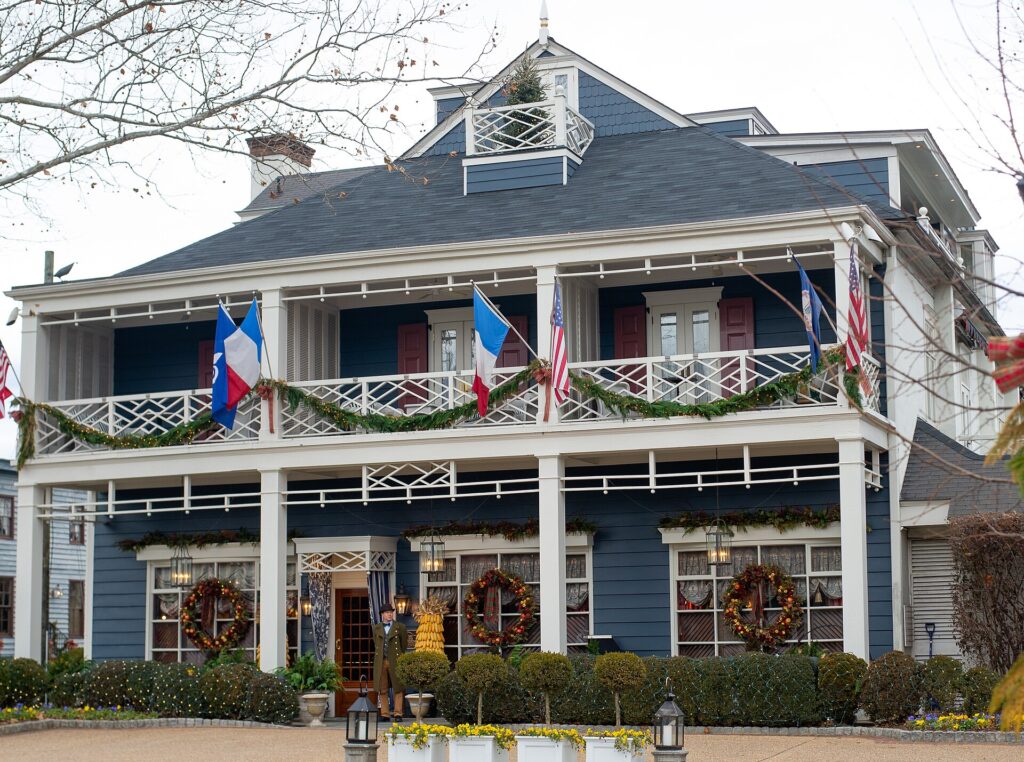
Wreaths hang in the windows of a blue clapboard inn in the middle of town. The whole town is only 182 acres, and 86 people lived in it at the last census.
People call it Little Washington, to tell it apart from the big one. The General Assembly established the town in 1796. For years, people said a young George Washington had surveyed and laid out the town in 1749. That story is now believed to have come from made-up documents produced in 1932. In 1803, Anne Cox opened a tavern in the center of town. That building still stands and now holds the gift shops of The Inn at Little Washington.
The entire town is listed on the National Register as a historic district, considered the best-preserved county seat in the Virginia Piedmont.
The famous founder never came. The town turned out fine anyway.
More from American Charm
 People who grew up on these 8 foods usually have no idea they originated in America, each in one hometown
 15 New Laws Taking Effect January 1, 2027 That Could Change Your Paycheck, Prescriptions and Shopping
 People who saved their nickels for the candy counter usually remember these 9 discontinued American candies, and a few made it back
6. Smithfield, Virginia: The town museum keeps a ham from 1902
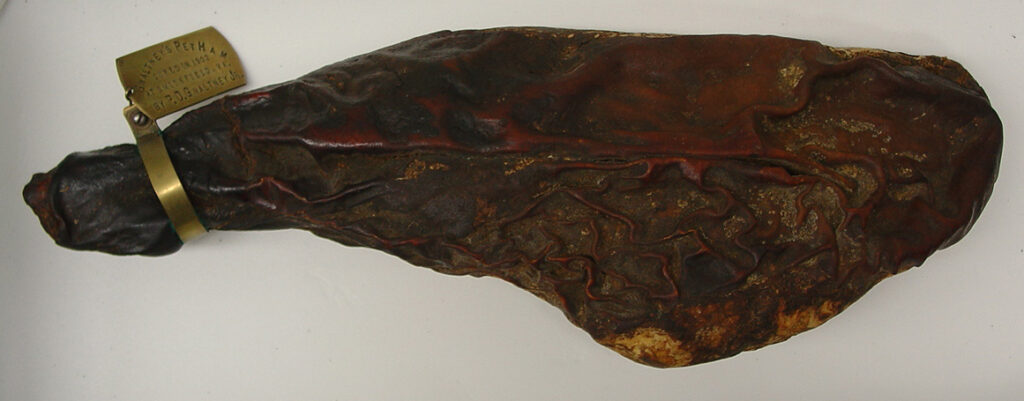
A shriveled brown ham with a brass collar sits in a glass case on Main Street. A camera watches it around the clock.
In 1902, one of P.D. Gwaltney Jr.’s cured hams was overlooked and hung from a rafter in his packing house for about 20 years. Gwaltney kept it as a “pet ham” and showed it off as the world’s oldest. The Isle of Wight County Museum now keeps it on a live “Ham Cam”, in a 1913 bank building on Main Street.
Smithfield was laid out as a river port on the Pagan River in 1752. In 1926, Virginia passed a law saying a true Smithfield ham had to be processed inside the town limits. About 8,500 people live here.
Most towns save a statue. Smithfield saved a ham.
7. Onancock, Virginia: The Hopkins family ran the store on the wharf for 123 years
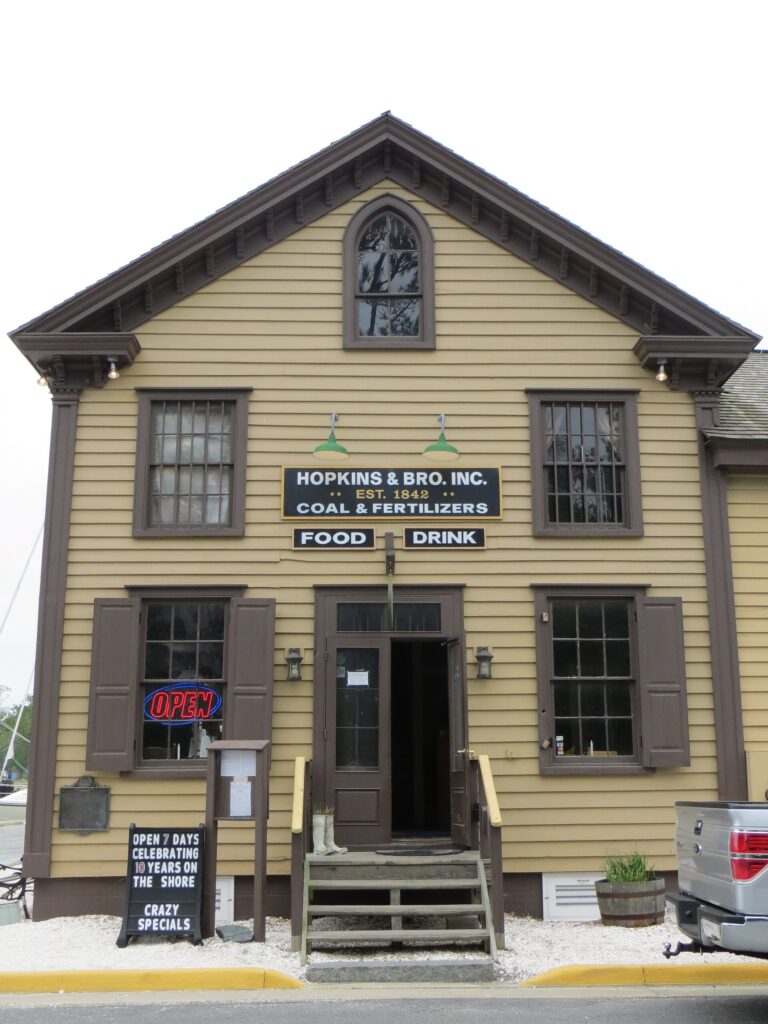
A white wooden store stands on Market Street, right on the Onancock waterfront. Its front faces the harbor, the way it did when boats were the main road.
Onancock dates to 1680, according to the state highway marker. Captain Stephen Hopkins founded Hopkins and Brother here in 1842, selling general goods. It became a commercial and maritime trading center for the bayside of the Eastern Shore. The family kept it going until 1965, and the store’s records from 1839 to 1965 went to the Virginia Historical Society. The state lists it as a historic landmark, and the building now holds a restaurant.
In November 1782, 25 local men joined Commodore Zedechiah Whaley’s flagship for what became the last naval battle of the Revolution. About 1,200 people live here now.
The family store closed in 1965. The building still faces the water.
8. Chincoteague, Virginia: The ponies still come down Main Street every July
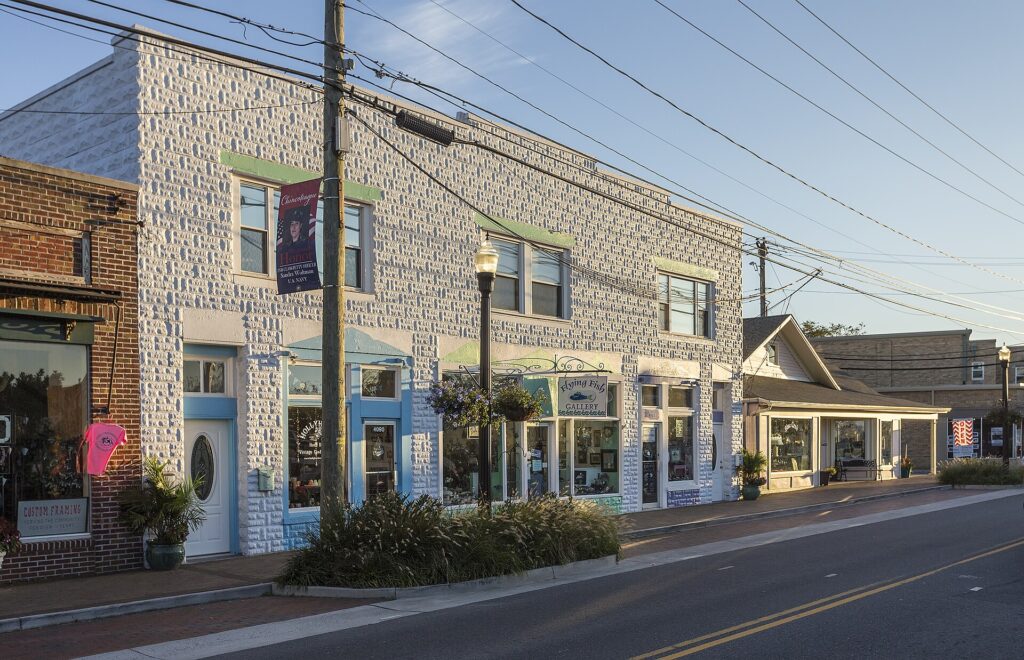
Shops with bright trim line Main Street, and hanging baskets swing from the lamp posts. Once a year, the street fills with wet ponies.
Since 1925, the Chincoteague Volunteer Fire Company has held Pony Penning on the last Wednesday and Thursday of July. At slack tide, the Saltwater Cowboys swim the wild ponies across the channel from Assateague Island, run them through town and auction the foals the next day. Marguerite Henry’s 1947 book Misty of Chincoteague made the island famous, and the 1961 film was shot right here.
In 1861, the island voted 132 to 2 not to leave the Union. The Ash Wednesday Storm of 1962 put the whole town underwater. About 3,300 people live here.
The ponies belong to the fire company. The town belongs to the ponies, at least for a week.
More from American Charm
 People who grew up near Amish country usually know these 9 things about Amish home life that most visitors never learn
 People who sing along to country radio usually love these 9 country singers who “couldn’t sing,” and know why it worked
 People who never missed ‘Bonanza’ on Sunday night usually remember these 9 things the show got wrong about the Wild West