The first sign shows up a long way out. Hand-painted, a little faded, nailed to two posts in a field. A few miles on there’s another one. By the third, somebody in the back seat has started asking.
That was how a lot of families planned a road trip. The plan was just the next sign.
Most of those stops are gone now. The interstate went around them, the motel closed, the giant fiberglass something got hauled off for scrap. The interstate works. Nobody’s arguing that.
But a few held on, the same way some of the country’s oddest little theme parks did: a family that wouldn’t quit, a town that adopted them, a county that stepped in. Every place below was open to visitors in 2026. Several are older than the people pulling in to see them.
The giant duck is not the strangest one.
1. Margate City, New Jersey: Lucy the Elephant has been standing on the beach since 1881
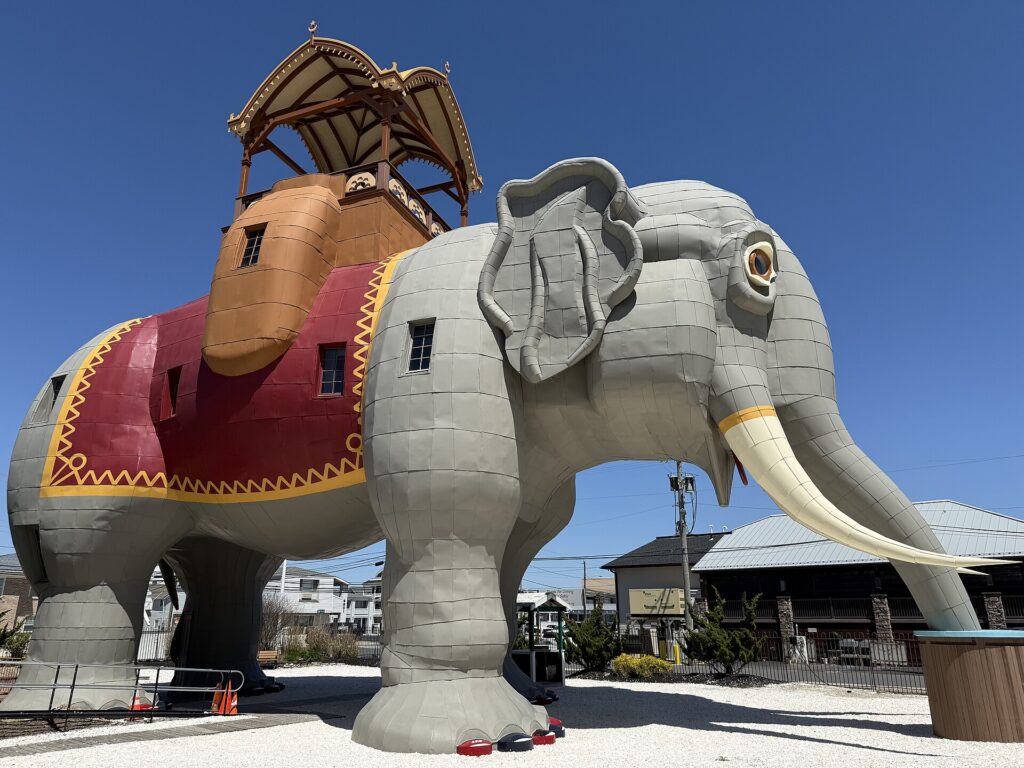
In the 1880s, buyers climbed up to the howdah on Lucy’s back to look out over the empty lots for sale below. Today a tour up there costs $9 for adults.
James Lafferty of Philadelphia built her in 1881 to promote those land sales. He even patented animal-shaped buildings in 1882. She’s 65 feet tall, a wood frame covered in tin. Later she was a tavern, and by 1970 she was falling apart. A Save Lucy Committee moved her down the beach and raised the money to fix her. NPR has called her perhaps the oldest surviving roadside attraction in America. She got a new $2.4 million skin in 2022, and she turned 145 in July 2026.
Lafferty built her to sell lots. She ended up being the thing people came to see.
2. Mitchell, South Dakota: The Corn Palace gets a new coat of corn every year
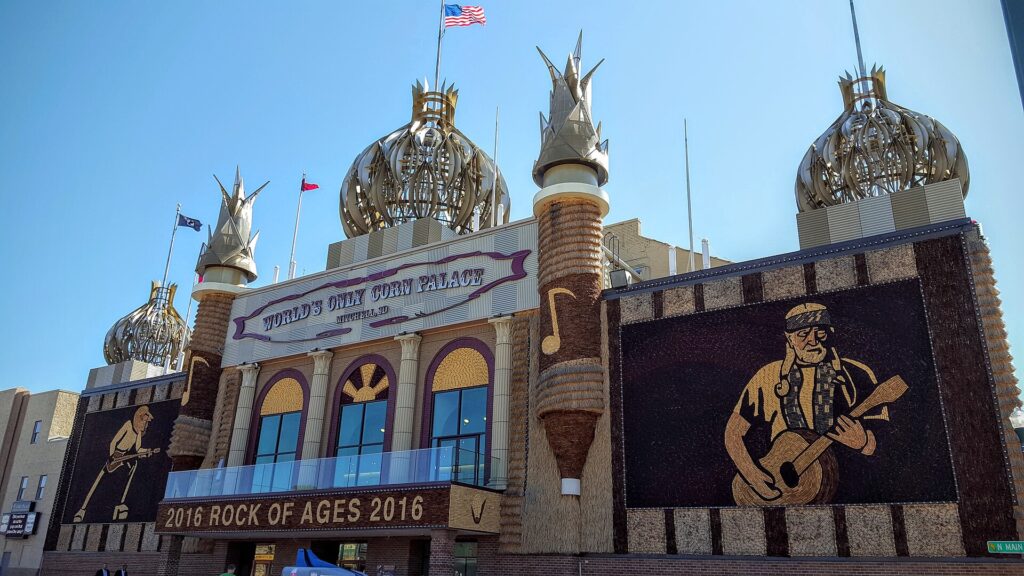
Up close, the murals on Main Street are made of corn. Ears are sawn in half and nailed to panels, in colors that come from the corn itself. None of it is painted.
Mitchell built its first Corn Palace in 1892 to show off the harvest. Plenty of prairie towns built crop palaces back then. The current building dates to 1921, and the onion domes went up in 1937. A local news report this summer called it the last surviving example of the Midwest’s crop palace tradition. The 2026 murals, designed by Dakota Wesleyan University students, marked 250 years of America. The next set will have a safari theme.
Admission is free. Dakota Wesleyan still plays basketball inside.
Other towns let their palaces go. Mitchell just kept re-nailing.
More from American Charm
 People who dug to the bottom of the cereal box for the prize usually remember these 8, and a few are worth real money now
 People who grew up on these 8 foods usually have no idea they originated in America, each in one hometown
 15 New Laws Taking Effect January 1, 2027 That Could Change Your Paycheck, Prescriptions and Shopping
3. Wall, South Dakota: Wall Drug still pours free ice water and sells coffee for a nickel
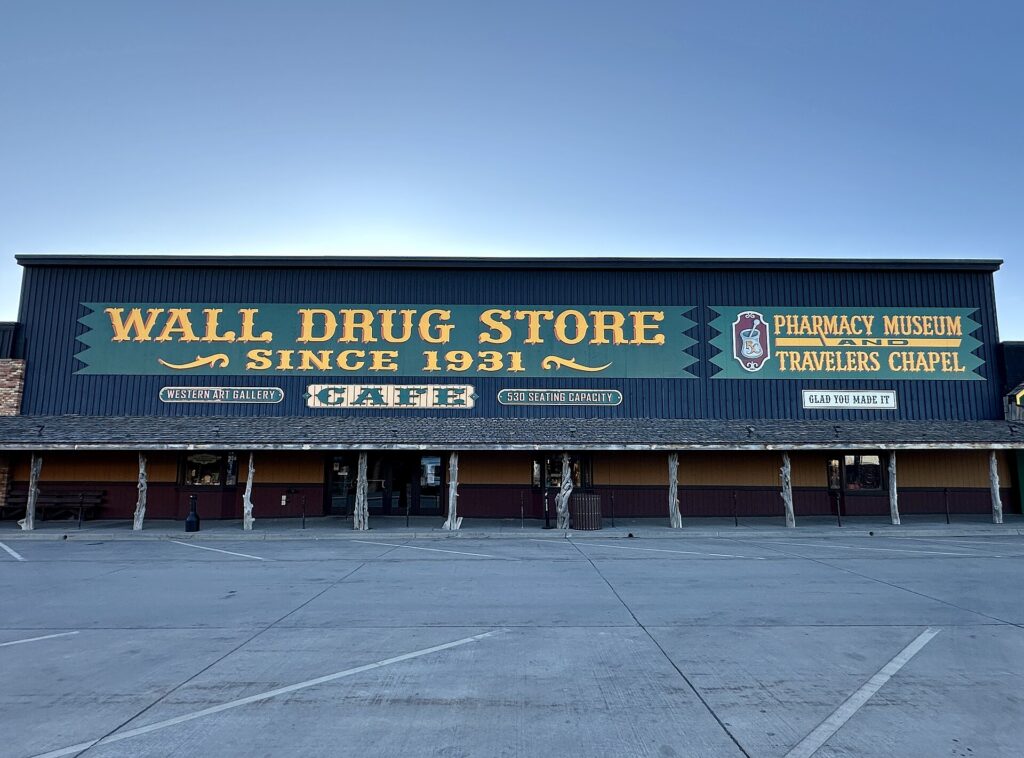
In December 1931, Ted and Dorothy Hustead bought the only drugstore in Wall, South Dakota. It was the Depression, and Ted called the place the middle of nowhere. Business was slow.
In the summer of 1936, Dorothy had an idea. Drivers heading west to the new Mount Rushmore monument were hot and thirsty, so why not put up signs offering them free ice water? The store’s own history says the first signs went up that summer and were styled after the Burma-Shave ads. Cars started turning off the highway. The water is still free. Coffee is still five cents. Wall Drug says it sees more than 2 million visitors a year, and the Hustead family has grown it to 76,000 square feet.
The billboards still run along I-90, and they’re still painted by hand.
The water was free. The idea paid for everything else.
4. Flanders, New York: The Big Duck was built to sell ducks in 1931
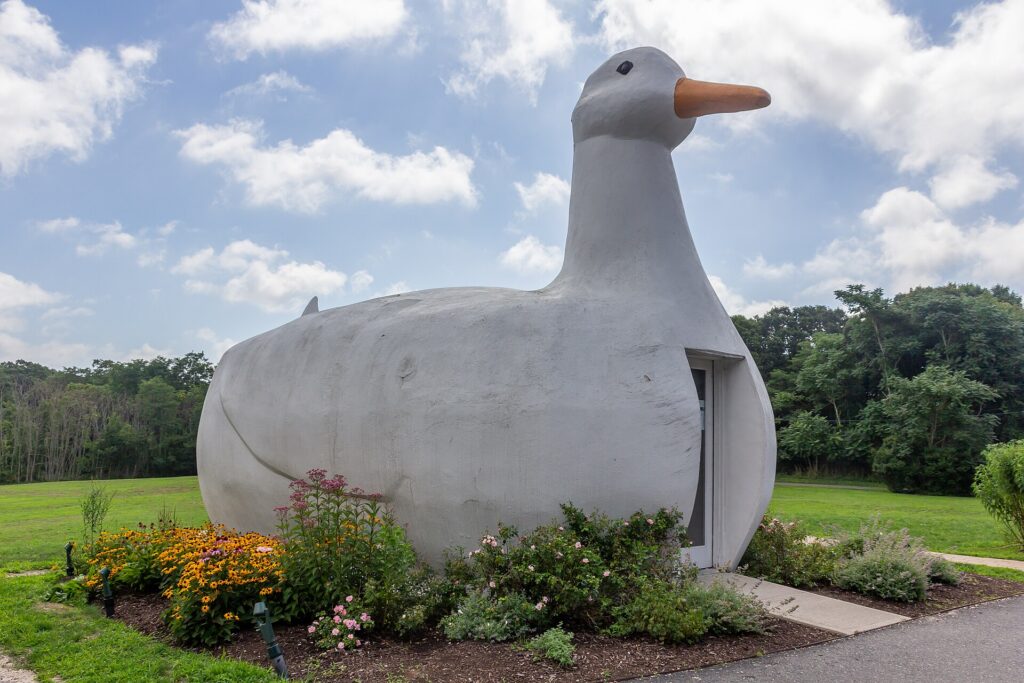
The duck’s eyes are Ford Model T taillights. At night they glowed red.
Martin Maurer, a Long Island duck farmer, had seen a coffee-pot-shaped building in California. In 1931 he built a 20-foot duck to sell his ducks and eggs from, with wire mesh and cement over a timber frame. By the early 1960s, Long Island was raising about two-thirds of the ducks Americans ate. Suffolk County later took over the duck, and it now stands on Route 24 in Flanders as a gift shop and small museum. The county asks visitors to call ahead to confirm hours.
Architects still call a building shaped like what it sells a “duck,” after this one.
The duck farms are mostly gone. The duck got a whole vocabulary.
5. Lookout Mountain, Georgia: Rock City paid farmers to paint its name on their barns
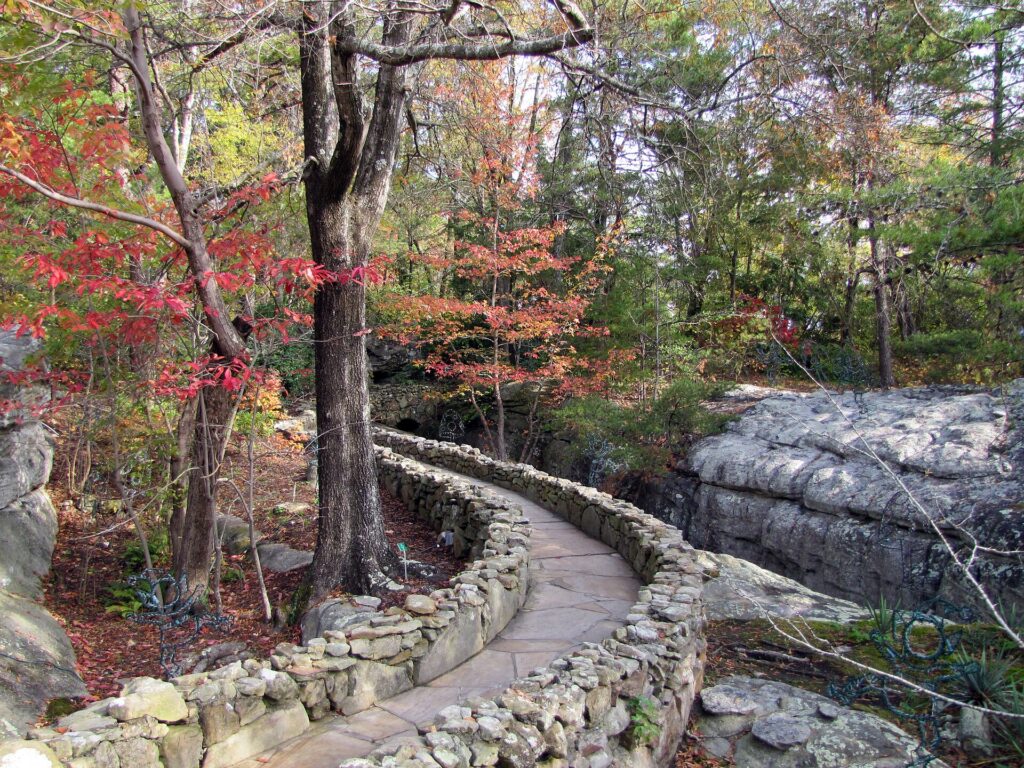
Frieda Carter laid out the trail with string, winding it between the boulders. Then she set out German gnome statues along the way. Rock City opened on May 21, 1932.
Her husband, Garnet, handled the selling. Starting in 1935, a painter named Clark Byers drove the back roads offering farmers a deal. Rock City says Byers painted some 900 barns in 19 states, paying owners in free passes, Rock City thermometers or a few dollars. “See Rock City” became one of the roadside signs nearly every traveler knew by heart. Highway beautification rules later cost many of the barns their messages, though some are still kept up.
The gardens are open this fall, and the holiday light show starts November 13.
Most attractions bought billboards. Rock City borrowed barns.
More from American Charm
 People who’d rather spend a Saturday on Main Street than at a resort usually fall for these 9 small towns in America’s most beautiful states
 9 small towns in Vermont where a Saturday morning still looks the way it did in 1955People who dug to the bottom of the cereal box for the prize usually remember these 8, and a few are worth real money now
6. Bemidji, Minnesota: Paul Bunyan and Babe have stood by the lake since 1937
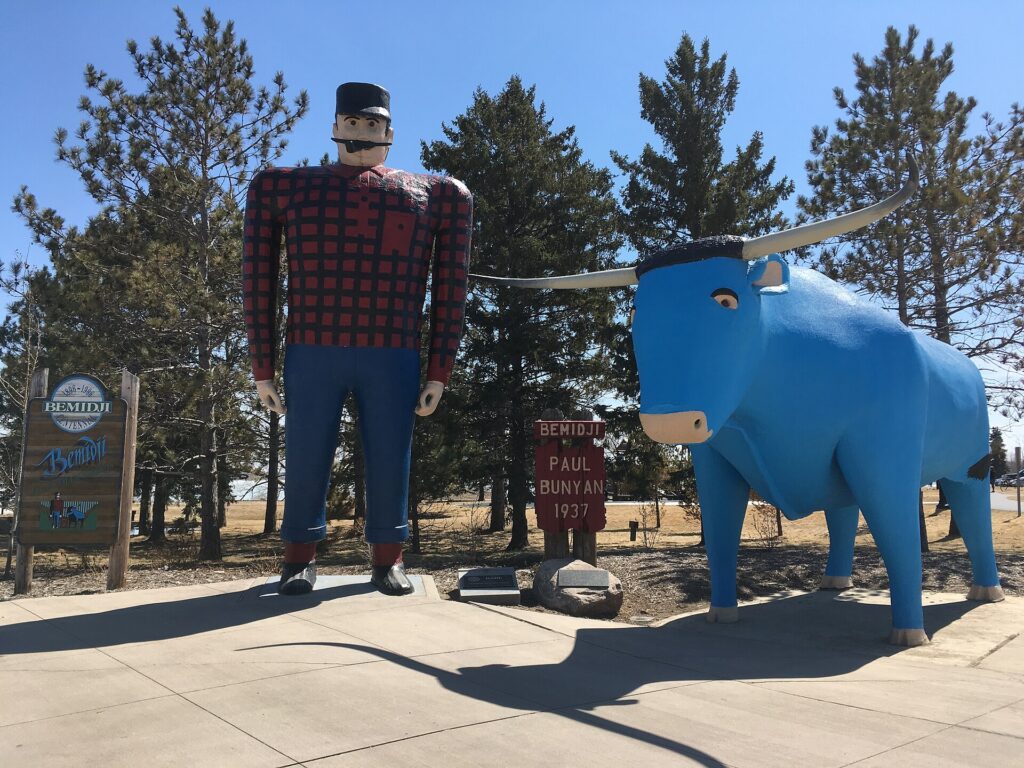
Paul Bunyan is about 18 feet tall, made of concrete and plaster, and he barely has a neck. Babe stands beside him on the shore of Lake Bemidji. There’s no admission. People just pull over.
The pair went up in January 1937 for the Bemidji Winter Carnival, built to get passing drivers to stop. Babe started out as a parade float. According to the Minnesota Historical Society, he rode around on a car with taillights for eyes and exhaust coming out of his nostrils. In 2022 the city raised Babe about 15 inches to fix drainage on the plaza. This June he and Paul got a fresh coat of paint before tourist season.
Paul turns 90 in January.
He was built to stop cars in 1937. He still does.
7. Homestead, Florida: One man carved Coral Castle out of 1,100 tons of rock
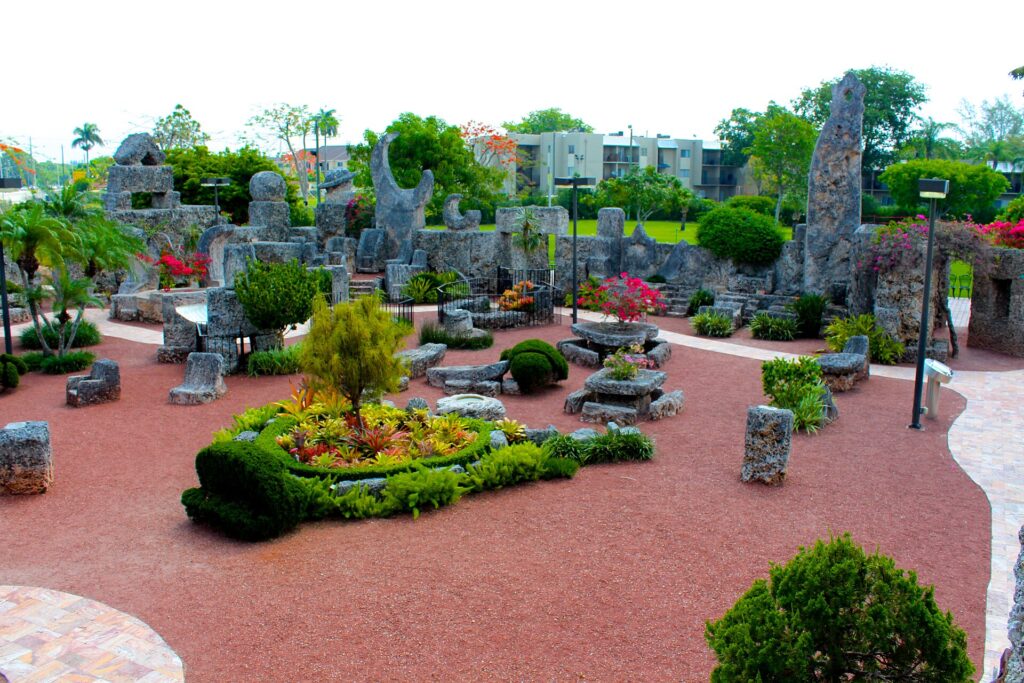
The gate weighs about nine tons. For decades it was reportedly balanced so well that a child could push it open with one finger. Then, in 1986, it stuck.
Edward Leedskalnin, a Latvian immigrant, started carving around 1923 in Florida City. In 1936 he bought land about 10 miles north and spent roughly three years moving his work there, piece by piece. He kept carving until he died in 1951. The museum puts the total at more than 1,100 tons of what it calls coral rock, though geologists describe the stone as oolite limestone. It’s on the National Register of Historic Places. According to most accounts, Ed asked visitors for a dime in Florida City and a quarter in Homestead.
Admission is now $25 for adults.
Ed charged a quarter. The mystery costs a little more now.
8. Cabazon, California: Two concrete dinosaurs still watch the interstate
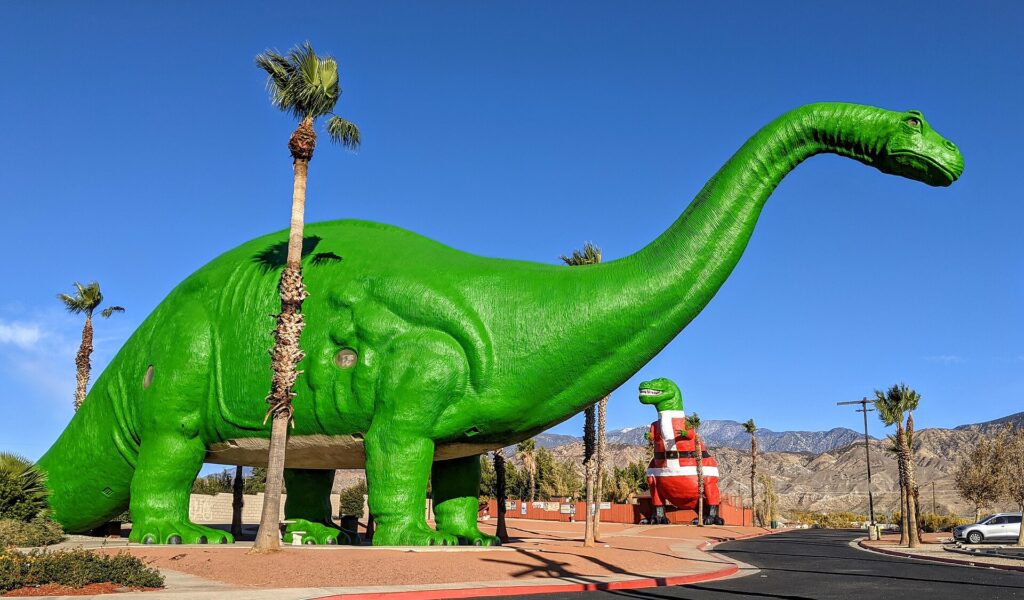
Dinny the brontosaurus is about 150 feet long. Behind him, Mr. Rex stands 65 feet tall over the freeway to Palm Springs.
Claude Bell, a sculptor, built them to pull drivers into his Wheel Inn restaurant. He started Dinny in 1964 and finished in 1975, using salvaged steel and cement left from a freeway project. He spent 1981 to 1986 on Mr. Rex. Then Hollywood found them. The dinosaurs had a starring scene in Pee-wee’s Big Adventure in 1985, with Cabazon playing Texas. Bell died in 1988 and the Wheel Inn closed in 2013, but the dinosaurs stayed. The park is open daily, and adult admission is $15.
Bell built them to fill a diner. They outlasted the diner.
More from American Charm