The green bean casserole comes out of the oven at 4:15. Somebody’s aunt has already cut the German chocolate cake. Out in the den, a bowl of wings is going cold during the third quarter.
Nobody at that table thinks of any of it as history. It’s just what’s for dinner. It’s what your mother made, and her mother made, out of the same kitchens that ran on cooking habits that would startle a chef today.
But a surprising number of those dishes have a birth certificate. A street address. A year. Sometimes a name on a recipe card.
They weren’t handed down from some old country. They were invented here, by a dentist in Tennessee, a soda jerk in Pennsylvania, a test-kitchen cook in New Jersey, and a bar owner in Buffalo.
A few of the stories are disputed, and that’s noted below. The rest are about as settled as food history gets.
Every one of them started in a real town.
1. Cotton candy was spun up by a dentist in Nashville, Tennessee, in 1897
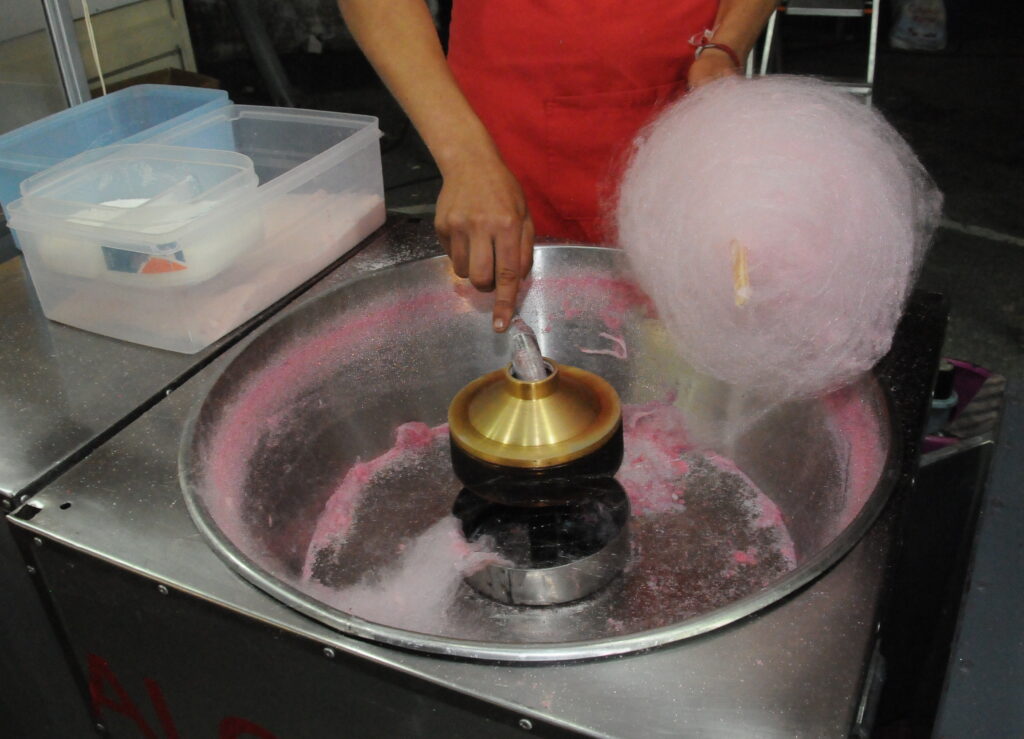
The county fair. The paper cone. The pink cloud that’s gone the second it touches your tongue.
Spun sugar had been around in Europe for a long time, but it was slow, fussy work for pastry chefs. In 1897, a Nashville dentist named William Morrison and a candy maker named John C. Wharton built an electric machine that melted sugar and pushed it through a wire screen into fine threads.
They called it “Fairy Floss.” They took it to the 1904 World’s Fair in St. Louis and sold it for a quarter a box, more than 68,000 boxes in all. The name “cotton candy” caught on later, after another dentist, Josef Lascaux of New Orleans, patented his own machine in 1921.
Yes, two dentists. The irony writes itself.
2. The banana split was born at a drugstore counter in Latrobe, Pennsylvania, in 1904
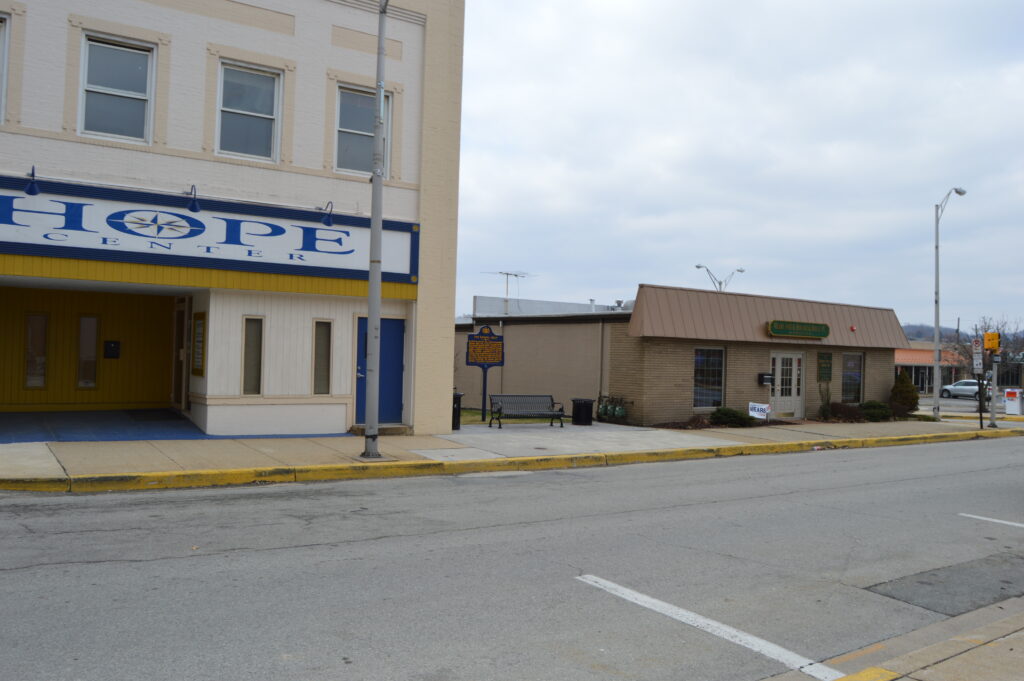
David Strickler was 23, a pharmacy student working the soda fountain at Tassel Pharmacy on Ligonier Street. He’d spent part of that summer in Atlantic City looking at fancy fruit sundaes.
Back home, he split a banana lengthwise and piled ice cream between the halves. It cost a dime, twice what other sundaes cost. Students from nearby Saint Vincent College bought it anyway, and word spread.
Wilmington, Ohio, has its own claim, from a shop owner named Ernest Hazard in 1907. Most food historians give the edge to Latrobe. In 2004 the National Ice Cream Retailers Association certified Latrobe as the birthplace, and in 2013 the state put up an official historical marker where the pharmacy stood.
Strickler eventually bought the drugstore. The sundae was the better investment.
More from American Charm
3. The cheesesteak started at a hot dog stand in South Philadelphia in the early 1930s
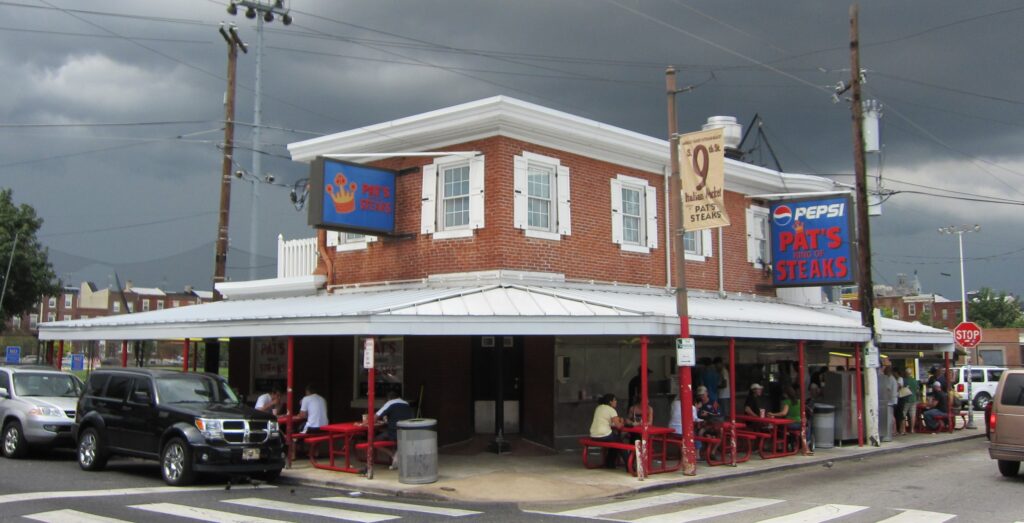
In 1930, brothers Pat and Harry Olivieri opened a hot dog stand where 9th Street meets Passyunk Avenue. Harry was a carpenter. Pat made sleds. The stand was a side job.
As the family tells it, one day they got tired of hot dogs. They sliced some cheap steak thin, threw it on the grill with onions, and put it on a roll. A cab driver smelled it and asked for one. Then he told them to forget the hot dogs.
There was no cheese yet. According to Pat’s son, that came in 1951, added by a manager at another family location. Other people dispute that detail, too.
Pat’s King of Steaks still stands on the same corner. The sandwich went national. The order at the window is still “wit” or “wit-out.”
4. The chocolate chip cookie came out of the Toll House Inn in Whitman, Massachusetts, around 1938
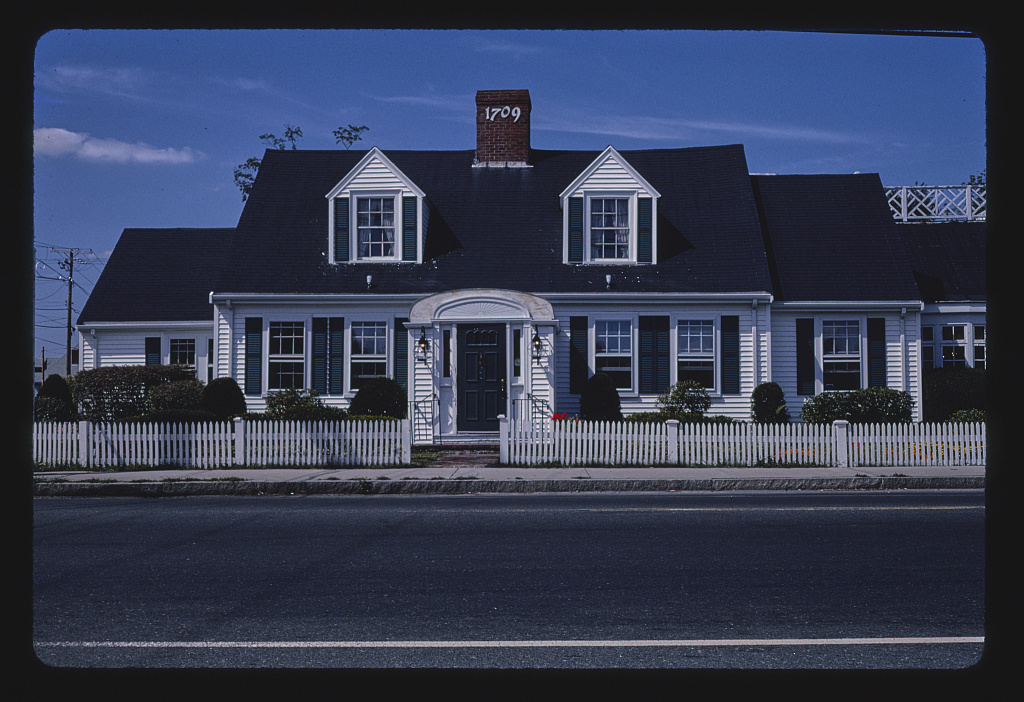
Ruth Wakefield had trained in home economics and taught it at Brockton High School. In 1930 she and her husband Kenneth opened the Toll House Inn, south of Boston, and her cooking made it a regional destination.
The popular story says she ran out of nuts and chopped up a chocolate bar instead. Wakefield later said it was on purpose. Either way, the recipe for her “Chocolate Crunch Cookie” ran in the 1938 edition of her cookbook, Toll House Tried and True Recipes, a book the Library of Congress says holds what food historians consider the first chocolate chip cookie recipe.
To be fair, chocolate had shown up in American cookies before her. In 1939 Nestlé put her recipe on its chocolate bars. By 1940 it was selling the chocolate already in little pieces.
The inn burned down in 1984. The recipe on the back of the bag never left.
5. Tater Tots were made from leftover scraps in Ontario, Oregon, in 1953
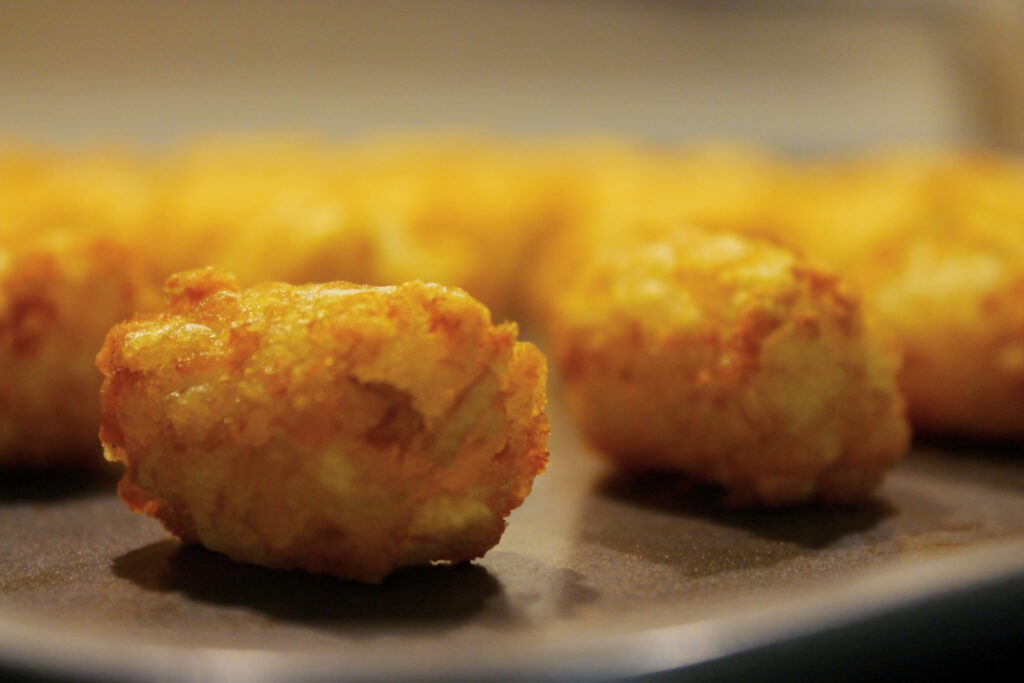
Ontario sits on the Oregon side of the Snake River, right on the Idaho line. That’s where brothers F. Nephi and Golden Grigg ran a potato plant. The company name, Ore-Ida, came straight off the map.
Cutting French fries left a pile of potato slivers that usually went to waste. In 1953 the Griggs and their partners chopped up the scraps, added flour and seasoning, pushed the mash through holes, and sliced off little cylinders.
Sales were slow when they hit stores in the mid-1950s. The family’s theory was that the price was too low, so shoppers figured they were cheap filler. They raised the price. People started buying.
Generations of school lunch trays followed. Not bad for something that started out as trash.
More from American Charm
6. Green bean casserole was written up in a Campbell’s test kitchen in Camden, New Jersey, in 1955
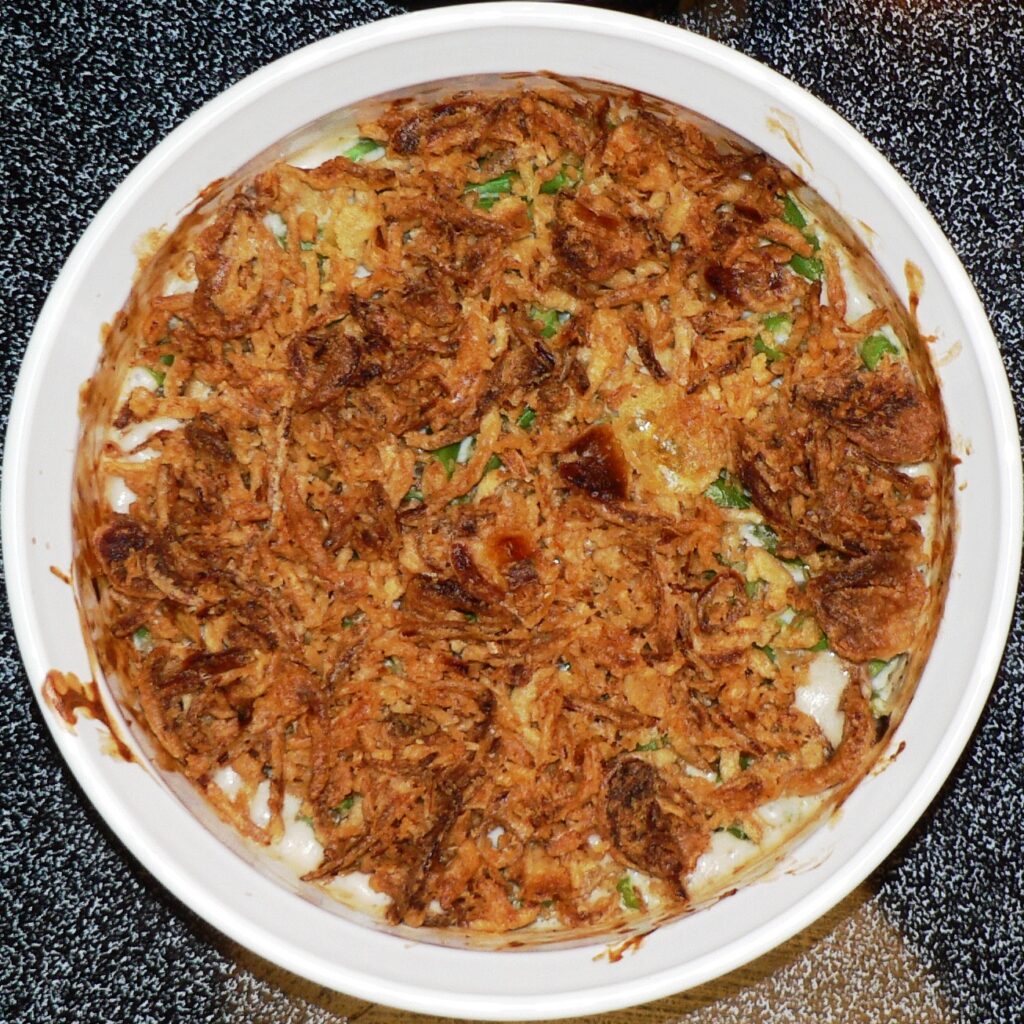
Dorcas Reilly worked in the home economics department at Campbell’s in Camden. The assignment was a quick side dish for an Associated Press feature, made from things most households already had in the cupboard.
She landed on green beans and cream of mushroom soup, finished with a topping of crispy fried onions. It first went on soup cans as “Green Bean Bake.”
It didn’t test well inside the company at first. Reilly stuck with it. In 2002 Campbell’s gave her original recipe card to the National Inventors Hall of Fame. By 2020, the company estimated the dish showed up at about 20 million Thanksgiving dinners a year.
It was meant for a Tuesday. It ended up on the holiday table.
7. German chocolate cake is from Dallas, Texas, where the recipe ran in the paper in 1957
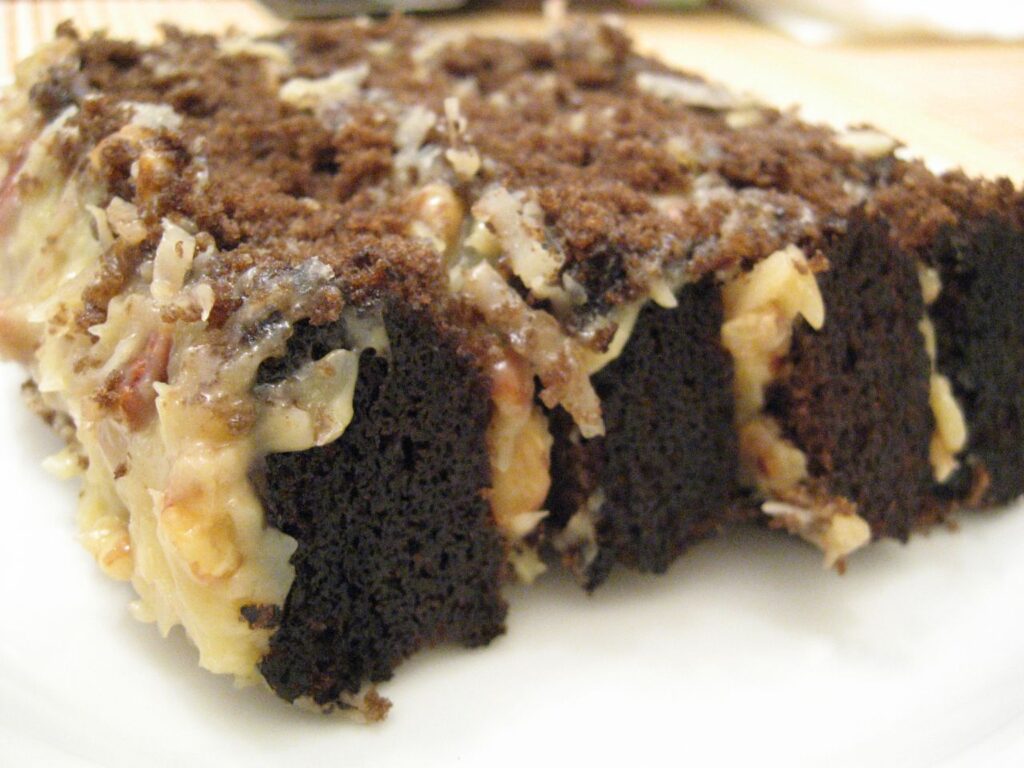
There’s nothing German about it. The name belongs to Samuel German, who developed a sweet baking chocolate for Boston’s Baker’s Chocolate Company in the 1850s.
A century later, a Dallas homemaker listed as Mrs. George Clay sent a recipe for “German’s Chocolate Cake” to The Dallas Morning News. It ran as the Recipe of the Day in 1957. General Foods, which owned Baker’s by then, sent it to papers across the country. NPR reported that sales of the chocolate jumped as much as 73 percent in a year.
Mrs. Clay may not have been first. A similar recipe appeared in a suburban Dallas paper in 1956, and similar cakes were likely being baked in Southern kitchens before that.
Somewhere along the way the “‘s” fell off. Germany got the credit. Texas kept the cake.
8. Buffalo wings came from the Anchor Bar in Buffalo, New York, in 1964, though not everyone agrees
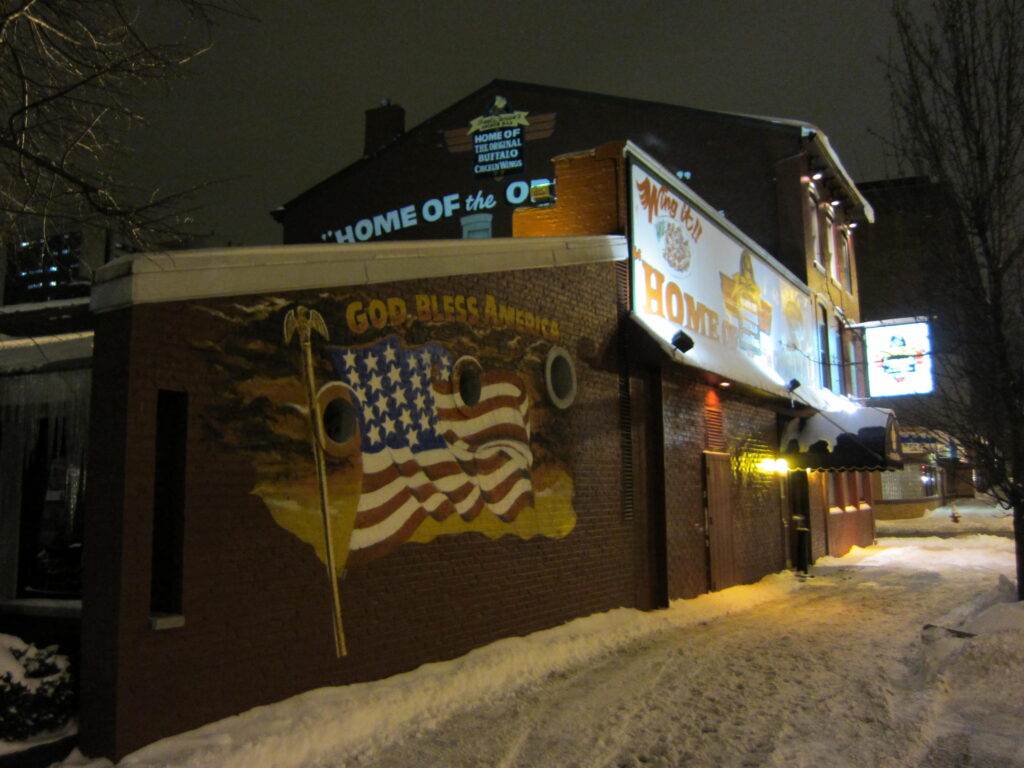
Back then, chicken wings were the part nobody wanted. They went into the stockpot or the trash.
The Anchor Bar’s version goes like this. Late one night in 1964, Dominic Bellissimo’s friends showed up hungry. His mother, Teressa, deep-fried some wings, tossed them in butter and hot sauce, and set out celery and blue cheese. Another family version blames a wrong delivery of wings.
Then there’s John Young, who ran a Buffalo place called John Young’s Wings ‘n Things and sold breaded wings in his own “mumbo” sauce in the 1960s. When writer Calvin Trillin went to Buffalo in 1980 to sort it out, he came back with competing stories, as Smithsonian magazine later recounted. In 2013, the National Buffalo Wing Festival honored Young too.
The argument isn’t settled. The city’s name is on the wings either way.