1. Maytag – Newton, Iowa
For over a century, Maytag was the pride of Newton, Iowa, producing dependable washers and dryers that became household staples. The plant was one of the largest employers in the region, and generations of families built their lives around it. When Whirlpool bought Maytag in 2006 and closed the Newton plant soon after, it wiped out nearly 2,500 jobs. For a small town, that loss was devastating.
The closure forced Newton to reinvent its local economy from scratch. The community began investing in renewable energy, drawing in wind turbine manufacturing and solar projects. The town also doubled down on small business development, encouraging entrepreneurship among displaced workers. While the scars are still visible, Newton’s slow transformation shows resilience in action.
2. Bethlehem Steel – Bethlehem, Pennsylvania
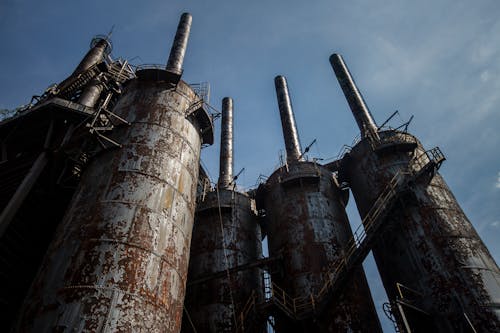
For most of the 20th century, Bethlehem Steel was the heartbeat of Bethlehem, Pennsylvania. Its mills forged the steel that built America’s bridges and skyscrapers, employing tens of thousands of workers. When the company shut down its main plant in 1995 and filed for bankruptcy a few years later, it left a massive void—economically and emotionally. The city has since turned the old plant into SteelStacks, an arts and cultural campus, but the echoes of molten steel and shift whistles still linger.
The closure forced Bethlehem to redefine itself beyond heavy industry. Instead of blue-collar jobs, the focus shifted toward tourism, technology, and entertainment. The repurposing of the old mill site gave residents a sense of continuity, even amid change. Still, the story of Bethlehem Steel remains a symbol of the Rust Belt’s struggle with deindustrialization.
3. Kodak – Rochester, New York

Eastman Kodak once made Rochester a city of invention and prosperity. Its film and camera operations employed more than 60,000 people at its peak, powering a proud middle class. But when digital photography disrupted the industry, Kodak faltered, filing for bankruptcy in 2012. The ripple effects were profound, leaving Rochester to cope with vacant facilities and a shaken sense of identity.
In the years since, Rochester has leaned on its strong universities and research institutions to pivot toward imaging technology and biotech. Kodak’s remaining operations are smaller but focused on advanced materials and printing. Many residents still see Kodak as both a cautionary tale and a cornerstone of the city’s innovation legacy. The transition hasn’t been easy, but Rochester continues to find new ways to make its own picture clearer.
4. GM Lordstown Assembly – Lordstown, Ohio
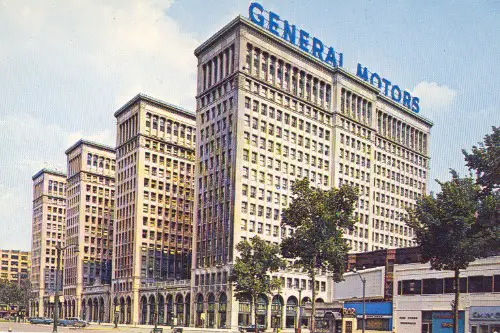
For decades, the General Motors plant in Lordstown was synonymous with stability and good wages. It produced millions of vehicles, including the once-popular Chevrolet Cruze. When GM shut the plant in 2019, it hit the Mahoning Valley like a gut punch, costing thousands of jobs and threatening the region’s already fragile economy. Many workers had to uproot their lives or retire early.
Since then, the sprawling site has become part of the electric vehicle conversation. Lordstown Motors, an EV startup, took over the facility, promising to revive local manufacturing. But the road has been bumpy—financial troubles and layoffs have tested the community’s optimism. Lordstown’s story is still unfolding, a microcosm of America’s uneasy shift from old industry to new tech.
5. International Harvester – Fort Wayne, Indiana
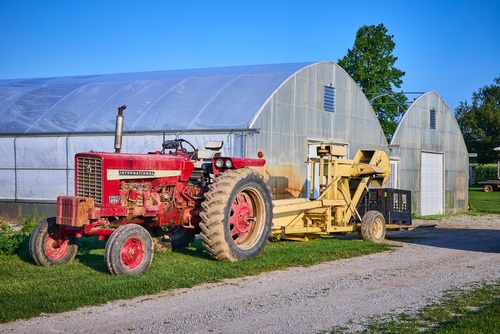
When International Harvester shut down its massive truck plant in Fort Wayne in 1983, the city lost one of its largest employers overnight. The plant had been a defining part of the local identity, employing over 10,000 people at its peak. Its closure was part of a broader wave of manufacturing decline that swept through the Midwest. Families that had depended on those jobs for generations suddenly faced an uncertain future.
Fort Wayne’s response has been pragmatic and patient. The city diversified its economy, attracting defense contractors, healthcare providers, and tech companies. The old Harvester site was eventually redeveloped into industrial parks and smaller businesses. While the community still remembers its manufacturing roots, it has learned to thrive in a more varied economic landscape.
6. Pacific Lumber Company – Scotia, California
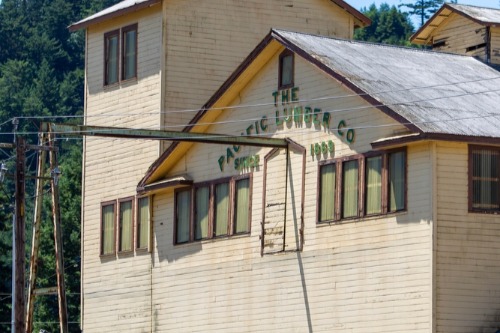
For more than a century, the Pacific Lumber Company was the lifeblood of Scotia, a tiny company town nestled in Northern California’s redwoods. It provided homes, schools, and even stores for its workers. But after a leveraged buyout in the mid-1980s, unsustainable logging practices and market changes led to bankruptcy by 2007. When the mill closed, it left Scotia without its central employer—and without its purpose.
Residents worked hard to transition Scotia into a more independent, self-governed community. The town incorporated new businesses and tried to preserve its unique lumber-era character. Today, tourism and small enterprises have begun to fill some of the void. Scotia’s shift from a one-company town to a self-sustaining community has been rocky, but hopeful.
7. Textile Mills – Kannapolis, North Carolina
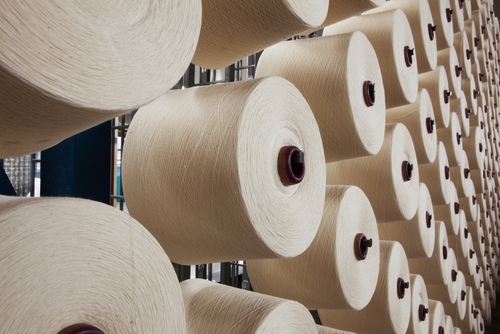
Kannapolis was built around Cannon Mills, one of the largest textile producers in the world. At its height, the mill employed 30,000 people, weaving cotton into a global brand. When the company was sold and eventually shut down in 2003, the loss was staggering—both economically and culturally. The town’s entire rhythm revolved around the mill’s whistle.
In the years following, Kannapolis launched an ambitious revitalization plan. The North Carolina Research Campus, a biotech hub, rose on the old mill site, symbolizing a bold pivot from textiles to technology. Though the transformation has been uneven, it’s given the town a new identity centered on science and innovation. Kannapolis is no longer a mill town—but it’s finding pride in what comes next.
8. Studebaker – South Bend, Indiana
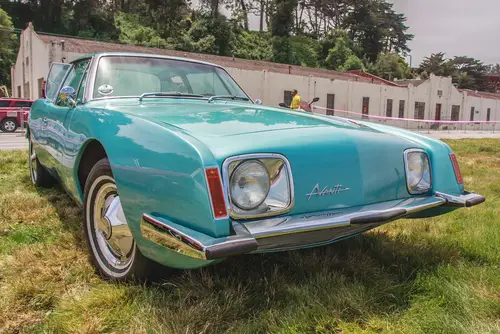
Studebaker cars were once a source of immense pride in South Bend. The company employed tens of thousands and helped shape the city’s working-class culture. But when the automaker went bankrupt in 1963, the fallout was immediate and severe, hollowing out the local economy. It took decades for South Bend to recover from the shock.
The old Studebaker complex has since been reborn as a technology park called Ignition Park. Startups and research firms now occupy spaces where assembly lines once stood. Notre Dame University has also played a role in steering economic redevelopment. South Bend’s evolution from a car town to a tech hub has been a long drive—but it’s finally gaining speed.
9. Kaiser Aluminum – Spokane, Washington
The Kaiser Aluminum plant in Spokane was once a major employer, part of the region’s strong industrial base. It produced aluminum for aircraft, automobiles, and household products, providing thousands of union jobs. But when the company declared bankruptcy in 2002, it shuttered operations and cut deep into Spokane’s blue-collar identity. The closure left behind both environmental cleanup and economic hardship.
Since then, the area has been reinventing itself around aerospace and healthcare industries. The site was repurposed for logistics and manufacturing ventures, though the number of jobs never matched Kaiser’s heyday. The community still wrestles with the environmental scars from the aluminum era. Yet Spokane’s steady diversification shows that recovery, while slow, is possible.
10. Peabody Coal – Gillette, Wyoming
Gillette was once called the “Energy Capital of the Nation,” thanks largely to Peabody Coal and other mining companies. The town thrived on the promise of endless coal reserves, offering high wages and steady work. But as demand for coal has fallen, Peabody and other operators have drastically cut production. The town’s once-booming economy now faces uncertainty and declining population growth.
In response, Gillette has begun exploring renewable energy and carbon capture projects. City leaders are also investing in tourism and local entrepreneurship to diversify the economy. While coal remains part of Gillette’s identity, the town’s future depends on adaptation. The challenge is monumental—but so is the community’s determination.
11. Goodyear Tire & Rubber – Gadsden, Alabama
For 90 years, Goodyear’s tire plant was a cornerstone of Gadsden’s economy. Generations of workers found steady paychecks and union benefits under its roof. When Goodyear permanently closed the plant in 2020, it ended nearly a century of industrial tradition. The decision gutted a city already struggling with poverty and population decline.
Local leaders have since focused on retraining programs and industrial recruitment. New manufacturing ventures are slowly emerging, but replacing Goodyear’s economic weight is no easy task. For many residents, the loss wasn’t just financial—it was personal, a blow to Gadsden’s identity. The hope now lies in building something more sustainable from the ground up.
12. Pullman Company – Pullman, Illinois
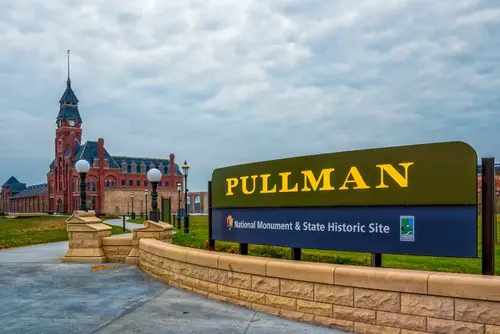
The Pullman Company didn’t just make railroad cars—it built an entire town. Founded in the 1880s as a model community for workers, Pullman became famous for both its elegant railcars and its role in labor history. When the company’s production faded by the mid-20th century, the area was left struggling with unemployment and decay. The once-celebrated company town became a relic of another era.
Today, Pullman has been reborn as a National Monument and a symbol of American labor heritage. Restoration efforts have transformed old factories into museums and community spaces. Residents and historians alike see it as a story of renewal through remembrance. Pullman’s rebirth shows how honoring the past can fuel a new sense of place.
13. Sears – Hoffman Estates, Illinois

Sears was more than a retailer—it was an institution that helped shape American consumer culture. When it moved its headquarters to Hoffman Estates in the early 1990s, the suburb flourished with jobs and prestige. But as Sears declined and filed for bankruptcy in 2018, the campus emptied out, leaving behind a massive complex and a crisis of purpose. The loss reverberated through the entire community.
Now, redevelopment plans aim to transform the old headquarters into a mixed-use “metropolitan center.” The hope is to attract tech firms, housing, and retail to fill the void Sears left behind. Residents are cautiously optimistic, seeing a chance to move beyond dependence on a single corporate giant. Hoffman Estates, once defined by Sears, is learning what reinvention really means.
This post 13 Companies That Left Small Towns Searching for New Identities was first published on American Charm.