
1. The Hodag of Rhinelander
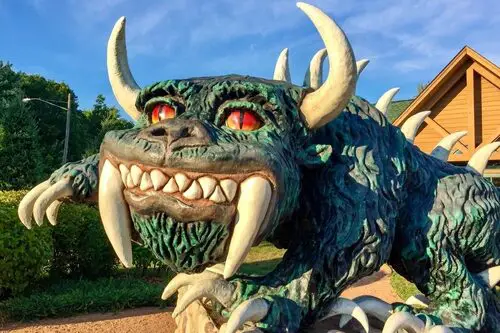
The Hodag of Rhinelander, Wisconsin began explicitly as a hoax in 1893 by surveyor Eugene Shepard. He created the creature to poke fun at sensational newspaper stories. When newspapers took it more seriously than expected, locals leaned into the humor and adopted the Hodag as a mascot. The fact that it started as a joke didn’t stop it from becoming folklore.
Today, Rhinelander proudly showcases the Hodag in statues, festivals, and school mascots. It’s a prime example of a community embracing its own invented strangeness. The myth works because it’s both silly and deeply rooted in local history. Residents continue telling the story because it reflects the town’s playful spirit.
2. The Loveland Frogman
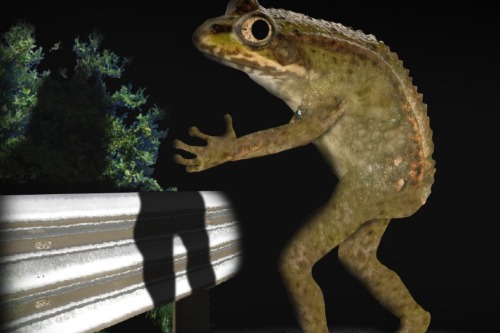
The Frogman of Loveland, Ohio began as a tongue-in-cheek tale from the 1950s involving a supposed humanoid frog near the Little Miami River. Locals originally laughed about it and treated it as something kids told to spook each other. But the story gained traction when two police officers decades apart reported seeing a strange creature, even though both later softened their claims. The blend of joke and official-sounding sightings created a myth that stuck hard.
Now the Frogman pops up in local festivals and merchandise in Loveland. The city embraces it cautiously, knowing it’s more fun than fact. Residents treat it as a symbol of the town’s quirky, small-town charm. The myth continues because Loveland loves having a monster that’s more silly than scary.
3. The Melon Heads of Connecticut
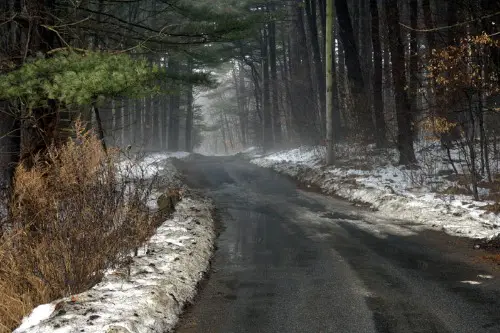
The Melon Heads—rumored to be mutated, big-headed forest dwellers—started as a camp joke shared by teens around Fairfield County. For decades, kids passed the story along to tease newcomers or add drama to nighttime drives. Though the details changed constantly, the core idea remained intentionally ridiculous. Ironically, that absurdity helped the story lodge itself into regional folklore.
Today, local trails and backroads are sometimes connected jokingly to Melon Head “territory.” Residents know it’s not real, but the myth adds flavor to otherwise quiet suburbs. Some small businesses reference the legend just to nod at the region’s strange storytelling traditions. People keep retelling it because it’s a shared cultural wink rather than a genuine warning.
4. The Jersey Devil of the Pine Barrens
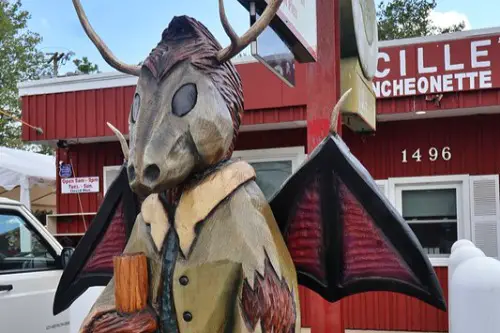
The Jersey Devil began as an 18th-century satirical jab at a local political family, the Leeds, and later morphed into a monster story used to rib South Jersey. Early storytellers leaned into the absurdity of a winged creature supposedly born from a cursed mother. Over generations, residents embraced the story as both a joke and a regional badge of independence. The myth’s humor softened its darker edges and made it feel like a communal in-joke.
South Jersey towns now proudly reference the Jersey Devil in team names and tourism. The creature’s silhouette shows up everywhere from minor league hockey to local diners. It reflects the Pine Barrens’ reputation for rugged self-identity. The story persists because it lets South Jersey define itself on its own terms—strange, stubborn, and unbothered by outside opinions.
5. The Phoenix Goat-Man of Pope Lick
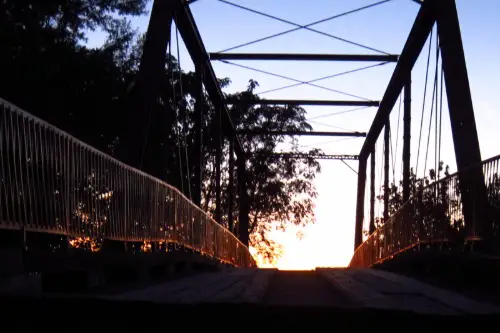
The Goat-Man near Louisville, Kentucky originated as a tongue-in-cheek exaggeration about a creepy bridge in the 1940s. Locals joked about a hybrid creature to explain unusual animal noises and the eerie echo of the trestle. Over time, embellishments layered on, and the joke became an urban myth people still reference today. Even though the story can sound sinister, its roots were never meant to be serious.
Today, Louisville residents talk about the Goat-Man as part of their city’s folklore fabric. The myth adds intrigue to an otherwise ordinary rail structure. Locals use it as a symbol of the city’s mix of humor and gothic flair. The story endures because it helps define the weird, moody atmosphere of the area’s wooded outskirts.
6. The White River Monster of Newport
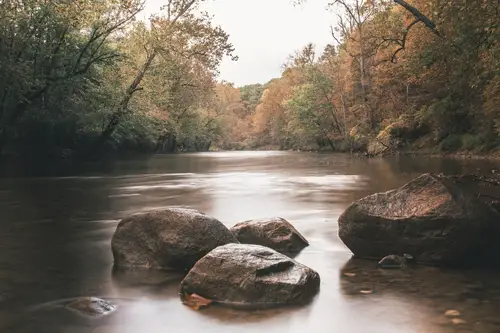
In Newport, Arkansas, talk of the White River Monster started as lighthearted speculation during the early 1900s after fishermen reported odd disturbances in the water. Locals joked about an oversized fish or playful river creature causing the splashes. Eventually, the story grew into a full-blown monster myth, despite little evidence. People enjoyed the comedy of it more than the fear factor.
Modern-day Newport uses the monster as a tourist draw and cultural quirk. Decorative signs and playful art installations keep the story alive. Residents often recount the legend with a grin, knowing it’s mostly about community storytelling. The myth persists because it gives an otherwise quiet river town a memorable calling card.
7. The Marfa Lights of Texas

The Marfa Lights began as rancher jokes in the late 1800s about mysterious glows on the horizon. Cowboys teased one another with tales of ghosts or wandering spirits. Later, as more travelers spotted the lights, the humorous tales hardened into a serious-sounding mystery. Still, the story was always told with a bit of a wink.
Today, Marfa hosts annual gatherings where people watch for the lights as a shared cultural ritual. The phenomenon, likely caused by atmospheric conditions, doesn’t diminish the myth’s charm. Locals like the blend of science and folklore because it reflects Marfa’s artsy identity. The myth endures as a symbol of the town’s mix of desert oddity and creative imagination.
8. The Fresno Nightcrawler

The legend of the Fresno Nightcrawler started with a quirky 2007 home-security video that locals initially treated like a prank. The puppet-like gait and odd proportions made many in Fresno joke that it looked like a pair of walking pants. Over time, the joke stuck so well that it became a recognizable local mascot for oddball charm. Today, you’ll find the creature referenced in murals and stickers because Fresno has leaned into the myth as part of its offbeat identity.
Residents often say the Nightcrawler represents the city’s willingness to embrace the unconventional. People share stories about supposed sightings mostly for fun, not fear. Artists and small businesses use the creature to differentiate themselves from bigger Central Valley cities. The myth endures because it captures a sense of playful weirdness that Fresno is proud of.
9. The Green-Clawed Beast of the Ohio River

The Green-Clawed Beast legend began in 1955 in Evansville, Indiana after a swimmer reported being grabbed by something underwater. Locals joked that it must have been a river monster rather than a fish or debris. The playful exaggeration took off, especially as newspapers ran with the story. Before long, the joke became a regional myth repeated every summer.
Evansville now brings up the creature mostly during community events or historical retrospectives. People enjoy the tale because it blends humor with the drama of river life. The story adds character to an otherwise understated waterway. It remains alive because residents appreciate a good yarn that unites generations.
10. The Bunny Man of Fairfax County
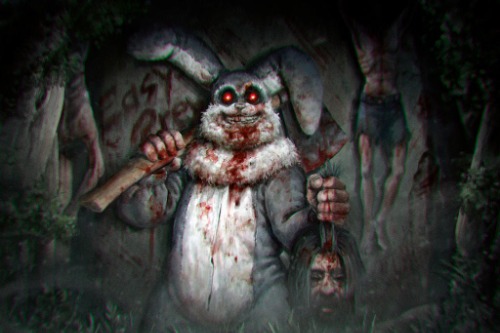
The Bunny Man started as a bizarre 1970s prank rumor about a man in a rabbit costume scaring motorists near a Virginia bridge. Locals treated it as a goofy Halloween joke that got out of hand. Over the years, exaggerated retellings turned the prankster into a full-fledged urban legend. The whimsy of a costumed figure helped the story stick.
Fairfax County now recognizes the Bunny Man as part of its folklore, especially around October. The bridge associated with the myth often draws curious visitors. Residents treat the story as a fun reflection of suburban eccentricity. The myth endures because it captures the mix of humor and creepiness that defines many local legends.
11. The Black Angel of Iowa City
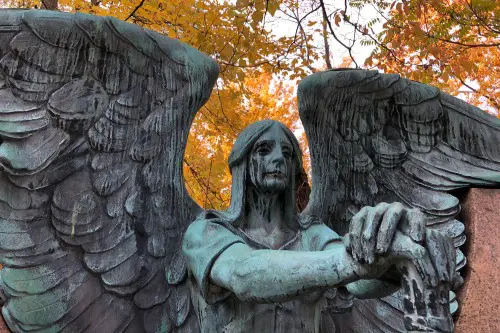
The Black Angel statue in Iowa City gained its eerie reputation through student jokes about curses and heartbreak. Local teens dared each other to touch the statue at night, creating a playful mythology around it. University folklore amplified the jokes until they became quasi-serious legends. The origins were always more prankish than paranormal.
Today, the statue is a fixture in campus storytelling and local tours. Residents know the myths aren’t real but still enjoy the ritual of retelling them. The legend adds a touch of drama to an otherwise peaceful cemetery. It sticks around because it captures the transition between teen mischief and adult nostalgia.
12. The Lake Worth Monster of Texas
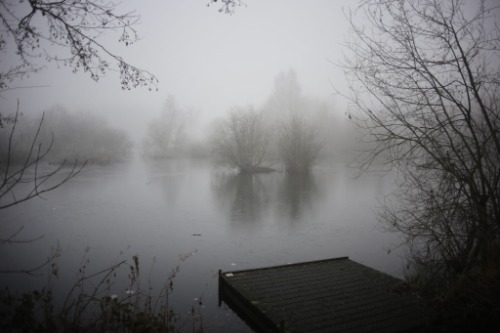
The Lake Worth Monster near Fort Worth emerged in 1969 after pranksters reportedly threw tires and scared locals near a lake. Newspapers sensationalized the event, and joking descriptions of a goat-man creature solidified into a regional myth. Even after prank participants admitted involvement, the story kept growing. The combination of humor and spectacle made it memorable.
Today, Lake Worth celebrates the creature with themed events and novelty merchandise. Locals reference it as part of the city’s eccentric history. The myth helps highlight the sense of humor that defines Fort Worth’s outskirts. It persists because residents enjoy a tall tale that never took itself too seriously.
This post 12 Urban Myths That Started As Jokes and Somehow Became Local Identity was first published on American Charm.

