1. Statue of Liberty

There’s no denying the symbolism of the Statue of Liberty, but the actual visit can feel more like a logistics exercise than a moving experience. You queue for security, board a packed ferry, and jockey for railing space just to snap that classic harbor shot. Once you’re on Liberty Island, most people spend more time angling their phones than absorbing the history. The monument is powerful, yet the crowd management often overshadows the reflection it deserves.
Even climbing to the pedestal or crown can feel rushed because of timed tickets and tight stairways. Rangers do their best, but the flow of tourists keeps things moving at a brisk pace. The result is that many visitors leave with a camera roll full of photos but only a surface-level understanding of the site. It’s iconic, yes, but the experience itself can feel surprisingly transactional.
2. Hollywood Walk of Fame

On screen, the Hollywood Walk of Fame looks glamorous and star-studded. In person, it’s a stretch of busy sidewalk surrounded by souvenir shops and costumed characters hustling for tips. You’ll likely spend more time looking down to avoid stepping on someone than gazing at the terrazzo stars. The whole ritual becomes about finding your favorite celebrity’s name and snapping proof that you were there.
Because the stars are embedded in an active commercial district, the setting can feel chaotic rather than cinematic. Street noise, traffic, and aggressive vendors dilute the supposed magic of old Hollywood. Most visitors breeze through in under an hour, having checked the box. It’s a quick hit of pop culture rather than an immersive tribute to film history.
3. Plymouth Rock
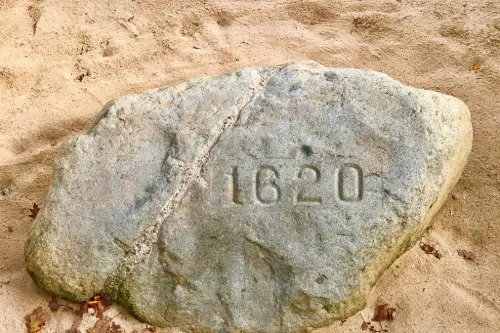
Plymouth Rock is one of those landmarks that feels larger in the American imagination than it does in real life. When you finally see it, you’re looking at a modest boulder protected behind a railing and a classical canopy. The buildup often exceeds the visual payoff. Many first-time visitors blink and wonder if that’s really it.
Interpretive signs try to add context, but the experience is brief and contained. You shuffle in, take a photo, and shuffle out. The historic significance of the rock’s connection to the Pilgrims is debated by scholars, which adds another layer of anticlimax. It’s less an immersive colonial history lesson and more a quick stop for documentation.
4. Times Square
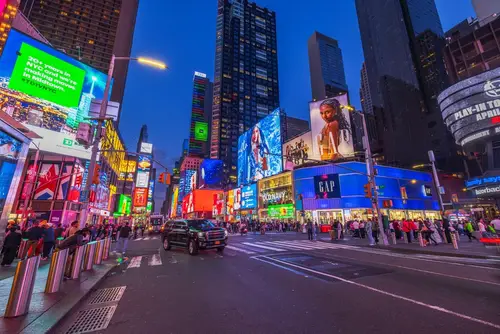
Times Square is visually overwhelming in the best and worst ways. Giant LED screens flash nonstop ads, and the sidewalks are packed shoulder to shoulder. Most people come to stand in the glow and capture that quintessential New York backdrop. The moment becomes about the spectacle rather than any deeper engagement with the city.
There’s no museum to enter or narrative to follow, just pure sensory overload. Street performers and characters compete for attention and tips. You’re essentially there to say you stood at the crossroads of the world. It’s unforgettable visually, but not necessarily meaningful experientially.
5. Four Corners Monument

The Four Corners Monument promises the novelty of standing in four states at once. In reality, it’s a simple plaza marker in a remote desert setting. Visitors line up patiently for the chance to pose with hands and feet in Arizona, New Mexico, Utah, and Colorado. The highlight is undeniably the photo itself.
Beyond the marker and a few vendor stalls, there isn’t much else to explore. The surrounding landscape is stark and beautiful, but the monument area is compact. Most people spend under half an hour before heading back to the highway. It’s a geographic novelty that thrives on visual proof.
6. Wall Drug
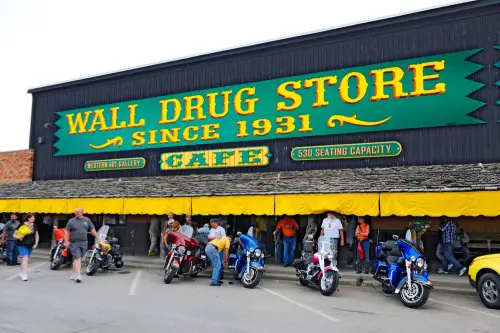
Wall Drug is legendary for its hundreds of billboards promising free ice water and roadside Americana. When you arrive, you’ll find a sprawling gift shop complex with themed rooms and quirky statues. The interior is designed for wandering and impulse buys rather than deep discovery. Nearly every corner seems engineered for a playful snapshot.
There are historic photos and a small museum component, but they’re often secondary to the shopping experience. Families pose with giant jackalopes and cowboy murals before moving on. The stop is fun in a kitschy way, yet unmistakably commercial. It feels like a carefully curated roadside set piece.
7. Cadillac Ranch
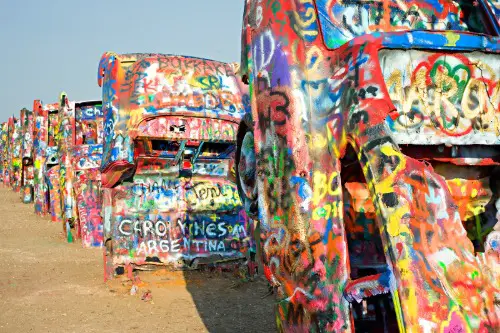
Cadillac Ranch delivers exactly what it advertises: half-buried Cadillacs nose-down in a Texas field. Visitors bring spray paint to leave their mark, layering new colors over decades of graffiti. The ritual is creative and communal, but it’s also undeniably about capturing a bold, colorful image. Most people spend their time framing the cars against the wide-open sky.
There’s no formal tour or interpretive center explaining the art collective that installed it in 1974. The appeal lies in the rebellious aesthetic and the chance to contribute to it. Once you’ve painted and photographed, there isn’t much else to do. It’s experiential for a moment, then primarily visual.
8. Lombard Street
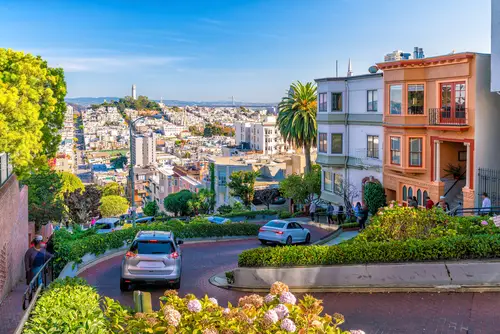
Lombard Street is often billed as the crookedest street in the world. In practice, it’s a short, steep block with tight switchbacks and manicured flowerbeds. Tourists crowd the sidewalks to photograph cars inching down the curves. The emphasis quickly shifts from engineering novelty to getting the perfect overhead shot.
Traffic moves slowly, and nearby residents navigate a constant stream of onlookers. You can walk it in minutes, then you’re essentially done. The surrounding neighborhood is charming, but the landmark itself is brief. It’s a postcard come to life rather than a sustained activity.
9. Navy Pier
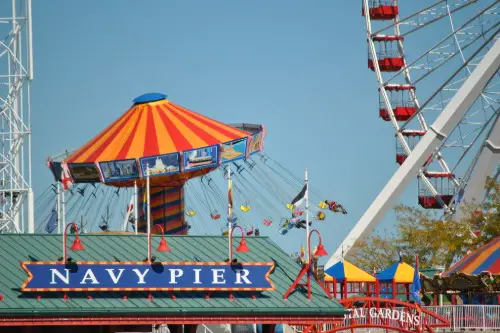
Navy Pier stretches into Lake Michigan with a Ferris wheel and skyline views. The setting is scenic, and the city backdrop makes for great photos. Much of the space, however, is devoted to shops, chain restaurants, and seasonal attractions. The atmosphere can feel more like a themed promenade than a cultural deep dive.
There are exhibitions and boat tours, but many visitors stick to strolling and snapping pictures. On busy days, the crowds make it hard to linger. The pier’s primary payoff is visual, especially at sunset. It’s a pleasant outing that leans heavily on its photogenic setting.
10. South of the Border
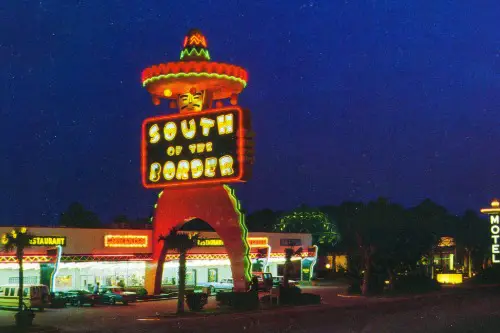
South of the Border is hard to miss thanks to its neon signs and towering mascot visible from the highway along Interstate 95. The complex includes shops, rides, restaurants, and themed decor that lean heavily into roadside spectacle. Visitors usually head straight for the photo ops with the oversized sombreros and brightly painted backdrops. The experience feels designed around visual gimmicks rather than cultural substance.
While there are amusements and dining options, most stops are brief and curiosity-driven. The branding and puns are more memorable than any single attraction on site. It’s a classic road trip pit stop that thrives on kitsch. You come for the novelty and leave with a few ironic selfies.
11. Cloud Gate
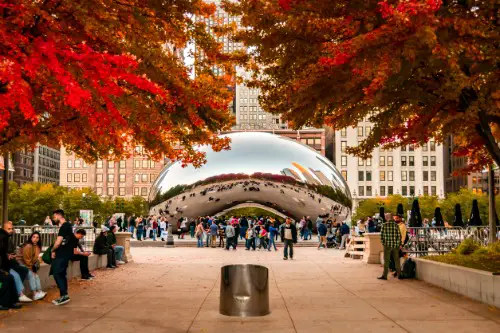
Cloud Gate, affectionately known as “The Bean,” is a magnet for cameras in Millennium Park. Its mirrored surface reflects the Chicago skyline in a way that practically begs for selfies. Visitors circle it repeatedly, trying to capture the perfect warped reflection. The interaction is playful, but it’s largely centered on getting that signature shot.
There’s no ticket line or structured exhibit, just an open plaza and a gleaming sculpture. You admire it, photograph it, and move along. The artwork is impressive in scale and craftsmanship, yet the visit is often fleeting. It’s a five-star backdrop with a ten-minute attention span.
12. Mount Rushmore National Memorial
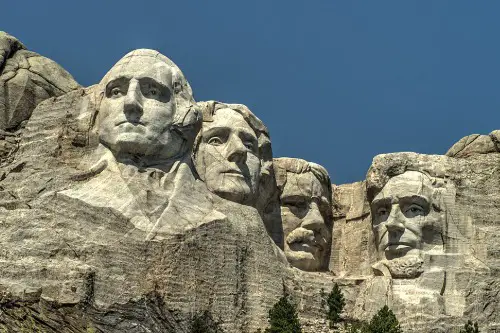
Mount Rushmore delivers a dramatic first glimpse as you walk the Avenue of Flags. The carved faces of four presidents are undeniably striking against the Black Hills. Yet once you’ve taken in the view from the main terrace, the core experience is largely complete. Most visitors cluster at the railings to frame the monument just right.
There is a visitor center and a short trail loop, but the centerpiece remains the distant sculpture. The scale is impressive, though you never get particularly close to the carvings. After photos and a stroll, many travelers are ready to move on. It’s monumental in symbolism but relatively contained in activity.
13. Bourbon Street
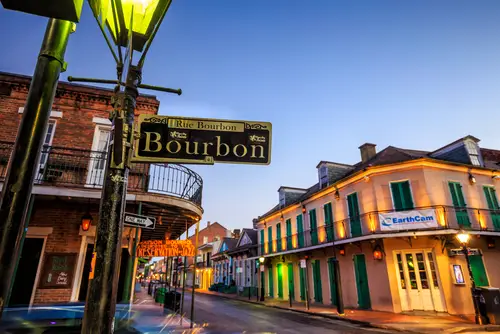
Bourbon Street has a reputation for nonstop revelry and neon-lit energy. In reality, much of the experience involves weaving through crowds with oversized drinks in plastic cups. The architecture is charming, but it often fades into the background behind flashing signs and loud music. Visitors tend to focus on documenting the party atmosphere rather than exploring the deeper culture of New Orleans.
During peak times, the street can feel more chaotic than celebratory. Bars blend together, and the sensory overload becomes the main event. You snap a few photos under the balconies and call it a night. It’s an iconic strip, but it rarely captures the full soul of the city beyond the frame.
This post The American Landmarks That Feel More Like Photo Ops Than Experiences was first published on American Charm.