
1. Frankenmuth
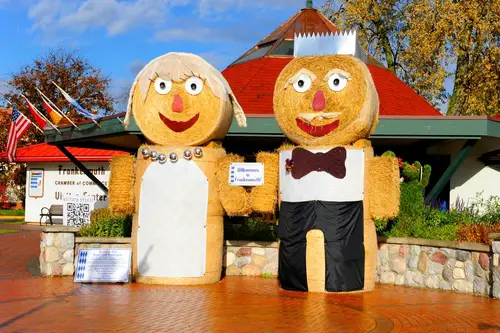
Frankenmuth greets you with covered bridges, gingerbread trim, and a skyline that looks lifted from a storybook Germany. The air smells like buttered noodles and roasting chicken, which honestly adds to the Old World mood. Horse-drawn carriages clip-clop past souvenir shops selling cuckoo clocks. Then you remember you’re in Michigan farm country, not Europe.
Founded by German immigrants in 1845, the town proudly preserves its heritage. Bavarian-style architecture defines the downtown, especially around Main Street. It’s also home to Bronner’s Christmas Wonderland, one of the world’s largest Christmas stores. The result is a place that feels culturally specific yet geographically surprising.
2. Solvang
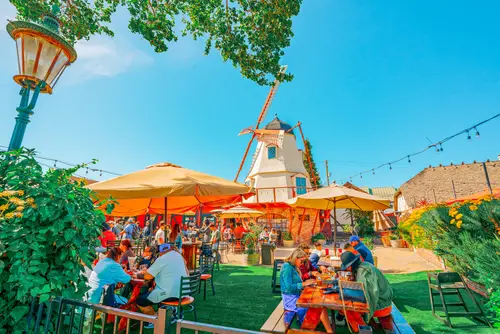
Walking into Solvang feels like you accidentally boarded a flight to Denmark and landed in coastal California instead. Windmills turn lazily above half-timbered buildings, and bakeries sell aebleskiver like it’s the most normal thing in the world. The streets are tidy and postcard-pretty, almost suspiciously so. It’s familiar if you’ve seen European travel photos, just slightly off when palm trees peek in behind Tudor facades.
The town was founded by Danish immigrants in 1911, and the architecture intentionally leans into that heritage. You’ll find replicas of Copenhagen landmarks and museums celebrating Danish culture and Hans Christian Andersen. Even the street signs and shop names keep the theme consistent. It feels sincere and stage-set polished at the same time, which is a charmingly odd mix.
3. Leavenworth
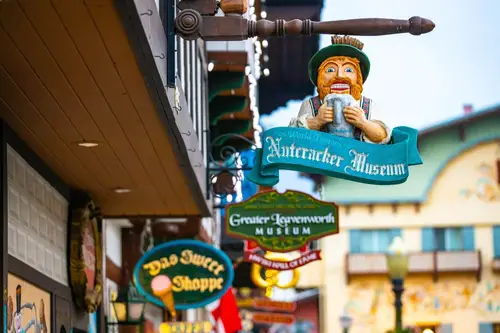
Leavenworth looks like a Bavarian alpine village that somehow drifted into the Cascade Mountains. Painted chalets, flower boxes, and beer halls line the streets with theatrical commitment. If you squint, you can almost hear cowbells echoing through the valley. Then you notice you’re surrounded by Washington evergreens, not the Alps, and your brain does a tiny double take.
The town remodeled itself in the 1960s to a Bavarian theme to revive tourism. Festivals like Oktoberfest and the Christmas Lighting Festival double down on the European vibe. Shopkeepers lean into the aesthetic with traditional façades and German-style menus. It’s immersive enough to feel transported, but the Pacific Northwest setting keeps it delightfully surreal.
4. Helen
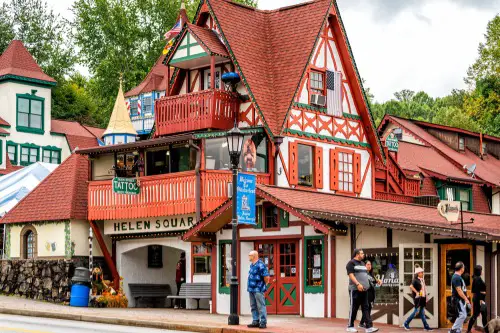
Helen is what happens when a Southern mountain town decides it wants to be a German fairytale. Timber-framed buildings and cobblestone-style walkways sit tucked into the Blue Ridge foothills. The Chattahoochee River tubing crowd floats past storefronts that look straight out of Bavaria. It’s cozy and recognizable, yet culturally misplaced in a way that’s hard not to smile at.
In the late 1960s, the town adopted Alpine-style architecture to boost its economy. Local ordinances even help maintain the visual theme across new construction. German restaurants, candy shops, and festivals keep the illusion going year-round. You feel like you’re abroad, until the sweet tea and Southern accents bring you back.
5. St. Augustine
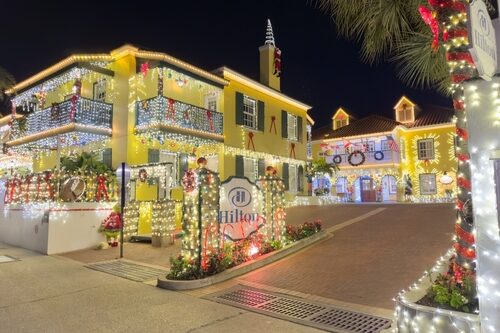
St. Augustine feels like a slice of old Spain gently pressed into the Florida coast. Narrow brick streets wind past courtyards, balconies, and centuries-old stone buildings. You half expect a conquistador to stroll around the corner. Then a beach cruiser zips by and reminds you this is still very much modern Florida.
Founded in 1565, it’s the oldest continuously inhabited European-established settlement in the continental U.S. Spanish colonial architecture defines much of the historic district. Landmarks like the Castillo de San Marcos reinforce the Old World atmosphere. It’s historically authentic, yet the subtropical setting makes it feel slightly dreamlike.
6. New Glarus
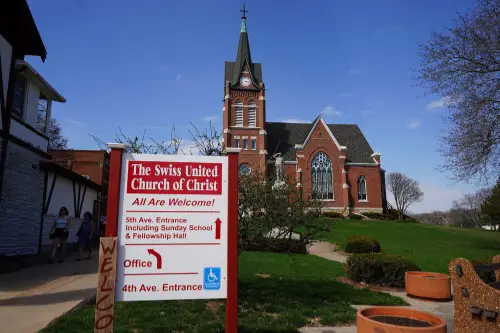
New Glarus feels like a tidy Swiss village that misplaced its mountains. Chalet-style buildings and red-and-white flags give the downtown a distinctly Alpine personality. You’ll see polka dots, fondue menus, and murals of pastoral European scenes. It all feels cohesive until you notice the rolling Wisconsin farmland instead of the Alps.
Settled by Swiss immigrants in 1845, the town carefully preserves its roots. Architecture, festivals, and museums celebrate Swiss traditions year-round. Even local businesses lean into the theme with names and décor. It’s culturally consistent but geographically unexpected, which makes it oddly delightful.
7. Holland
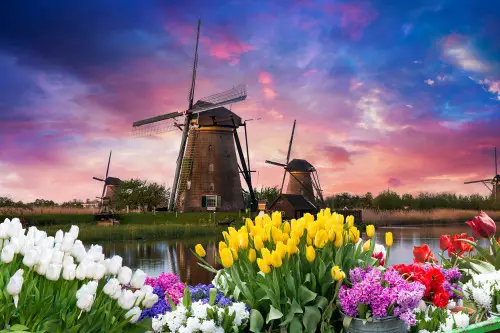
Holland looks like the Netherlands decided to try Midwestern living. Tulip beds bloom in neat rows, and a working Dutch windmill rises above the landscape. Brick sidewalks and gabled rooftops add to the European illusion. Lake Michigan lurking nearby, though, is your gentle reminder you didn’t cross the Atlantic.
The town was founded by Dutch settlers in 1847 and still celebrates that heritage. The annual Tulip Time Festival transforms the city into a sea of color each spring. Windmill Island Gardens features an authentic Dutch windmill transported from the Netherlands. It’s charmingly faithful to its theme while firmly rooted in America.
8. Montpelier
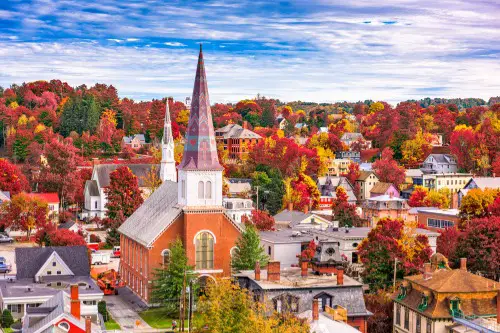
Montpelier feels like a New England town filtered through a European lens. Its compact downtown, classical architecture, and quiet streets make it feel older than it is. There’s a gentler pace here, like a place that values town halls and bookstores over highways. Then you remember it’s the smallest U.S. state capital, which adds to the quirky vibe.
The gold-domed Vermont State House anchors the city with stately presence. Much of the downtown preserves 19th-century architecture. Independent shops and cafés reinforce the intimate scale. It feels like a capital city in miniature, familiar yet subtly out of proportion.
9. Santa Fe
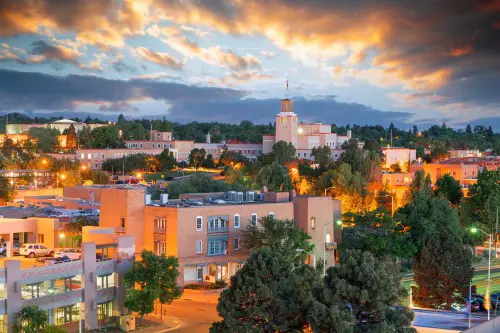
Santa Fe looks unlike anywhere else in the United States, which is exactly why it feels slightly surreal. Earth-toned adobe buildings blend into the desert like architecture grown from clay. Wooden vigas jut from walls, and turquoise jewelry glints in gallery windows. It’s cohesive and beautiful, but so stylistically distinct it almost feels like a movie set.
The city’s building codes preserve Pueblo Revival and Territorial architectural styles. Its history blends Native American, Spanish, and Mexican influences. The central Plaza has been a cultural hub since the early 1600s. You recognize it as American, yet it doesn’t resemble the version you see on postcards.
10. Mackinac Island
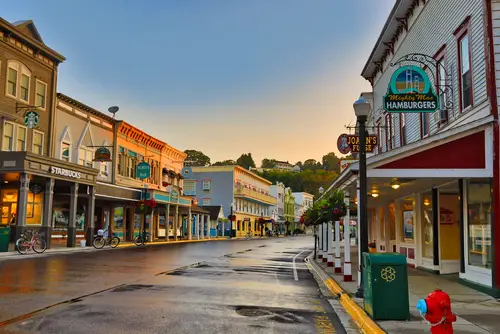
Mackinac Island feels like you slipped into a time capsule with great lake views. Cars are banned, so transportation happens by bicycle or horse-drawn carriage. Victorian buildings painted in soft pastels line the streets. The quiet clip-clop atmosphere feels charmingly out of step with modern life.
The island became a popular resort destination in the late 19th century. Many historic hotels and homes remain carefully preserved. Fudge shops and waterfront promenades add to the nostalgic mood. It feels familiar like a history book illustration brought to life.
11. Celebration
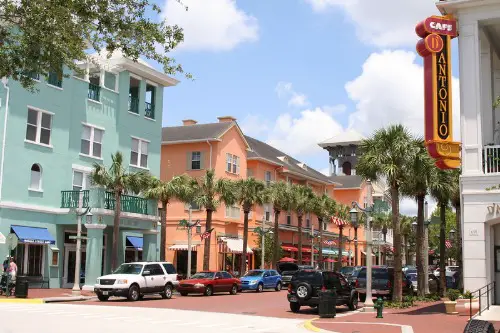
Celebration feels like someone tried to design the ideal American small town from memory. Streets are pristine, houses look freshly staged, and the downtown seems permanently golden-hour ready. It’s welcoming, walkable, and almost too perfectly composed. The polish makes it feel real and artificial at the same time.
The community was developed by the Walt Disney Company in the 1990s. Its design follows New Urbanist planning principles with a nostalgic aesthetic. Architects gave neighborhoods distinct but coordinated styles. It’s a lived-in town that somehow still feels like a movie backdrop.
12. Avalon
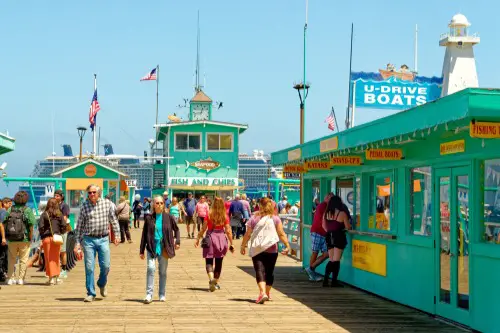
Avalon feels like a Mediterranean seaside town that drifted off course and docked in California. Hillside homes cascade toward a bright blue harbor filled with boats. The relaxed waterfront energy feels more Riviera than West Coast. Then a golf cart zips by and reminds you you’re on Catalina Island.
Most visitors arrive by ferry, which adds to the tucked-away feeling. The iconic Catalina Casino building anchors the harbor with Art Deco flair. Spanish-influenced architecture shapes much of the town’s look. It’s breezy, sun-soaked, and just unfamiliar enough to feel like a gentle escape.
This post American Locations That Feel Familiar — But Slightly Off was first published on American Charm.

