
1. Travel Agent

Once the go-to for booking flights and vacation packages, travel agents have seen their role shrink dramatically. Online booking platforms now let travelers compare prices, read reviews, and reserve trips in minutes. While travel agents still exist, their jobs rarely lead to bigger roles unless you pivot into luxury or corporate travel. For most, it’s a job that pays a living wage without much upward mobility.
The decline is tied to technology and changing consumer behavior. People want instant access to deals and itineraries, which websites provide. This has left traditional travel agencies with fewer clients and less revenue. Even experienced agents often find themselves stuck in similar positions for years.
2. Typist/Word Processor

Before computers became household staples, typists were in high demand for correspondence, reports, and manuscripts. Today, almost everyone is expected to type their own documents quickly and efficiently. The role rarely evolves into management or other positions unless combined with administrative skills. It’s a job that used to feel stable but now mostly exists in niche settings.
The technology shift has automated much of the work typists once handled. Software programs correct grammar, format documents, and even predict text. Employers now value multi-tasking administrative professionals over someone who just types. Consequently, career growth for dedicated typists is almost nonexistent.
3. Telephone Operator
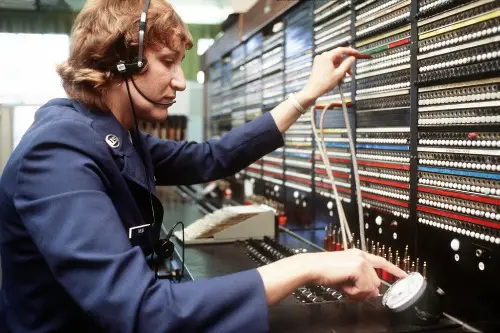
Telephone operators once connected calls manually, a crucial role in business and social communication. Modern telecommunications and automated systems have rendered this job largely obsolete. Even companies that need human operators now require multitasking skills, not just patching calls. As a result, this role rarely leads to career advancement today.
The job disappeared because technology replaced the core function entirely. Automated switchboards and VoIP services manage millions of calls seamlessly. Any human operator is typically handling customer service instead of direct connections. The traditional career ladder that existed for operators is gone.
4. Video Rental Clerk
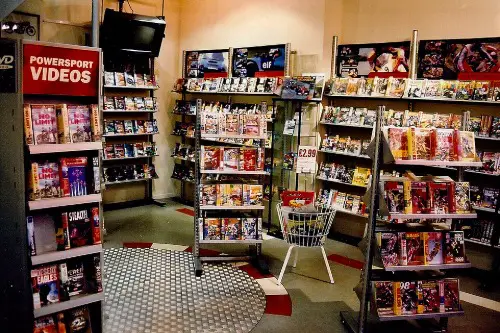
Remember when checking out movies meant browsing VHS or DVD shelves and talking to a clerk? That job is nearly extinct thanks to streaming services like Netflix and Hulu. While some independents survive, the positions they offer are largely entry-level with limited growth. Career advancement rarely comes from working behind the counter.
The collapse of Blockbuster-style chains sealed the deal on this role. Technology allowed instant, digital access to films, removing the need for physical stores. With fewer stores, there are fewer supervisory or managerial positions. What used to be a summer job for teenagers has become a relic.
5. Travel Courier/Delivery Driver (for physical documents)

Before email and cloud storage, travel couriers ferried contracts and important documents between offices and cities. Today, digital communication has replaced almost all of this work. Jobs in this space now exist mostly in very niche industries, like legal filings or high-security deliveries. They rarely offer advancement beyond the same delivery role.
The decline is directly linked to efficiency improvements. Emails, secure file-sharing, and e-signatures remove the need for physical movement. Many organizations have eliminated courier positions altogether. Workers who remain in these roles often stay in the same position for years.
6. Data Entry Clerk

Companies used to hire teams of data entry clerks to transfer paper records into databases. Modern software now automates much of this process, drastically reducing demand. Career growth for someone who only enters data is minimal, as the position rarely leads to supervisory roles. Most data entry jobs today are temporary or contract-based.
The rise of AI, OCR technology, and automated forms has made these positions less valuable. Employers now seek staff who can analyze data rather than just input it. Workers who remain in these roles often stagnate in pay and title. Without additional skills, the job is effectively a dead-end.
7. Bank Teller

Tellers were once the face of the bank, handling deposits, withdrawals, and basic financial advice. The widespread adoption of online and mobile banking has reduced the need for in-person tellers. Many banks now view teller roles as a temporary stepping stone rather than a career path. Promotions into management often require additional skills beyond basic banking transactions.
Automated teller machines and digital apps handle most day-to-day banking. This automation has shrunk branch staff numbers. While tellers still exist, the growth ladder has narrowed significantly. They often perform the same routine tasks for years.
8. Newspaper Delivery Person

Delivering newspapers was once a reliable job for students and adults alike, offering early morning independence and a sense of responsibility. With declining print subscriptions and the rise of digital news, this role has nearly vanished. There’s little room for advancement beyond the same route or distribution manager in a small market. For most, it no longer offers a long-term career path.
The change is tied to media consumption habits. Digital devices provide instant news updates, reducing the demand for physical delivery. Fewer papers mean fewer jobs and less opportunity to grow. The role that once introduced many young workers to the workforce has largely disappeared.
9. Photo Lab Technician

Before smartphones, photo labs developed prints from film, corrected color, and provided customer service. Today, digital photography and at-home printers have eliminated most traditional photo lab work. These positions rarely lead to management outside of specialized labs. Employees often remain in low-wage, task-specific roles.
The technology shift is clear: nearly everyone can process and print images at home. Retail chains that once housed photo labs now outsource or close them entirely. The skills needed for advancement are mostly technical and niche. Traditional photo lab work is largely a dead-end job.
10. Typesetter
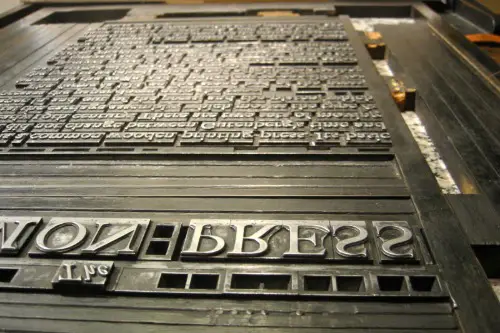
Typesetters were artisans who arranged letters and images for print publications. Desktop publishing and automated design software have replaced most of this labor-intensive work. Modern publishing jobs prioritize graphic design or digital layout skills, leaving traditional typesetters with few opportunities. Advancement rarely comes without retraining.
The transition was driven by digital tools like InDesign and Photoshop. Publications can now produce layouts faster and with fewer people. The manual craft of typesetting is now mostly a historical skill. Those who remained in the trade faced stagnation in both pay and career trajectory.
11. Elevator Operator

In the early to mid-20th century, elevator operators guided passengers, pressed buttons, and ensured safety. Modern automated elevators have made the role largely ceremonial. Opportunities for growth in this position are virtually nonexistent. Employees often stay in the same building performing the same routine for years.
The decline is tied to technology and safety regulations. Automatic elevators require little to no human intervention. Some luxury or historic buildings still employ operators, but these roles are symbolic. Career advancement in this field is effectively stalled.
12. Switchboard Installer/Repairer

Switchboard installers and repairers were once essential to keeping telephone networks running. With the rise of digital telecommunications and IP-based systems, the role has contracted sharply. Few positions remain, and most do not offer career ladders beyond basic maintenance. It’s a highly specialized skill that rarely translates to broader opportunities.
The shift to digital networks eliminated much of the manual labor involved. Modern telecommunications companies prioritize software and network engineers. Remaining roles are often contract-based with limited upward mobility. What was once a high-demand job has become a niche, stagnant position.
This post 12 American Jobs That No Longer Lead Anywhere was first published on American Charm.