
1. Ithaca, New York
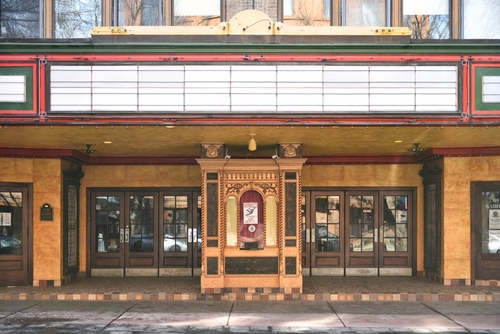
Ithaca feels self-contained because daily life revolves around its compact downtown and two major colleges. Cornell University and Ithaca College provide jobs, culture, and a steady population that keeps the town active year-round. The Ithaca Commons pedestrian mall concentrates shops, restaurants, and events into a small, walkable area. It’s entirely possible to live, work, and socialize without leaving town.
The surrounding landscape deepens that sense of completeness. Gorges, waterfalls, and Cayuga Lake are integrated into everyday routines rather than treated as distant attractions. Residents hike, swim, and paddle after work or between classes. When a town supplies both intellectual and natural resources, it feels unusually self-sufficient.
2. Mackinac Island, Michigan
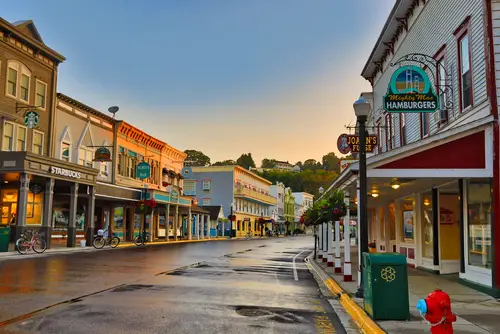
Mackinac Island is self-contained by necessity, starting with its ban on cars. Transportation happens by foot, bicycle, or horse-drawn carriage, which shrinks daily life to a human scale. The island maintains its own school, medical clinic, grocery stores, and local government. Even basic errands feel communal because everyone moves through the same limited spaces.
The economy is tightly focused on tourism, hospitality, and preservation. Historic sites like Fort Mackinac and the Grand Hotel anchor both jobs and identity. Because supplies arrive by ferry, residents rely heavily on local businesses and planning. That reliance reinforces a strong sense of shared responsibility.
3. Carmel-by-the-Sea, California
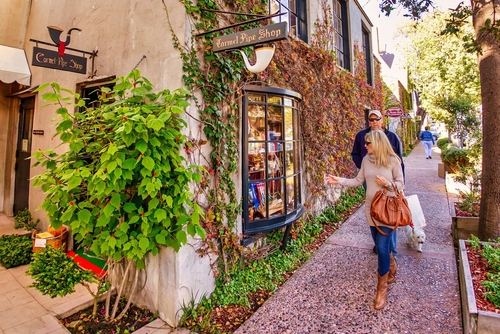
Carmel-by-the-Sea feels like a town that deliberately limited its growth. Strict zoning laws restrict chain businesses, signage, and building styles. The result is a village center filled with independent shops, galleries, and cafes. Nothing feels imported or interchangeable.
Carmel’s artistic roots still shape everyday life. The town began as an artists’ colony, and creative work remains central to its identity. Residents walk between the beach, downtown, and nearby forests with ease. When everything is close and intentional, the town feels complete on its own.
4. Ashland, Oregon
Ashland’s self-contained nature is anchored by the Oregon Shakespeare Festival. The festival operates most of the year and employs a significant portion of the community. Downtown theaters, restaurants, and bookstores all orbit this cultural center. The town stays lively without needing outside stimulation.
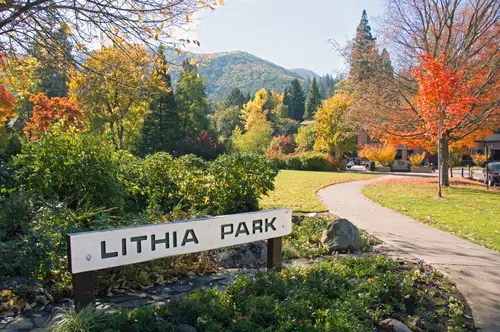
Beyond theater, Ashland supports itself with strong local systems. Lithia Park runs through town, blending recreation into daily routines. Southern Oregon University adds educational and economic stability. Together, these elements keep Ashland balanced and inwardly focused.
5. Taos, New Mexico
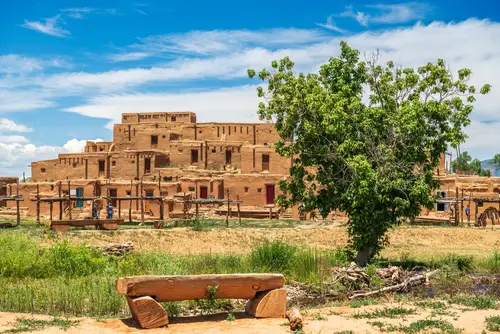
Taos feels self-contained because its cultural continuity runs deep. Taos Pueblo, continuously inhabited for centuries, remains an active community just outside town. Art, spirituality, and tradition are not performances for visitors but parts of daily life. The historic plaza still functions as a true center.
Geographic isolation reinforces that independence. Mountains and high desert separate Taos from major cities. Locals depend on regional networks, local food systems, and community institutions. That separation strengthens Taos’s sense of self-definition.
6. Provincetown, Massachusetts
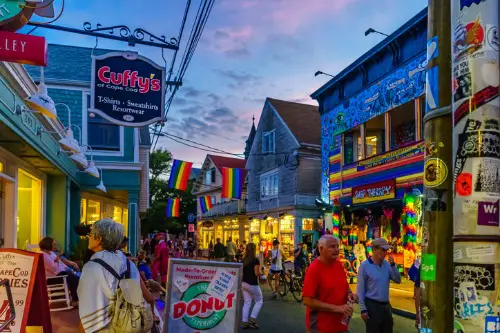
Provincetown sits at the very end of Cape Cod, and that physical endpoint shapes everything. There is only one road in and out, which naturally limits sprawl. The town packs shops, galleries, restaurants, and theaters into a dense, walkable strip. Daily life unfolds in shared public spaces.
Its cultural identity is unusually clear and resilient. Provincetown has long been a center for artists and the LGBTQ community. Seasonal tourism arrives, but it doesn’t erase local character. Fishing, performance, and art still define the town’s core.
7. Beaufort, South Carolina
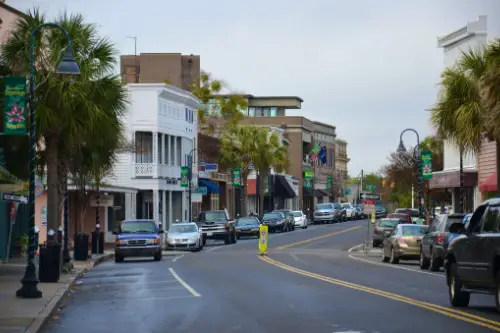
Beaufort feels self-contained because it serves as a small regional anchor. Its historic downtown includes government offices, shops, restaurants, and waterfront parks within a few blocks. The surrounding rivers and marshes shape both recreation and work. Life here rarely feels oriented toward a larger nearby city.
The local economy is stabilized by nearby military installations like Parris Island. That steady presence supports schools, healthcare, and local businesses. Community events are well attended and locally organized. The town comfortably sustains its own rhythms.
8. Telluride, Colorado
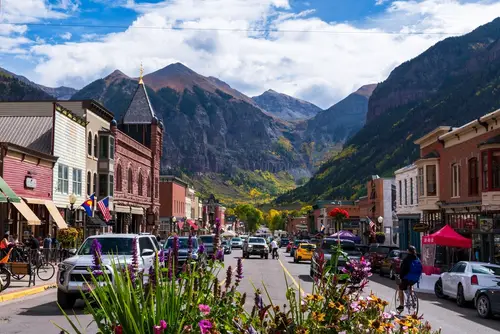
Telluride’s box canyon setting physically limits expansion. Mountains surround the town, keeping it compact and walkable. A free gondola connects Telluride to Mountain Village and functions like everyday transit. The geography encourages self-reliance.
Despite its small size, Telluride offers robust services and infrastructure. Residents work, shop, and socialize in the same core areas year-round. Festivals and outdoor recreation support the economy without overwhelming it. The town feels balanced rather than stretched.
9. Eureka Springs, Arkansas
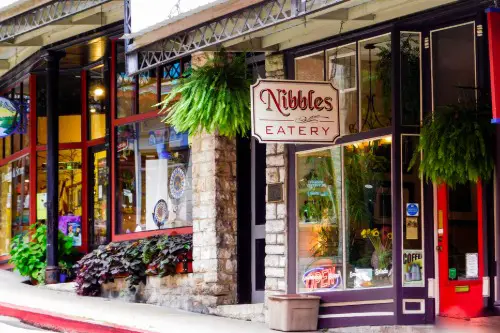
Eureka Springs developed inward and upward instead of outward. Steep hills are filled with Victorian buildings, staircases, and narrow streets. Downtown is dense, walkable, and dominated by local businesses. Leaving the historic core feels unnecessary.
Tourism plays a role, but it doesn’t define everything. Artists, retirees, and service workers share the same compact spaces. Community institutions remain active year-round. That layered population keeps the town grounded.
10. Bar Harbor, Maine
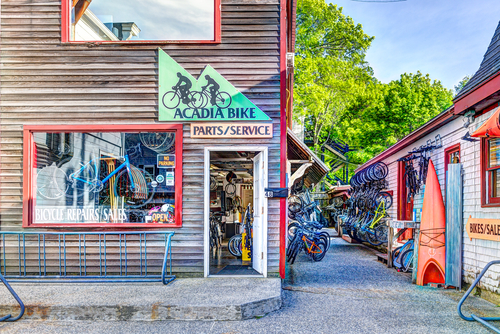
Bar Harbor feels self-contained due to its island location. Situated on Mount Desert Island, it serves as the main service center for nearby towns. Hospitals, schools, and government offices are concentrated in a small area. Locals depend on Bar Harbor for daily needs.
Acadia National Park shapes life without overwhelming it. Residents interact with the park as part of normal routines, not just tourism. Seasonal shifts are expected and planned for. That predictability helps the town function smoothly.
11. Marfa, Texas

Marfa feels self-contained because of its cultural singularity and isolation. The town is hours from major cities and relies heavily on itself. Art installations like the Chinati Foundation are embedded into daily life rather than set apart. The town’s identity is cohesive and intentional.
Basic services, social life, and work all overlap in a small area. Residents regularly encounter one another at the same cafes, shops, and events. The surrounding desert reinforces the town’s boundaries. Marfa operates on its own wavelength.
This post American Towns That Feel Self-Contained was first published on American Charm.

