
1. Cahawba, Alabama
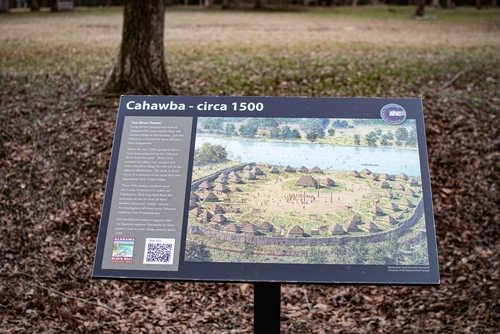
Cahawba was Alabama’s first state capital, which surprises almost everyone who hasn’t heard of it. Built at the confluence of the Alabama and Cahaba rivers, it was plagued by flooding and poor sanitation. By the mid-1800s, the capital moved, and residents slowly followed. Today, it exists mostly as ruins preserved in a quiet state historic park.
It’s forgotten because it never fully recovered from being abandoned early in its life. You can still see old foundations, graveyards, and the remains of brick structures overtaken by vines. The site feels more like a memory than a town, suspended between history and nature. Cahawba shows how political importance doesn’t guarantee long-term survival.
2. Centralia, Pennsylvania
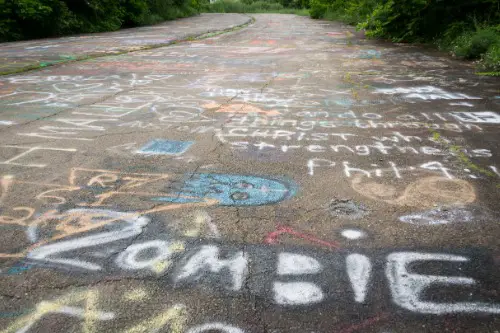
Centralia is often called the town that’s literally on fire, and that’s not an exaggeration. An underground coal seam ignited in 1962 and has been burning ever since, forcing nearly all residents to leave. The population dropped from over a thousand people to just a handful who refused to relocate. What remains is a grid of empty streets, cracked pavement, and quiet hills that feel unsettlingly alive beneath your feet.
It’s forgotten not because people don’t know about it, but because there’s nothing left to stay for. The post office closed, the ZIP code was revoked, and most buildings were demolished by the state. Nature is slowly reclaiming the town, with trees growing where homes once stood. Centralia is a reminder that even permanent-seeming places can quietly vanish.
3. Salton Sea, California
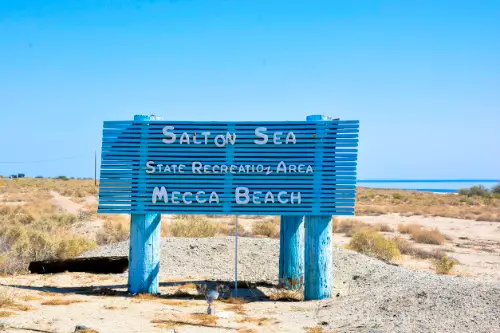
The Salton Sea wasn’t supposed to exist at all, and that’s part of why it’s been forgotten. It was accidentally created in 1905 when engineering failures diverted the Colorado River into a low desert basin. For decades, it became a booming resort destination with marinas, hotels, and celebrity visitors. Then pollution, rising salinity, and massive fish die-offs drove people away.
What’s left today is a shoreline littered with abandoned structures and the smell of decay. Nearby communities still struggle with air quality issues caused by exposed lakebed dust. It’s not quite a ghost town, but it’s not alive in the way it once was either. The Salton Sea lingers as a cautionary tale about environmental neglect.
4. Picher, Oklahoma
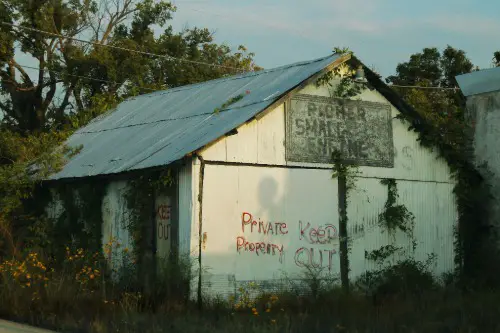
Picher was once a thriving mining town in northeastern Oklahoma, built on rich deposits of lead and zinc. Decades of mining left behind massive piles of toxic waste known as chat, which contaminated the soil and water. The town also sat atop unstable ground riddled with abandoned mine shafts. A series of environmental disasters and a devastating tornado in 2008 accelerated its decline.
Eventually, the federal government funded a buyout, and residents were urged to leave. Schools closed, homes were demolished, and Picher was officially disincorporated in 2009. What remains is a stark landscape of empty lots and looming chat piles. Picher is forgotten because it became too dangerous to inhabit.
5. Glenrio, Texas–New Mexico
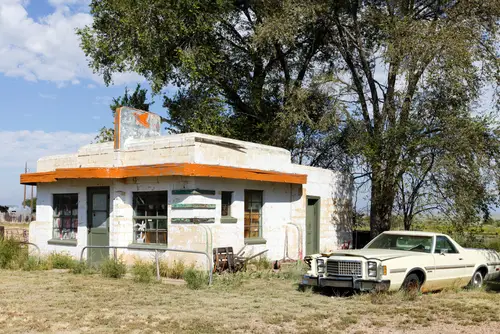
Glenrio once thrived because of its location along Route 66, straddling the Texas–New Mexico border. Travelers stopped for gas, food, and motels as they crossed state lines. When Interstate 40 bypassed the town in the 1970s, the traffic vanished almost overnight. Businesses closed, and residents moved on.
Today, Glenrio is a near-perfect snapshot of mid-century roadside America frozen in time. Faded signs, abandoned service stations, and empty diners still line the old highway. It’s forgotten because it depended entirely on travelers who no longer pass through. Glenrio shows how infrastructure changes can erase a town’s reason for existing.
6. Thurmond, West Virginia
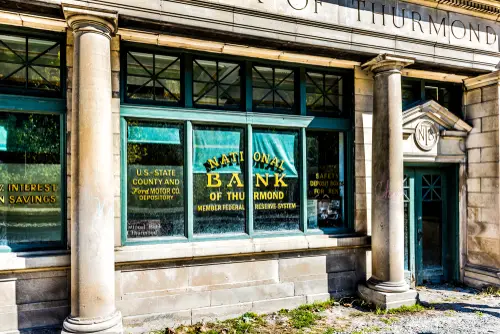
Thurmond was once a booming railroad town deep in the New River Gorge. In the early 1900s, it was one of the busiest rail hubs in the region, serving nearby coal mines. As coal declined and rail traffic slowed, the town’s importance faded. Fires and floods further reduced its population.
Today, fewer than a handful of residents remain, and many buildings are owned by the National Park Service. The old depot and downtown still stand, eerily intact but largely unused. Thurmond is forgotten because it was built around a single industry that disappeared. Its quiet streets echo with the sound of a past economy.
7. Bodie, California
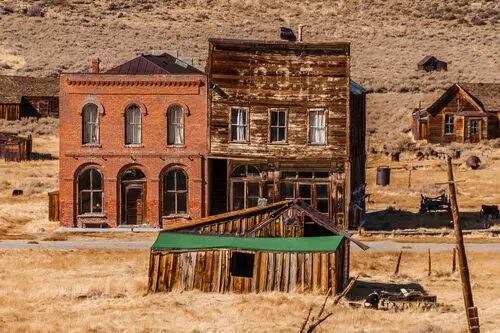
Bodie exploded into existence during the California gold rush of the late 1800s. At its peak, it had thousands of residents, saloons, newspapers, and a reputation for lawlessness. When the gold ran out, people left just as quickly as they arrived. By the early 20th century, Bodie was nearly empty.
Unlike many ghost towns, Bodie has been preserved in a state of “arrested decay.” Furniture, bottles, and personal items still sit where they were abandoned. It’s forgotten because no one ever came back to reinvent it. Bodie stands as one of the most authentic snapshots of boom-and-bust America.
8. Cairo, Illinois
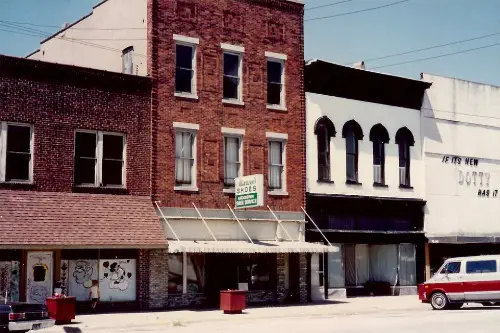
Cairo sits at the confluence of the Mississippi and Ohio rivers, a location that once made it strategically vital. In the 19th and early 20th centuries, it was a bustling port and railroad hub. Economic decline, flooding, and racial violence drove residents away over decades. The population plummeted from over 15,000 to just a few thousand.
Much of downtown is now filled with vacant buildings and boarded-up storefronts. Entire neighborhoods feel paused in time, with schools and churches closed. Cairo is forgotten because its decline was slow and painful rather than sudden. It reflects how social and economic fractures can hollow out a city.
9. Independence, Kansas
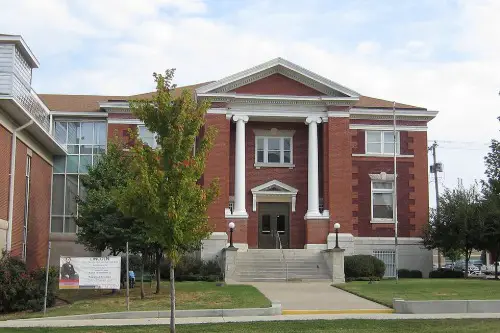
Independence was once a lively southeastern Kansas town fueled by oil and manufacturing. When those industries declined, jobs disappeared and residents followed. Big-box retail on the outskirts further drained the historic downtown. Population loss turned once-busy streets quiet.
Today, many buildings remain but lack tenants or purpose. The town still exists, but it feels disconnected from the momentum of modern growth. Independence is forgotten because it never fully rebounded after its economic base collapsed. It’s a reminder that not all decline ends in abandonment, just stagnation.
10. Bannack, Montana
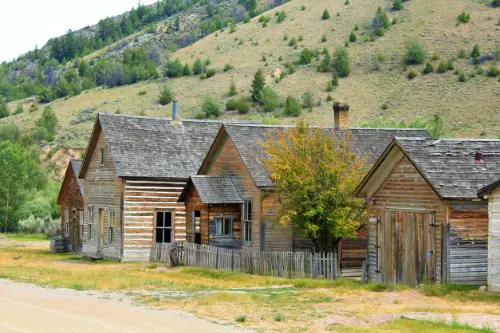
Bannack was Montana’s first territorial capital, founded after a major gold discovery in 1862. It grew rapidly, complete with hotels, saloons, and government buildings. As mining shifted elsewhere, Bannack emptied out. The capital moved, and residents followed opportunity.
Today, Bannack is preserved as a ghost town with dozens of original structures. Walking through it feels like stepping into a paused frontier story. It’s forgotten because its moment was brief and tied to a single resource. Bannack illustrates how fast prosperity could vanish in the Old West.
11. Times Beach, Missouri
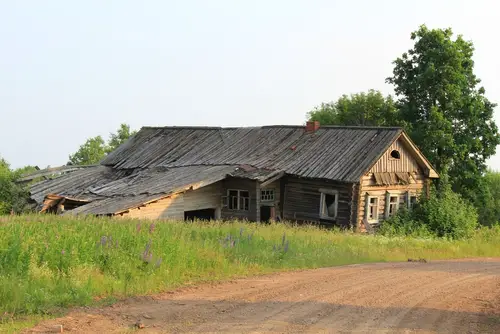
Times Beach began as a small resort town along the Meramec River. In the 1970s, roads were sprayed with oil contaminated with dioxin to control dust. The chemical exposure posed severe health risks to residents. Flooding worsened the situation and spread contamination further.
The federal government bought out the town in the early 1980s, and all residents relocated. Every building was demolished, and the land was later converted into a state park. Times Beach is forgotten because it was deliberately erased for safety. Few visitors realize a town once stood there at all.
12. Gary, Indiana
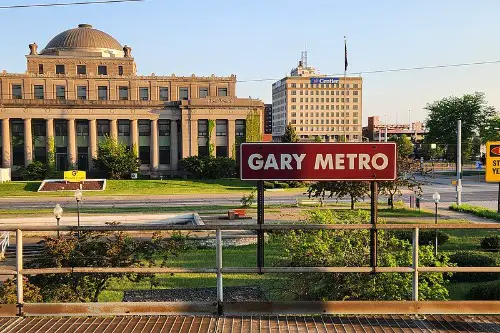
Gary was founded in 1906 as a company town for U.S. Steel. For decades, it symbolized industrial strength and middle-class opportunity. Deindustrialization, job losses, and white flight devastated the city in the late 20th century. The population fell dramatically, leaving many neighborhoods abandoned.
Large sections of Gary are now defined by empty homes and crumbling schools. Yet the city still has residents fighting for revival. Gary is forgotten because its decline challenges the myth of permanent industrial progress. It stands as a stark reminder of how economic shifts reshape entire communities.
13. Rhyolite, Nevada
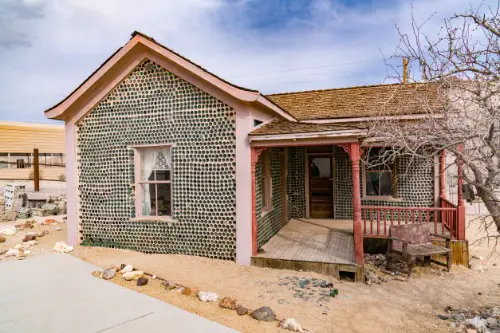
Rhyolite sprang up in 1904 after a gold discovery near Death Valley. It grew rapidly, boasting electricity, a stock exchange, and concrete buildings. Within a decade, the mines failed and investors fled. By 1920, the town was nearly deserted.
Today, skeletal buildings and ruins stand against the desert landscape. Rhyolite is forgotten because its rise and fall were both incredibly fast. It captures the fragile optimism of mining booms. Few places show so clearly how hope can evaporate with a single bad assay.
This post America Has More Forgotten Places Than Anyone Wants to Admit was first published on American Charm.

