
1. The Great Seal’s Eye of Providence
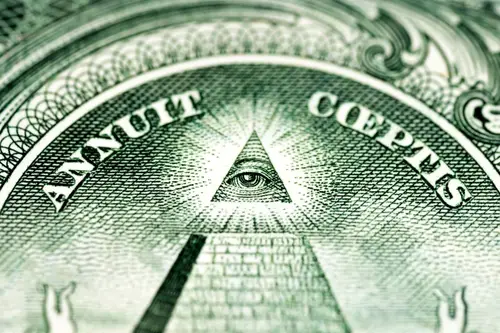
The all-seeing eye above the pyramid is often viewed as a mystical or divine endorsement of the nation. Many Americans assume it has secret religious or conspiratorial origins. In reality, it was a common Enlightenment-era symbol representing divine guidance and moral oversight. It wasn’t uniquely American when it was adopted.
The pyramid itself wasn’t even finished, symbolizing strength and endurance rather than occult meaning. The design reflects 18th-century classical symbolism more than hidden theology. Its later association with conspiracy theories has overshadowed its original intent. What’s treated as sacred mystery began as straightforward iconography.
2. The American Flag
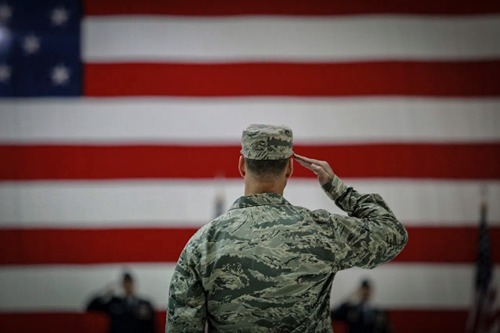
Most Americans treat the flag as a near-sacred object, with rituals about folding, displaying, and even disposing of it. Many people assume these customs date back to the founding era, but a lot of what feels ancient is actually modern. The Flag Code that governs “proper” treatment wasn’t adopted until 1942, during World War II. Before that, practices varied widely and were far less ceremonial.
Even the design itself is more practical than mystical. The stars and stripes weren’t loaded with spiritual symbolism at first; they were a clear visual system to represent states and unity. The now-reverent idea that the flag should never touch the ground is also a 20th-century norm. What feels timeless is largely a product of wartime patriotism and mass education.
3. The Liberty Bell
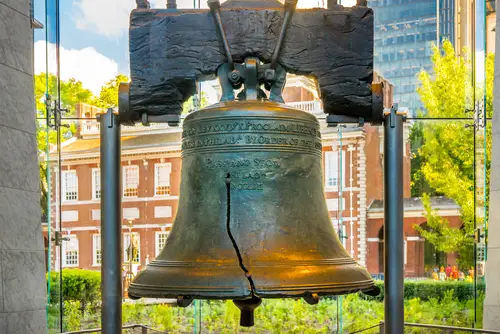
The Liberty Bell is treated like a relic of the Revolution, imbued with almost spiritual authority. Many people think it rang out during the signing of the Declaration of Independence. In reality, there’s no evidence it rang on July 4, 1776, and it likely wouldn’t have survived such use. Its famous crack didn’t even happen during the founding era.
The bell became a symbol of freedom much later. Abolitionists in the 19th century embraced it because of its biblical inscription about liberty. The crack, originally a flaw, became part of its mystique rather than a defect. Americans now revere a symbol whose meaning was retroactively assigned.
4. The Pledge of Allegiance
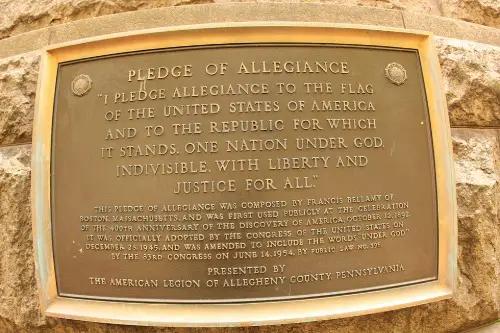
The Pledge is often treated as a sacred civic prayer, especially in schools and public ceremonies. Many people assume it dates back to the founding of the nation. It was actually written in 1892 by Francis Bellamy, a socialist minister, for a public school campaign. The original version didn’t even include the words “under God.”
Those words were added in 1954 during the Cold War. The change was meant to distinguish the U.S. from officially atheist communist states. Even the physical gesture changed over time, as the original Bellamy salute was dropped because it resembled a Nazi salute. What feels ancient is a product of late 19th- and mid-20th-century politics.
5. “In God We Trust”
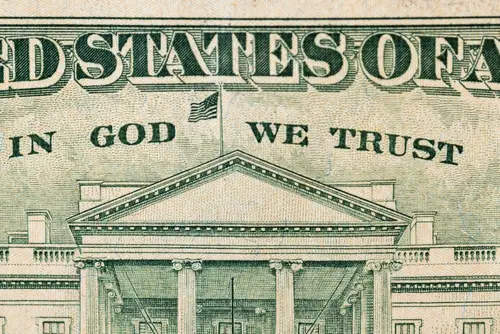
This phrase is treated as a foundational expression of American identity. Many people believe it’s been part of the nation since 1776. In fact, it first appeared on coins during the Civil War, reflecting anxiety about national survival. It didn’t become the official national motto until 1956.
The Cold War played a major role in its elevation. Lawmakers wanted a clear religious contrast with the Soviet Union. Earlier American leaders were far more cautious about blending religious language with government. The phrase’s sacred status is relatively recent.
6. The Bald Eagle
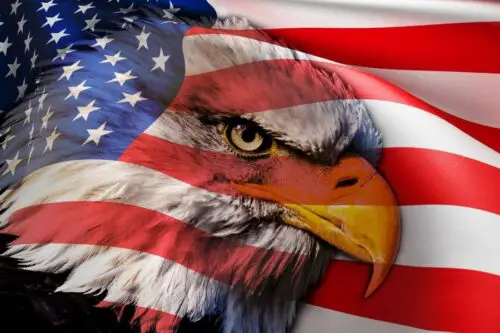
The bald eagle is treated as a noble, almost holy emblem of American strength and freedom. Many people assume it was an obvious choice because it’s majestic or uniquely American. In reality, Benjamin Franklin famously disliked the eagle and preferred the turkey. The eagle was chosen partly because of its long-standing use in European heraldry, especially in Roman symbolism.
Its meaning also shifted over time. Early Americans didn’t universally admire the bird, and some thought it was lazy or dishonest for stealing food. The eagle’s elevated status grew as the young nation sought symbols that conveyed imperial strength and permanence. What feels like a natural national icon was a deliberate political choice.
7. Uncle Sam
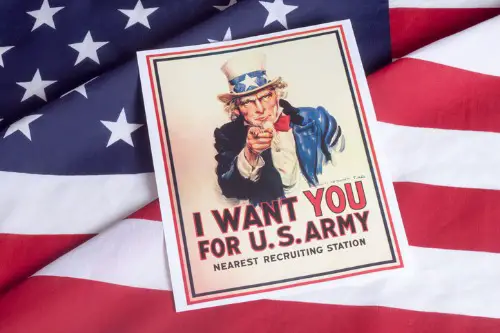
Uncle Sam is treated as the personification of the nation, almost like a national ancestor. Many people assume he’s a symbolic figure invented by artists or politicians. The character is based on a real person, Samuel Wilson, a meat packer who supplied the U.S. Army during the War of 1812. Barrels stamped “U.S.” were jokingly said to stand for “Uncle Sam.”
Over time, the nickname stuck and evolved into a national symbol. The familiar top-hatted image didn’t fully solidify until the late 19th and early 20th centuries. What feels like a timeless national embodiment began as a workplace joke. Americans now revere a figure born from logistics and humor.
8. The Washington Monument
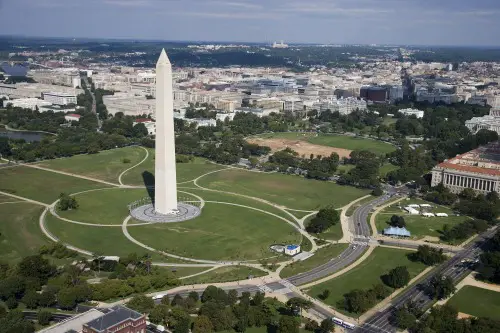
The Washington Monument is often treated as a solemn national shrine. Many people see it as a purely American architectural statement. Its obelisk shape, however, comes directly from ancient Egyptian monuments. Obelisks were traditionally associated with the sun god and imperial power.
In the 19th century, neoclassical design borrowed heavily from ancient civilizations. The monument’s symbolism was meant to convey endurance and greatness rather than religious meaning. Most Americans don’t connect it to its ancient roots when they visit. What feels uniquely American is deeply borrowed.
9. Mount Rushmore
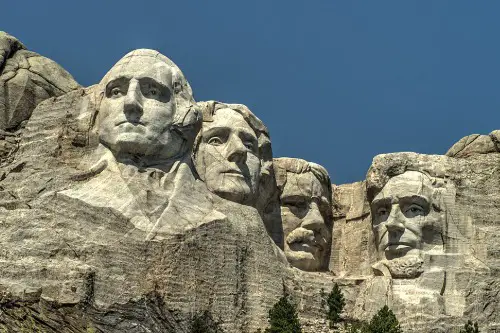
Mount Rushmore is treated as a sacred tribute to presidential greatness. Many visitors assume the site was always intended as a patriotic monument. The mountain is located in the Black Hills, a region sacred to the Lakota Sioux. The U.S. government seized the land after gold was discovered there.
For Native communities, the monument represents loss rather than honor. The decision to carve the mountain ignored existing spiritual significance. What many Americans treat as a national altar is, for others, a symbol of broken treaties. Its meaning depends entirely on whose history you know.
10. The Minute Man
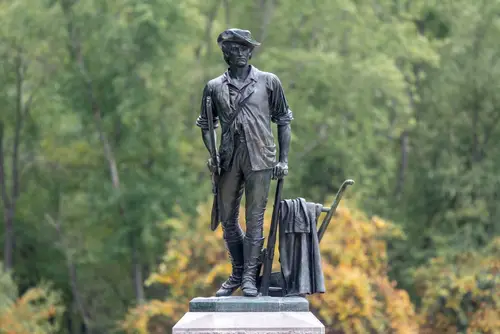
The Minute Man is often treated as the idealized image of the American citizen-soldier. People assume the image comes directly from Revolutionary War reality. In truth, the familiar statue-like figure was shaped heavily by 19th-century romanticism. Artists borrowed poses and ideals from classical Greek and Roman art.
Actual militia members were far less uniform and heroic-looking. The symbol was refined to promote unity and virtue during later national crises. What feels like historical truth is partly artistic invention. Americans revere an image shaped by nostalgia.
11. The White House
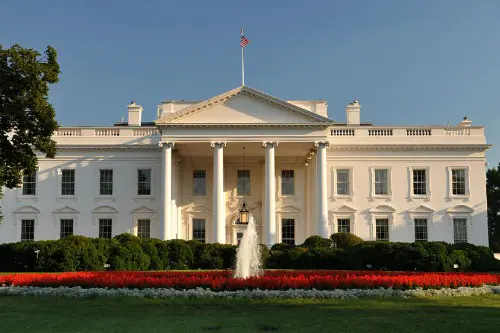
The White House is treated as a symbolic temple of democracy. Many people assume its design emerged organically from American ideals. In reality, it was heavily inspired by European neoclassical architecture, particularly Irish and French designs. The style was chosen to convey legitimacy and permanence.
Early Americans associated classical architecture with republican virtue. The building’s symbolism was imported along with its aesthetic. Over time, the structure gained emotional and ceremonial weight. What feels uniquely American is rooted in Old World traditions.
This post Symbols Americans Treat as Sacred Without Knowing the Origin was first published on American Charm.

