
1. Wildwood, New Jersey
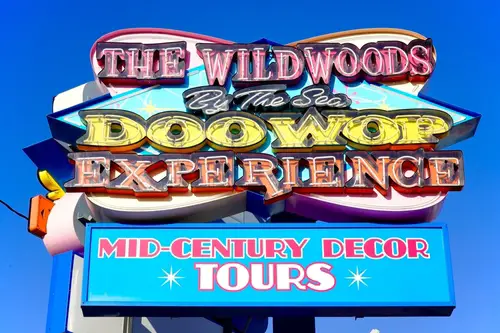
Wildwood’s famous “Doo Wop” motels cling proudly to their mid-century and late-20th-century neon glory, making the whole stretch feel like a beach trip from a few decades ago. The angular railings, pastel colors, and sun-bleached signs don’t pretend to be anything newer than the 80s or early 90s. Walking the boardwalk, you’ll still find old-school arcades that use the same kinds of machines they’ve had for ages. Even the food stands lean into nostalgia, serving the type of boardwalk classics many people grew up with.
The amusement piers, especially Morey’s Piers, help preserve the vibe by keeping a mix of older rides that visitors remember from childhood. You’ll see attractions that survived multiple generations of beachgoers without much aesthetic updating. Shops selling 80s-style graphic tees and retro souvenirs feel like they’ve been frozen in time. The whole experience has that “summer vacation before Wi-Fi mattered” energy.
2. Seligman, Arizona
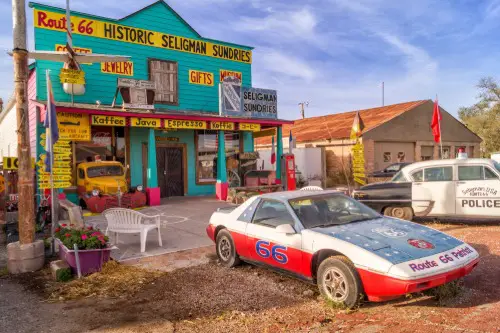
Seligman is often credited as the birthplace of the modern Route 66 preservation movement, and much of the town still looks like the highway era never ended. Storefronts drip with bright paint and hand-made signs reminiscent of the 70s and 80s roadside boom. The Delgadillo family’s shops, especially the Snow Cap Drive-In, maintain their quirky, homemade charm. Even the cars and props outside businesses feel intentionally stuck in a late-20th-century loop.
You’ll find that the town leans into kitsch in a way that feels refreshingly authentic rather than curated. Local shops often feature displays that look like they’ve been arranged the same way for decades. Tourists snap photos because it looks like a movie set, but it’s just how Seligman has always operated. The town’s tiny scale and slowed pace reinforce that time-capsule effect.
3. Pioneertown, California
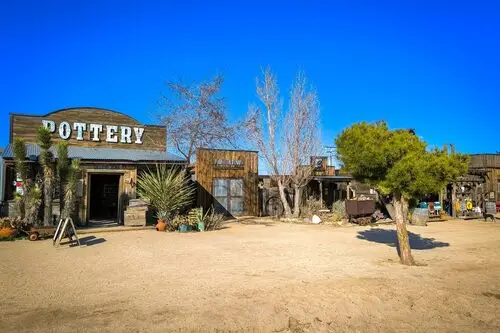
Although Pioneertown was built in the 1940s as a movie set, the look and feel of the place today channel that faded-Western-tourism vibe that peaked again in the 70s–90s. The wooden facades and dusty main drag don’t try to modernize themselves into a sleek attraction. You can wander into small shops that feel more like someone’s favorite local hangout than a polished destination. The whole place gives off the energy of a roadside attraction that never tried to update for the internet era.
Pappy & Harriet’s, the town’s iconic bar and music venue, amplifies this feeling with décor that hasn’t changed much since its mid-century-to-80s transitions. Patrons still pack in for live music without any attempt at corporate branding or slick renovation. The interior feels comfortably worn, in the best way. You get the sense that if you returned in another 20 years, it would look nearly identical.
4. Funspot, Laconia, New Hampshire
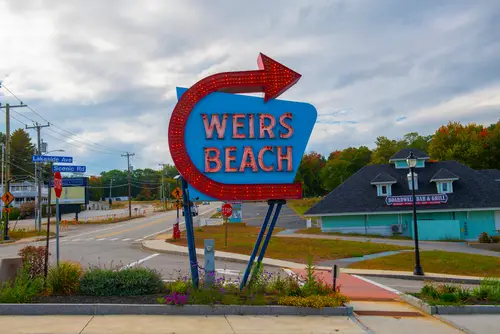
Funspot claims the title of the largest arcade in the world, and it has held onto its massive collection of classic 80s and early-90s games. Walking through the aisles feels like stepping into a preserved arcade hall from decades past. Original cabinets, CRT monitors, and old carpet patterns lock in the vibe. Even the prize counter feels like it hasn’t changed much since childhood birthday parties of the 90s.
The place hosts the annual Classic Arcade Tournament, which reinforces its retro identity. Players travel specifically because Funspot keeps things original rather than updating to modern gaming trends. You won’t find sleek LEDs or minimalist décor—just endless rows of arcade machines humming like they always have. It’s a rare place where time respects the pixels.
5. Santa Cruz Beach Boardwalk, California
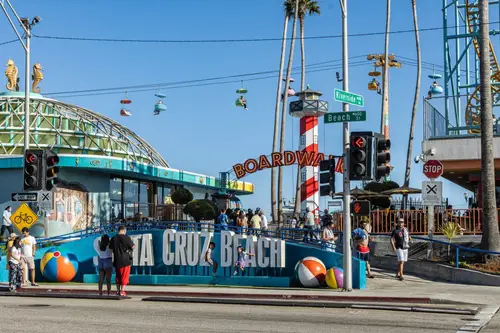
This seaside amusement park has been operating since 1907, but much of its charm comes from attractions that were modernized only lightly through the 70s–90s and kept essentially the same since. The Giant Dipper and other classic rides are maintained with care yet still feel like the ones you remember from school trips. The arcade under the boardwalk retains plenty of older games and that unmistakable carpet. Even the food stands—corn dogs, soft-serve, and saltwater taffy—taste like pure nostalgia.
Because the boardwalk has resisted becoming a hyper-polished theme park, it maintains a “family-vacation-in-1988” tone. The soundtrack of clacking rides and surf rock drifting from speakers feels oddly timeless. You’ll find souvenir shops stocked with retro styles rather than ultra-trendy designs. It’s one of the few amusement areas that still feels authentically analog.
6. South of the Border, Dillon, South Carolina
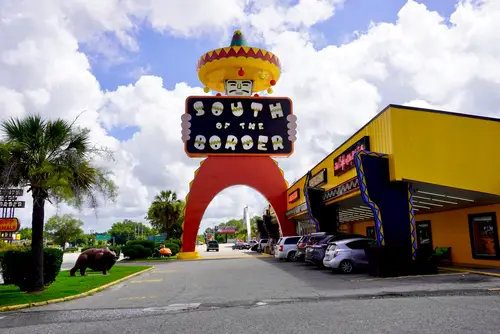
South of the Border is a neon-soaked roadside attraction that peaked in popularity from the 70s through the 90s—and it still looks the part today. The giant Pedro mascot signs and towering sombrero-shaped structure feel straight out of a quirky, pre-GPS road trip. Motels, gift shops, and restaurants carry the same kitsch-drenched décor that once made every passing family pull over. The complex feels like it was preserved by sheer force of personality.
The sprawling layout, dotted with fiberglass statues, still invites travelers to explore just like it did decades ago. Many of the photo ops seem untouched since the era of disposable cameras. Even the color schemes remain gloriously dated and unapologetic. It’s one of those places where the outdated charm is its entire identity.
7. International UFO Museum, Roswell, New Mexico
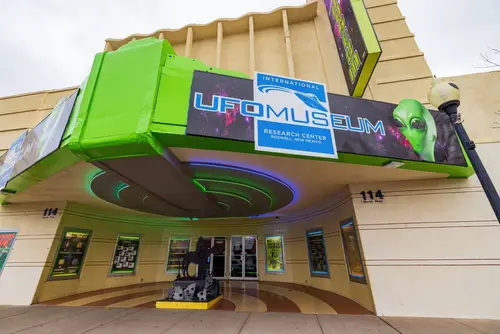
The UFO Museum opened in 1991, and remarkably, much of it still carries that early-90s aesthetic. Graphic panels, fonts, and exhibit layouts feel like they haven’t changed since the museum’s launch. Visitors often comment that it feels like walking into a science classroom from decades past. Instead of slick multimedia, you get hand-assembled displays and printed timelines.
The museum leans into its grassroots origins rather than upgrading to high-tech exhibits. Many photos, newspaper clippings, and diagrams are displayed in a format that would look right at home in 1994. It works because the museum’s mission is storytelling, not spectacle. That authenticity gives it a wonderfully “frozen in time” appeal.
8. Glenrio, Texas/New Mexico (Route 66 Ghost Town)
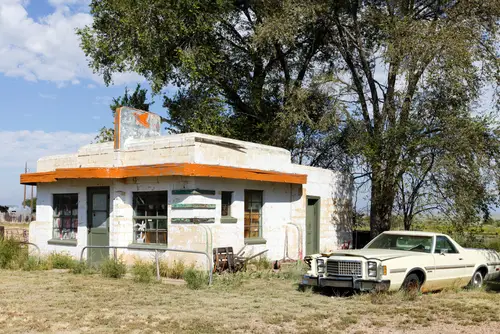
Glenrio straddles the state line and feels like a snapshot of the late Route 66 era, which lingered well into the 70s–90s in its final years. Abandoned motels and diners still display signs that look straight out of old road-trip photo albums. The structures remain weathered but recognizable, making it easy to imagine cars pulling in before the interstate bypassed the town. There’s a haunting stillness that feels like someone turned the lights off and walked away.
Because the town wasn’t redeveloped, its last functional decades have been preserved unintentionally. Old gas stations display faded logos from brands that dominated the late 20th century. The motel office and café façades remain eerily intact. It’s a quiet but powerful reminder of a pre-smartphone travel culture.
9. Winslow, Arizona
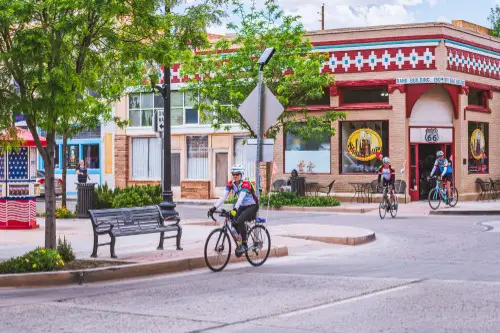
Winslow embraced its Route 66 heritage and kept much of its downtown looking like it did during the 70s–90s tourism boom. Its most famous corner—yes, the “Standin’ on the Corner” one—has remained intentionally retro. The surrounding storefronts use signage and façades that echo their late-20th-century appearance. Even the souvenir shops lean into that older Americana look.
The town didn’t chase ultra-modern redevelopment, which helps the vintage feel resonate. Many businesses feature the same decorative motifs they’ve had for decades. The slow pace and small-town layout enhance the “paused” feeling. Visitors often remark that it feels like a detour into another era.
10. Mall of America, Bloomington, Minnesota
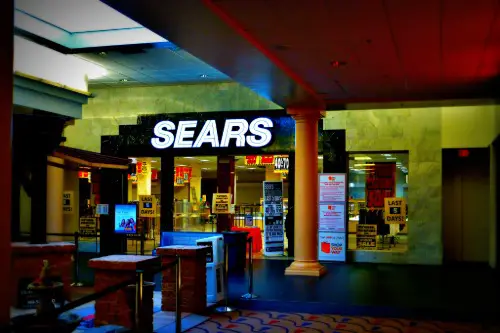
Opened in 1992, the Mall of America still carries a lot of unmistakable early-90s mall energy despite periodic updates. Its massive interior layout reflects the era’s love of supersized everything. Some original design elements, like the wide-open atriums and classic mall storefront styles, still show through. You can almost imagine the place filled with denim jackets and giant scrunchies.
Nickelodeon Universe, formerly Camp Snoopy, still keeps bits of its older amusement-park personality. Many corners of the mall feel untouched by the minimalist trends of modern retail. Its attraction-focused setup reflects a 90s mindset when malls were full-day events. The nostalgia hits you even if you didn’t grow up there.
11. Ocean City, Maryland Boardwalk
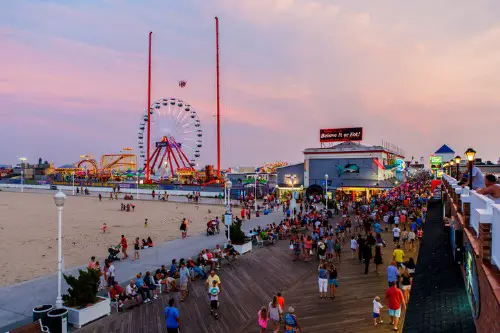
Ocean City’s boardwalk has been refreshed over the years, but plenty of its charm remains rooted in the late-20th-century vacation era. Classic arcades, T-shirt shops, and long-running snack stands keep the vibe alive. The amusement pier still showcases rides that feel familiar to anyone who visited in the 80s or 90s. Wooden walkways and old signage add to the sense of continuity.
Because many businesses are family-run, they’ve kept their aesthetic stable for decades. The boardwalk lights up at night with that traditional beach-town glow instead of modern LEDs. Visitors often return to find the same rides, same sweets, and sometimes even the same staff. It’s a place where yearly tradition holds more weight than modernization.
12. El Reno, Oklahoma (Route 66 Strip)
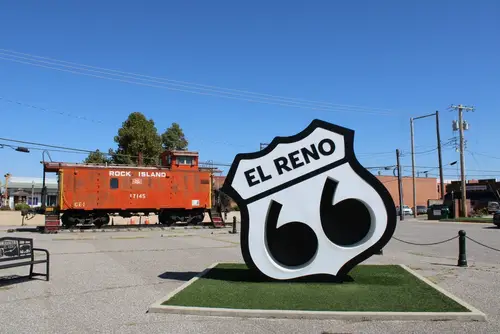
El Reno keeps portions of its Route 66 corridor looking remarkably close to how they appeared in the late 20th century. Classic burger joints like Sid’s Diner maintain their 1980s-era setups and menus. The signage along the strip has been preserved with a fondness for the retro. Driving through feels like a throwback to the road-trip era before chain sprawl took over.
The town embraces its heritage without trying to turn everything into a curated museum experience. Many storefronts operate much the same way they did decades ago. Locals appreciate the familiarity, which helps keep things steady. Visitors often describe it as simple, genuine, and pleasantly unchanged.
13. Oaks Park Roller Rink, Portland, Oregon
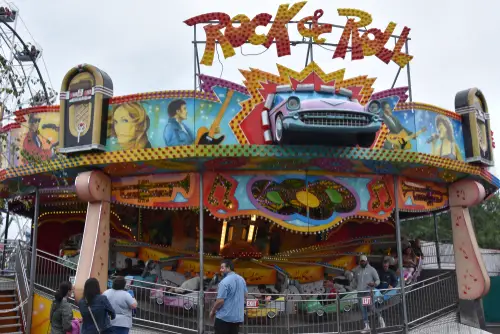
Oaks Park Roller Rink is one of the oldest roller rinks in America, but much of its interior keeps the spirit of the 70s–90s alive. From the lighting to the music selections, the vibe often feels like a weekend skate party from a few decades back. The wooden floor and classic rental skates are part of the charm. Even the snack bar has that unmistakable rec-center feel.
The rink deliberately honors its retro identity, hosting themed nights that lean heavily on older music and aesthetics. Families who skated there in the 80s can return and find the experience surprisingly familiar. The décor avoids sleek modernism, choosing instead to preserve its long-lived authenticity. It’s the kind of place where nostalgia doesn’t feel manufactured—it just naturally stuck around.
This post 13 Places That Feel Like They Hit ‘Pause’ Somewhere Between 1978 and 1994 was first published on American Charm.

