1. The shady historic squares everywhere you turn
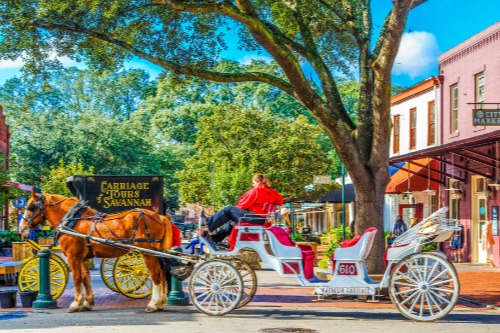
In Savannah, people immediately notice how green the city feels. The historic district is dotted with 22 public squares that anchor the street grid. Each one is shaded by mature live oaks and layered with gardens, statues, and benches. It feels less like a grid of streets and more like a sequence of outdoor living rooms.
There’s a reason this stands out so quickly: the city was deliberately designed around these spaces in the 1700s. General James Oglethorpe’s plan made the squares central to navigation and neighborhood life. Visitors naturally drift into them while walking and cooling off under the tree canopy. Even without knowing the history, you can feel how intentional the layout is.
2. The dreamy tunnels of Spanish moss
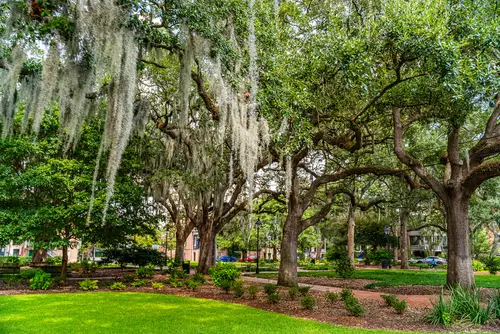
Those wispy gray strands hanging from tree branches catch nearly everyone’s eye first. Spanish moss drapes from the live oaks along streets, parks, and squares like natural decorations. When the breeze hits, the strands sway gently and give the city a soft, cinematic look. It’s one of those details that instantly says “Lowcountry.”
People notice it because it changes the mood of entire streetscapes. The filtered light beneath the canopy makes even midday walks feel calm and shaded. Photographers love it because it adds texture and depth to every shot. First-time visitors often stop just to stare up at the trees.
3. The cobblestone riverfront and old warehouses
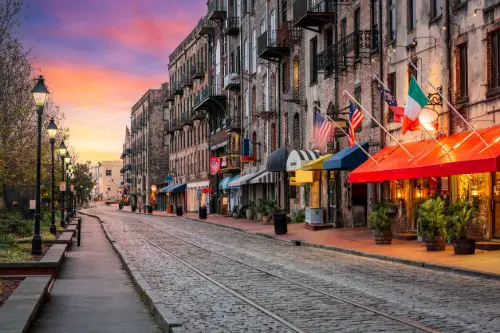
The historic waterfront along the Savannah River looks like a preserved slice of the 1800s. Old cotton warehouses made of brick line the street with heavy wooden doors and iron details. Parts of the roadway are still paved with uneven cobblestones. The whole area feels tactile and lived-in rather than polished.
This stands out because most cities have replaced industrial areas with modern development. Here, the original architecture remains and now houses shops, galleries, and restaurants. Visitors can literally feel the history under their feet as they walk downhill toward the water. It’s an immediate contrast to the leafy elegance inland.
4. The elegant historic homes with wrought-iron details
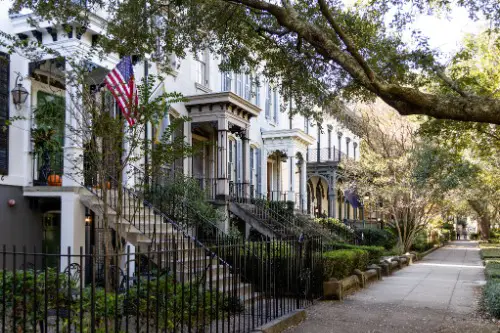
Walking through neighborhoods feels like strolling past an open-air architecture museum. Grand townhouses, row homes, and mansions display ornate balconies and intricate iron railings. Many date back to the 18th and 19th centuries and have been carefully preserved. The craftsmanship is detailed enough to make you slow your pace.
People notice the ironwork because it’s everywhere once you start looking. Stair rails curl into elaborate patterns, and window grilles look custom-forged. The metalwork pairs beautifully with pastel walls and shaded porches. It gives the city a refined but welcoming personality.
5. The sheer walkability of the historic district
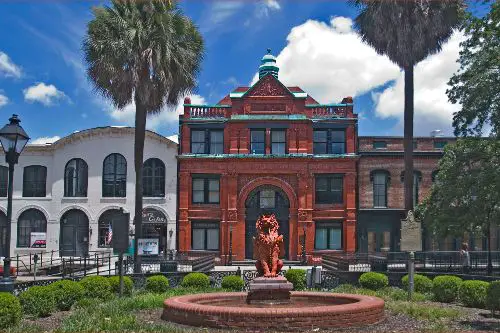
Visitors quickly realize they don’t need a car to explore much of the city. The Savannah Historic District spans roughly a square mile and is easy to navigate on foot. Streets are laid out in a simple grid anchored by the public squares. Sidewalks are wide and shaded, making long walks comfortable.
This becomes obvious within the first hour of arrival. You can wander without an itinerary and still hit major landmarks. Cafés, museums, parks, and river views are all within strolling distance. It encourages a slower pace that fits the city’s personality.
6. The fountain and open lawns at Forsyth Park
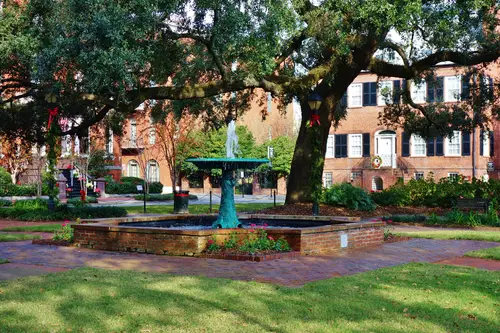
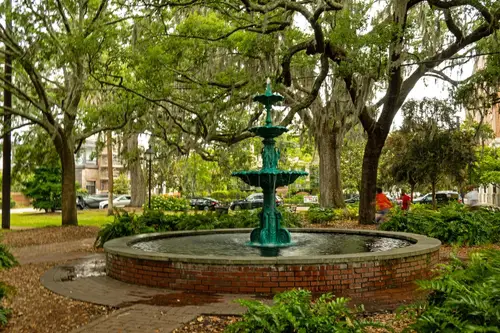
At the southern end of the historic district, Forsyth Park makes a strong first impression. Its large central fountain, installed in the 1850s, is one of the city’s most photographed landmarks. Broad walking paths frame expansive green lawns and flower beds. The scale feels grand without being overwhelming.
People notice it because the park opens up dramatically after tighter residential streets. Locals picnic, exercise, and relax here throughout the day. The fountain often becomes a natural meeting point for tours and friend groups. It’s a visual anchor that helps visitors orient themselves.
7. The slower, unhurried pace of daily life
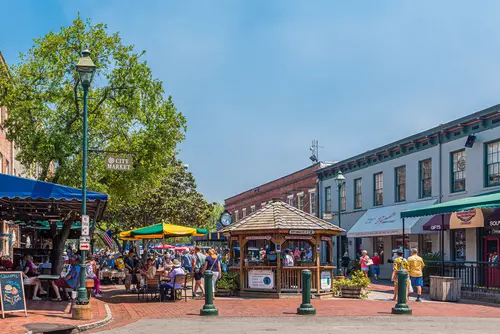
The rhythm of the city feels different from bigger urban centers. Pedestrians stroll instead of rush, and conversations linger on shaded benches. Traffic moves steadily but rarely feels frantic. Even downtown areas maintain a relaxed energy.
Visitors pick up on this almost immediately. Meals last longer, and walks turn into wandering explorations. Street performers and porch sitters add to the lived-in atmosphere. The tempo invites you to slow down without even trying.
8. The Southern food scene and comforting aromas

Savannah greets you with the smell of buttery biscuits and fried seafood. Restaurants serve regional staples like shrimp and grits, fried green tomatoes, and Lowcountry boils. Menus lean into coastal ingredients and traditional Southern recipes. The food feels hearty, familiar, and celebratory.
This stands out because flavors are bold and portions are generous. Many eateries operate inside historic buildings, adding character to the experience. Outdoor dining is common thanks to the mild climate and shaded streets. Meals often become highlights of the trip.
9. The visible layers of American history
Plaques, monuments, and preserved buildings make history hard to miss. Sites tied to colonial settlement, the Revolutionary War, and the Civil War sit within walking distance of each other. Churches, cemeteries, and civic buildings date back centuries. The past feels present rather than distant.
People notice this because storytelling is built into the landscape. Guided tours depart constantly on foot, by trolley, and by carriage. Architecture reflects changing eras without erasing earlier ones. It creates a sense of continuity that’s rare in modern cities.
10. The art schools and creative energy
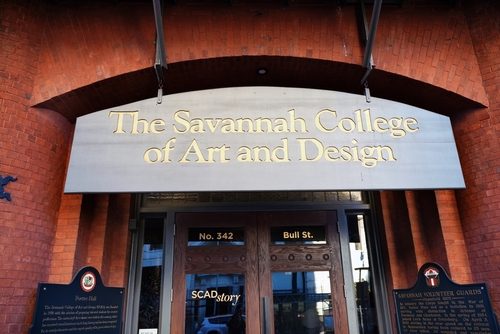
Students carrying portfolios and sketchbooks are a common sight downtown. Savannah College of Art and Design has a major presence, with classrooms and galleries woven into the city. Historic buildings double as academic spaces and exhibition venues. Creativity feels embedded in everyday life.
Visitors notice murals, window displays, and pop-up exhibitions as they explore. Galleries range from student showcases to professional collections. Events and festivals often highlight film, design, and visual arts. The artistic influence keeps the historic setting feeling current.
11. The mix of polished beauty and coastal grit
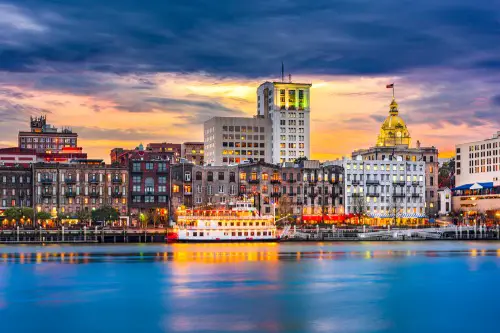
Savannah balances elegance with working-port practicality. Manicured parks and stately homes sit not far from active shipping terminals. Cargo ships pass along the river within view of historic promenades. The contrast feels authentic rather than staged.
This dual identity is immediately visible from the waterfront. You can admire refined architecture, then watch industrial cranes at work. It tells the story of a city that preserves its past while functioning in the present. Visitors often remember that layered character long after they leave.
This post What Visitors Always Notice First About Savannah was first published on American Charm.