
1. Holding the Door for the Person Behind You
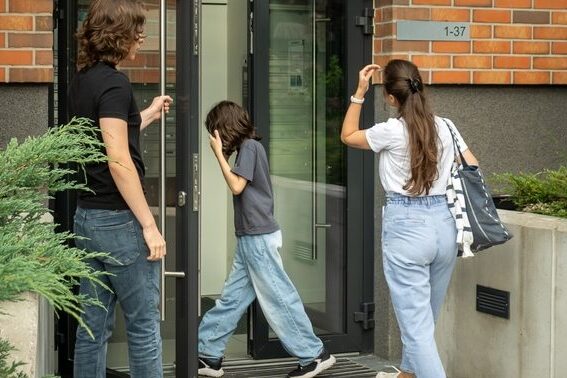
Holding the door became a quiet everyday courtesy in public spaces across the U.S. It shows awareness of others and a small willingness to help a stranger. The gesture became common in offices, schools, stores, and apartment buildings. No one formally teaches it, but most people notice when it’s missing.
The rule also carries subtle timing and distance cues. You hold it if someone is close enough, but not so far that it becomes awkward. A quick “thanks” usually completes the exchange. It’s a tiny ritual that reinforces shared public space etiquette.
2. Forming a Line and Respecting Your Turn

Americans are generally taught to queue rather than crowd. Whether at a coffee shop, airport, or movie theater, forming a line signals fairness. Cutting ahead tends to draw immediate side-eye or verbal correction. The expectation keeps public spaces orderly without posted instructions.
Kids absorb this early in school cafeterias and playgrounds. The “first come, first served” idea becomes muscle memory. Even informal lines, like waiting for a restroom, follow the same rule. It’s a social contract people follow without thinking.
3. Tipping Service Workers

Tipping became an expected part of dining and personal services culture. Restaurant servers, bartenders, hair stylists, and delivery drivers often rely on it as income. The norm developed into standard percentage ranges that most adults recognize. Leaving nothing typically sends a message, fairly or not.
People learn the practice by watching parents handle the bill. Receipts and tip lines quietly teach the math. Travelers quickly notice regional differences in expectations. It’s an unwritten rule that strongly shapes service interactions.
4. Making Small Talk in Casual Encounters

Brief, friendly conversation with strangers is widely accepted in many American settings. Chatting about the weather or weekend plans fills social gaps politely. Silence isn’t rude, but light talk signals openness and ease. Elevators, checkout lines, and waiting rooms become social buffers.
This habit helps smooth interactions between people who may never meet again. It lowers tension and establishes a baseline friendliness. Many workplaces also rely on small talk to build rapport. People who skip it can seem distant even if they’re not.
5. Respecting Personal Space
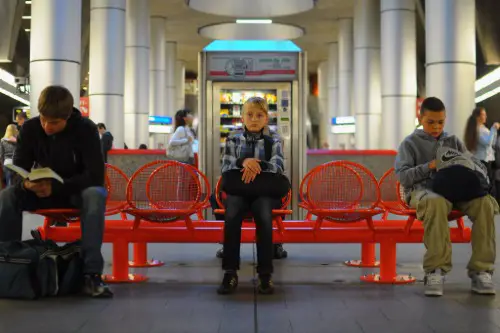
Americans tend to maintain a comfortable physical distance in conversations. Standing too close can feel intrusive or confrontational. This norm varies by region and context, but it’s widely felt. You sense it immediately when someone steps inside that invisible bubble.
Public seating also reflects this rule. People often leave an empty seat when space allows. Crowded settings relax the norm, but awareness remains. The expectation quietly shapes how people move and gather.
6. Bringing Something When Invited to a Home

Showing up empty-handed to a dinner or party can feel off. Guests often bring a dessert, drink, or small host gift. It signals appreciation for the invitation and effort. The item doesn’t need to be expensive to matter.
Children watch adults make these gestures and internalize the habit. It helps balance hospitality with reciprocity. Even casual get-togethers often follow the pattern. The exchange reinforces social bonds without discussion.
7. Sending Thank-You Notes for Gifts

Thank-you notes have long been a polite follow-up to receiving gifts. Weddings, graduations, and baby showers especially reinforce the norm. A handwritten note traditionally carried more sincerity than a quick message. The practice acknowledges both the gift and the giver.
Families often coached kids through writing them after birthdays. Stationery aisles and etiquette columns reinforced expectations. While texts and emails are now common, the core idea remains. Gratitude is expressed deliberately, not assumed.
8. Lowering Your Voice in Shared Quiet Spaces

Libraries, waiting rooms, and public transit developed quiet expectations. Loud conversations draw attention and subtle disapproval. People adjust their volume instinctively in these environments. The rule preserves comfort for everyone nearby.
Even phone calls get hushed or postponed. Parents often remind kids with a quick whisper. The shared understanding reduces the need for constant enforcement. Silence becomes a collective courtesy.
9. RSVPing Promptly to Invitations
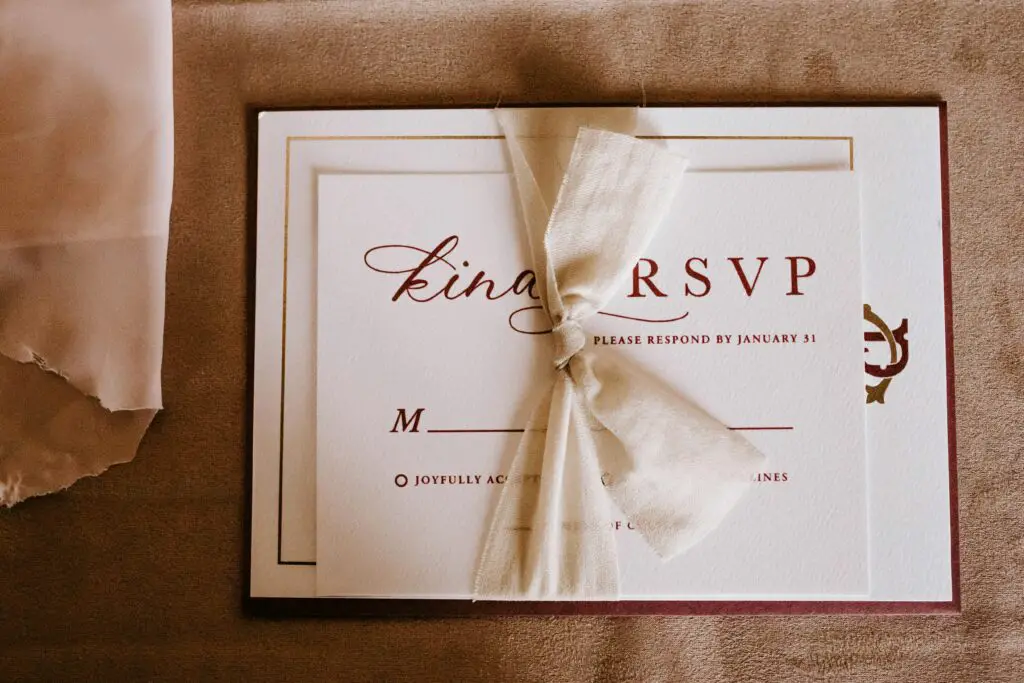
Responding to invitations in a timely way helps hosts plan food and space. Ignoring an RSVP creates uncertainty and extra work. The norm grew alongside mailed invitations and formal events. A simple yes or no is considered respectful.
Digital invites kept the expectation alive. Event planners still rely on headcounts. Late responses can affect seating charts and budgets. The habit supports smoother gatherings for everyone.
10. Avoiding Sensitive Topics in Polite Company

Politics, religion, and personal finances are often treated as delicate subjects. Many people avoid them in casual or mixed company. The goal is to prevent conflict and keep interactions comfortable. Social settings often favor neutral ground.
Families and workplaces frequently model this boundary. You learn when a conversation shift feels tense. The rule isn’t universal, but it’s widely recognized. It quietly steers countless conversations.
11. Offering a Firm Handshake in Formal Introductions

The handshake became a standard greeting in professional and formal settings. A brief, firm grip signals confidence and respect. It often accompanies eye contact and a clear introduction. The ritual sets the tone for first impressions.
Job interviews and business meetings reinforce the habit. Young adults typically learn it through observation and coaching. Alternatives exist, but the expectation persists in many contexts. A small gesture carries outsized social meaning.
This post Unspoken Social Rules That Quietly Shaped American Behavior was first published on American Charm.

