
1. Braddock, Pennsylvania
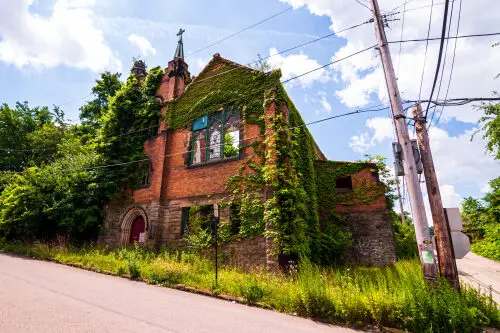
Braddock was home to Andrew Carnegie’s Edgar Thomson Steel Works, one of the first and most productive steel mills in America. The mill, which opened in 1875, transformed Braddock into a thriving industrial town with a population that peaked at about 20,000 in the 1920s. The town was a melting pot of immigrants from across Europe who came to work in the mills and build better lives. Andrew Carnegie even funded a magnificent library for the town, complete with a music hall and an indoor pool, which still stands today.
The steel industry’s decline devastated Braddock even more dramatically than larger cities. The Edgar Thomson Works drastically reduced its workforce through automation, and the town’s population has collapsed to around 1,700 residents. About 90 percent of Braddock’s commercial buildings are gone, demolished or collapsed. Mayor John Fetterman, who later became a U.S. Senator, worked to revitalize the town, but vast stretches remain empty lots where neighborhoods once stood, and Braddock’s poverty rate exceeds 40 percent.
2. Gary, Indiana
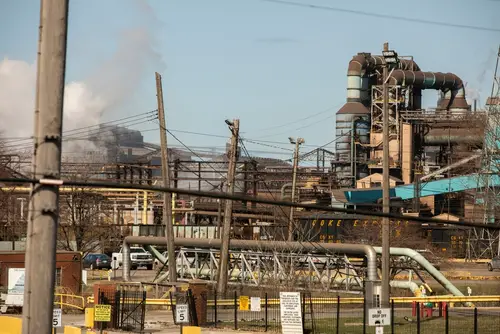
Gary was built by U.S. Steel in 1906 and named after the corporation’s chairman, Elbert Henry Gary. This planned industrial city attracted thousands of workers and became one of the most productive steel manufacturing centers in the world. At its peak in 1960, Gary boasted a population of over 178,000 residents and was a symbol of American industrial might. The city’s Broadway corridor was lined with thriving businesses, grand theaters, and the impressive Gary City Hall that still stands today.
The decline of the American steel industry in the 1970s and 1980s hit Gary particularly hard. U.S. Steel scaled back operations dramatically, leading to massive job losses and population exodus. Today, Gary’s population has plummeted to under 70,000, and vast stretches of the city feature abandoned buildings and empty lots. The once-magnificent City Methodist Church, now a haunting ruin, has become an unintended symbol of the city’s fall from prosperity.
3. Cairo, Illinois
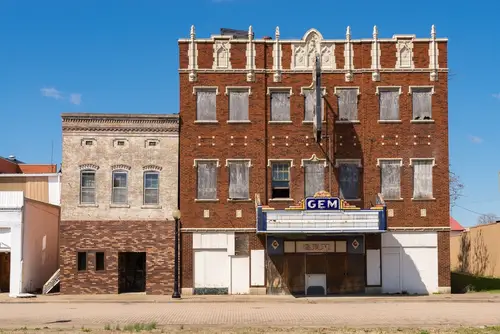
Cairo sits at the strategic confluence of the Mississippi and Ohio Rivers, which made it a crucial transportation and trade hub in the 19th and early 20th centuries. The town’s location meant riverboats, railroads, and later highways all passed through, bringing commerce and prosperity. At its peak in 1920, Cairo had a population of over 15,000 and featured grand Victorian architecture, bustling docks, and the magnificent Customs House. The town even served as Ulysses S. Grant’s headquarters during the Civil War, cementing its place in American history.
The decline began when shipping patterns changed and river traffic diminished, but racial tensions in the 1960s and 1970s accelerated Cairo’s downfall. The town experienced violent conflicts and white flight, which devastated the local economy. Businesses closed, jobs disappeared, and the population dwindled to just over 2,000 residents today. The once-grand buildings now sit vacant and crumbling, protected by levees that feel like they’re holding back time as much as water.
4. Butte, Montana
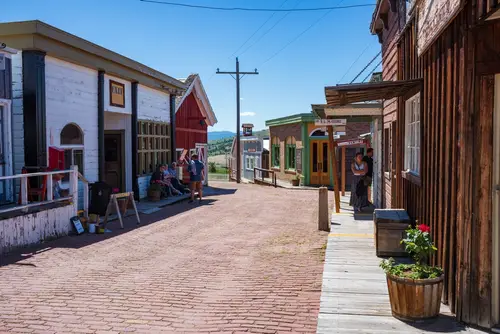
Butte earned the nickname “The Richest Hill on Earth” because of its incredibly productive copper mines. At its peak around 1920, Butte had nearly 100,000 residents and was one of the largest cities between Chicago and San Francisco. The mining operations ran 24 hours a day, and the city’s uptown district was a colorful mix of immigrant neighborhoods, saloons, theaters, and brothels. Butte supplied much of the copper that electrified America and supported the war efforts of both World Wars.
The Berkeley Pit, an enormous open-pit copper mine, began operations in 1955 and swallowed up entire neighborhoods as it expanded. When the Atlantic Richfield Company suspended mining operations in 1982, Butte’s economy collapsed. The pit filled with toxic, acidic water and became one of the largest Superfund sites in the nation. Today, Butte’s population hovers around 35,000, and while some historic districts have been preserved, the massive toxic pit remains a stark reminder of the environmental and economic cost of the city’s former glory.
5. Youngstown, Ohio
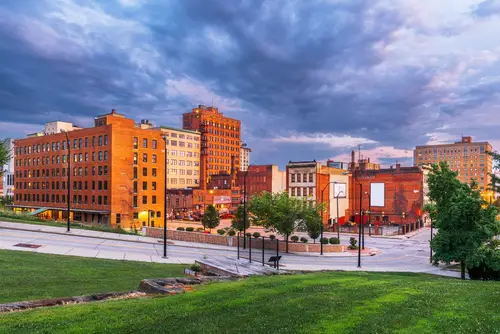
Youngstown was a steel powerhouse in the Mahoning Valley, with massive mills that employed tens of thousands of workers throughout the 20th century. The city’s population peaked at about 170,000 in 1930, and the steel mills were so productive that Youngstown became known as part of the backbone of American manufacturing. Workers earned solid middle-class wages, bought homes, and sent their children to good schools. The downtown was vibrant with department stores, restaurants, and entertainment venues that served the prosperous community.
“Black Monday” arrived on September 19, 1977, when Youngstown Sheet and Tube announced the closure of its Campbell Works, eliminating 5,000 jobs in a single day. More mill closures followed throughout the late 1970s and early 1980s, devastating the local economy. The population has dropped to around 60,000, and Youngstown has struggled with poverty, crime, and urban decay for decades. Efforts at revitalization continue, but the empty lots where mills once stood serve as monuments to deindustrialization.
6. Galena, Illinois
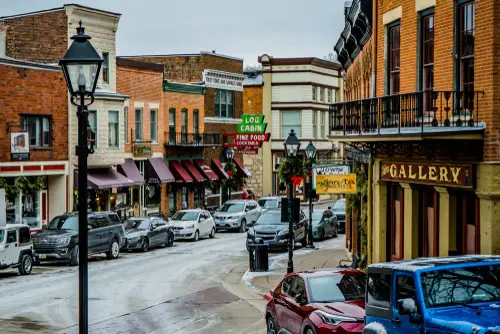
Galena was one of the most important cities in Illinois during the mid-1800s, producing more than 85 percent of the nation’s lead. The town’s population swelled to over 14,000 by 1860, making it larger than Chicago at the time. Steamboats crowded the Galena River, and the town’s Main Street was lined with brick buildings housing banks, hotels, and shops serving the mining boom. Ulysses S. Grant lived here before the Civil War and returned to a hero’s welcome in a house given to him by grateful citizens.
The lead deposits were eventually exhausted, and the Galena River became too silted for steamboat traffic by the 1880s. Railroad lines bypassed the town, taking commerce elsewhere, and Galena’s population collapsed to just a few thousand. The economic stagnation actually preserved the 19th-century architecture that would have otherwise been demolished for modern development. Today, Galena survives as a tourist destination with about 3,000 residents, its Main Street frozen in time as a museum of its former grandeur rather than a living economic center.
7. Flint, Michigan
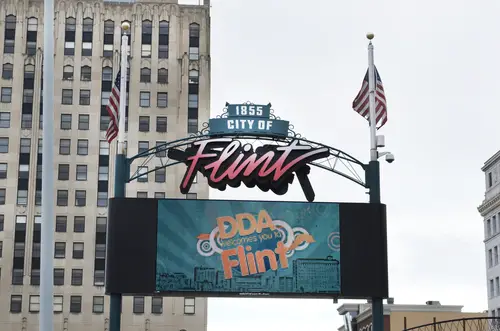
Flint was “Vehicle City,” the birthplace of General Motors and home to Buick, Chevrolet, and AC Spark Plug factories. At its peak in 1960, Flint had nearly 200,000 residents with one of the highest median incomes in the United States. The UAW was powerful here, workers earned excellent wages with benefits, and the automotive plants ran multiple shifts. Flint had beautiful parks, thriving shopping districts, and strong neighborhoods built on the stability of automotive manufacturing.
General Motors began closing plants in Flint in the 1980s, a process documented in Michael Moore’s film “Roger & Me.” The population has plummeted to under 82,000, and Flint has faced poverty rates above 40 percent. The 2014 water crisis, when the city’s water supply was contaminated with lead, became an international symbol of urban decline and governmental failure. While recovery efforts continue, thousands of abandoned homes and the ongoing challenges of poverty and infrastructure failure make Flint one of the most dramatic examples of post-industrial collapse.
8. Bodie, California
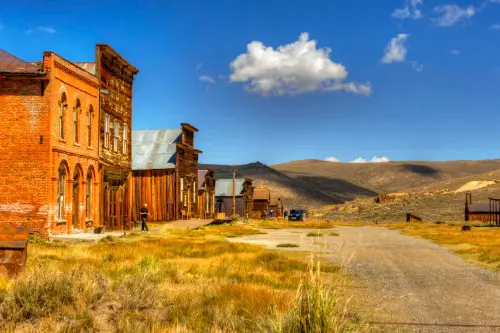
Bodie exploded into existence in 1876 when gold was discovered in the hills of Mono County. Within just a few years, the town had swelled to nearly 10,000 residents, with 65 saloons lining Main Street. Bodie was notorious as one of the wildest gold rush towns, with murders and robberies occurring regularly in its lawless streets. The mines produced millions of dollars in gold and silver, and the town had everything from Chinese restaurants to a red-light district called “Maiden Lane.”
The gold began to play out by the early 1880s, and several devastating fires destroyed large portions of the town. By 1910, the population had dropped to just a few hundred, and a final fire in 1932 destroyed much of what remained. The last residents left in the 1940s, and Bodie became a genuine ghost town. Today it exists as Bodie State Historic Park, preserved in a state of “arrested decay,” where visitors can walk streets lined with over 100 weathered buildings and peer through windows at possessions left behind when the gold ran out.
9. Bethlehem, Pennsylvania

Bethlehem Steel was founded in 1857 and grew to become the second-largest steel producer in America. The company built the Golden Gate Bridge, supplied armor for warships, and produced steel for countless skyscrapers including the Chrysler Building. At its peak, Bethlehem Steel employed over 30,000 workers at its main plant, and the city’s population reached 110,000. The iconic blast furnaces dominated the skyline, and generations of families depended on the mill for their livelihoods.
The company began its decline in the 1970s due to foreign competition and management problems, finally declaring bankruptcy in 2001. The closure of the steel plant devastated Bethlehem’s economy and identity. The city’s population has dropped to around 76,000, and the struggle to redefine itself has been difficult. The former steel plant site has been partially redeveloped as a casino and entertainment venue, but the rusting blast furnaces preserved as historical monuments serve as a bittersweet reminder of what was lost.
10. Rhyolite, Nevada
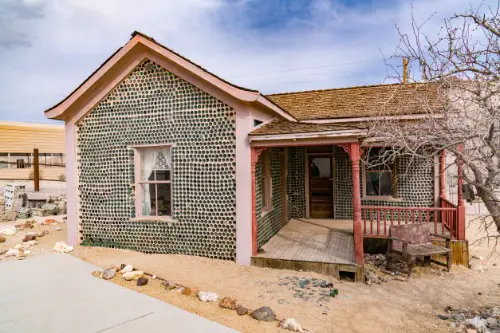
Rhyolite was born in 1905 when prospectors discovered high-grade gold ore in the Bullfrog Mining District. Within just two years, the town had mushroomed to between 3,500 and 5,000 residents with electric lights, water mains, telephones, and an ice plant. The town boasted a stock exchange, an opera house, a school for 250 children, and the impressive three-story Cook Bank Building made of concrete. Rhyolite even had its own red-light district and more than 50 saloons serving miners who believed the gold would last forever.
The 1906 San Francisco earthquake triggered a financial panic that made it difficult to raise mining capital, and by 1910 it became clear the ore deposits weren’t as extensive as hoped. The mines closed, and Rhyolite’s population evaporated as quickly as it had appeared. By 1916, the power was turned off, and Rhyolite became a ghost town. Today, the ruins of the Cook Bank Building, the train depot, and the famous Bottle House made from thousands of beer and liquor bottles stand in the desert as testaments to the boom-and-bust cycle that defined the American West.
11. Centralia, Pennsylvania
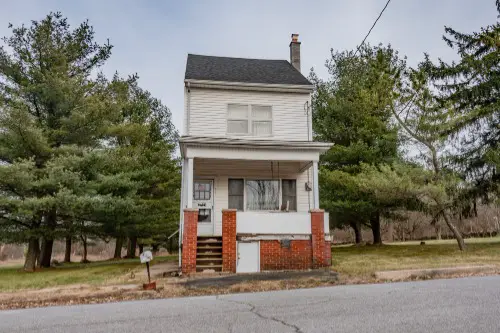
Centralia was a thriving anthracite coal mining town in Columbia County with a population of over 2,700 in the 1960s. The town had multiple churches, five hotels, seven bars, and a bustling business district serving the mining community. Families had lived there for generations, building a tight-knit community around the coal industry that had sustained the region since the 1800s. Children walked to school on streets where everyone knew their neighbors, and Friday night football games brought the whole town together.
In 1962, a fire started in an abandoned mine pit, and despite efforts to extinguish it, the blaze spread through the underground coal seams beneath the town. By the 1980s, toxic gases were seeping into homes, the ground became unstable, and sinkholes began opening up. The federal government eventually condemned the town and relocated most residents, offering to buy their properties. Today, only about five residents remain in Centralia, and the fire still burns beneath the abandoned streets where Route 61 buckles and cracks from the heat below.
12. Thurmond, West Virginia
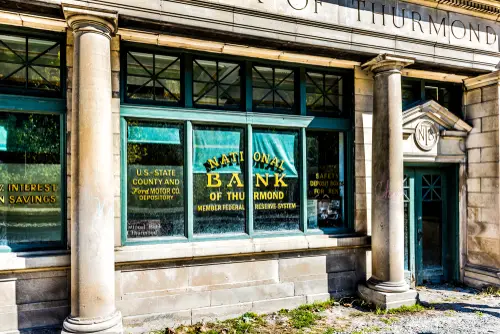
Thurmond was a crucial railroad town on the Chesapeake and Ohio Railway line that hauled coal out of the Appalachian mountains. In its heyday during the early 1900s, Thurmond was one of the busiest freight stations in the nation, with trains arriving every few minutes. The town had banks, hotels, a movie theater, restaurants, and the famous Dun Glen Hotel where coal barons conducted business. Despite having only about 500 permanent residents, millions of dollars changed hands in Thurmond as coal money flowed through the New River Gorge.
The shift from steam to diesel locomotives and the decline of coal mining eliminated Thurmond’s reason for existence. The population dwindled throughout the mid-20th century as businesses closed and residents moved away. By the 1990 census, only seven people lived in Thurmond, and today the number hovers around five. The National Park Service now maintains the abandoned town as part of the New River Gorge National Park and Preserve, where visitors can see the empty depot, boarded-up buildings, and rusting railroad infrastructure that once made this remote spot an economic powerhouse.
13. Lowell, Massachusetts
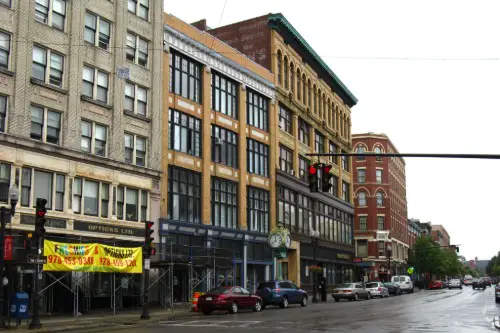
Lowell was America’s first planned industrial city, founded in the 1820s as a model textile manufacturing center. The city harnessed the power of the Merrimack River to run massive mills that produced cloth for the growing nation. By 1850, Lowell had 40 mill buildings and employed thousands of young women from New England farms in what was considered a progressive system for its time. The city’s population reached nearly 100,000 by 1920, and its canals and red-brick mill buildings defined the urban industrial landscape.
The textile industry began moving south in the 1920s seeking cheaper labor, and by the 1950s most of Lowell’s mills had closed. The city fell into severe economic decline with high unemployment, poverty, and abandoned industrial buildings. The population dropped to around 92,000 by 1980, and much of downtown was blighted. Lowell has partially reinvented itself through historic preservation and cultural tourism, with some former mills converted to museums and housing, but it remains a city trying to overcome the loss of the industry that created it.
14. Jerome, Arizona
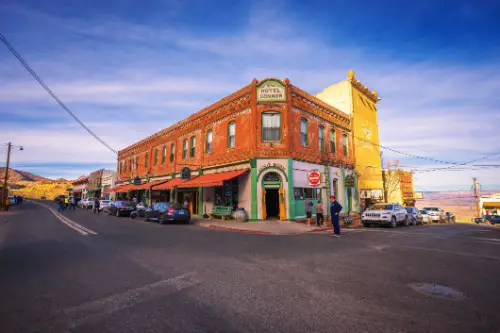
Jerome clung to the side of Cleopatra Hill in central Arizona, where copper mining began in the 1880s. The United Verde Mine became one of the most productive copper mines in the world, and by 1920, Jerome had about 15,000 residents living in houses stacked on the steep mountainside. The town was known for its rough character, with a thriving red-light district and saloons serving miners who worked dangerous shifts underground. The copper from Jerome helped electrify America and provided crucial materials for World War I and World War II.
The mines began to play out after World War II, and the United Verde Extension mine closed in 1938, followed by the main United Verde Mine in 1953. The population collapsed to fewer than 100 residents by the late 1950s, and Jerome was nearly abandoned. Buildings slid down the unstable hillside, and the town seemed destined to become a complete ghost town. Instead, artists and hippies rediscovered Jerome in the 1960s and 1970s, and today it survives as a tourist destination with about 400 residents living among buildings that testify to the boom years.
15. Picher, Oklahoma
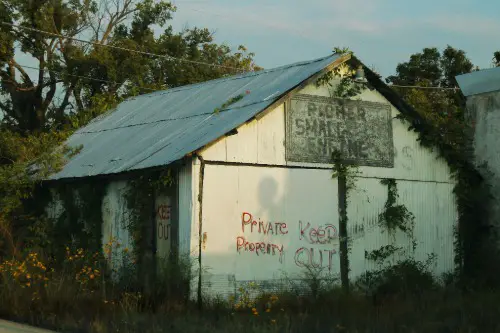
Picher was the heart of the Tri-State Mining District, one of the most productive lead and zinc mining areas in the world. From the 1920s through the 1960s, Picher and the surrounding area produced over half of the lead and zinc used by the Allies during World War I and World War II. The town’s population peaked at nearly 20,000, with miners working around the clock in hundreds of shafts and tunnels beneath the streets. The mines generated enormous wealth and provided good jobs for generations of families in this corner of Oklahoma.
The environmental cost of mining eventually became impossible to ignore, as mountains of toxic waste called “chat piles” surrounded the town and poisoned the ground. The EPA designated Picher as one of the nation’s most toxic Superfund sites due to lead contamination. A devastating tornado in 2008 destroyed much of what remained, and the government offered buyouts to residents. Picher was officially disincorporated in 2009, and today it’s a ghost town where collapsing buildings and toxic waste mark where a community once thrived on the wealth extracted from beneath it.
This post 15 U.S. Towns That Once Were the Heart of America—Now They Echo was first published on American Charm.

