
1. Greendale, Wisconsin

The village of Greendale, Wisconsin was the third of the federal greenbelt towns and was built between 1936 and 1938 near Milwaukee. Its plan included winding roads, parkways, integrated green spaces, and a focus on combining modest incomes with modern living. Today, the built environment remains remarkably intact, with original homes, village center and layout preserved—so it feels like a time capsule of those New Deal ambitions.
While Greendale did become a functioning suburb, it never quite evolved into the sweeping utopia its designers had envisioned. Much of its early identity remains frozen in its architecture and street patterns, providing a living museum of that era’s optimism. For urban history geeks, Greendale is like an artifact you can walk through.
2. Greenbelt, Maryland

The town of Greenbelt, Maryland was one of the three “greenbelt” new towns built under the New Deal in the 1930s, designed to combine the best of city and country living. As a federally planned community, it was meant to be modern, healthy and egalitarian—but today the core feels like a preserved relic of that era, complete with garden‑spaces, cooperative homes and curving pedestrian paths. That planning ideal looks very different now compared with sprawling suburbs around it.
Greenbelt hasn’t failed, but it hasn’t quite become the fully self‑sustaining utopia its planners imagined, so today it sits as a fascinating example of mid‑century planning preserved in amber. The town center, the cooperative housing, the original layout—all still visible—give you the sense of stepping into a model town from a past generation. When you wander the sidewalks you can almost feel the aspirations of 1930s reformers and wonder how much of that ended up fulfilled.
3. Savannah, Georgia
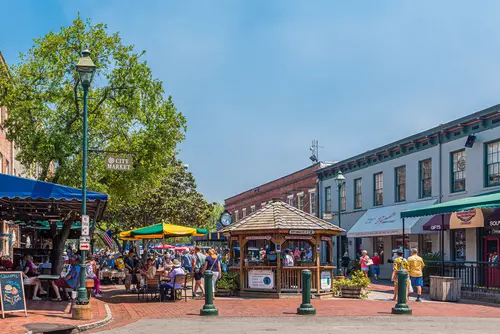
The town of Savannah, Georgia was founded in 1733 with a formal plan of town squares and streets laid out by James Oglethorpe, marking one of the earliest examples of intentional city‑planning in the U.S. It was meant as a utopian colonial outpost with wide streets, orderly lots and a sense of civic purpose, yet today many of its historic blocks feel frozen in time, a neat grid encased in antebellum facades. Walking through the squares, you get a sense not just of history but of a town whose original promises have paused in mid‑stride.
Over the centuries Savannah has grown and changed, yet the original plan remains so present that it almost feels like stepping back into another era. The architecture and squares remain largely intact and preserved, giving the place a “time capsule” vibe of colonial ambition and early American town‑making. While Savannah succeeded in many ways, the fact that the physical plan remains so intact means you see the dream and the reality side‑by‑side. For anyone interested in planned communities, Savannah offers a vivid illustration of what happens when you freeze a design in place and let history catch up.
4. Levittown, New York

Levittown, New York is often considered the prototype post‑war American suburb, built by Levitt & Sons for returning veterans beginning in 1947. The idea was massive scale, uniform homes, single‑family suburban living—the “American dream” on a production line. Today many of its houses remain unchanged, and the neighborhood feels like a preserved vision of mid‑20th century suburbia.
Levittown succeeded wildly as a concept, but that very success means it also offers a snapshot‑in-time of what suburban America looked like at its birth. The grid of houses, the conformity of style, the sense of planned perfection—all there. Walking its streets, you can almost imagine the original buyers stepping into new lives and communities, and you sense how frozen that moment has become.
5. Oak Ridge, Tennessee

Oak Ridge, Tennessee was created as a secret, purpose‑built town for workers on the Manhattan Project during WWII, designed with a clear plan for streets, housing, and infrastructure. It was built quickly, under security constraints, and with its layout and infrastructure planned from scratch. Today many of its original structures, roads and layout remain intact, offering a glimpse of mid‑20th‑century war‑era planning and idealism.
The town succeeded in its initial mission but then faced the challenge of what to become after the war – so parts of its built environment retain that sense of “frozen moment” when the project was new and purpose‑driven. Today you can sense that history in the orderly street grid, the dorm‑type housing structures (some still standing) and the town‑planning logic. Oak Ridge is not just a historical place, it’s a living time capsule of a very specific era.
6. Marktown, Indiana

The planned community of Marktown, Indiana was created around 1917 by industrialist Clayton Mark to house workers of the Mark Manufacturing Company. Designed with a cohesive architectural style and a unified layout, it remains one of the few intact industrial‑town experiments from the progressive era. Today the neighborhood has changed little structurally, giving visitors a sense of an early 20th‑century worker‑community that hasn’t been radically overhauled.
While some homes have been evacuated and areas have changed, the core of Marktown retains its original character and layout. It may not have become a sprawling utopia, but its story and its built environment preserve a unique chapter of American industrial planning. For anyone curious about early planned towns, Marktown is a subtle gem.
7. Soul City, North Carolina

Soul City, North Carolina was conceived in 1969 by civil‑rights leader Floyd McKissick as a racially integrated planned community built and managed by Black entrepreneurs. The idea was revolutionary: create jobs, homes and community in rural Warren County, NC, as a model for Black economic empowerment. Sadly, the project never achieved its full scale and today what remains still feels lifted from a vision that ran out of steam—a time capsule of ideal, not full fulfillment.
Walking through the site today you can see vestiges: streets named with hope, infrastructure started and then stalled, a ghostly feeling of “what might have been.” For that reason it qualifies as a planned‑as‑paradise town that ended up frozen in aspiration. The very ambition of Soul City makes it a poignant inclusion here.
8. Rohnert Park, California

The city of Rohnert Park, California was one of the post‑war planned cities near San Francisco—designed as a modern suburban model. With its uniform development, community planning and infrastructure built from scratch, it still carries the imprint of the era’s belief in planning for a better way of life. Today much of its original layout, neighborhoods and community features remain, giving it a vintage planned‑community feel.
While Rohnert Park has grown and matured into a full city, anyone strolling its original neighborhoods will sense the blueprint beneath the everyday lives there: schools, parks and subdivisions arranged in that mid‑century ideal. It’s not frozen in time the way abandoned towns are, but the original concept remains highly legible. That alignment of planning and reality is what makes it feel like a time capsule of its own age.
9. Reston, Virginia
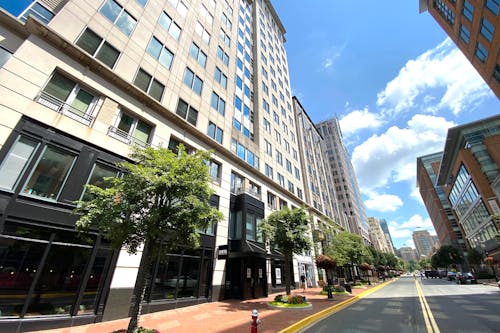
Reston, Virginia is perhaps one of the more successful planned communities—founded in 1964 with the idea of building “new towns” that integrated living, working and recreation in one place. Though it has evolved and grown, the core remains a built representation of its original vision. Walking around the early neighborhoods, you can still trace the pathways, pedestrian circulation, planned lakes and amenities envisioned by its founders.
Because it achieved so much of its intent, Reston stands out as a time capsule in which the planning dream hasn’t been completely overwritten by sprawl. The original architecture, street layouts and communal zones remain visible. It’s a reminder of what happens when a planned paradise actually gets built and then preserved enough to let visitors sense the original moment.
10. Columbia, Maryland
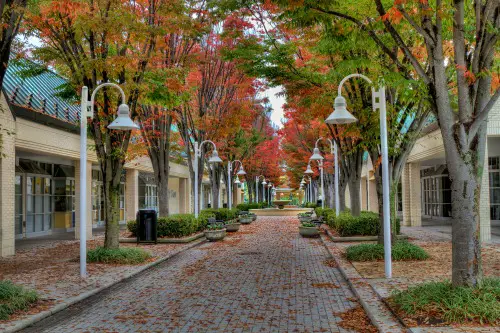
Columbia, Maryland was founded in the mid‑1960s by developer James Rouse with the idea of creating a community that transcended race, income and age. Parks, paths and planned village clusters were part of the blueprint. Today, while Columbia has grown into a full‑fledged city, the original villages still retain their design integrity and communal feel.
Walking through one of the original village cores, you’ll sense the plan: mixed‑use clusters, walkability, space around. In that sense, Columbia is a well‑kept time capsule of 1960s planning ambition, embedded in a modern city. It shows what happens when a planned paradise is built and lives on.
11. Irvine, California
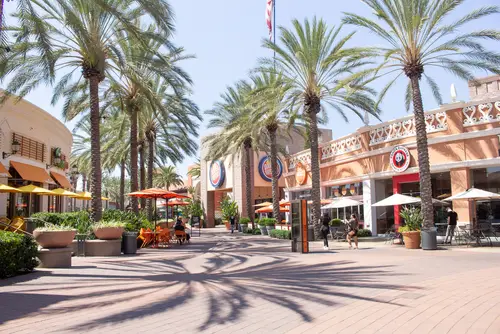
Irvine, California in Orange County was developed starting in the late‑1960s as a master‑planned community with extensive greenbelts, mixed‑use development and strong design control. Today the city is thriving and modern, but when you explore the original sectors you’ll find very clear zoning, consistent design themes and preserved green corridors that reflect that earlier planning vision. It’s like walking into a scaled‑down model of suburban paradise from another era.
Because Irvine scaled up so successfully, it shows not so much abandonment but preservation of planning ideals. The older sectors feel intact and convey the time‑capsule effect—a community whose original dream is still legible. It’s one of the more optimistic examples on this list.
12. The Woodlands, Texas
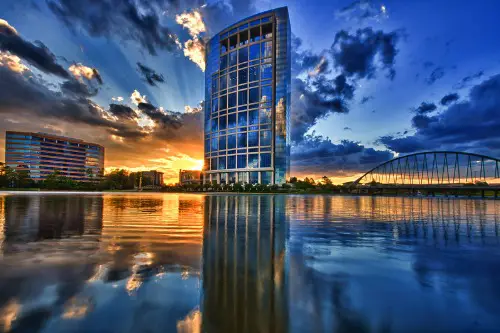
The community of The Woodlands, Texas near Houston was based on a master‑plan concept emphasizing preservation of nature, neighborhoods integrated with green space, and a high quality of life. Though it has grown into a large suburban region, the original concept remains visually and spatially distinct. Many residents and visitors still comment on “this part feels like the old plan” because the green corridors, trails and village centers have been maintained.
When a community retains its original structure and look, it becomes a walking time piece—and The Woodlands fits that description. It’s in many ways what the planners promised, and in others what the neighborhood preserved. For that reason it deserves space in this list.
13. Cape Coral, Florida

Cape Coral, Florida was developed beginning in the 1950s and 1960s as a planned waterfront community with canals, single‑family homes and leisure‑oriented lifestyle. Today, while it has grown enormously, many of its original neighborhoods, canal‑lined streets and lot layouts remain unchanged. Visiting some of these areas gives you the sense of stepping into the 1960s vision of Florida living.
While Cape Coral doesn’t feel abandoned or stale, the original plan still dominates large parts of the city—and that presence of untouched earlier design is why it feels like a time capsule. The unchanged canal patterns, uniform homes and initial development logic remain present in its fabric.
14. Venice, Florida
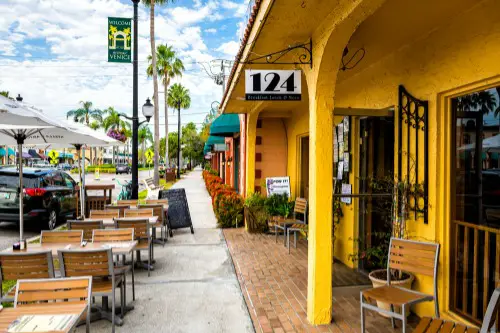
The city of Venice, Florida was laid out in the 1920s by famed urban planner John Nolen as a seaside ideal, with grand boulevards, parks and a structured plan. Although the Florida land boom and subsequent bust interrupted full realization of Nolen’s vision, the part that was built retains that early‑20th‑century planning character. Walking Venice evokes the 1920s optimism, with its patterned street grid, green spaces and historic buildings intact.
Because the plan was never fully executed, parts of Venice feel like a preserved fragment of an aspirational paradise frozen in time. The contrast between what was built and what was intended only enhances the sense of time‑capsule. It’s a reminder of how brilliant planning and real‑world economics sometimes diverge.
This post 14 Towns That Were Planned as Paradise and Ended Up as Time Capsules was first published on American Charm.

