
1. Colfax, Louisiana
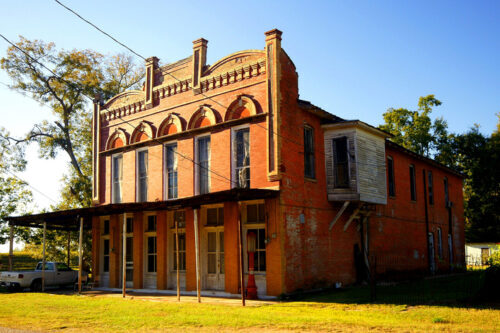
Colfax looks much like it did in the mid-20th century, with a quiet downtown and modest commercial footprint. The town never pursued aggressive redevelopment or expansion. As a result, many original storefronts and civic buildings remain intact. It’s a place where change arrives slowly, if at all.
Colfax’s economy has stayed largely local and regional. Agriculture and small services still dominate instead of large employers or industrial parks. Even as nearby towns modernized infrastructure and retail, Colfax stayed low-key. That choice has preserved its rhythm, for better or worse.
2. Mackinac Island, Michigan
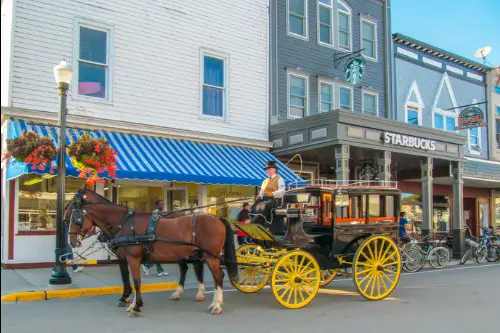
Mackinac Island famously banned automobiles in 1898, and it has never reversed that decision. To this day, transportation is handled by bicycles, horse-drawn carriages, and walking. That rule alone shapes daily life, tourism, and even emergency services. While the rest of Michigan modernized around highways and cars, the island simply opted out.
The town’s architecture reinforces that resistance to change. Many of the buildings date back to the late 19th century, including the Grand Hotel, which opened in 1887. Local ordinances tightly regulate signage and development to preserve the historic look. It’s not nostalgia as branding—it’s policy backed by enforcement.
3. Jerome, Arizona
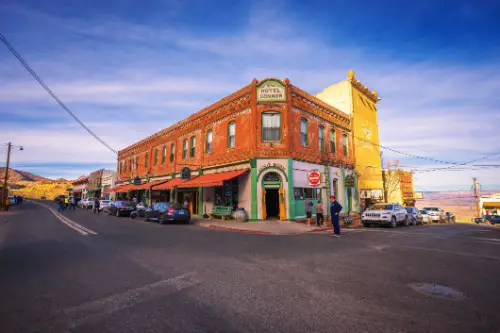
Jerome was a booming copper mining town in the early 1900s, and when the mines closed, it nearly became a ghost town. Instead of reinventing itself completely, it leaned hard into its past. The town still clings to its steep hillside layout, narrow roads, and mining-era buildings. Even basic infrastructure upgrades have been limited by geography and preservation rules.
Residents have resisted large-scale development for decades. Jerome actively limits chain businesses and new construction that doesn’t fit its historical character. The town’s population remains small, hovering around 450 people. While nearby Arizona cities exploded in size, Jerome stayed intentionally scrappy and weird.
4. Marfa, Texas
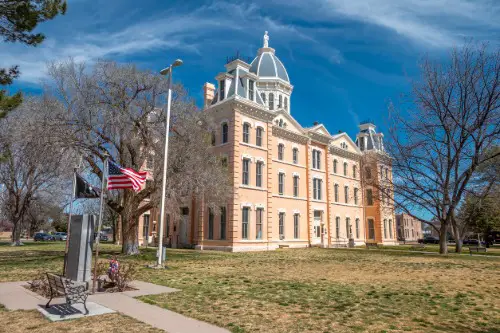
Marfa gained international attention for contemporary art, but structurally it hasn’t changed much at all. The town’s grid, low-rise buildings, and desert spacing remain mostly untouched. There are no big-box stores, malls, or highways cutting through town. Even its population has stayed under 2,000 people.
Local regulations and community pressure keep development minimal. New buildings are often required to match the town’s scale and aesthetic. Despite global attention, Marfa refuses to sprawl or modernize aggressively. It’s a rare case where fame didn’t force transformation.
5. Skagway, Alaska
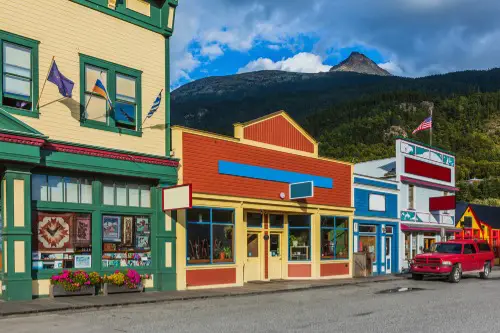
Skagway still revolves around its Klondike Gold Rush-era layout. Many of its downtown buildings are preserved as part of the Klondike Gold Rush National Historical Park. Wooden boardwalks, false-front buildings, and narrow streets remain standard. The town feels frozen in 1898 by design.
Even with massive cruise ship traffic, Skagway limits structural change. Seasonal population spikes haven’t resulted in permanent overdevelopment. Much of the land surrounding the town is protected wilderness. While tourism elsewhere reshapes towns entirely, Skagway draws a hard line.
6. Natchitoches, Louisiana
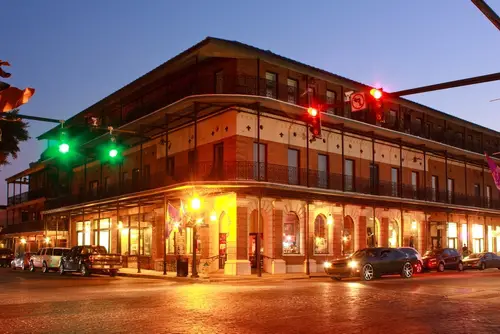
Natchitoches is the oldest permanent settlement in the Louisiana Purchase territory, founded in 1714. Its historic district has been carefully preserved for decades. Brick streets, wrought-iron balconies, and Creole architecture dominate downtown. The town actively resists modern alterations to this core area.
Zoning laws strictly protect historic properties. New construction near the Cane River must adhere to established styles. While nearby areas expanded with modern retail and housing, the historic center barely budged. Natchitoches treats continuity as a civic duty.
7. Winslow, Arizona
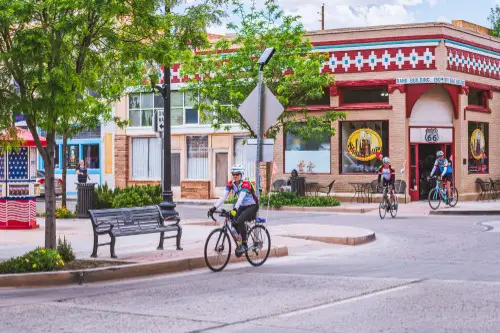
Winslow remains closely tied to its Route 66 identity. The town has leaned into preservation rather than reinvention as interstate highways bypassed it. Its downtown still centers on railroad-era buildings and classic motels. There’s little effort to modernize beyond basic upkeep.
The local economy never chased large-scale redevelopment. Instead, it focuses on heritage tourism and small businesses. The famous Standin’ on the Corner Park reflects that mindset. Winslow chose to stay recognizable rather than competitive.
8. Apalachicola, Florida
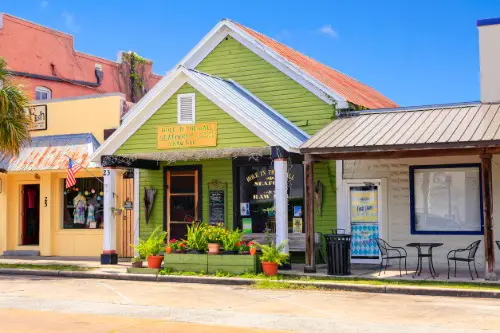
Apalachicola has retained its historic fishing-town character despite Florida’s rapid coastal development. There are no high-rise condos or resort complexes dominating the skyline. Many buildings date back to the 19th century, including former cotton warehouses. The town looks and feels markedly different from nearby beach destinations.
Local resistance to large-scale development has been consistent. Environmental concerns over the Apalachicola Bay have shaped policy decisions. The seafood industry remains central, even as it struggles. Change happens here cautiously, under heavy scrutiny.
9. Deadwood, South Dakota
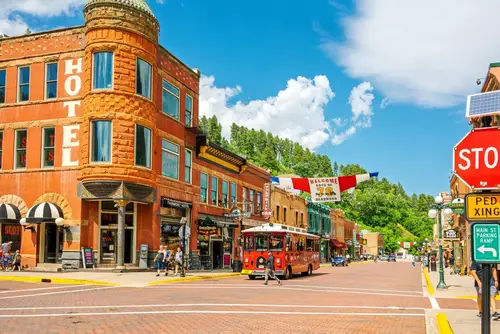
Deadwood still leans heavily into its Wild West past. The town’s layout, buildings, and street names reflect its 1870s origins. Historic preservation laws govern much of the downtown area. Even modern businesses operate within old façades.
Legalized gambling was introduced in 1989, but it didn’t overhaul the town’s appearance. Casinos were required to fit existing structures. That compromise allowed economic survival without visual transformation. Deadwood modernized just enough to stay alive.
10. Jim Thorpe, Pennsylvania
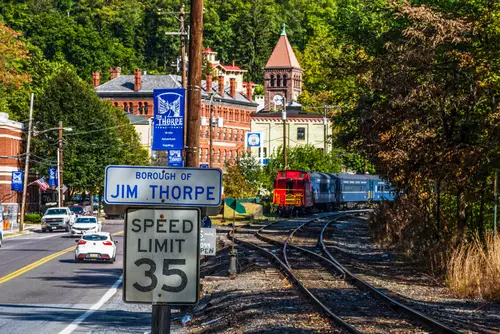
Jim Thorpe’s Victorian architecture has remained largely unchanged for over a century. Nestled in the Pocono Mountains, the town avoided suburban sprawl. Its narrow streets and steep terrain discouraged modern development. Many buildings date back to the coal boom era.
Historic preservation efforts began early and remain strict. The town actively restricts new construction that clashes with its aesthetic. Tourism centers on history rather than novelty. Jim Thorpe chose timelessness over reinvention.
11. Abingdon, Virginia
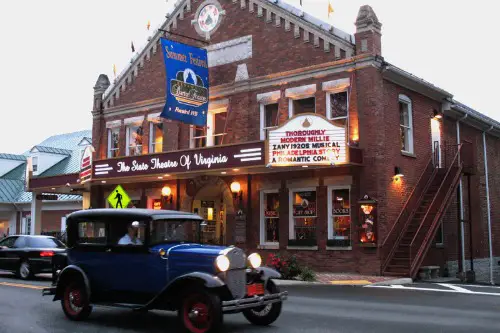
Abingdon’s historic core has stayed intact since the 18th century. Buildings around Main Street and Court Square remain in active use. The town has resisted large-scale commercial redevelopment. Its walkable layout remains central to daily life.
Cultural institutions like the Barter Theatre reinforce continuity. Founded in 1933, the theater still anchors downtown. Local leadership prioritizes preservation over expansion. Abingdon evolves quietly, without dramatic shifts.
12. St. Francisville, Louisiana
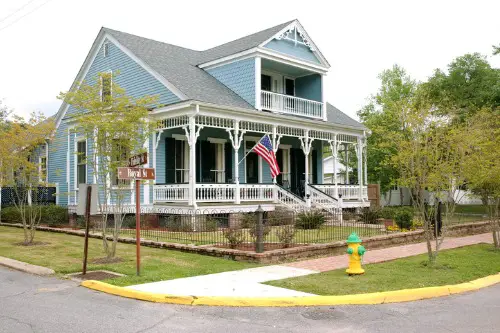
St. Francisville has preserved its antebellum-era town center. Large oak trees, historic homes, and small shops dominate the landscape. The town avoided highway-driven commercial growth. As a result, it remains visually consistent with its past.
Zoning laws heavily favor preservation. Development pressure from nearby Baton Rouge hasn’t dramatically altered the town. Residents actively oppose changes that threaten its character. St. Francisville treats stability as an asset.
13. Bisbee, Arizona
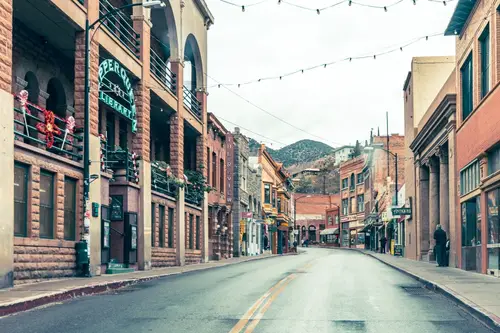
Bisbee’s steep streets and mining-era housing have limited modernization. The town’s geography makes large developments impractical. Many former miners’ homes are still in use. The layout remains largely the same as it was a century ago.
Bisbee also resists corporate retail. Chain stores are notably absent from the historic district. The town favors small, local businesses. It’s a place that never tried to catch up.
14. Galena, Illinois
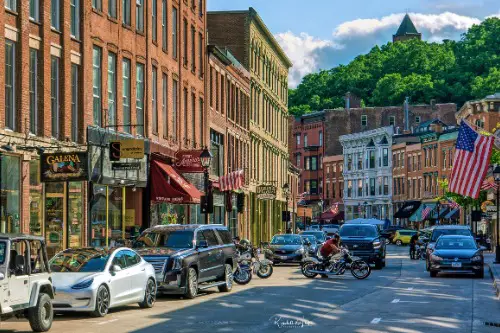
Galena’s downtown is dominated by 19th-century brick buildings. Preservation laws protect more than 80 percent of the town’s structures. The streets follow their original contours along the Galena River. Modern architecture is almost nonexistent in the core.
The town chose tourism built around history rather than growth. Big-box development was pushed to the outskirts. Local leaders prioritized visual consistency. Galena looks the way it does because it fought to stay that way.
15. Eureka Springs, Arkansas
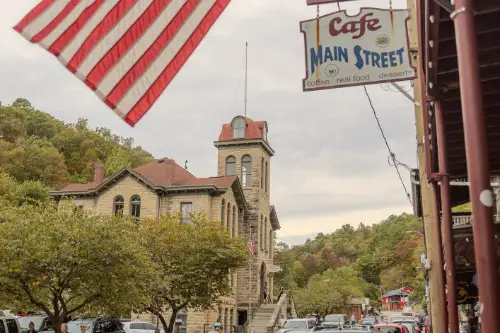
Eureka Springs has preserved its Victorian resort-town identity. The entire city is listed on the National Register of Historic Places. Its winding streets were never straightened or widened. That alone discouraged modern development.
Strict building codes enforce historical accuracy. Even renovations require careful review. The town’s size and layout remain fixed by design. While the surrounding region changed rapidly, Eureka Springs held its ground.
This post 15 Towns That Refuse to Change—Even as Everything Around Them Does was first published on American Charm.

