
1. Ocala, Florida
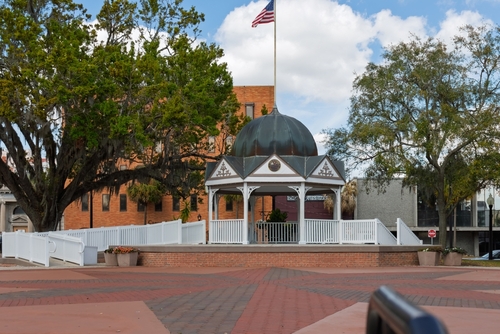
Ocala has positioned itself as an affordable retirement hub in central Florida. Large nearby retirement communities and horse country scenery appeal to older adults seeking space and lower costs. The city has encouraged healthcare expansion and age-friendly housing. Its promotional materials increasingly target retirees rather than young families.
That focus has changed Ocala’s economic mix. Medical services, home construction, and leisure activities dominate job growth. Younger residents often commute or work in support roles tied to retirees. Ocala’s growth forecasts are closely linked to continued retiree in-migration.
2. Venice, Florida
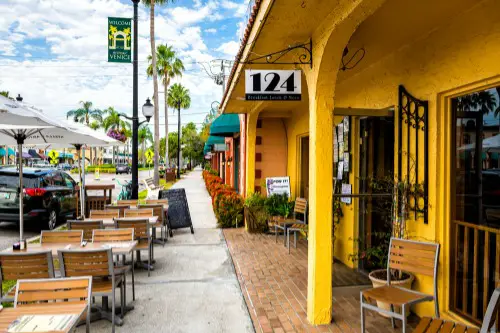
Venice has deliberately branded itself as a quieter, more affordable alternative to its flashier Gulf Coast neighbors. The city’s housing stock skews heavily toward condos and single-family homes designed for low-maintenance living. Its downtown businesses, from early-bird restaurants to specialty medical offices, are clearly oriented toward older residents. Local leaders regularly talk about preserving a calm lifestyle because that is what draws retirees in.
Retirees aren’t just moving to Venice; they’re reshaping its economy. Seasonal residents drive retail, dining, and real estate activity during months when tourism alone wouldn’t cut it. The city has invested in walkable streets, beach access, and senior-friendly recreation instead of nightlife or big employers. Venice’s long-term growth plan assumes retirees will remain the primary engine.
3. Punta Gorda, Florida

Punta Gorda rebuilt much of its identity after Hurricane Charley with retirees in mind. The city emphasized canal-front homes, golf courses, and a relaxed downtown rather than attracting major industry. Its airport expansion focused on leisure travel, making it easy for retirees to visit family. Even city marketing highlights sunsets, fishing, and calm living over job opportunities.
This strategy has made retirees a cornerstone of the local tax base. Healthcare providers, home services, and leisure businesses now dominate employment. Younger workers often move in specifically to serve an older population rather than to build long-term careers. Punta Gorda’s future planning assumes this dynamic will continue.
4. Naples, Florida
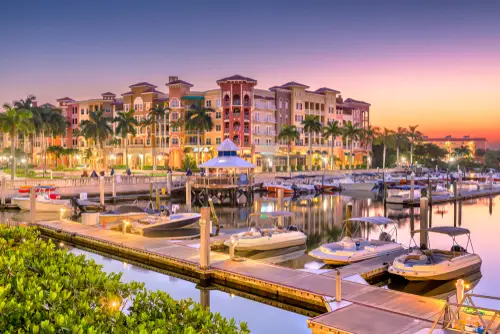
Naples has long catered to affluent retirees, and it has doubled down on that identity. High-end medical facilities, luxury condos, and private clubs shape the local landscape. The city has resisted large-scale industrial development in favor of lifestyle amenities. Its zoning and development choices reflect a desire to protect a tranquil, upscale environment.
The retiree economy here is not incidental; it is central. Property taxes from second homes and retirement communities fund public services. Many businesses operate seasonally, thriving when retirees are in town and slowing when they leave. Naples is essentially structured around the rhythms of retired life.
5. Prescott, Arizona

Prescott actively markets its mild four-season climate to retirees escaping desert heat. The historic downtown offers walkability and cultural events without big-city congestion. Local hospitals and clinics have expanded with an older population in mind. City leaders often describe Prescott as a place to age comfortably.
Retirees make up a large share of new residents and homeowners. Their spending supports restaurants, arts venues, and local nonprofits. Limited industrial growth leaves few alternatives to a retiree-driven economy. Prescott’s future depends on staying attractive to older newcomers.
6. Green Valley, Arizona

Green Valley was built almost entirely as a retirement community south of Tucson. Age-restricted neighborhoods dominate the housing landscape. Commercial areas cater to daily needs rather than job seekers. The town has never seriously pursued large employers.
Its economy revolves around retiree consumption and volunteerism. Healthcare, home maintenance, and recreation drive employment. The population shrinks noticeably during summer months. Green Valley’s survival depends on a steady flow of new retirees.
7. The Villages, Florida

The Villages is one of the most explicit retiree-focused communities in the country. It was master-planned for residents aged 55 and older. Amenities include golf courses, town squares, and dedicated entertainment venues. Nearly everything is designed around active retirement.
The local economy exists almost entirely to serve residents. Retail, healthcare, and hospitality dominate employment. Few people move here for work unless it supports retirees. The Villages’ growth model assumes endless retiree demand.
8. Hilton Head Island, South Carolina
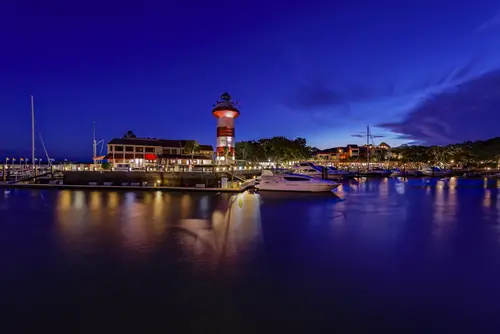
Hilton Head Island attracts retirees seeking coastal living with controlled development. Gated communities and golf resorts shape the island’s layout. Strict zoning limits industrial or large-scale commercial growth. The lifestyle pitch is quiet, scenic, and comfortable.
Retirees help stabilize the economy outside peak tourist season. Their property taxes fund local services and infrastructure. Healthcare and home services have expanded steadily. Hilton Head’s future leans heavily on older residents choosing to stay long term.
9. Beaufort, South Carolina
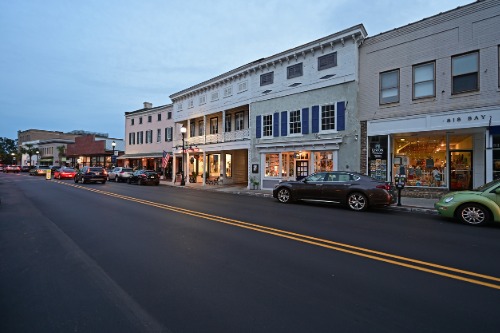
Beaufort markets itself as a historic, slow-paced coastal town. Its charm appeals strongly to retirees relocating from larger cities. Development focuses on preserving character rather than attracting corporations. Healthcare access has become a major priority.
Retirees contribute to a stable housing market and local spending. Many civic organizations rely on retired volunteers. Job opportunities for younger residents are limited. Beaufort’s growth strategy assumes retirees will fill the gap.
10. Hendersonville, North Carolina
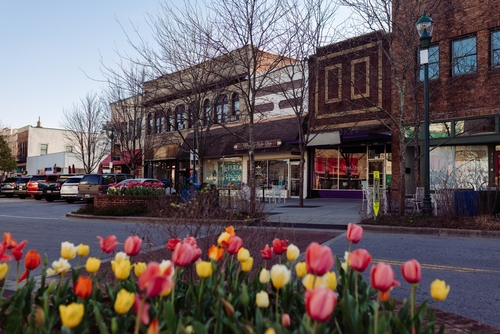
Hendersonville has leaned into its reputation as a mountain retirement destination. A walkable downtown and mild climate draw older adults. Healthcare systems have expanded to meet demand. Local planning emphasizes quality of life over job growth.
Retirees now make up a large portion of the population. Their spending sustains restaurants, arts groups, and real estate. Younger workers often face limited career options. Hendersonville’s economy is increasingly retirement-centered.
11. Asheville, North Carolina
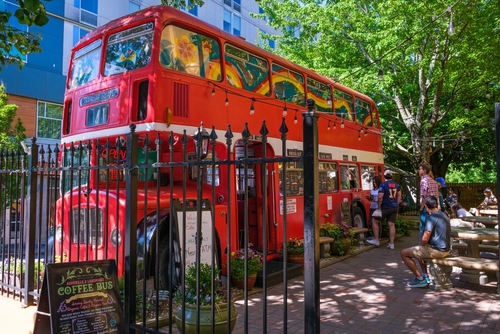
Asheville attracts retirees with arts, scenery, and healthcare access. While it has tourism and culture, retirees make up a growing share of permanent residents. Housing development increasingly targets older buyers. City leaders balance growth with livability.
Retiree income supports local businesses year-round. Healthcare and wellness industries benefit directly. Rising housing costs have squeezed younger workers. Asheville’s future depends in part on continued retiree migration.
12. Port Townsend, Washington
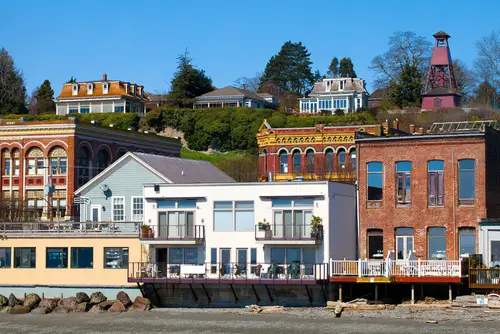
Port Townsend draws retirees with maritime history and small-town charm. Its remote location limits industrial growth. The town emphasizes arts, culture, and preservation. Healthcare access has expanded to support aging residents.
Retirees provide a stable tax base. Many local nonprofits rely on their time and donations. Employment options remain limited for younger residents. Port Townsend’s long-term viability leans on retirees staying put.
13. Sequim, Washington
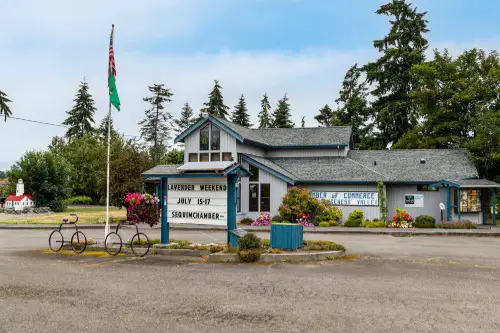
Sequim promotes its sunny climate and quiet lifestyle. Retirement communities and senior housing are common. The town has invested heavily in healthcare services. Economic development for other sectors is limited.
Retirees drive most housing demand. Local businesses cater to fixed incomes and routine needs. Seasonal population changes affect revenue. Sequim’s growth plans revolve around attracting older residents.
14. Hot Springs Village, Arkansas
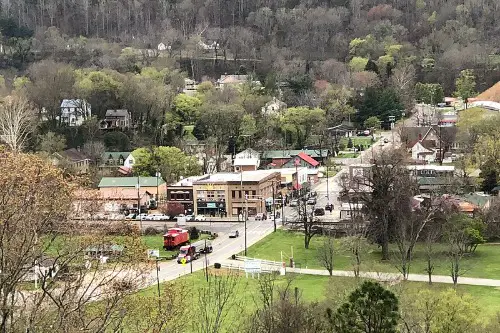
Hot Springs Village is a gated community built for retirees. Amenities include golf courses, lakes, and clubs. The surrounding area offers few major employers. The village operates almost independently.
Retirees sustain the local economy. Healthcare, maintenance, and recreation dominate jobs. Younger workers commute from outside the community. The village’s future depends on ongoing retiree interest.
15. Sun City, Arizona

Sun City was one of the first master-planned retirement communities. It is entirely age-restricted and purpose-built. Amenities include recreation centers and medical facilities. There is little focus on traditional economic development.
The economy exists to serve residents’ daily needs. Healthcare and service jobs dominate employment. Population stability depends on constant turnover of retirees. Sun City’s entire model is built around retirement living.
16. Lake Havasu City, Arizona
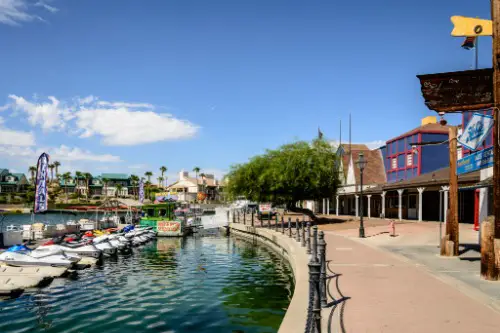
Lake Havasu City has steadily repositioned itself as a retirement haven centered on warm weather and water recreation. Affordable housing compared to other Arizona destinations draws retirees on fixed incomes. The city highlights boating, low humidity, and relaxed living in its outreach. Economic development efforts rarely emphasize attracting younger professionals.
Retirees now anchor much of Lake Havasu City’s economy. Healthcare expansion and home services account for a growing share of jobs. Retail and dining depend heavily on seasonal resident spending. The city’s future growth projections assume retirees will continue to arrive in large numbers.
17. Branson, Missouri

Branson has evolved from a family tourism hub into a retirement-friendly destination. Live entertainment, mild winters, and low housing costs appeal to older adults. Many shows and attractions now cater to daytime audiences rather than younger crowds. Local messaging increasingly blends tourism with retirement living.
Retirees provide stability beyond peak tourist seasons. Their presence supports healthcare, real estate, and service industries year-round. Employment opportunities skew toward hospitality and senior services. Branson’s long-term plans lean on retirees to smooth out economic volatility.
18. Leland, North Carolina
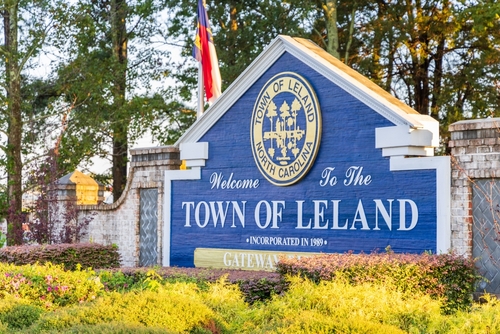
Leland has grown rapidly as a quieter alternative to nearby coastal cities. New housing developments are largely designed with retirees in mind. Easy access to healthcare and flat terrain strengthen its appeal. The town rarely markets itself as a job center.
Retiree in-migration has reshaped local priorities. Commercial growth focuses on medical offices, retail, and dining. Younger residents often commute elsewhere for work. Leland’s economic outlook is closely tied to continued retiree interest.
19. Georgetown, Texas

Georgetown has actively branded itself as a retirement-friendly city near Austin. Master-planned communities dominate new residential growth. City amenities emphasize parks, trails, and healthcare access. The retiree pitch is central to its identity.
Retirees contribute significantly to the tax base and housing demand. Their spending supports local businesses without relying on heavy industry. Workforce growth lags behind population growth. Georgetown’s future depends on balancing retirees with limited employment expansion.
20. Payson, Arizona

Payson markets its cooler climate as a refuge for retirees escaping desert heat. Surrounded by forest, it offers scenic living without large-city pressures. Housing development caters to downsizing homeowners. Economic recruitment remains modest.
Retirees drive much of Payson’s housing and retail demand. Healthcare and home services dominate job creation. Younger workers face limited career paths locally. The town’s survival strategy hinges on steady retiree relocation.
21. St. George, Utah

St. George has become a magnet for retirees seeking sunshine without extreme heat. Planned communities and golf courses shape much of the city’s growth. Healthcare systems have expanded rapidly in response. The city rarely competes for large corporate employers.
Retirees fuel construction, real estate, and medical employment. Their presence stabilizes consumer spending year-round. Younger residents often work in service roles. St. George’s long-term growth is closely linked to retirement migration.
22. Oxford, Mississippi
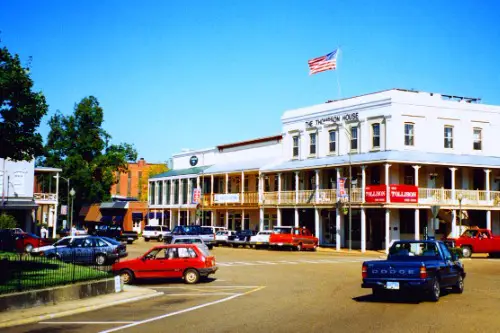
Oxford attracts retirees with culture, history, and a walkable downtown. While anchored by a university, many newcomers are no longer working. Housing development increasingly targets older buyers. Quality of life messaging outweighs job creation.
Retiree income supports restaurants, arts, and local services. Healthcare demand continues to rise. Job growth outside education and healthcare remains limited. Oxford’s economy is quietly becoming more retiree-dependent.
23. Traverse City, Michigan
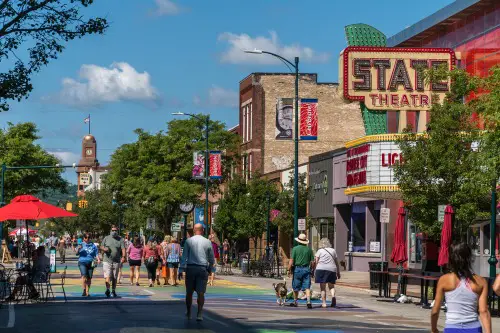
Traverse City promotes itself as a scenic retirement destination on Lake Michigan. Natural beauty and seasonal charm appeal to older residents. Housing and condo development increasingly reflect that market. Industrial growth plays a minor role.
Retirees provide spending stability outside peak tourist months. Healthcare and real estate sectors benefit most. Younger workers often struggle with affordability. The city’s future assumes retirees will offset seasonal tourism swings.
24. Lewes, Delaware
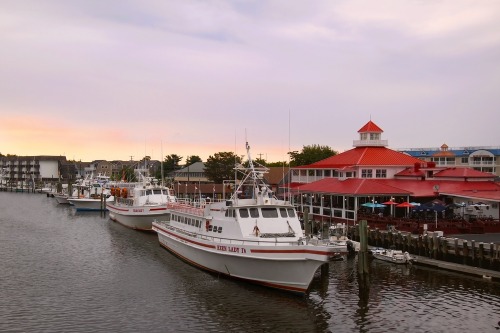
Lewes has leaned into its identity as a coastal retirement town. Proximity to beaches and healthcare drives demand from older buyers. Development focuses on low-density communities rather than offices or industry. The town emphasizes preservation over expansion.
Retirees anchor the housing market and tax base. Their spending sustains local shops and services year-round. Employment options skew toward healthcare and retail. Lewes’s growth strategy relies heavily on retirees continuing to arrive.
25. Bella Vista, Arkansas
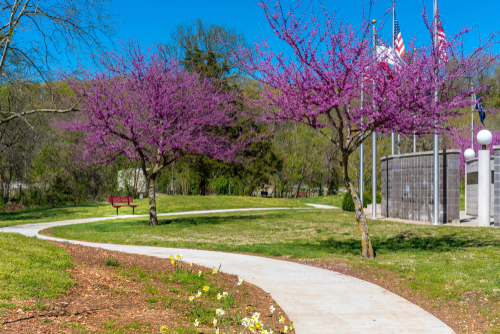
Bella Vista was originally built as a planned retirement community. Golf courses, trails, and lakes define the landscape. The town has limited commercial and industrial space. Its appeal centers on quiet, low-cost living.
Retirees dominate population growth and local spending. Healthcare, maintenance, and recreation form the backbone of employment. Younger workers often commute to nearby cities. Bella Vista’s entire future rests on sustained retiree demand.
This post 25 Towns Betting Their Entire Future on Retirees was first published on American Charm.

