1. Roswell, New Mexico
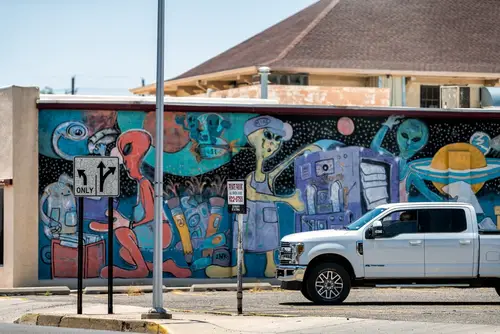
Everyone knows Roswell as the “UFO Capital of the World,” thanks to that 1947 “crash” that allegedly involved an alien spacecraft. The truth, as most locals will quietly tell you, is that it was a high-altitude military balloon from Project Mogul. Still, the town’s entire identity now revolves around little green men—complete with alien-themed streetlights, museums, and parades. Even skeptics can’t deny that the legend brings in a steady stream of tourists (and revenue).
The UFO Museum, alien souvenir shops, and annual UFO Festival keep the myth alive and well. Locals play along because the story is simply too good for business to give up. It’s not uncommon to find residents who joke about “spotting” aliens just to make a tourist’s day. In Roswell, the truth might be out there—but the economy’s doing just fine right here.
2. Point Pleasant, West Virginia
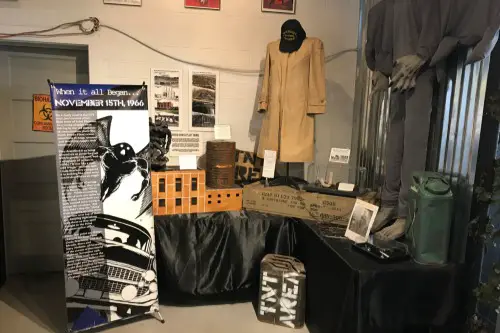
Point Pleasant’s claim to fame is the Mothman—a red-eyed creature said to have haunted the town before the 1967 Silver Bridge collapse. The story goes that it was an omen or even a curse, but no evidence of such a creature has ever been found. Locals know it’s folklore, but they’ve leaned into it with gusto. The annual Mothman Festival and a towering metallic Mothman statue have turned the town into a cryptid lover’s paradise.
The myth draws thousands of curious visitors every year, transforming an otherwise quiet riverside community. Residents embrace their monster mascot, knowing that it keeps their small-town economy fluttering. Shops sell everything from Mothman cupcakes to plush toys, and even skeptics can’t resist the fun. It’s a classic example of a scary story turned into small-town gold.
3. Sleepy Hollow, New York
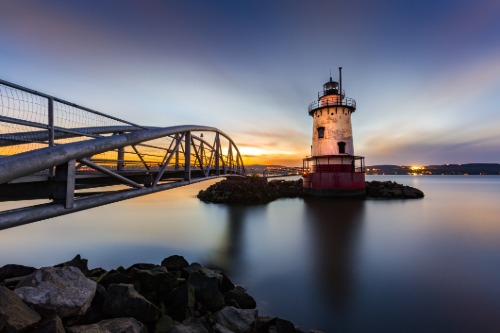
Washington Irving’s “The Legend of Sleepy Hollow” put this Hudson Valley village on the map centuries ago. But while tourists come hunting for the Headless Horseman, locals will tell you the ghostly rider was pure fiction. The area’s real history is colonial, not supernatural, yet the town’s entire brand is steeped in gothic charm. Even the high school football team is called the Horsemen.
Each October, Sleepy Hollow transforms into a Halloween wonderland complete with lantern tours and haunted hayrides. Visitors come expecting chills, but locals mostly see it as good business. It’s a rare case of fiction shaping a town’s reality. The line between story and history here is as blurred as the fog that rolls over the Hudson.
4. St. Augustine, Florida
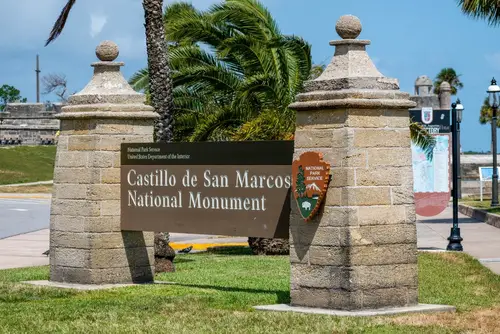
St. Augustine claims to be haunted from corner to corner—especially at the Castillo de San Marcos, where ghost tours promise spirit sightings nightly. The legends range from pirate curses to ghostly soldiers, but historians note that most of the tales were crafted to lure in tourists. Locals generally chuckle about the “haunted” branding, though they appreciate what it does for business. The oldest city in America doesn’t mind a little myth to keep the lights on.
The ghost tours are wildly popular, even if the scares are mostly theatrical. Residents know the city’s real draw is its Spanish colonial architecture and coastal charm. Still, a spooky legend sells better than a history lesson. In St. Augustine, it’s all about giving visitors a good story to take home.
5. Eureka Springs, Arkansas
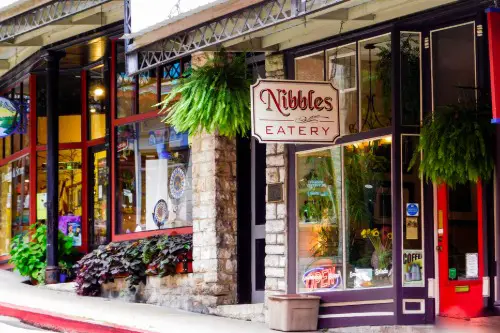
Eureka Springs has built an entire tourism industry on its “healing waters” and haunted hotels. The Crescent Hotel, in particular, is billed as “America’s Most Haunted Hotel.” Locals, however, know the haunted claims mostly date back to its days as a fraudulent cancer hospital in the 1930s. Still, the ghost tours and eerie reputation make it one of the most visited spots in the Ozarks.
Visitors come expecting bumps in the night, and the hotel’s marketing plays the part beautifully. The truth—that the hauntings are more hype than horror—doesn’t seem to matter. Locals wink at the ghost stories because they bring in curious travelers year-round. In Eureka Springs, superstition and tourism go hand in hand.
6. Salem, Massachusetts
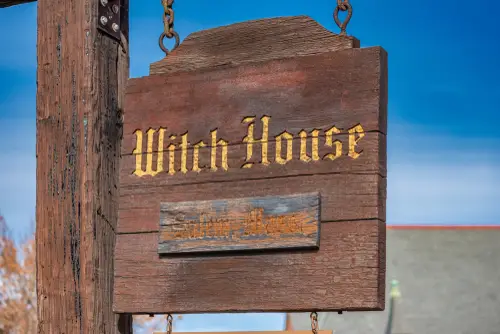
Salem’s witchy reputation is legendary, but most locals know the hysteria of 1692 was driven by paranoia, not actual witchcraft. Still, the town has turned its dark past into a full-blown brand. Every October, the Witch City becomes a carnival of broomsticks, crystals, and costumed tourists. Even the police cars have witch logos.
Residents have a complicated relationship with the myth, balancing remembrance with commercial appeal. Many acknowledge that the “witch” identity is a profitable bit of revisionist history. But the mix of history and fantasy keeps Salem buzzing with visitors and economic life. It’s proof that even a tragic story can turn into a thriving spectacle.
7. Lake George, New York

Lake George has long been linked to tales of buried treasure left by French soldiers during the 18th century. Treasure hunters still show up hoping to strike gold, though there’s never been credible evidence of any hidden fortune. Locals are well aware it’s a myth, but they don’t discourage it. After all, it keeps visitors coming to dig into the area’s scenic charm.
Businesses sell “treasure maps” and themed tours for those chasing legends. The truth may be elusive, but the thrill is part of the fun. Residents know the real riches are the lake views and tourism dollars. In Lake George, the legend might be fake—but the payoff is very real.
8. Marfa, Texas

Marfa’s “mystery lights” have fascinated visitors for decades, flickering on the horizon with no clear explanation. While tourists whisper about UFOs and ghosts, scientists have mostly attributed them to car headlights and atmospheric conditions. Locals play along with the mystique but aren’t buying the alien angle. Still, the legend draws art lovers, desert wanderers, and curiosity-seekers by the thousands.
The Marfa Lights Festival celebrates the phenomenon each year with music, food, and storytelling. Residents enjoy the spectacle, knowing that mystery sells better than meteorology. Even skeptics admit the lights look magical from the viewing area. Marfa proves that sometimes, a good mystery is more valuable than a clear answer.
9. Bigfoot Country, Willow Creek, California

Willow Creek calls itself the “Bigfoot Capital of the World,” sitting near the site of the famous 1967 Patterson-Gimlin film. Most locals know the footage is widely considered a hoax or misidentification, but they’ve embraced the legend wholeheartedly. The town has a Bigfoot Museum, murals, and an annual festival dedicated to the elusive creature. Tourists come hoping for a sighting—and usually leave with a T-shirt instead.
For the residents, the myth is a local treasure in its own right. It gives their small Humboldt County town a playful identity and a steady stream of visitors. Bigfoot may not exist, but the economic footprint sure does. It’s small-town storytelling at its finest.
10. Mineral Wells, Texas
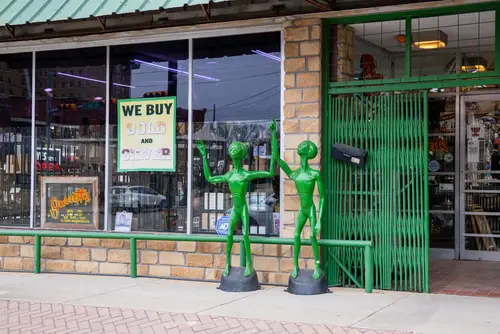
Mineral Wells rose to fame in the early 20th century for its “healing mineral water,” supposedly curing everything from arthritis to insanity. Scientists debunked those claims decades ago, but the legend stuck. The town’s spa heritage and the iconic Baker Hotel still attract wellness tourists today. Locals know the real secret ingredient is nostalgia, not magic minerals.
Modern visitors come seeking vintage charm more than miracle cures. The Baker Hotel is being restored, and its haunted rumors help fuel the mystique. Residents happily play along, aware that myth and marketing go hand-in-hand. It’s a small town that turned pseudoscience into an enduring brand.
11. Jerome, Arizona
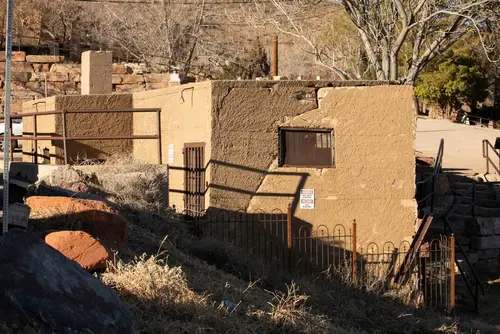
Perched on Cleopatra Hill, Jerome brands itself as one of Arizona’s most haunted towns. Ghost stories swirl around old mining buildings, hotels, and saloons—but most residents admit the tales were exaggerated to attract tourists. The town nearly died after the mines closed, and the ghost legend gave it new life. Today, it’s a vibrant artist colony with a haunted twist.
Visitors flock for paranormal tours and spooky photo ops, while locals enjoy the buzz (and the income). The “ghost town” identity keeps Jerome’s creative community thriving. Everyone knows the scariest thing there now is the steep drive up the mountain. Still, the legend lingers because it makes for a great story.
12. Cape May, New Jersey
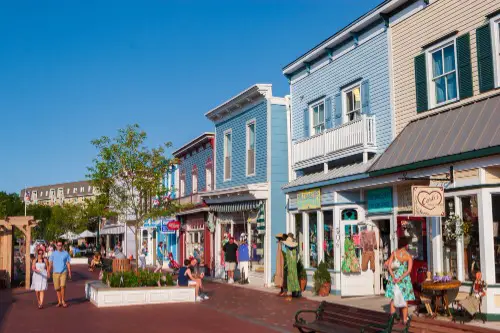
Cape May’s Victorian charm comes with a side of ghost stories—especially about the Emlen Physick Estate and Congress Hall. Paranormal tours keep the tales alive, though most residents see them as harmless fiction. The real draw is the preserved architecture and seaside beauty, not the spirits. Still, a good haunting sells tickets.
Locals smile at the tall tales because they add flair to the town’s genteel atmosphere. It’s ghostly marketing done right—eerie enough to intrigue, not to frighten. The myths make for great conversation over cocktails at the shore. In Cape May, history wears a supernatural costume.
13. Deadwood, South Dakota
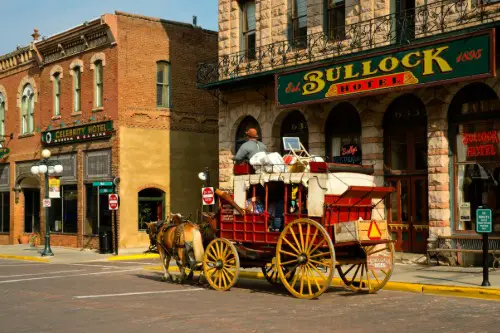
Deadwood’s Wild West legends—of Wild Bill Hickok, Calamity Jane, and ghostly gamblers—are tourist gold. Most of the ghost tales are modern inventions, but visitors can’t resist the town’s rowdy reputation. Locals know that real history is dramatic enough without the ghosts, yet they happily lean into the myths. It’s all part of keeping the Old West alive.
The town has mastered the art of performance tourism. Saloon reenactments, gunfight shows, and haunted tours blend fact and fiction seamlessly. Even locals who know better still enjoy the spectacle. In Deadwood, history and hype coexist perfectly.
14. Louisville, Kentucky
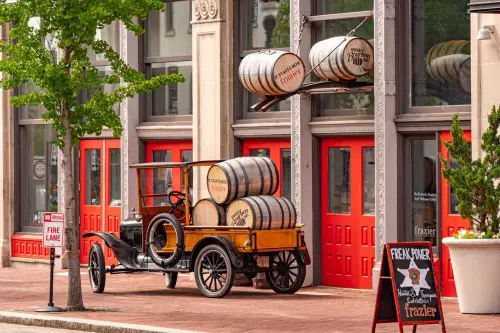
The Waverly Hills Sanatorium is one of America’s most famous “haunted” spots, drawing ghost hunters from around the world. Locals know most of the spine-tingling stories were exaggerated long after the hospital closed in 1961. Still, its dark reputation fuels a year-round tourism industry. The owners even host haunted tours and Halloween events that sell out months in advance.
Louisville residents appreciate the eerie allure, even if the scariest thing there might just be the humidity. The legend turned an abandoned structure into a pop culture landmark. It’s a reminder that curiosity—and fear—are powerful marketing tools. In this town, ghosts have good PR.
15. New Orleans, Louisiana
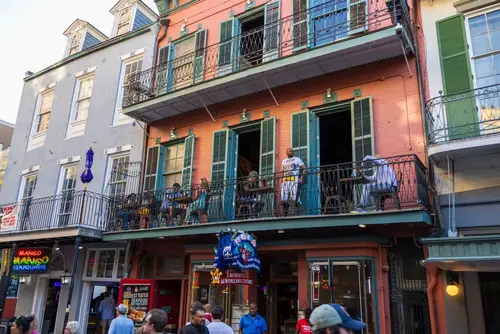
New Orleans thrives on ghost stories, vampire lore, and tales of voodoo queens like Marie Laveau. Locals, however, know much of the supernatural narrative is a blend of history, exaggeration, and tourism flair. That doesn’t stop millions from taking haunted tours through the French Quarter each year. The myths have become part of the city’s cultural fabric.
Residents see the legends as both preservation and performance. They keep the mystique of New Orleans alive, even if most of it’s theatrical. The real magic is in the city’s energy, music, and spirit—not its spirits. But visitors wouldn’t want it any other way.
This post 15 Tourist Towns That Thrive on Legends Locals Know Aren’t True was first published on American Charm.