
1. Baltimore’s Harborplace
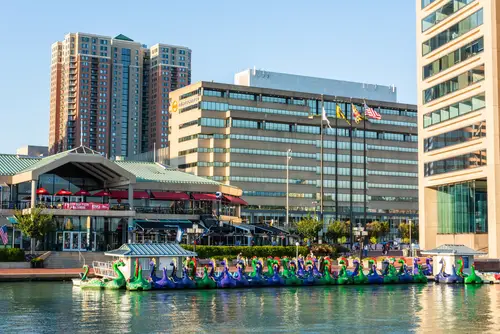
The Light Street and Pratt Street pavilions once buzzed with quick-service eateries, specialty shops, and waterfront viewing decks. These spaces were modeled after the festival marketplace concept that worked well elsewhere but eventually fell out of fashion. As years passed, many tenants left, leaving the indoor corridors noticeably quiet. Even the outdoor performance areas, once reliable crowd magnets, saw diminishing use.
Shifting retail expectations meant the quirky, small vendors that originally defined the space struggled to compete. Tourist flow began concentrating at nearby attractions like the aquarium, bypassing the marketplace’s central walkways. Deferred maintenance also made the structures feel dated by modern standards. By the time redevelopment was proposed, the decline in day-to-day activity was impossible to ignore.
2. Atlantic City’s The Pier Shops at Caesars
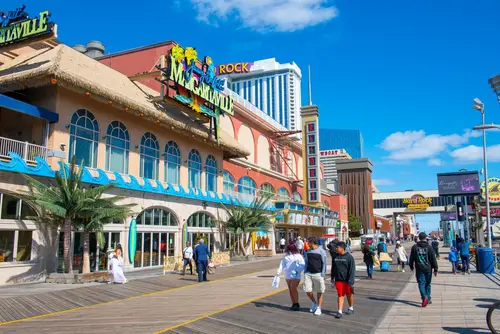
The mall once showcased high-end stores like Gucci and Louis Vuitton, hoping to complement the casino scene with upscale shopping. Its indoor fountain show and ocean-facing dining deck were designed to create a destination feel that never quite materialized. Visitors often wandered in expecting a bustling retail hub and instead found long stretches of empty storefronts. Those vacancies became the defining experience for many guests, making the space feel quieter than planners intended.
Even the third-floor “sky garden” area, which was supposed to be a lively events space, rarely hosted the kinds of gatherings needed to attract steady foot traffic. Tourists tended to stay inside the connected casino, leaving the mall feeling like an afterthought. Seasonal visitors rarely turned into big spenders, which was the core assumption behind the project. Eventually, entertainment venues replaced much of the original luxury vision as operators sought to revive interest.
3. St. Louis’ Union Station Entertainment District
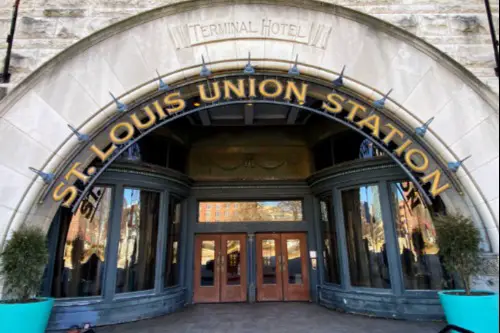
The property introduced attractions like the mirror maze and ropes course to reinvigorate the old rail hub. Even the massive aquarium installation, a major investment, didn’t consistently pull the crowds management hoped for. With such large indoor spaces, the quiet patches felt especially noticeable. Visitors expecting constant motion often remarked that the energy dipped once you moved away from the main exhibits.
Dining concepts like the grand hall light show café area tried to keep guests lingering longer, but the traffic spikes were mostly event-driven. Retail kiosks came and went, hinting at inconsistent sales. The space had to constantly evolve to avoid feeling like a beautiful but underpopulated landmark. Despite improvements, the district never fully matched its ambitious projections.
4. New Orleans’ Riverwalk Marketplace (pre-redevelopment years)
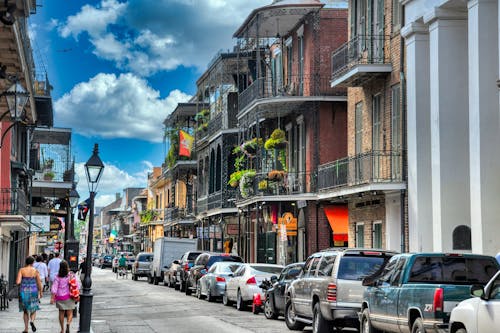
Before its outlet conversion, the mall featured river-view food courts and specialty shops that were meant to attract cruise passengers. Many travelers, however, simply passed through without stopping for long. Vacant units became more common as traditional retail struggled. Even the outdoor promenade, designed for strolling crowds, felt surprisingly empty on off-peak days.
The marketplace faced heavy competition from the French Quarter, which naturally drew more attention. Tourists looking for authentic local experiences often skipped the mall-style layout. Its mix of national chains didn’t differentiate it enough from what visitors could find at home. The eventual decision to rebrand as an outlet center reflected long-standing attendance challenges.
5. Memphis’ Peabody Place
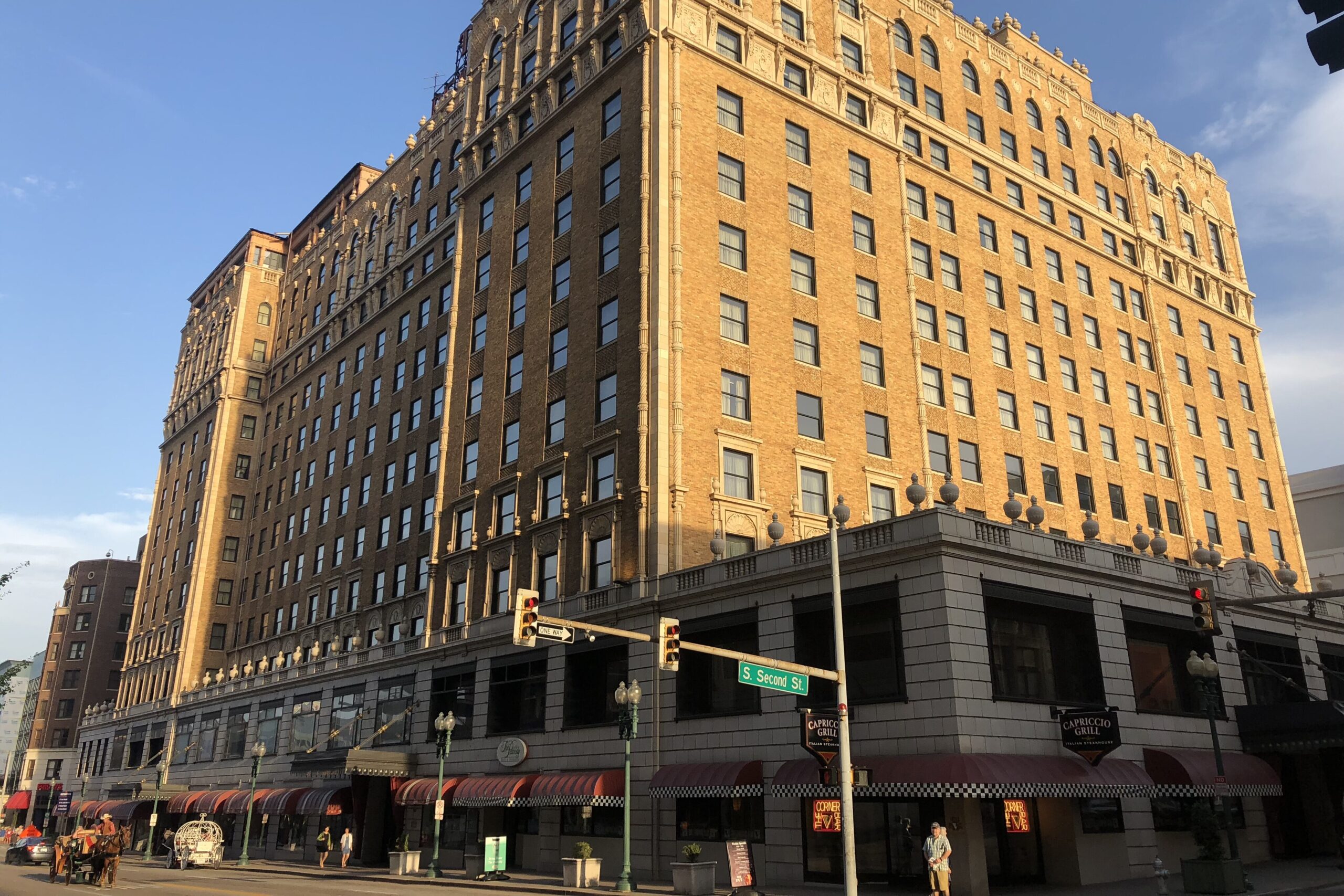
The complex once showcased an indoor entertainment district with a multiplex, themed restaurants, and a central atrium. These attractions were supposed to pull in both convention visitors and Beale Street foot traffic. Instead, many of the dining and retail spaces struggled to stay leased. The cinema remained one of the few reliably active pieces, highlighting the imbalance.
Even with proximity to major hotels, the district never reached the lively atmosphere envisioned by developers. Guests frequently commented on how quiet the interior hallways felt. Competition from the surrounding nightlife spots made the complex seem redundant. Over time, much of the space was repurposed as office and hotel facilities rather than tourist draws.
6. Kansas City’s Power & Light District
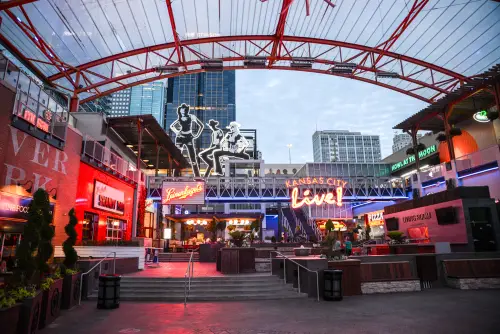
The district featured a central outdoor events plaza with big screens and a performance stage intended to generate constant foot traffic. While it succeeded on game nights and special events, the everyday crowds didn’t always match the scale of the build-out. Several restaurant concepts turned over quickly due to inconsistent patronage. Some side streets, despite the bright signage, remained noticeably calm.
Developers anticipated that nearby arenas would keep the area packed most days, but those spikes weren’t enough to stabilize certain businesses. Retail storefronts, in particular, had difficulty sustaining predictable sales. The public investment sparked debate when activity didn’t reach expectations. Despite improvements, parts of the district still fluctuate heavily depending on the event calendar.
7. Milwaukee’s Grand Avenue (The Avenue MKE today)
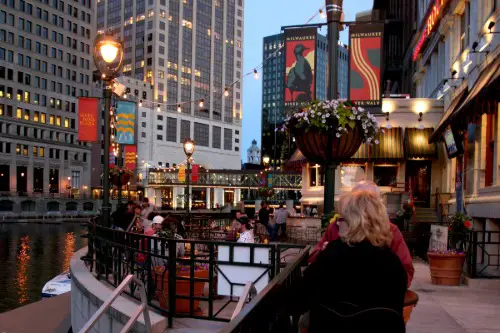
The original mall included a three-level atrium, food court, and skywalk connections intended to create a year-round urban gathering place. However, many storefronts struggled as shopping habits shifted away from downtown malls. Even during conventions, the hallways didn’t always feel full. By the late 2000s, closures were frequent, and long blank walls replaced former retailers.
Attempts at reviving the food court with new kiosks couldn’t recreate the traffic levels from its early years. The skywalk system, once thought to be a draw for office workers, ended up reducing street-level vibrancy. The atrium’s acoustics made emptiness more noticeable, amplifying even small footsteps. Redevelopment eventually pivoted toward office and food hall concepts instead of pure tourism.
8. Las Vegas’ Harmon Corner
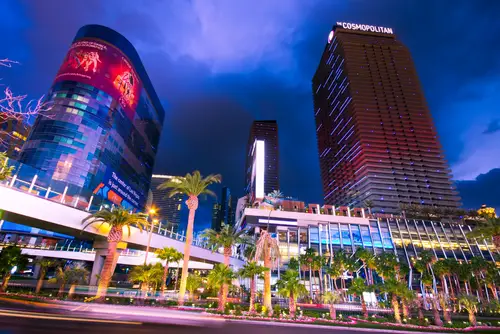
This vertical retail center boasted attractions like the multi-story LED screen and elevated walkways connecting to major resorts. Despite its prime location, visitors often treated it as a pass-through rather than a destination. Many of the upper-level shops saw light traffic compared to the bustling sidewalks outside. Even national brands had difficulty generating consistent activity inside.
The escalator-heavy design caused some guests to skip exploring the upper floors entirely. The open-air balconies, meant for people-watching, rarely filled the way planners expected. With strip visitors overwhelmed by competing entertainment, the center struggled to stand out. Over time, several units rotated frequently, underscoring the uneven performance.
9. Denver’s Tabor Center
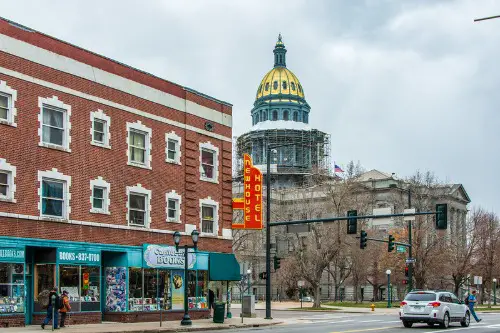
The complex once featured a sky-bridge connection to another mall, giving it a built-in flow of shoppers. When the neighboring property declined, the Tabor Center’s foot traffic suffered dramatically. Fountains and landscaped seating areas, created to encourage lingering, mostly sat idle. Even popular eateries couldn’t fully offset the quietness in the retail corridors.
Office tenants helped on weekdays, but the hoped-for tourist crowds rarely materialized. Visitors were drawn to other downtown attractions instead. The center’s multi-level design sometimes confused guests, making exploration feel unintuitive. Eventually, more of the property shifted toward office and hospitality use rather than tourism.
10. Cleveland’s Tower City Center
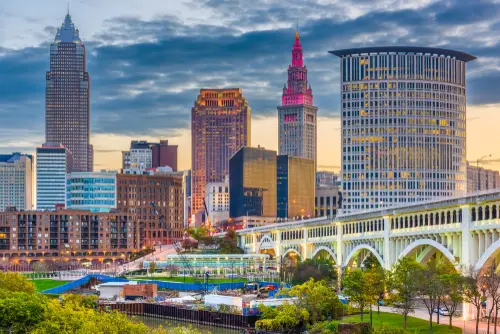
The mall’s grand skylight atrium and fountain area were intended to create a signature public gathering spot. For a time, it hosted national retailers and events, but declining store numbers made the space feel sparse. The lower-level food court, once a hub, gradually lost variety. This left the central area feeling less like a destination and more like a corridor.
Tourists heading to the nearby arena and ballpark rarely lingered inside the retail portion. The property struggled to compete with suburban shopping options. Indoor transit connections, while convenient, didn’t translate to extended browsing. Redevelopment plans have since focused on reimagining the property beyond traditional retail.
11. Dallas’ Victory Park
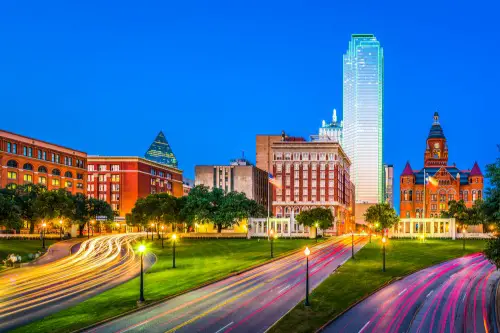
The district introduced entertainment venues, high-end restaurants, and pedestrian corridors alongside the arena. Expectations were that game-day crowds would spill into the neighborhood year-round. Instead, many visitors left immediately after events, leaving the streets quiet on non-game days. Several early retail and dining tenants closed quickly due to inconsistent business.
The district’s layout once felt disconnected from surrounding neighborhoods, making casual strolls less appealing. Public spaces like the plaza screens didn’t always draw sustained attention. As vacancies grew, the area earned a reputation for being oddly empty despite its flashy design. Later redevelopment gradually improved the situation, but the early years were notably slow.
12. Los Angeles’ Hollywood & Highland (pre-2020s era)
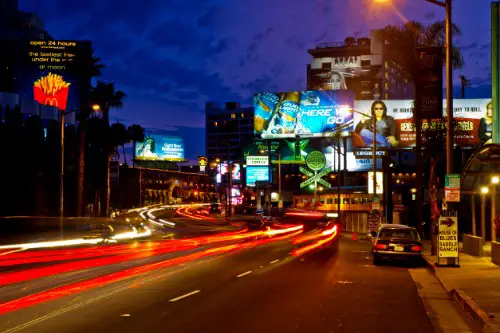
The complex offered a massive central courtyard, themed architectural elements, and access to a major theater. Despite constant tourist presence on the boulevard outside, many visitors bypassed the upper levels. Retail turnover was common, especially away from the prime entrances. The intricate design sometimes made navigation confusing, which didn’t help draw repeat visits.
Even attractions like the viewing deck overlooking the Hollywood Sign didn’t consistently boost interior traffic. Crowds tended to cluster near street-level icons instead of exploring deeper inside. The mix of tenants shifted frequently as operators tried to find the right combination. Updates and rebranding efforts were eventually introduced to address longstanding attendance issues.
13. Detroit’s Renaissance Center Wintergarden (tourist retail portion)
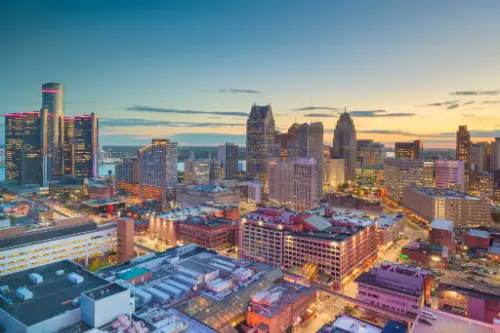
The glass-enclosed atrium once featured riverfront cafés, boutique shops, and event setups meant to energize the waterfront. But many visitors came for business-related reasons, not leisurely browsing. As a result, the retail zone often felt underused. Even the beautiful river views didn’t translate into strong visitor engagement.
Cruise passengers and hotel guests sometimes passed through without stopping, reducing sales for the small vendors. The layout favored circulation over lingering, making shopping feel secondary. Attempts to host seasonal displays helped briefly but didn’t solve the core issue. Today, the space functions more as a scenic passageway than a bustling tourist zone.
14. Miami’s CocoWalk (pre-2010s decline years)
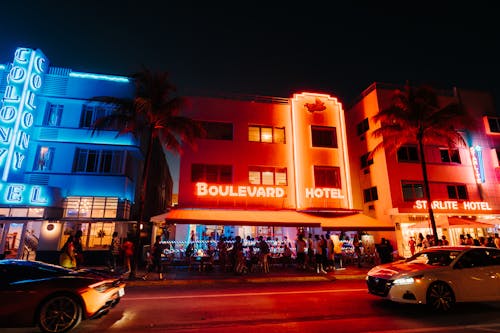
The center once offered an open-air movie theater, courtyard cafés, and specialty retailers aimed at tourists exploring Coconut Grove. As competition intensified and tourism patterns shifted, many stores struggled with declining sales. The once-busy courtyard gradually became quieter. Even the cinema couldn’t consistently anchor the surrounding shops.
Tourists increasingly favored waterfront paths and nearby dining over the multi-level complex. Some of the upper terraces felt overlooked, leading to uneven traffic across the property. Over time, vacancies became more visible. Redevelopment later revitalized the area, but the earlier slump made it known as a district that didn’t meet its original expectations.
This post 14 Tourist Districts Built for Crowds That Never Showed Up was first published on American Charm.

