
1. Navajo Nation
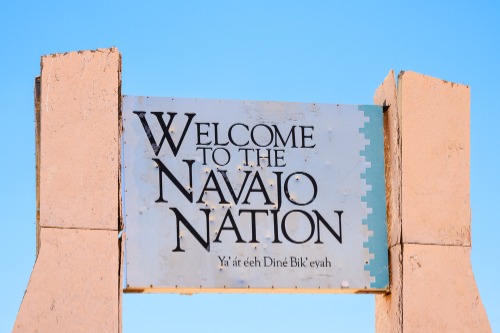
The Navajo Nation spans Arizona, New Mexico, and Utah, and it does observe Daylight Saving Time. That decision was made so the entire nation stays on one consistent schedule. Surrounding parts of Arizona do not change clocks, which creates seasonal time pockets. You can drive a short distance and suddenly gain or lose an hour depending on the month.
This becomes especially noticeable for work schedules, schools, and businesses. Residents near the borders pay close attention to calendars to avoid mix-ups. It’s one of the few places in the U.S. where time policy follows cultural and governmental boundaries rather than state lines. The result is a lived experience where time feels unusually fluid.
2. Arizona (Most of the State)
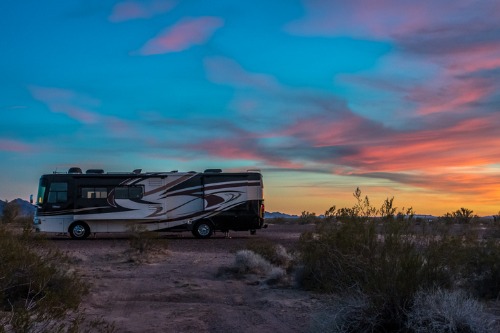
Time feels different in Arizona because most of the state does not observe Daylight Saving Time. Clocks stay on Mountain Standard Time all year, even as neighboring states spring forward and fall back. That means part of the year Arizona matches Pacific Time, and another part it aligns with Mountain Time. If you’re traveling or scheduling across state lines, it can feel like the calendar is playing tricks.
Locals barely think about it because their schedule never shifts. Sunrise and sunset stay consistent relative to the clock, which many residents prefer. The exception is the Navajo Nation, which does observe DST, creating an unusual internal contrast. Crossing regional lines can literally change the time without leaving the state.
3. Hawaii
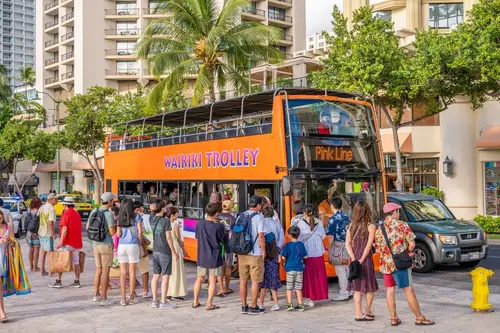
Hawaii also skips Daylight Saving Time, keeping its clocks steady year-round. Its tropical latitude means daylight hours don’t swing as dramatically across seasons anyway. While the mainland shifts twice a year, Hawaii’s rhythm stays constant. That creates a widening and shrinking time gap depending on the season.
For residents, daily life feels pleasantly consistent. For visitors and remote workers, scheduling calls can take a minute to calculate. Prime-time TV, financial markets, and live events air at unusual local hours. It’s a subtle but constant reminder that Hawaii runs on its own clock.
4. Indiana (Historical Time Zone Patchwork)
Indiana used to be famously confusing when it came to time. Before 2006, most counties did not observe Daylight Saving Time, while some did. Parts of the state followed Eastern Time and others followed Central Time. Neighboring counties could operate on entirely different clocks.
This created decades of scheduling headaches for travel, broadcasting, and business. School start times and TV listings varied depending on county lines. The state standardized DST observance in 2006, but split time zones remain. Longtime residents still joke that you needed a chart just to plan dinner.
5. Gallup, New Mexico
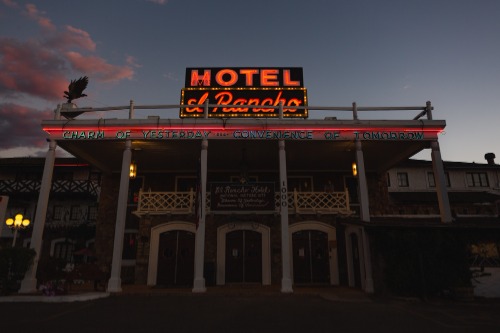
Gallup sits near the Arizona border, where time rules shift quickly. Because Arizona doesn’t observe Daylight Saving Time, nearby cross-border travel can change the clock. Businesses and commuters regularly move between different time observances. That makes daily scheduling more complicated than a typical small city.
The nearby Navajo Nation observing DST adds another layer of complexity. Depending on your route, you might pass through multiple time rules in one afternoon. Visitors often double-check phones and car dashboards to stay oriented. It’s a place where geography directly affects your sense of time.
6. El Paso, Texas
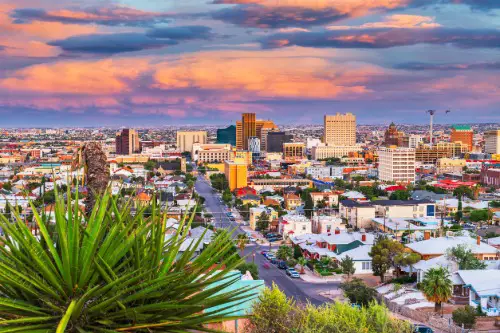
El Paso runs on Mountain Time, unlike most of Texas which uses Central Time. The shift reflects geography and economic ties to the Southwest. Travel deeper into Texas means adjusting your watch by an hour. That difference can surprise people expecting uniform statewide time.
Business coordination across Texas often requires careful planning. Statewide broadcasts and government operations span two time zones. Residents get used to clarifying “Mountain Time” in conversations. It creates a subtle but constant sense of being slightly out of sync with the rest of the state.
7. Pensacola, Florida
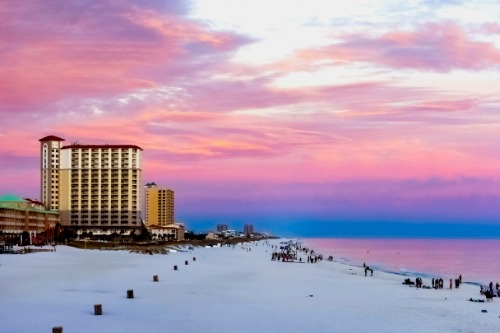
Pensacola sits in the Florida Panhandle, which follows Central Time. The rest of Florida’s peninsula runs on Eastern Time. Crossing the Apalachicola River effectively means changing clocks. That split reflects historical trade and transportation patterns.
Statewide events and broadcasts often require time-zone clarification. Travelers driving east or west can cross a time boundary without leaving Florida. It’s easy to assume the entire state shares one schedule, but it doesn’t. Locals grow used to specifying which Florida time they mean.
8. Alaska
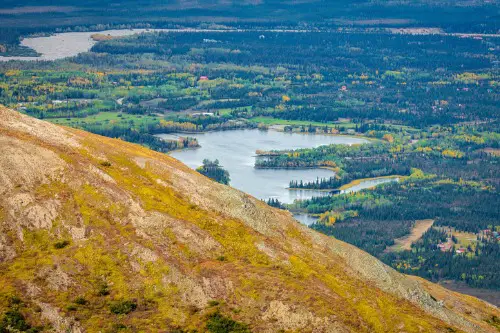
Alaska spans enormous longitudinal distance but mostly uses a single time zone. Solar noon can vary widely depending on where you are in the state. In some communities, the sun’s position feels out of sync with the clock. Winter darkness and summer midnight sun intensify that sensation.
Daylight patterns stretch and compress daily routines. Some towns experience very little daylight in winter months. Others see the sun barely set during summer. The clock says one thing while the sky suggests another.
9. Nome, Alaska
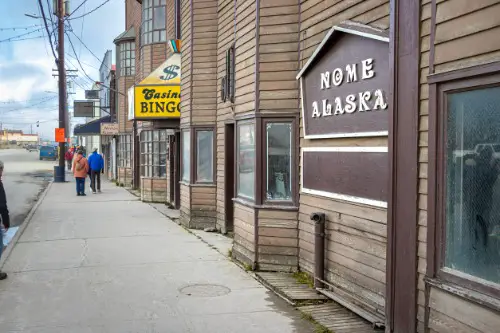
Nome experiences extreme seasonal daylight shifts due to its far northern latitude. Winter days bring only a few hours of dim light. Summer can deliver nearly continuous daylight. Traditional notions of morning and evening blur.
Residents rely more on schedules than sunlight cues. Sleep patterns often require blackout curtains and deliberate routines. Visitors are surprised by how disorienting the light cycles feel. Time becomes something you manage rather than sense naturally.
10. Hoover Dam
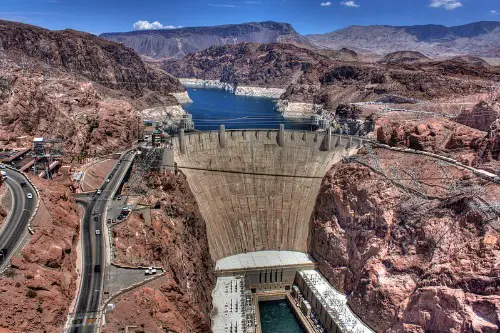
Hoover Dam straddles the border between Nevada and Arizona. Nevada observes Daylight Saving Time while Arizona mostly does not. Depending on the season, each side of the dam can be on a different clock. A short walk can shift the official time.
Tourists often take photos standing in two time zones at once. Tour schedules and device clocks sometimes cause confusion. The boundary turns time into a visible geographic feature. It’s a rare place where minutes change with your footsteps.
11. Nashville, Tennessee

Tennessee is split between Central and Eastern Time Zones. Nashville sits in Central Time, while cities to the east follow Eastern Time. Driving across the state can mean gaining or losing an hour. The divide affects travel plans and live broadcasts.
Residents near the boundary pay attention to which side they’re on. Event listings and business hours often include time-zone labels. It’s easy to assume a single statewide clock, but Tennessee keeps two. That split gives parts of the state a slightly different daily rhythm.
This post Time Moves Differently in These Unexpected Parts of the U.S. was first published on American Charm.

