
1. Big-Box Stores Replacing Local Main Streets

For much of the 20th century, local hardware stores, grocers, and pharmacies doubled as informal meeting places. You ran into neighbors, exchanged news, and sometimes lingered longer than you planned. Big-box stores brought lower prices and convenience, but they also centralized shopping into anonymous spaces. The shift mattered because fewer everyday errands now involve familiar faces.
When shopping moved to the outskirts of town, it stopped being woven into daily social life. You drive in, get what you need, and leave without talking to anyone you know. Employees are less likely to live nearby or stay long-term. The result is efficiency without the low-level social glue those places once provided.
2. Streaming Services Replacing Shared TV Time

Television used to be a synchronized experience, especially for families and neighborhoods. People watched the same shows at the same time and talked about them the next day. Streaming broke that schedule by letting everyone watch whatever they want, whenever they want. That freedom came at the cost of shared cultural rhythms.
Now even people in the same household often watch different shows on different screens. Watercooler conversations are harder when everyone is at a different episode or season. Fewer communal moments form around entertainment. What replaced them is convenience, not connection.
3. Social Media Replacing Civic Organizations

Groups like Rotary Clubs, PTAs, church committees, and local associations once anchored social life. They required showing up regularly and working alongside the same people. Social media offered a lighter version of belonging with fewer obligations. That shift matters because commitment was part of what made those groups meaningful.
Online groups are easy to join and just as easy to leave. Interaction is frequent but shallow, and accountability is minimal. You can feel connected without actually being needed. Over time, that changes how people relate to one another in real life.
4. Food Delivery Apps Replacing Neighborhood Restaurants as Hangouts

Local diners and cafés once served as informal community centers. Regulars knew each other, and staff often knew customers by name. Delivery apps turned restaurants into kitchens rather than gathering places. The food still arrives, but the social layer disappears.
Eating used to involve being seen and seeing others. Now it often happens alone, at home, while multitasking. Restaurants lose their role as neutral public spaces. The convenience is real, but so is the loss.
5. Remote Work Replacing the Everyday Workplace Community

Offices were never perfect, but they created routine social contact. You chatted before meetings, ate lunch together, and noticed when someone was having a hard week. Remote work removed much of that ambient connection. What remains is scheduled and task-focused.
For many people, coworkers were a major source of adult friendship. Video calls rarely recreate the small, unplanned moments that build trust. Work still gets done, often more efficiently. But the quiet sense of belonging is harder to find.
6. Private Yards Replacing Front Porches
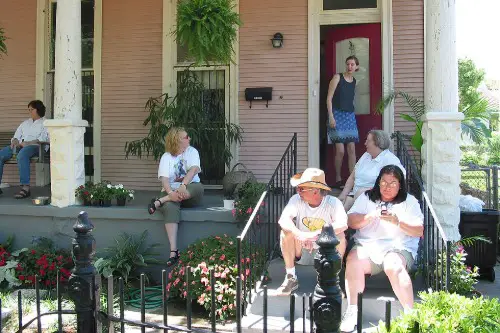
Front porches once made it normal to sit facing the street. Neighbors waved, stopped to talk, and kept an eye on one another. Over time, homes shifted toward back decks, fences, and private outdoor space. That architectural change altered social behavior.
When leisure happens out of sight, casual interaction drops. You’re less likely to meet someone unless it’s planned. Neighborhood familiarity fades even when people live close together. Privacy increased, but everyday friendliness declined.
7. Smartphones Replacing Small Talk

Small talk used to fill waiting rooms, checkout lines, and bus stops. It wasn’t deep, but it reinforced a sense of shared space. Smartphones gave people something else to look at instead of each other. The habit spread quickly because it felt more comfortable.
Now silence in public is normal rather than awkward. People retreat into personalized digital worlds. Opportunities for brief human connection quietly vanish. Those moments added up more than we realized.
8. Online Banking Replacing the Local Bank Branch

Bank branches once functioned as neighborhood institutions. Tellers recognized customers, and visits were part of regular routines. Online banking made those visits unnecessary for most transactions. Branch closures followed as a practical response.
The change saved time but removed another point of human contact. Financial interactions became efficient and impersonal. Trust shifted from people to interfaces. One more reason to leave the house disappeared.
9. Algorithmic Recommendations Replacing Word of Mouth

People once relied heavily on friends and neighbors for recommendations. You asked where to eat, what to read, or which mechanic to trust. Algorithms now fill that role with reviews and rankings. They’re fast and often accurate.
But algorithms don’t create conversation. You no longer need to ask anyone for advice. Shared discovery becomes rarer. Social trust gets replaced by data-driven confidence.
10. Youth Sports Leagues Replacing Informal Play

Kids once gathered spontaneously to play in streets, parks, and yards. Parents knew one another because they were all nearby. Organized leagues brought structure, safety, and skill development. They also required schedules, fees, and travel.
Play became something managed rather than shared organically. Parents interact less casually and more transactionally. Kids see teammates only at practice and games. The community aspect thins out even as participation continues.
11. Subscription Services Replacing Shared Resources

Libraries, video rental stores, and community pools emphasized shared use. You borrowed, returned, and ran into other people doing the same. Subscription services shifted access into private, individualized spaces. Everything arrives on demand.
Ownership and access became solitary experiences. You no longer negotiate use or talk to others about availability. Convenience increased while shared responsibility declined. Community faded quietly in the background.
This post Things That Quietly Replaced Community in Everyday American Life was first published on American Charm.