
1. Centralia, Pennsylvania
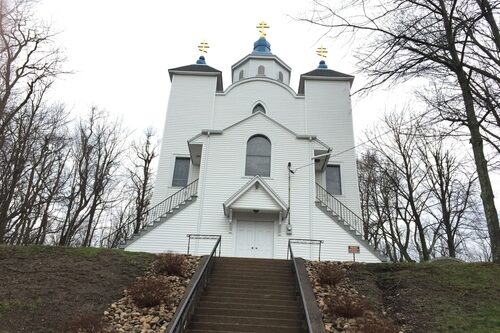
Centralia was a typical coal town with churches, schools, and a busy main drag that supported more than a thousand residents. When an underground mine fire started in 1962, officials initially believed it could be extinguished and life would continue as normal. Instead, the fire spread beneath the town, releasing toxic gases and causing sinkholes. Buyouts slowly emptied the community, leaving streets with curbs, signs, and no one left to use them.
Centralia earns its place here because the decline happened in slow motion. For decades, residents stayed, convinced the town could still recover or stabilize. Even as the population dropped to double digits, the street layout remained intact. Today, those quiet roads feel like a town paused rather than erased.
2. Picher, Oklahoma
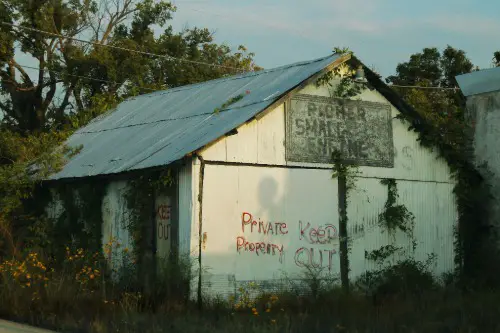
Picher grew quickly during the early 1900s as lead and zinc mining brought jobs and investment. The town was promoted as a long-term industrial success with strong wages and a growing population. Mining waste piled up around town, poisoning soil and water and eventually triggering federal intervention. Once buyouts began, the population collapsed almost completely.
What makes Picher especially stark is how residential it still looks. Streets are lined with empty lots, cracked driveways, and the remnants of neighborhoods. This was not a town that ran out of people slowly through aging. It emptied because the very industry that promised growth made it unlivable.
3. California City, California
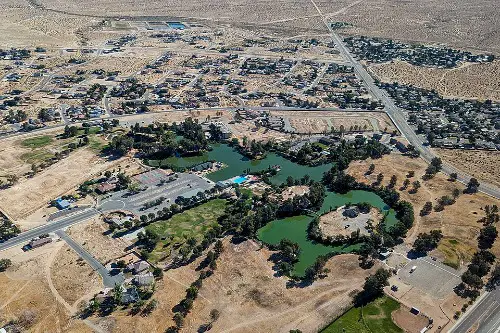
California City was one of the most ambitious real estate developments in U.S. history. In the 1950s, developers promised a massive desert metropolis with homes, industry, and even a major airport. Roads, blocks, and subdivisions were laid out across miles of land in anticipation of explosive growth. The population never came, leaving vast stretches of paved but empty streets.
This town belongs on the list because the failure is built into the landscape. You can drive for long distances following street signs that lead nowhere. A small population lives within a grid designed for hundreds of thousands. The result feels less abandoned than unfinished, which makes it unsettling.
4. Bombay Beach, California
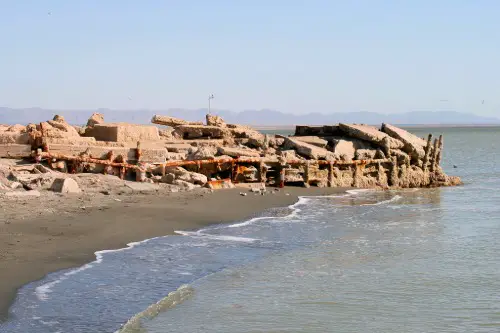
Bombay Beach was founded as a resort town on the shores of the Salton Sea in the 1950s. Developers marketed it as a glamorous getaway for Southern California, complete with marinas and beachside homes. Environmental problems quickly unraveled those plans as salinity rose and fish populations died off. Flooding and odor drove tourists away, followed by residents.
The streets here tell a story of dashed expectations. Roads still lead toward what was supposed to be waterfront property, now facing decaying shoreline. A small number of residents remain, surrounded by abandonment. The town shows how environmental miscalculation can quietly kill big promises.
5. Amboy, California
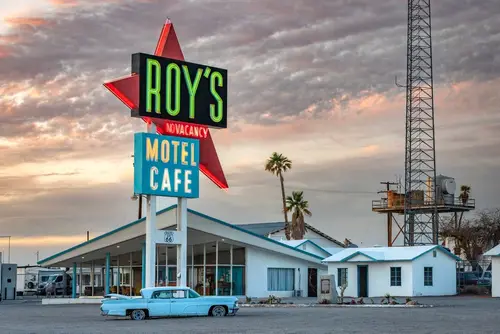
Amboy thrived as a Route 66 service stop, catering to motorists crossing the Mojave Desert. Gas stations, cafes, and motels supported steady growth tied to highway travel. When Interstate 40 rerouted traffic, Amboy was bypassed almost entirely. Businesses closed quickly, and residents followed.
Amboy’s empty streets exist because the town lost its purpose. Nothing replaced the traffic that once sustained it. You can still see where travelers would have turned in and parked. It’s a clear example of how growth tied to a single infrastructure decision can vanish overnight.
6. Glenrio, New Mexico
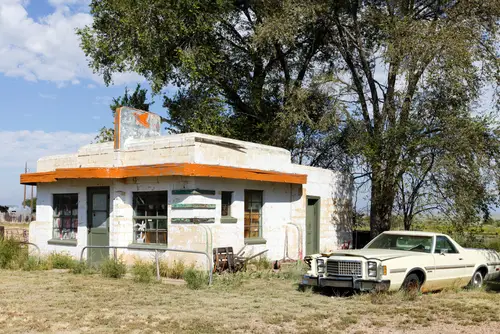
Glenrio sat directly on Route 66 at the Texas–New Mexico border and benefited from constant road traffic. At its peak, it supported multiple motels, diners, and fuel stations. Like many Route 66 towns, it relied almost entirely on passing travelers. The opening of Interstate 40 bypassed it completely.
What remains are streets lined with empty buildings and little else. The town did not shrink gradually; it simply stopped. Glenrio is included because its ghost streets are a direct result of modern transportation planning. Growth ended the moment cars stopped coming through.
7. Cairo, Illinois
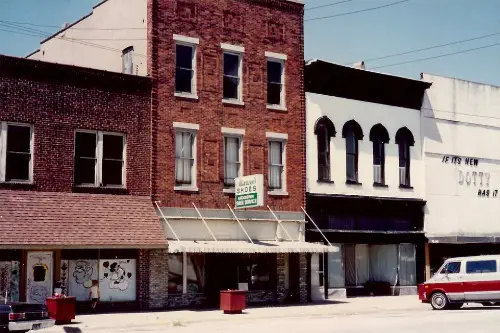
Cairo once occupied a strategic location at the confluence of the Mississippi and Ohio Rivers. In the 19th century, it was promoted as a future commercial powerhouse and transportation hub. Changes in trade routes, industry, and long-term economic decline steadily reduced its population. Racial tensions and disinvestment accelerated the loss.
Cairo’s streets feel oversized for the people who remain. Entire blocks of homes and storefronts stand empty but intact. The infrastructure reflects a city that expected continued importance. Its decline shows how geography alone cannot guarantee lasting growth.
8. Thurmond, West Virginia

Thurmond was a booming railroad town in the early 20th century, serving coal mines throughout the region. The town had hotels, banks, and businesses catering to rail traffic and workers. As railroads modernized and coal employment declined, the town’s role faded. Residents left as jobs disappeared.
Thurmond’s streets are still clearly defined despite having only a handful of residents. Many buildings remain standing, locked in place by geography. The town is included because it shows how a single-industry economy can hollow out a place completely. Growth stalled when the trains stopped needing it.
9. Empire, Nevada
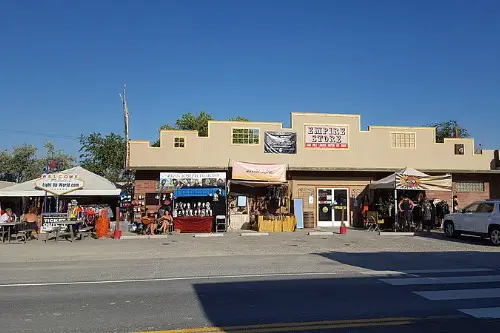
Empire was a classic company town built around a gypsum plant that supplied materials for drywall. At its peak, it had a school, a medical center, a store, and housing for hundreds of workers and their families. The town’s future seemed secure as long as construction demand stayed strong. When the plant shut down in 2011, the town was effectively closed almost overnight.
Empire belongs on this list because its streets were functional right up until the end. Residents were given weeks to leave, not years to adjust. The road grid, sidewalks, and empty homes remain in the desert with no organic reason to refill. It’s a modern example of how quickly promised stability can disappear when a single employer pulls out.
10. Gary, Indiana
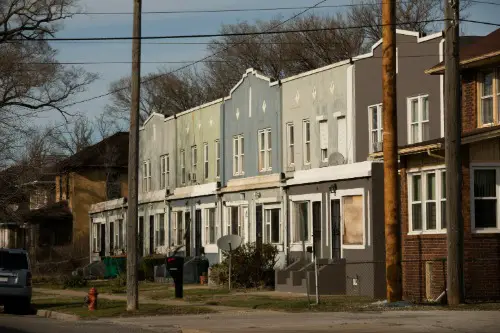
Gary was founded as a company town for U.S. Steel and grew rapidly in the early 20th century. It was promoted as a model industrial city with stable jobs and modern amenities. Deindustrialization and population loss hollowed out large sections of the city. Entire neighborhoods were left behind.
Gary’s inclusion comes from scale rather than total abandonment. Streets remain fully urban but often nearly empty. The city shows how industrial optimism can outpace long-term sustainability. Its ghost streets exist within a place that technically still functions.
11. Monowi, Nebraska
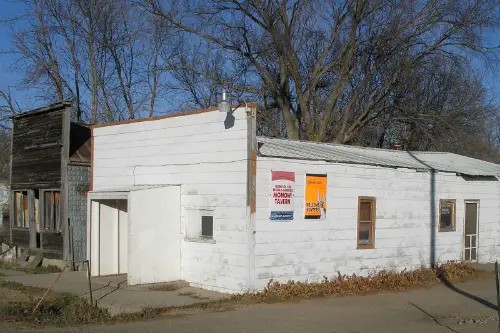
Monowi once supported farms, businesses, and a small but stable population. Like many rural towns, it expected gradual growth or at least continuity. Young residents left for larger cities, and services slowly disappeared. By the early 2000s, only one resident remained.
Monowi’s streets are quiet because there is simply no one left to walk them. The town still exists legally, with a mayor and licenses issued to itself. It earns its place because its decline was not sudden or dramatic. Instead, growth faded into silence one departure at a time.
This post These Small Towns Promised Growth—and Got Ghost Streets Instead was first published on American Charm.

