1. Cadillac Ranch
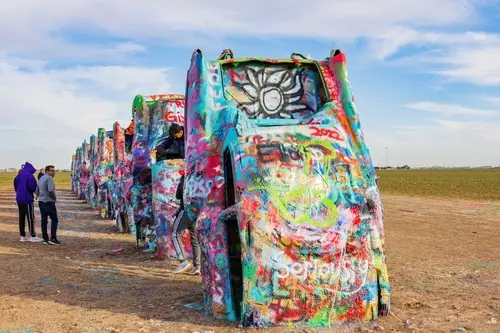
If you’ve ever driven along Interstate 40 near Amarillo, you’ve probably spotted the row of half-buried Cadillacs nose-down in the dirt. Installed in 1974 by the art collective Ant Farm, the cars run from a 1949 model through a 1963 model. Visitors are encouraged to bring spray paint and leave their mark, which means the colors change constantly but the concept hasn’t. The rebellious, counterculture vibe that once felt cutting-edge now feels more like a well-worn ritual.
The cars are regularly repainted and re-graffitied, but the experience is largely the same as it was decades ago. There’s no interpretive center or meaningful update to contextualize the artwork for new generations. It’s still a quick photo op in a dusty field just off the highway, with little shade and few amenities. In an era of immersive art installations, this once-radical statement now feels frozen in the 1970s.
2. South of the Border
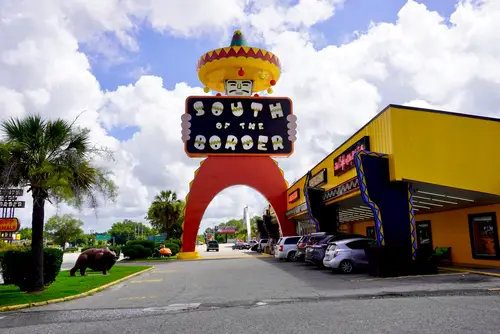
Just off Interstate 95 on the North Carolina–South Carolina line, South of the Border has been luring road-trippers since 1949. The sprawling complex includes a motel, restaurants, shops, and its 200-foot-tall sombrero-shaped observation tower. Its mascot, Pedro, appears on countless billboards for miles before you ever reach the exit. The humor and branding are rooted in mid-20th-century stereotypes that haven’t evolved much over time.
While it remains a recognizable landmark, many of the buildings and signs have a distinctly faded, retro look. The gift shops still lean heavily on novelty souvenirs that feel pulled from another era. Even with periodic renovations, the overall atmosphere feels like a preserved slice of roadside Americana. For some, that’s nostalgic charm, but for others it’s a reminder that the attraction hasn’t meaningfully reimagined itself.
3. The Thing
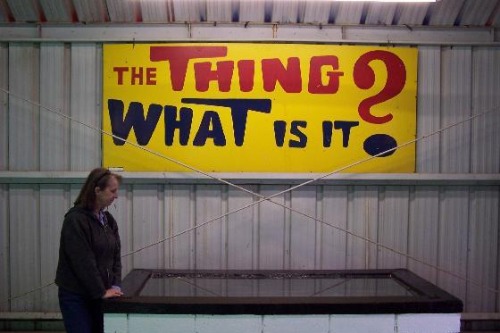
Along Interstate 10 in southern Arizona, The Thing has been intriguing motorists since the 1960s with billboards teasing a mysterious exhibit. Located at the Texas Canyon rest area, the attraction culminates in a small museum displaying a mummified figure in a wooden coffin. The buildup is intentionally dramatic, playing on roadside curiosity culture. It’s a formula that worked brilliantly in the golden age of highway travel.
Today, the experience is still largely the same: a modest display behind glass after a series of teaser signs. The museum includes other oddities and historical artifacts, but the centerpiece hasn’t changed much in decades. In an age of viral marketing and interactive exhibits, the low-tech reveal feels quaint. It’s a relic of when a simple mystery and a stretch of open road were enough to draw a crowd.
4. Wall Drug
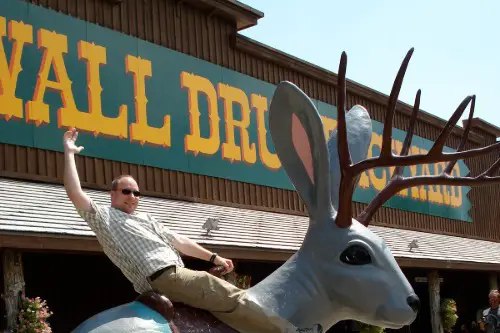
Wall Drug began as a small pharmacy in 1931 and grew famous for its free ice water signs along Interstate 90. Over time, it expanded into a massive complex with restaurants, gift shops, and Western-themed attractions. The backyard area includes a giant jackalope statue and old-fashioned photo opportunities. Its success story is rooted in classic roadside marketing ingenuity.
Despite expansions, much of Wall Drug’s aesthetic remains anchored in mid-20th-century Americana. The Western decor and animatronic displays haven’t dramatically evolved. While it’s meticulously maintained, it doesn’t stray far from its established formula. For travelers seeking modern attractions, it can feel like stepping into a carefully preserved time capsule.
5. Mitchell Corn Palace
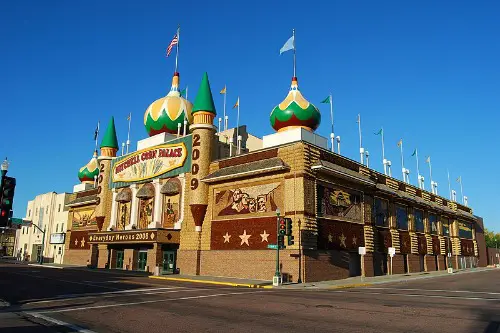
The Mitchell Corn Palace has stood in various forms since 1892, celebrating the region’s agricultural heritage. Its Moorish Revival-style building is redecorated each year with murals made from naturally colored corn and grains. The tradition is undeniably unique and deeply local. It’s a point of pride for the community and a longstanding festival site.
Inside, however, the arena space functions much as it has for decades, hosting events and displays tied to the corn theme. The agricultural focus hasn’t significantly shifted to reflect broader conversations about farming or sustainability. The experience is charming but straightforward. It feels like a monument to a single crop in an era when roadside attractions often aim for broader storytelling.
6. Four Corners Monument

At the only point in the United States where four states meet—Arizona, New Mexico, Utah, and Colorado—the Four Corners Monument draws steady visitors. The site is managed by the Navajo Nation and features a simple granite marker embedded in the ground. You can literally stand in four states at once. It’s a geographic novelty that’s easy to explain and photograph.
Beyond the marker and surrounding vendor stalls, there’s little else to the experience. The layout has remained largely the same for years, centered on the brass disc and plaza. There’s minimal interpretive material about the surveying history or tribal lands beyond basic signage. In a time when travelers expect immersive storytelling, the stop remains strikingly straightforward.
7. Lucy the Elephant

Lucy the Elephant has towered over the Jersey Shore since 1881, making her one of the oldest surviving roadside attractions in the country. Built as a real estate promotion, the six-story elephant-shaped structure now operates as a museum. Visitors can climb inside and look out from her howdah. She’s even designated as a National Historic Landmark.
The structure has been carefully restored, but the experience inside is modest and traditional. Exhibits focus on Lucy’s history rather than offering interactive or multimedia elements. The charm lies in her Victorian-era whimsy, which hasn’t been substantially modernized. For better or worse, visiting Lucy feels like stepping back into 19th-century promotional spectacle.
8. Mystery Spot
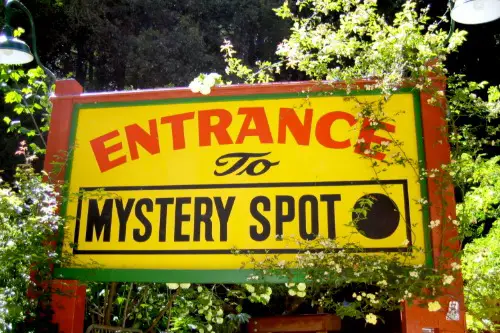
The Mystery Spot in the redwoods near Santa Cruz opened in 1940 and promises gravitational anomalies. Guided tours lead visitors through a tilted cabin where balls appear to roll uphill and people seem to lean at impossible angles. The optical illusions rely on clever construction and perspective. It’s a classic example of a “gravity hill” attraction.
The script and demonstrations have remained remarkably consistent over the decades. While that consistency is part of the brand, it can also feel repetitive for those familiar with the tricks. There’s little technological enhancement to update the illusions. In a world of augmented reality, the slanted floors and wooden beams feel charmingly old-school.
9. Enchanted Highway

Stretching 32 miles from Interstate 94 to the small town of Regent, the Enchanted Highway features massive scrap-metal sculptures. Artist Gary Greff began installing the pieces in 1990 to draw visitors off the interstate. Sculptures like “Geese in Flight” are among the largest of their kind in the world. Each installation has its own turnout for photos.
While new sculptures were added over time, the overall concept hasn’t dramatically evolved. The rural setting and minimal facilities mean most stops are brief roadside pullovers. There’s limited interpretive material beyond signs identifying the artwork. The highway feels like a snapshot of one man’s long-running project rather than a continually refreshed destination.
10. Big Texan Steak Ranch
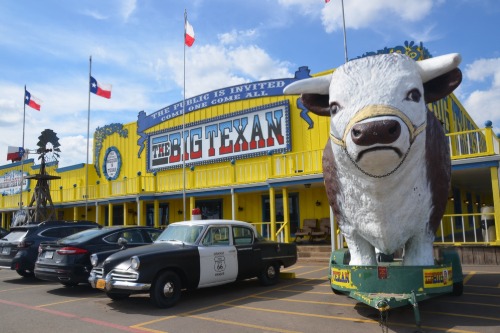
The Big Texan Steak Ranch has been serving travelers along Route 66 and Interstate 40 since 1960. It’s best known for its 72-ounce steak challenge, which offers a free meal to anyone who can finish it within an hour. The Old West-themed decor, complete with taxidermy and neon, sets the tone. It’s a spectacle built around excess and bravado.
Despite updates to the dining room and lodging, the core attraction remains the same decades-old challenge. The menu leans heavily on oversized portions and novelty appeal. In a culinary landscape that increasingly celebrates local sourcing and modern flavors, the concept feels rooted in mid-century roadside dining. The draw is still the stunt, not a reinvention.
11. Rock City
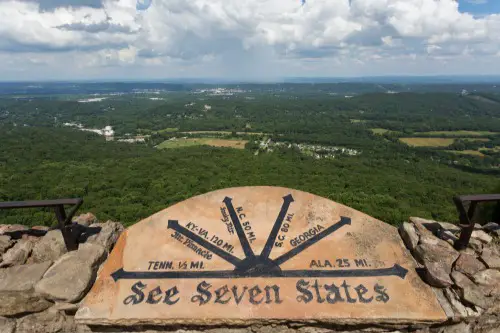
Perched atop Lookout Mountain, Rock City has welcomed visitors since 1932 with its winding trails and dramatic rock formations. The attraction is famous for its “See Seven States” viewpoint and its fairy-tale-themed displays. Barn advertisements across the Southeast once promoted it with the slogan “See Rock City.” The combination of natural scenery and kitsch has long defined the experience.
Many of the themed installations and garden paths remain much as they were decades ago. While maintenance keeps the grounds tidy, the storytelling style feels distinctly mid-20th century. The fairy-tale caverns and painted signs haven’t been substantially reimagined. For travelers seeking cutting-edge attractions, Rock City can feel like a preserved chapter of roadside history.
This post The Roadside Stops That Haven’t Kept Up With Time was first published on American Charm.