
1. The Bell Witch of Tennessee
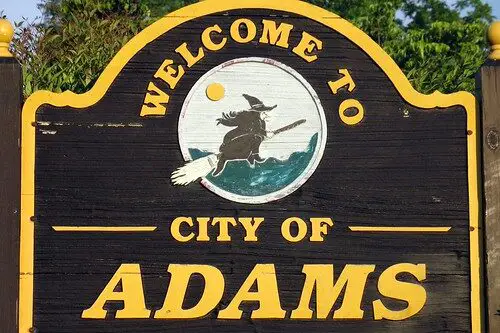
In the early 1800s, the Bell family of Adams, Tennessee, claimed they were haunted by a violent spirit known as the Bell Witch. The story goes that the entity tormented John Bell and his daughter Betsy for years, speaking, hitting, and even poisoning John to death. Locals reported hearing disembodied voices and seeing strange animals around the Bell property. Over time, the tale became so central to the area’s folklore that few people question whether any of it really happened.
The Bell Witch legend has been retold in books, plays, and even movies, often cited as “America’s most documented haunting.” Despite all that attention, historians have found no definitive proof beyond secondhand stories. Still, the legend endures—so much that nearby schools, tours, and a cave all bear the witch’s name. In Adams, it’s practically hometown history, not just a ghost story.
2. Paul Bunyan’s Giant Footsteps in Minnesota
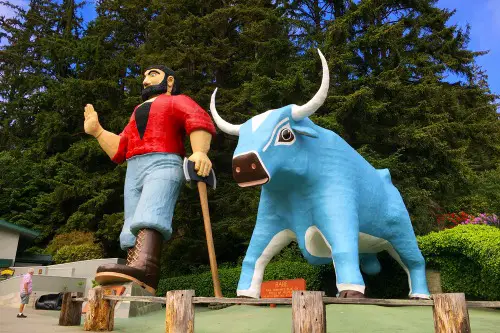
Everyone in Minnesota knows Paul Bunyan—the towering lumberjack who shaped the landscape with his mighty axe and boots. According to local lore, his massive footprints became the state’s 10,000 lakes, and his blue ox Babe helped carve out rivers. The story grew out of early 20th-century logging tales used to boost morale among lumber workers. By the time tourist towns like Bemidji and Brainerd erected statues in his honor, it didn’t matter if he ever lived—he was real enough to them.
Paul Bunyan became a symbol of American ingenuity and grit, an embodiment of the hardworking Midwest. Historians can trace his “origin” to campfire exaggerations that turned into tall tales printed in lumber company newsletters. Still, visitors line up every year to take pictures with Bunyan and Babe, never mind that he’s pure fiction. Sometimes, a good story is worth more than the truth.
3. The Lost Dutchman’s Gold Mine in Arizona
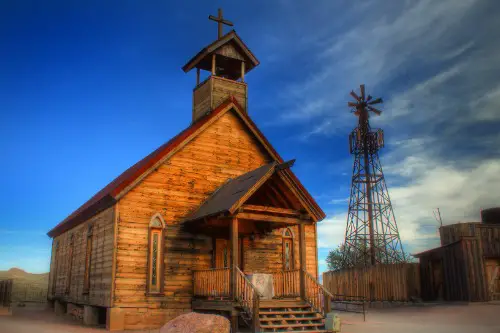
The Superstition Mountains east of Phoenix are home to one of America’s most persistent legends: the Lost Dutchman’s Gold Mine. Supposedly discovered by a German immigrant named Jacob Waltz in the 19th century, the mine was said to hold unimaginable riches. Waltz allegedly revealed its location on his deathbed—but no one ever found it. Treasure hunters have been searching (and dying) in those mountains ever since.
The story persists because bits of it could be true—there really was a Jacob Waltz, and he did live near Phoenix. Old mining records and scattered clues keep fueling hope that the gold is still out there. Local hikers still trade theories about hidden tunnels and cursed treasure maps. For Arizonans, it’s not just a ghost story; it’s a decades-long treasure hunt woven into state identity.
4. The Mothman of Point Pleasant, West Virginia
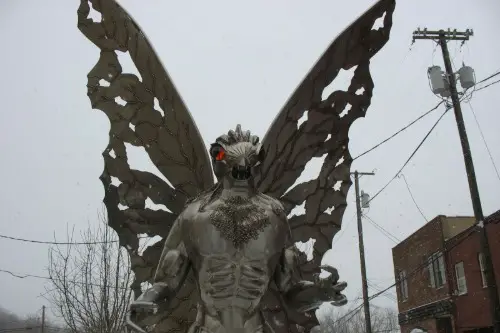
Between 1966 and 1967, dozens of people in Point Pleasant reported seeing a tall, winged creature with glowing red eyes—the infamous Mothman. The sightings culminated in tragedy when the Silver Bridge collapsed in 1967, killing 46 people. Locals connected the two events, claiming Mothman had been an omen of disaster. Ever since, Point Pleasant has embraced the legend completely.
The town holds an annual Mothman Festival and even has a gleaming statue downtown. Skeptics say it was just mass hysteria or misidentified birds, but residents talk about Mothman as if he’s family. For them, he’s not just a cryptid—he’s part of their shared memory of a painful time. Truth or not, the Mothman gave meaning to chaos and built a new kind of folklore out of tragedy.
5. The Jersey Devil of the Pine Barrens
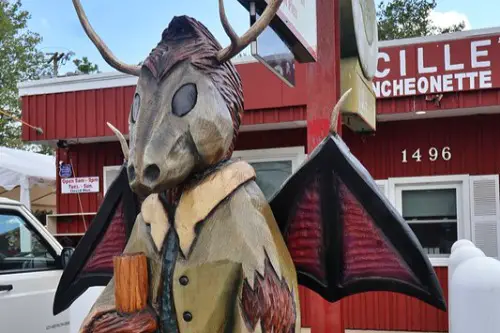
For over 250 years, South Jersey residents have whispered about a winged, horse-faced creature that prowls the Pine Barrens at night. According to the legend, Mother Leeds gave birth to her thirteenth child in 1735, cursed it, and watched it transform into the Jersey Devil. Since then, people have claimed to hear its screams, see its tracks, or even glimpse it flying overhead. It’s so ingrained in local lore that even skeptics grow up knowing the story by heart.
The creature’s myth has been kept alive by early newspapers, Boy Scout tales, and even a minor panic in 1909 when hundreds claimed sightings. Historians note that it reflects colonial fears, isolation, and religious superstition. But in modern New Jersey, the Devil is a mascot—you’ll see it on sports jerseys, diner menus, and brewery labels. Whether it’s real doesn’t matter; it’s a symbol of homegrown weirdness.
6. Roanoke’s Lost Colony in North Carolina
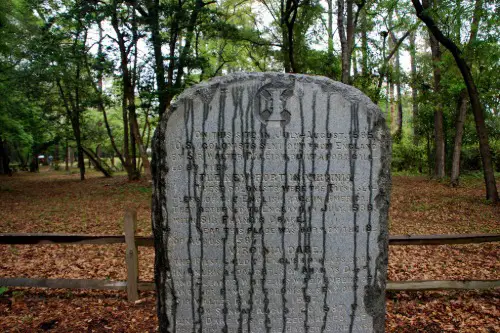
When English settlers vanished from Roanoke Island around 1590, the only clue left was the word “CROATOAN” carved into a tree. Historians have proposed explanations for centuries—from Native American assimilation to disease or relocation. But locals have long told the story as a haunting mystery, with whispers of curses and ghosts. The tale became so entwined with the region’s identity that it’s now almost mythic.
Every summer, an outdoor drama called The Lost Colony reenacts the settlers’ fate before sold-out crowds. Few question whether it’s a dramatization or history—it’s both. The mystery of Roanoke is so familiar that people forget how little we actually know. In North Carolina, the “lost colony” isn’t just a historical footnote—it’s a living legend.
7. The Vanishing Hitchhiker of Chicago’s Archer Avenue
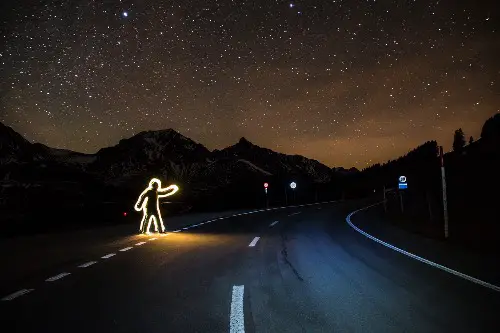
Since the 1930s, Chicagoans have traded stories about “Resurrection Mary,” a young woman who hitches rides near Resurrection Cemetery. Drivers pick her up, chat with her, and then watch her disappear near the cemetery gates. The tale is so old and so retold that it’s practically part of the city’s folklore. Locals don’t ask whether it’s real—they just wonder which stretch of road she’ll haunt next.
There are police reports, bar stories, and even cab driver accounts describing her icy touch and white dress. Most historians agree it’s an urban legend fueled by tragic accidents from the Prohibition era. But Chicago has fully adopted Mary—there are songs, ghost tours, and even cocktail names in her honor. In a city that never sleeps, she’s one of its most restless residents.
8. Bigfoot in the Pacific Northwest
From Oregon to Washington, stories of Bigfoot—or Sasquatch—run deep in the forests and in people’s imaginations. Indigenous tribes told tales of large, hairy forest guardians long before modern sightings began. In the 20th century, supposed footprints, blurry photos, and shaky videos gave the legend fresh life. For many locals, Bigfoot isn’t a question of belief—it’s a cultural fixture.
Communities like Willow Creek, California, host Bigfoot festivals and museums dedicated to sightings. Scientists dismiss the idea, but locals defend it as regional pride. After all, the mystery keeps tourism alive and ties people to the wilderness around them. Whether he’s myth or misidentified bear, Bigfoot has become the Northwest’s unofficial mascot.
9. The Winchester Mystery House in California
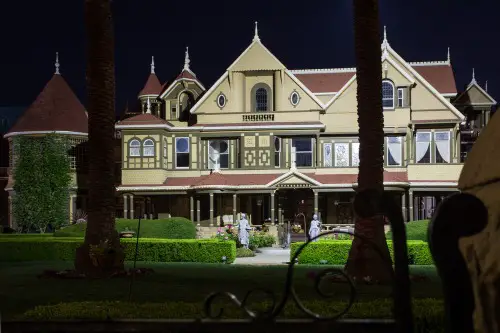
Sarah Winchester, widow of the rifle magnate, supposedly built her San Jose mansion to appease ghosts killed by her husband’s guns. The house features stairs to nowhere, doors that open into walls, and other architectural oddities. Guides say Sarah built nonstop for 38 years to keep the spirits at bay. The story is so established that no one even debates whether she was haunted—they just accept it as fact.
Historians now think Sarah may simply have been eccentric or experimenting with architecture. But the ghostly interpretation has stuck for over a century. Visitors still whisper about footsteps and cold spots as they explore the labyrinth. Fact or fiction, the story gives the house—and its builder—a haunting kind of immortality.
10. The Lizard Man of Scape Ore Swamp, South Carolina

In 1988, a 17-year-old claimed a green, scaly humanoid attacked his car near Bishopville, South Carolina. Soon, other residents began reporting sightings of the “Lizard Man,” a creature with glowing eyes and claws. Law enforcement even investigated, finding unusual tracks near the swamp. Before long, the story was on national news—and Bishopville became synonymous with its swamp monster.
Though scientists quickly debunked the evidence, locals leaned into the fun. They started selling Lizard Man T-shirts, organizing festivals, and renaming roads. The legend turned a small town into a quirky landmark on the cryptid map. Whether he ever existed or not, the Lizard Man put Bishopville on it.
11. The Legend of Sleepy Hollow in New York
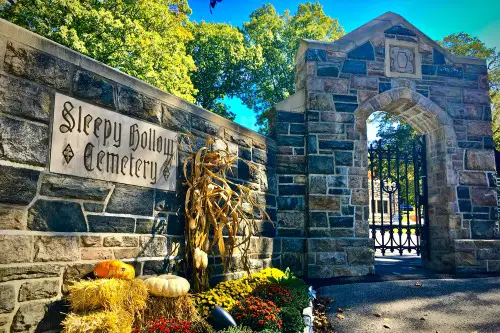
Washington Irving’s 1820 story about the Headless Horseman may be fiction, but in Sleepy Hollow, New York, it’s treated like history. The tale of Ichabod Crane and the ghostly rider supposedly set during the Revolutionary War has seeped into the town’s identity. Locals point to real landmarks—like the Old Dutch Church—that Irving based his setting on. Visitors come from around the world to walk the “haunted” bridge where Crane vanished.
The line between myth and memory has completely blurred here. Every Halloween, Sleepy Hollow transforms into a gothic celebration of its own story. Even though Irving invented the Headless Horseman, the town has built a legacy on it. No one bothers to separate the fiction anymore—it’s become their truth.
12. The Skunk Ape of Florida’s Everglades
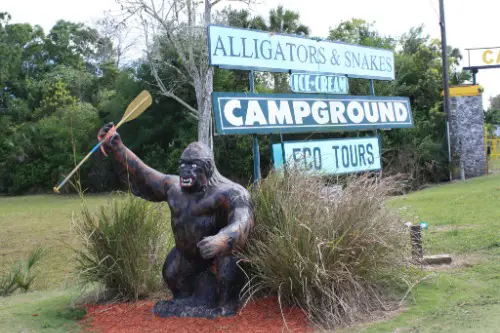
Deep in the Everglades, Floridians have long reported sightings of a foul-smelling, ape-like creature—the Skunk Ape. The legend dates back to the 1950s, with hunters and park rangers describing huge footprints and an unbearable stench. Some call it the Southern cousin of Bigfoot, others swear it’s an undiscovered species. In Florida, it’s one of those things everyone’s heard of, but no one can prove.
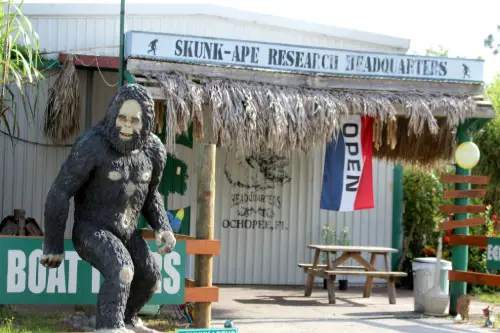
A small roadside “Skunk Ape Research Headquarters” near Ochopee keeps the story alive with exhibits and reported photos. Biologists dismiss it as misidentified wildlife, but locals cherish the mystery. For them, it’s as much a part of the Everglades as the gators and sawgrass. Truth aside, it’s a tale that keeps their swamps wonderfully strange.
This post 12 Tales So Embedded in Local History No One Checks If They’re True was first published on American Charm.

