
1. Colonial Williamsburg, Virginia
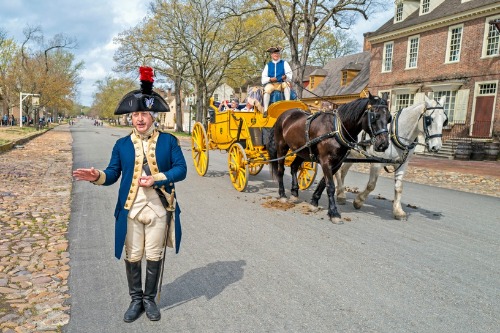
Colonial Williamsburg exists because people decided the 18th century was worth keeping exactly where it was. The entire historic area is restored to look and operate like it did on the eve of the American Revolution. Interpreters wear period clothing and work as blacksmiths, printers, and shopkeepers. Even the streets are intentionally free of modern distractions.
What makes it feel frozen on purpose is the commitment to daily life, not just buildings. Conversations happen in candlelit taverns instead of behind ticket counters. You’re encouraged to slow down because that’s how information traveled back then. It’s less a museum and more a functioning time capsule.
2. Mackinac Island, Michigan
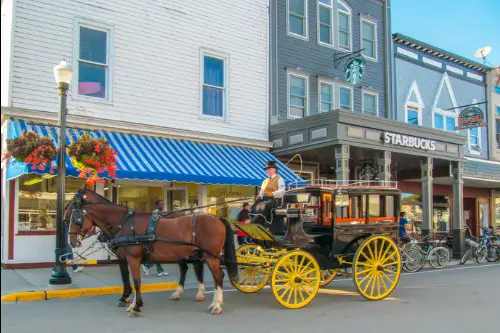
Mackinac Island famously banned cars in 1898, and that single decision shapes everything you experience today. Transportation happens by foot, bicycle, or horse-drawn carriage. The lack of engines immediately changes the rhythm of the place. You hear hooves, wind, and water instead of traffic.
The island leans into its 19th-century resort identity on purpose. Grand hotels, historic forts, and preserved Victorian architecture dominate the landscape. Modern conveniences exist, but they stay politely in the background. Time feels slower here because the island insists on it.
3. Lancaster County Amish Country, Pennsylvania
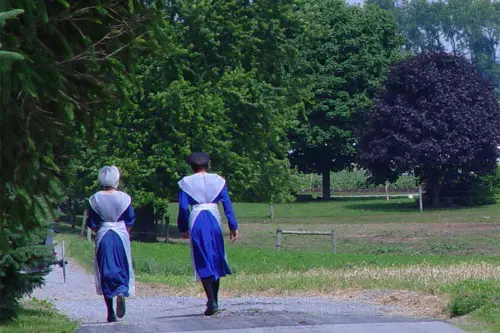
Lancaster County feels rooted in another era because many residents intentionally live that way. Amish communities continue traditions that avoid most modern technology. Horse-drawn buggies still share the road with cars. Farm work, clothing, and daily routines follow generations-old practices.
The sense of timelessness comes from consistency rather than performance. These aren’t reenactments or tourist attractions, but real communities. The pace is slower because life is organized around daylight and seasons. Visitors notice quickly that rushing simply doesn’t fit here.
4. Bodie State Historic Park, California
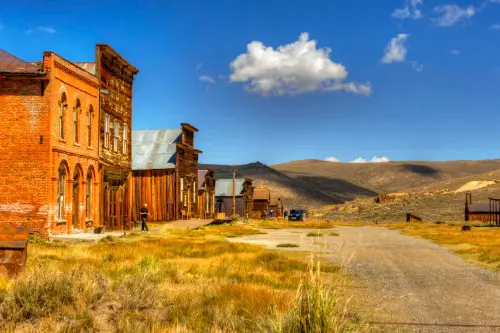
Bodie was once a booming gold-mining town and is now preserved in a state of “arrested decay.” The buildings aren’t restored to look new, but stabilized so they don’t fall apart. Furniture, bottles, and tools remain exactly where they were left. Walking through town feels like everyone stepped out mid-sentence.
The park’s purpose is to let time stop without erasing the messiness of the past. Peeling wallpaper and collapsed roofs are part of the story. You’re not meant to imagine history, because it’s still visibly there. Bodie stays frozen so visitors can see what abandonment actually looks like.
5. Chaco Culture National Historical Park, New Mexico
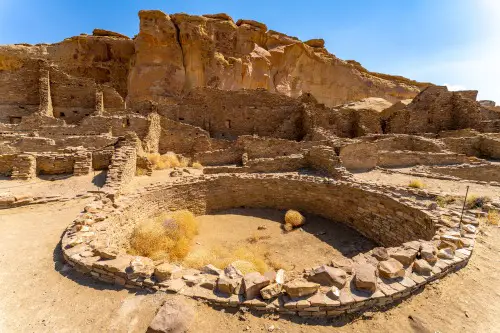
Chaco Canyon preserves monumental stone structures built between 850 and 1250 CE. The buildings align with solar and lunar events, reflecting careful planning. There are no modern reconstructions, just stabilized ruins in a remote desert. The isolation is intentional and protected.
Time feels suspended because the site resists modern interpretation. There are no flashy exhibits competing for attention. Silence and space do most of the explaining. The park preserves not just architecture, but the feeling of deep, ancient time.
6. Taos Pueblo, New Mexico
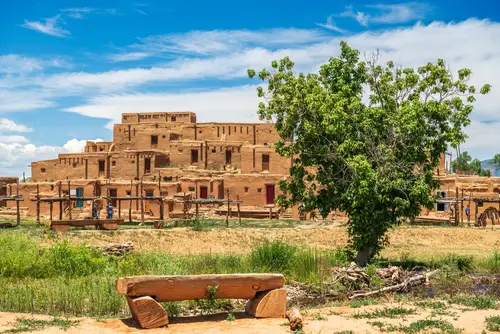
Taos Pueblo has been continuously inhabited for over 1,000 years. The multi-story adobe buildings are still home to tribal members today. Electricity and running water are limited in the historic core by choice. The layout and construction methods remain traditional.
What makes time feel deliberately paused is the balance between living and preserving. This isn’t a historical replica, but an active community honoring its past. Visitors must adjust to Pueblo rules and rhythms. That respect keeps the place grounded in its original identity.
7. St. Augustine’s Historic District, Florida
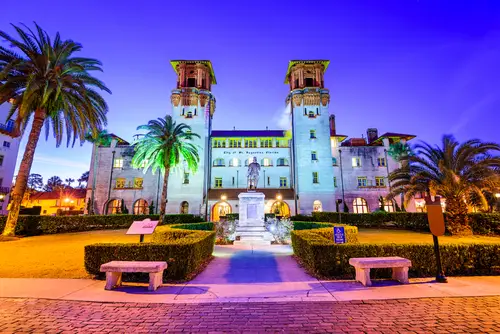
St. Augustine is the oldest continuously occupied European-established city in the continental United States. Its historic district preserves Spanish colonial streets, forts, and buildings. Castillo de San Marcos still stands guard over the waterfront. The city’s layout hasn’t been modernized away.
The sense of time standing still comes from layers rather than perfection. Narrow streets and coquina stone walls slow movement naturally. Modern life exists, but it bends around the old bones of the city. History sets the pace here.
8. New Harmony, Indiana
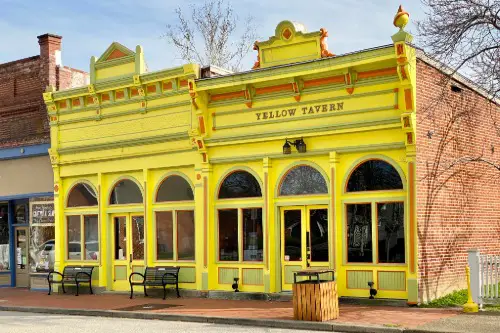
New Harmony was founded as a utopian community in the early 19th century. Many original buildings from both religious and secular experiments still stand. The town was never heavily industrialized, which helped preserve its structure. Restoration efforts focus on keeping that early vision intact.
Time feels paused because ambition outpaced change here. The town never grew into something bigger or faster. Quiet streets and historic brick buildings dominate daily life. It feels like an idea that decided to stay put.
9. Greenfield Village, Michigan
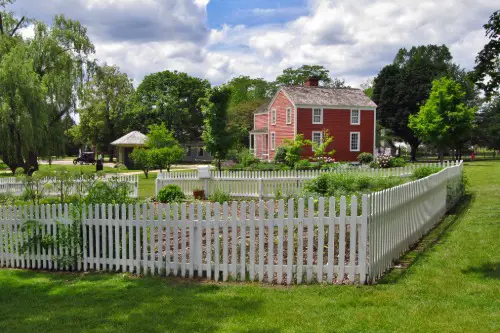
Greenfield Village was created by Henry Ford to preserve American innovation history. Entire buildings were relocated and reconstructed, including Thomas Edison’s Menlo Park lab. The village operates with period costumed staff and demonstrations. Everything is meant to reflect specific historical moments.
The experience feels frozen because it’s curated down to the smallest detail. Modern signage and technology are kept out of sight. You move through time by walking a few hundred feet. It’s intentional nostalgia with educational purpose.
10. Harper’s Ferry, West Virginia
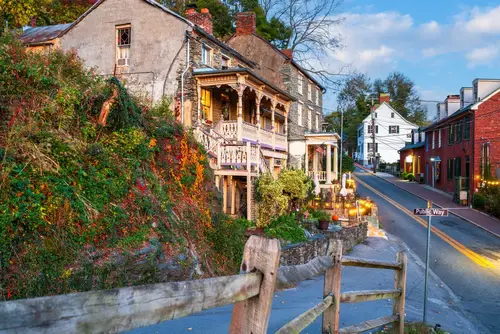
Harper’s Ferry sits at the convergence of two rivers and several key moments in U.S. history. The lower town is preserved by the National Park Service. Buildings reflect their 19th-century appearances. Cars are restricted in favor of walking.
The town feels paused because so much happened there all at once. John Brown’s raid and Civil War occupations left lasting marks. Preservation keeps those moments visible rather than polished away. The geography itself reinforces the feeling of being locked in time.
11. Tombstone, Arizona
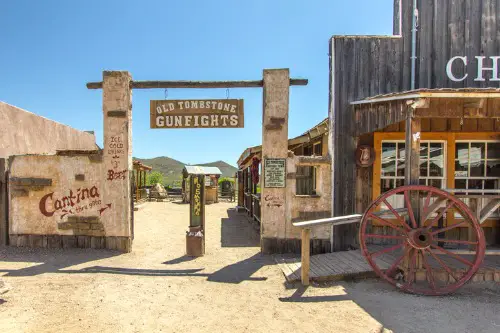
Tombstone embraces its Wild West past unapologetically. Many original buildings from the 1880s still stand along Allen Street. Gunfight reenactments and preserved saloons keep the era front and center. The town’s identity is built around staying recognizable.
Time feels intentionally stalled because modern development is limited. The focus remains on mining-era history rather than reinvention. Even tourism feeds into preservation rather than replacement. Tombstone survives by refusing to move on.
12. Fort Ross State Historic Park, California
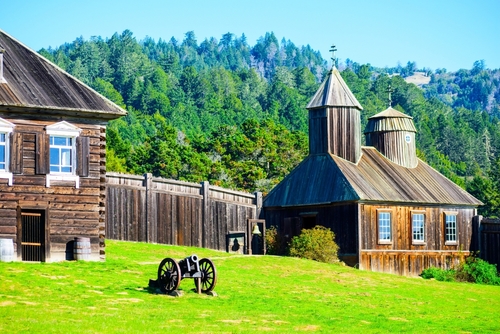
Fort Ross was a Russian settlement established in 1812. The reconstructed fort reflects the original layout based on archaeological evidence. The site avoids modern intrusions to maintain historical atmosphere. Its coastal isolation adds to the effect.
The park feels frozen because it tells a specific, rarely discussed story. Russian-American history isn’t blended into broader narratives here. Everything stays focused on that brief period. Time stops so the story doesn’t get lost.
13. Santa Fe Plaza, New Mexico
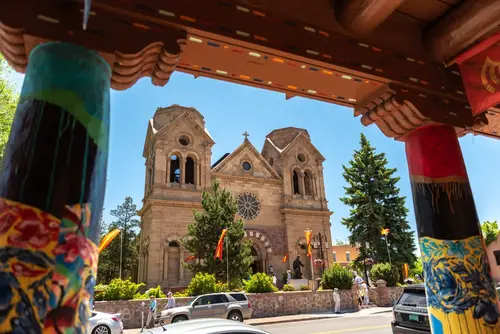
Santa Fe’s Plaza has been the center of the city since the early 1600s. Adobe architecture dominates due to strict preservation rules. Buildings are maintained in Pueblo Revival style. The result is visual continuity across centuries.
Time feels stuck on purpose because change is carefully filtered. New construction must honor old forms. The city chose aesthetic memory over rapid modernization. That choice keeps the Plaza feeling grounded in its past.
This post 13 Places Where Time Feels Stuck on Purpose was first published on American Charm.

