
1. Bench Vises
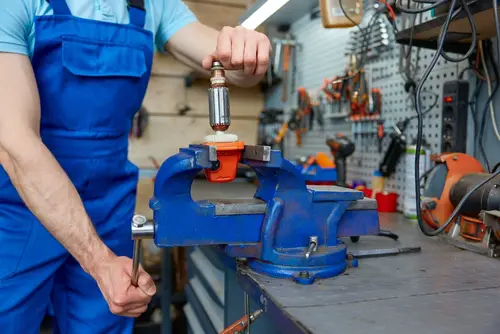
A bench vise may look like a brute of a tool, but collectors see grace in its iron form. Companies like Wilton and Record engineered vises with perfect mechanical smoothness and nearly indestructible designs. Some feature distinctive “bullet” shapes that have become iconic among machinists. Fully restored, they gleam like mechanical sculptures.
People collect them because they’re the quiet cornerstone of every workshop. They hold the world steady while everything else moves. Restoring an old vise is a kind of tribute to that silent reliability. It’s not just nostalgia—it’s respect for the machinery that supported all other making.
2. Vintage Hand Planes
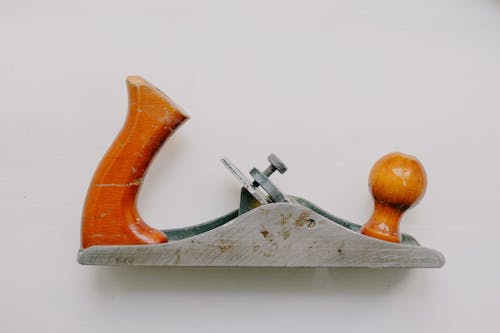
Old woodworking hand planes—especially ones made by Stanley in the late 19th and early 20th centuries—are prized by collectors for their craftsmanship and precision. These tools were designed to last lifetimes, often made from cast iron and rosewood. Because each model had subtle design tweaks, enthusiasts can date a plane to a specific decade by its knob shape or trademark stamp. Restored examples can fetch hundreds of dollars, particularly the rare “Bed Rock” series.
Collectors love hand planes because they embody an era when woodworking was both art and trade. A single plane tells a story about evolving industrial design and materials science. Many people restore them not to use but to display, admiring their curves and patina like sculpture. To tool historians, they represent the golden age of craftsmanship before mass-produced plastics changed everything.
3. Carpenter’s Squares
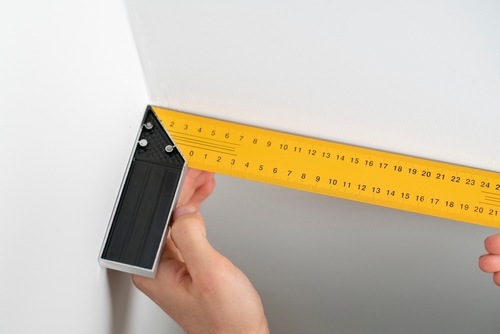
The humble carpenter’s square, often a simple L-shaped piece of steel, is another unsung collectible. Antique examples from makers like Starrett or Stanley show exquisite craftsmanship, with engraved measurement marks that were etched by hand. Some have decorative brass inlays or unique patent numbers that identify their era. Collectors scour flea markets for these, especially ones with ornate engravings or company logos.
They appeal because they represent both beauty and mathematical precision. A good square meant everything in traditional building—accuracy determined structural soundness. Many collectors mount them in workshops or frame them like artwork, appreciating the blend of geometry and grit. In a world of laser levels and digital tools, these analog icons feel grounded and human.
4. Oil Cans
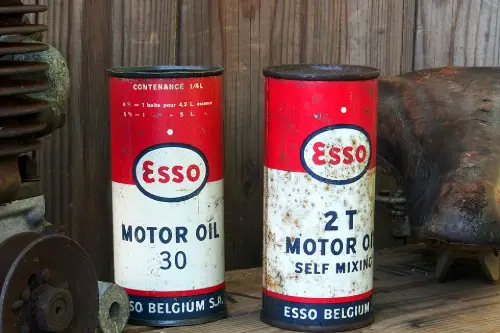
Tiny oil cans, once used to lubricate sewing machines, typewriters, or engines, have become small marvels of industrial design. Brands like Eagle and Gem produced them in a variety of shapes—from long-necked precision oilers to squat workshop cans. Their embossed logos and functional curves make them look almost sculptural today. Collectors are drawn to their patina, dents, and the stories they imply.
The fascination lies in how ordinary they were—and how beautifully they were made. These were tools of care, used to keep machines alive and running smoothly. Now, they’re relics of a time when maintenance was personal and tactile. Lined up on a shelf, their silhouettes tell a quiet story about the human touch behind the machine age.
5. Screwdrivers
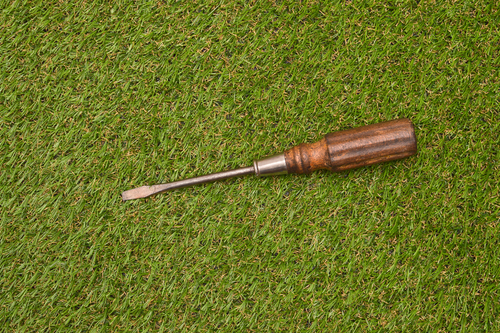
It’s hard to think of anything more everyday than a screwdriver, yet early models have become collectible. Tools from brands like Goodell-Pratt or North Brothers (later acquired by Stanley) are valued for their nickel-plated steel and turned wooden handles. The “Yankee” push drill screwdriver, patented in the late 1800s, is especially sought after for its spring-loaded mechanism. Even their original boxes, with bold type and graphics, are considered collectible art.
Collectors love these because they chart the evolution of ergonomic design and industrial branding. The change from wood to plastic grips mirrors shifts in materials and manufacturing methods. Holding an antique screwdriver feels like holding a century of problem-solving ingenuity. It’s the perfect blend of form, function, and nostalgia.
6. Tape Measures
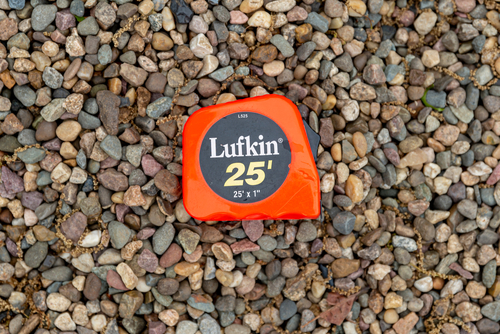
Early tape measures were works of mechanical art—crafted with brass, steel, and leather cases. Makers like Rabone Chesterman and Lufkin turned out retractable tapes with hand-engraved numbers and ornate housings. Some even had decorative motifs or marketing slogans that reflect early 20th-century advertising trends. These pieces now trade hands among collectors of industrial design.
They represent both ingenuity and accessibility—tools that made precision portable. Each mechanism reveals how inventors solved the puzzle of retractability long before modern plastics. Many collectors restore the tapes’ coiled springs just to hear that satisfying snap. For them, a tape measure isn’t just for measuring—it’s a little time machine of mechanical innovation.
7. Saws
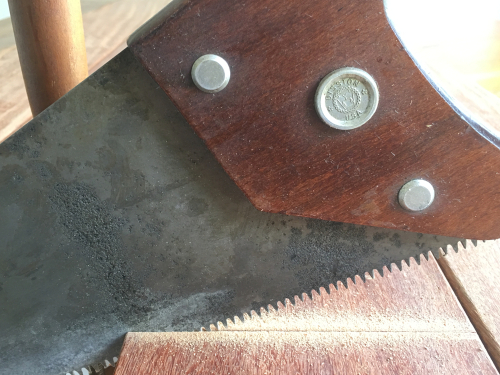
Hand saws, especially those made by Disston in Philadelphia, have developed a devoted following. The company’s saws from the late 1800s featured ornate medallions and carved wooden handles that made them both practical and beautiful. Some models were custom-made for specific trades, adding another layer of intrigue. Restored saws often become wall art in workshops or living rooms.
Collectors see these as emblems of an era when every tradesman personalized his tools. The handles were shaped to fit a hand perfectly, and the brass medallions told the story of pride in work. Restoring a saw means preserving that relationship between maker and user. It’s about honoring the tool’s legacy, not just its teeth.
8. Wrenches
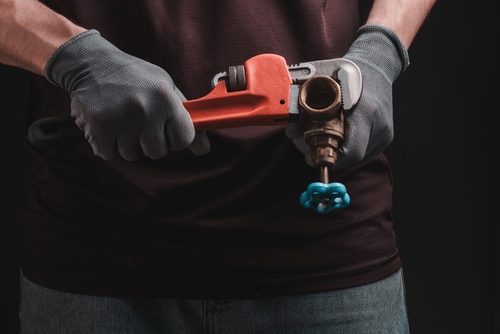
The adjustable wrench—humble, heavy, and essential—has a surprisingly rich collector community. Early Crescent and Coes models, with stamped patent dates and knurled handles, show just how much design evolution went into a simple twist of metal. Monkey wrenches and pipe wrenches from the 19th century often have unique jaw shapes and ornate branding. Some collectors specialize in miniature promotional wrenches once handed out by hardware stores.
Their appeal lies in how tactile and honest they are. Wrenches bear the marks of hard work—nicks, rust, and worn edges that become part of their identity. They symbolize mechanical problem-solving and blue-collar ingenuity. Collectors often display them in shadow boxes, arranged like a museum of the working hand.
9. Levels
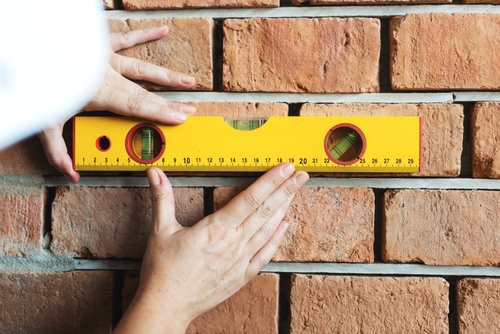
Before laser levels existed, spirit levels with brass and mahogany bodies ruled the trade. Makers like Davis and Stanley produced levels so beautiful they looked like furniture pieces. Some featured intricate brass endcaps and multiple vials for horizontal and vertical readings. Restored examples gleam like jewelry, commanding high prices among tool enthusiasts.
These tools capture the pursuit of perfection in both craft and measurement. Collectors admire the balance between material luxury and precision engineering. A vintage level represents trust—it told a builder when the world was truly straight. To own one now is to hold that old-world belief in alignment and honesty.
10. Axes
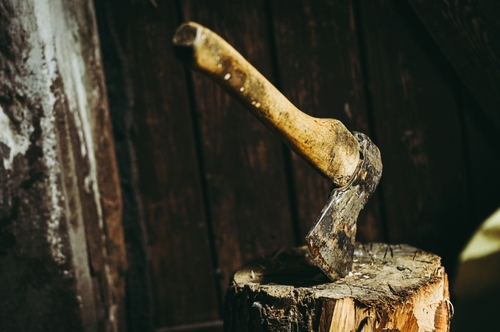
Collectors of vintage axes often talk about the “geometry” of the blade like art critics discuss brushstrokes. Brands like Kelly, Plumb, and Collins made axes with regional patterns—Maine, Michigan, and Jersey styles each had distinct shapes. The stamped maker’s marks and hand-forged steel tell a story of local traditions and logging culture. Some collectors even rehang old heads on new hickory handles to revive them.
Axes embody the intersection of design and raw function. They were survival tools, but their forms were refined for balance, swing, and beauty. Collectors are fascinated by how they combine brutal purpose with elegant simplicity. Restoring one feels like resurrecting a piece of frontier history.
11. Measuring Calipers
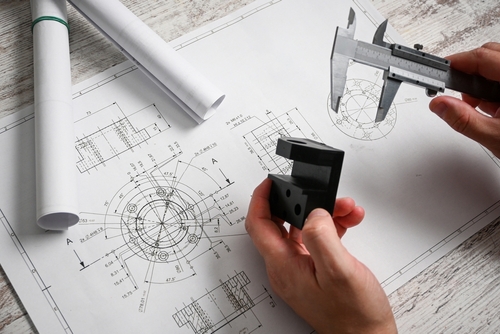
Before digital displays, calipers were precise mechanical wonders. Early vernier or dial calipers, often made of brass or hardened steel, were designed with intricate scales and crisp engravings. Makers like Brown & Sharpe produced models that became benchmarks of precision. Collectors seek out these tools not just for their looks but for their lasting accuracy.
There’s a kind of quiet reverence for such instruments. They represent trust in human-made precision before computers took over. Each tiny adjustment of a thumb screw once carried the weight of invention and discovery. For collectors, calipers aren’t just measuring tools—they’re symbols of the human desire to understand things down to the millimeter.
12. Pocket Knives
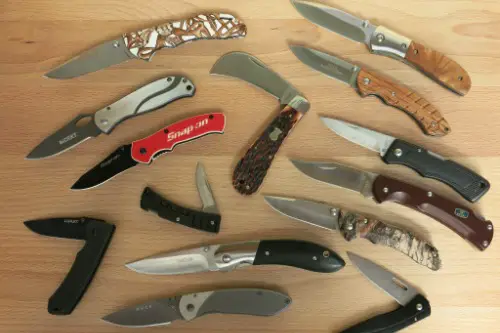
Simple folding knives—especially early Swiss Army or Case models—have become major collectibles. Some knives feature unique blade etchings or handle materials like bone or mother-of-pearl that elevate them from utility to heirloom. Vintage Swiss Army knives from the mid-1900s are especially desirable because of their handmade precision and compact innovation. Even military-issue pocket knives from World War II are traded like artifacts among collectors.
Collectors see these knives as reflections of personal history and design evolution. Each knife tells a story of who used it—campers, soldiers, or tradesmen. The patina on the blade or the worn texture of the handle adds authenticity and nostalgia. It’s less about sharpness now and more about preserving a tangible link to the hands that once relied on them.
13. Tongs and Pliers
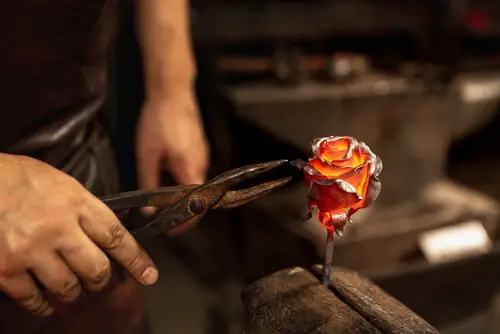
Early tongs and pliers, especially blacksmithing tools, are prized for their forged simplicity. Each pair was handmade, tailored to a specific job or grip style. Over time, blacksmiths added subtle flourishes—hammer marks, decorative curves, even initials. Collectors often find these tools at estate sales, coated in rust but rich with history.
Their appeal lies in their individuality—no two are exactly alike. They were extensions of the maker’s hand, not factory clones. Collectors say you can “read” a blacksmith’s personality in the hammer marks left behind. Displayed on a wall, they look like ancient relics of strength and artistry.
14. Toolboxes
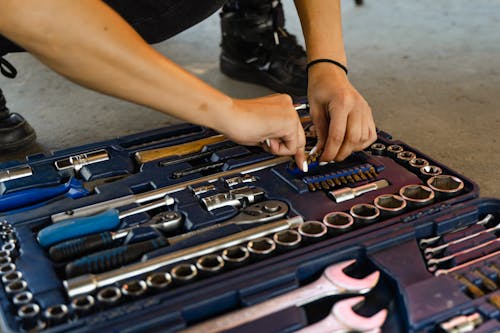
Finally, the toolbox itself—often overlooked—is a collectible in its own right. Vintage wooden tool chests, especially those made by machinists, feature hand-cut dovetails, brass fittings, and velvet-lined drawers. Brands like Gerstner still make versions inspired by those early designs. A well-worn box tells the life story of its owner through nicks, stickers, and paint stains.
Collectors see toolboxes as portraits of craftsmanship and identity. They reveal not just what tools were used but how someone organized their world. Restoring one brings back the tactile pride of a bygone workshop. It’s a reminder that even the container of tools can be a masterpiece of its own.
This post 14 Ordinary Tools Collectors Treat Like Artifacts was first published on American Charm.

