
1. Havasu Falls, Arizona
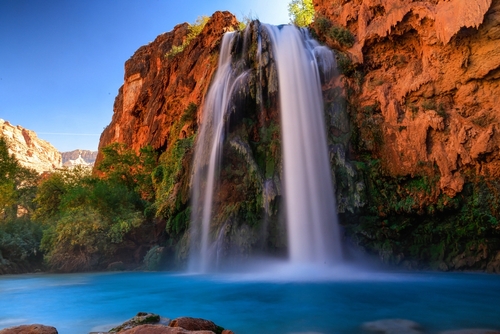
Havasu Falls looks like it was lifted straight out of a tropical postcard. Located on the Havasupai Reservation within the Grand Canyon, the water is a striking blue-green color. The vivid color comes from high levels of calcium carbonate in the water. It earns its spot because waterfalls like this are rarely associated with desert terrain.
Reaching the falls requires a long hike or helicopter ride, which makes the destination feel even more remote. Red canyon walls surround the bright water, creating an almost unreal contrast. Palm trees and cottonwoods line the creek in places. It feels far more like an oasis in Mexico than northern Arizona.
2. The Wave, Arizona
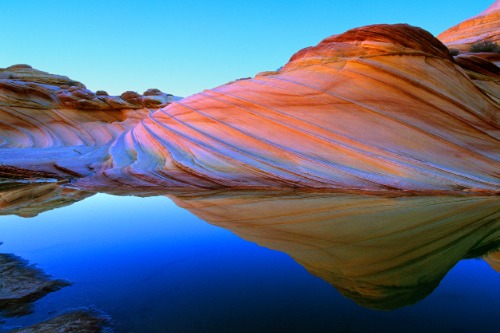
If you didn’t know better, you’d swear this place was somewhere deep in the Sahara or on another planet entirely. The Wave sits in the Coyote Buttes North area near the Arizona–Utah border and looks like flowing fabric turned to stone. Its smooth, swirling bands of red, orange, and cream sandstone were shaped by wind and erosion over millions of years. It makes the list because it feels more like a natural sculpture garden than a desert hike.
Getting there isn’t easy, which only adds to the feeling that you’ve left the U.S. behind. Access is controlled by a permit system to protect the fragile rock formations. Once you arrive, there’s no signage or guardrails, just open desert and silence. It’s unmistakably American Southwest, yet it feels completely otherworldly.
3. Dry Tortugas National Park, Florida
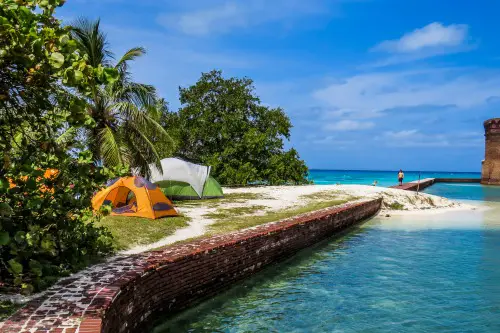
Dry Tortugas feels more like the Caribbean than the United States. Located about 70 miles west of Key West, it’s surrounded by clear turquoise water and coral reefs. The main landmark is Fort Jefferson, a massive 19th-century brick fort sitting alone in the sea. It earns its place here because it looks like something you’d expect near Cuba or the Bahamas.
There are no roads, hotels, or restaurants, just ocean, birds, and history. You can only get there by boat or seaplane, which heightens the sense of isolation. The water is shockingly clear, often revealing fish and shipwrecks below. It feels far removed from mainland Florida in every possible way.
4. Great Sand Dunes National Park, Colorado
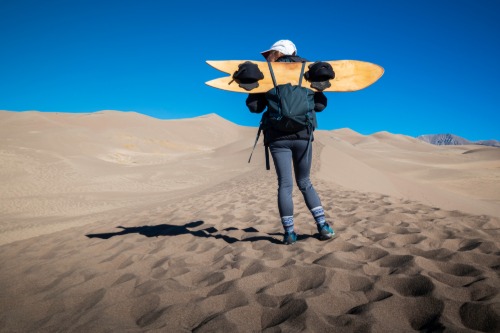
At first glance, this landscape looks like it belongs in North Africa or the Middle East. Towering sand dunes rise up to 750 feet tall, backed by the snow-capped Sangre de Cristo Mountains. The contrast between desert dunes and alpine peaks is what makes this place feel so out of place. It’s hard to believe this exists in southern Colorado.
The sand itself was formed by sediments from nearby mountains, shaped by persistent winds. In warmer months, Medano Creek flows at the base of the dunes, adding to the surreal atmosphere. You can sandboard here while looking at mountains that get heavy snowfall. It’s an American landscape that breaks all the expected rules.
5. Olympic National Park Rainforests, Washington
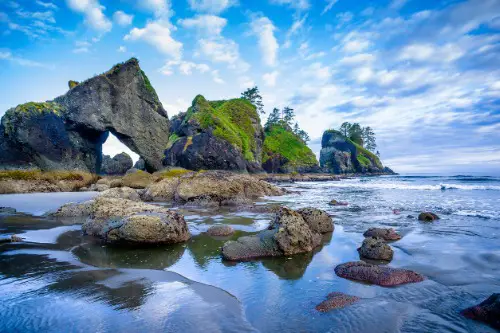
These rainforests feel closer to New Zealand or coastal Chile than the continental U.S. Moss-draped trees tower overhead, and everything feels damp, green, and alive. The Hoh and Quinault Rainforests receive over 100 inches of rain annually. They make the list because they challenge what people expect American forests to look like.
Massive Sitka spruce and western hemlock trees dominate the landscape. Fallen logs become entire ecosystems of moss and fungi. Even the light feels different here, filtered through thick canopy and mist. It’s a quiet, almost primeval environment that feels far removed from modern America.
6. Badlands National Park, South Dakota
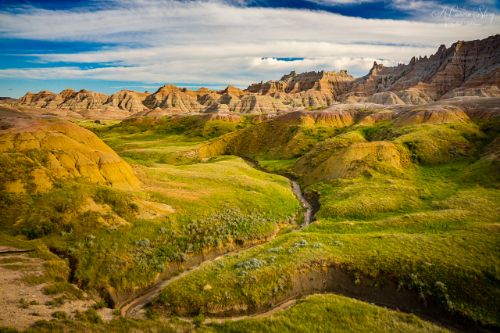
The Badlands look like a fragment of the moon dropped into the Great Plains. Sharp spires, layered rock formations, and eroded cliffs stretch as far as the eye can see. The terrain was formed by ancient seabeds and volcanic ash deposits. It earns inclusion because it feels alien compared to the surrounding grasslands.
There are almost no trees, and the colors shift with the light from pale gray to deep rust. Fossils of ancient mammals are still being discovered here. The silence and openness amplify the sense of strangeness. It’s one of the most visually unexpected landscapes in the Midwest.
7. Lake Hillier–Like Pink Sand Beaches, Papakōlea Beach, Hawaii
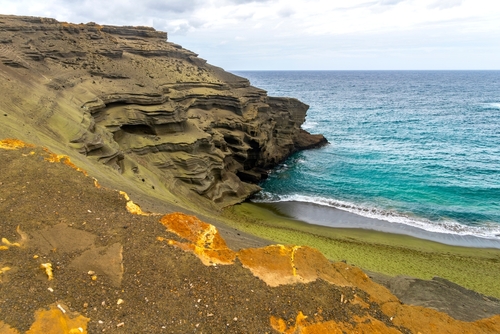
Papakōlea Beach doesn’t look like a typical American beach at all. Located on the Big Island of Hawaii, it’s one of the world’s few green sand beaches. The unusual color comes from olivine crystals eroded from nearby volcanic rock. It makes the list because green sand feels almost impossible until you see it.
The beach sits inside a volcanic cinder cone near South Point. Reaching it requires a hike across rugged lava fields or a rough ride. The contrast between green sand, blue water, and black lava is striking. It feels more like a geological oddity abroad than a U.S. shoreline.
8. Mono Lake, California
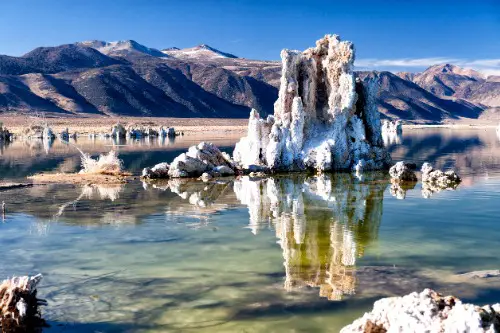
Mono Lake feels like a forgotten corner of another planet. This ancient saline lake is famous for its eerie limestone tufa towers rising from the water. The lake has no outlet, which makes it far saltier than the ocean. It earns its place because nothing else in California looks quite like this.
The surrounding landscape is stark and windswept, adding to the alien feel. Migratory birds rely heavily on the lake’s unusual ecosystem. At sunrise or sunset, the light makes the tufa formations glow. It feels more like a remote Asian salt lake than something near Yosemite.
9. Carlsbad Caverns, New Mexico
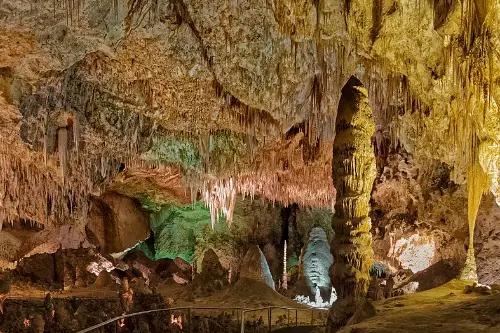
Stepping into Carlsbad Caverns feels like entering an underground cathedral. Massive chambers are filled with stalactites, stalagmites, and flowstone formations. The scale is so large that it’s hard to comprehend without seeing it in person. It makes the list because it feels more like a fantasy setting than a national park.
The Big Room is one of the largest cave chambers in North America. Lighting highlights the formations without overpowering the natural darkness. Thousands of bats emerge from the cave at dusk during certain seasons. It’s a reminder that some of America’s strangest landscapes exist below ground.
10. Valley of Fire, Nevada
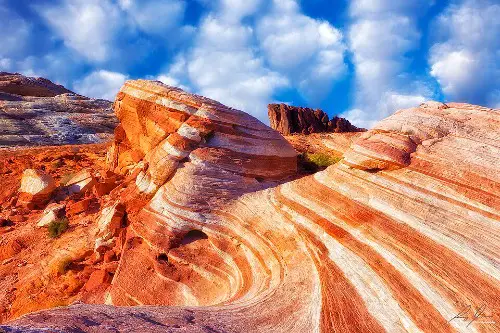
Valley of Fire looks like a slice of Mars just outside Las Vegas. The red sandstone formations appear to glow, especially at sunrise and sunset. These rocks are over 150 million years old and shaped by erosion. It earns its place because the colors and shapes feel almost exaggerated.
Ancient petroglyphs carved by Indigenous peoples can be found throughout the park. The heat and starkness add to the feeling of being somewhere far from civilization. Despite its proximity to a major city, it feels completely wild. It’s desert scenery turned up to an extreme.
11. Apostle Islands Ice Caves, Wisconsin
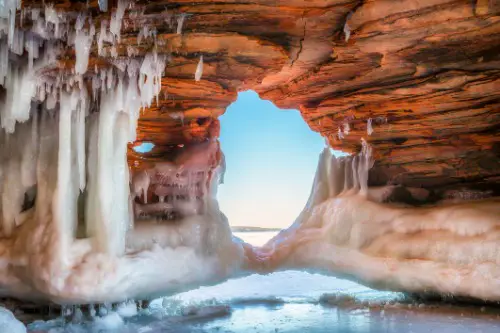
When conditions are right, these ice caves feel straight out of Scandinavia. Along the shores of Lake Superior, waves carve caves into sandstone cliffs. In winter, frozen spray creates massive icicles and walls of ice. It makes the list because frozen sea caves aren’t something most people associate with Wisconsin.
Access depends on the lake freezing solid enough to walk across safely. When it happens, the caves glow blue and white in the reflected light. The experience is both fragile and fleeting. It feels more like the Arctic than the American Midwest.
12. White Sands National Park, New Mexico
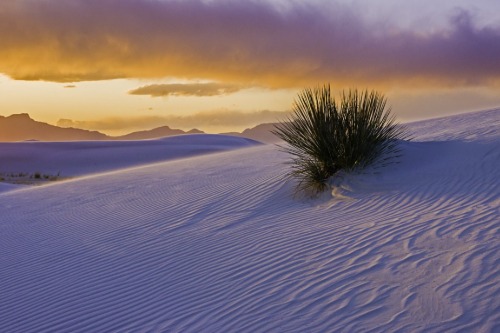
White Sands looks like an endless field of snow under a desert sun. The dunes are made of gypsum, not quartz, which gives them their bright white color. Unlike most sand, gypsum doesn’t absorb heat the same way. It earns its place because it defies basic desert expectations.
The dunes constantly shift with the wind, reshaping the landscape daily. Mountains rise in the distance, framing the white expanse. Walking here feels disorienting, especially at midday. It’s a landscape that feels completely disconnected from its surroundings.
This post Hidden American Landscapes That Feel Like They Should Be Somewhere Else was first published on American Charm.

