1. Pullman, Illinois
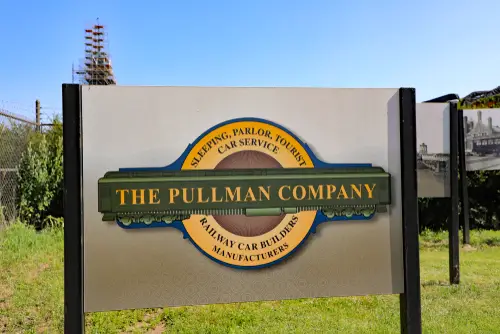
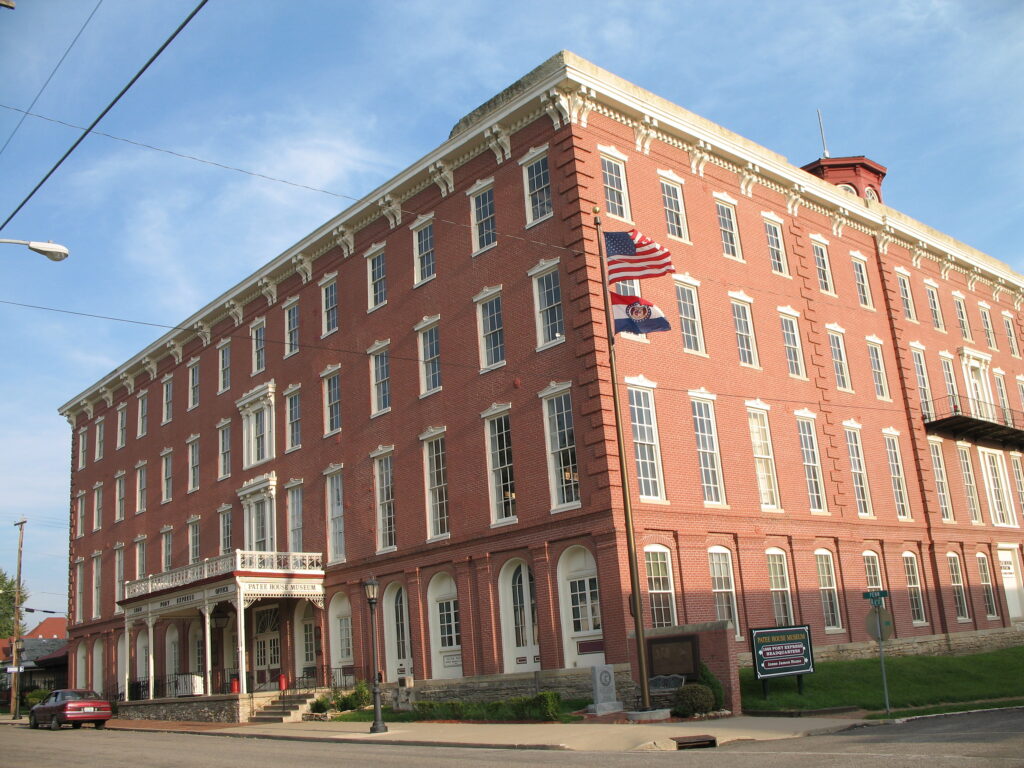
Pullman grew out of George Pullman’s railcar empire, which once controlled housing, wages, and even local commerce. When the Pullman Company dissolved in the 1970s, it left the neighborhood with beautiful architecture and a fraught legacy. Residents still balance pride in the district’s historic design with the discomfort of its paternalistic origins. Walking through the preserved streets, you can feel how deeply the former corporation shaped daily life.
Today the area is part of the Pullman National Historical Park, but that designation also keeps the company’s image unusually present. Locals often say the neighborhood feels half-museum, half-living community. Even the restored Clock Tower continues to act like a central organizer, as if the company’s schedule still hums in the background. It gives the town a personality suspended between nostalgia and reclamation.
2. Scotia, California
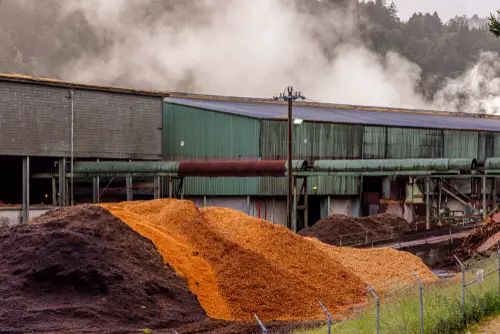
Scotia was built entirely by the Pacific Lumber Company, which ran everything from utilities to housing. After the company collapsed in the mid-2000s, the town had to reinvent itself unexpectedly fast. Residents suddenly faced a transition from corporate-provided services to private property ownership, and the shift was anything but seamless. Many say the town still feels like it’s adjusting to life after a single employer’s control.
The old mill grounds remain a physical reminder of how one corporation once dictated the town’s identity. Redevelopment and cleanup projects continue to stir up old debates about land use and environmental impacts. Even as new businesses arrive, the community often frames progress in contrast to what Pacific Lumber once imposed. The forest surrounding Scotia still bears the marks of that industrial past.
3. Centralia, Pennsylvania
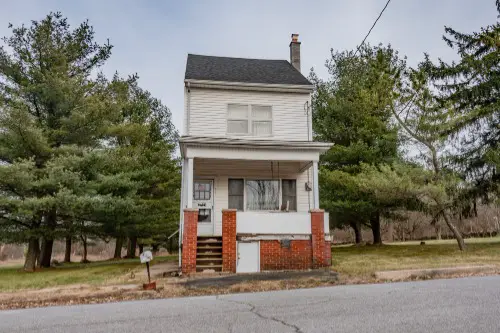
Centralia began as a coal town dominated by companies such as the Lehigh Valley Coal Company. Long after those companies closed or merged out of existence, the mine fire that started in the 1960s continued to define the town’s fate. With the corporations gone, residents found themselves depending on government agencies to manage a crisis rooted in abandoned industrial infrastructure. Today only a handful of people remain, surrounded by streets laid out for a community that no longer exists.
The fire still burns underground, acting as an eerie legacy of the unchecked mining era. Visitors wander through the near-empty landscape, often overlooking how tightly the town was once controlled by coal interests. Locals who stayed say the corporate ghost feels more present than the living community. Even the empty lots feel shaped by a company that disappeared long ago.
4. Calumet, Michigan
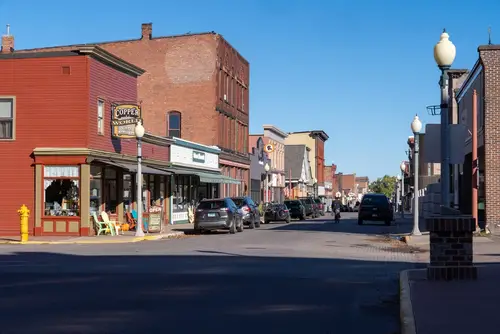
Calumet was once the thriving center of the Calumet & Hecla Mining Company, one of the most powerful copper producers in the country. When the company faded out in the mid-20th century, the town was left with monumental buildings that now feel oversized for its population. Residents still live with infrastructure designed for a bustling company town, even though the copper boom ended decades ago. Many say the grandeur of the architecture keeps expectations out of sync with present-day reality.
Today Calumet leans heavily on heritage tourism, which ironically keeps the company’s name alive. Former company buildings house museums, offices, and community groups trying to reinvent the town. But reminders of labor struggles, safety issues, and economic displacement still hang in the air. The place feels shaped by both the wealth and the wounds the mining company left behind.
5. Birmingham District, Alabama (Red Mountain Communities)
Several neighborhoods just south of Birmingham were formed around iron and steel operations led by companies like Tennessee Coal, Iron and Railroad. As consolidation and eventual U.S. Steel control dissolved or downsized these operations, the communities were forced to shift from industrial centers to residential enclaves. Streets, housing patterns, and even local politics still reflect the old company hierarchy. People often describe the landscape as industrial muscle turned architectural memory.
Red Mountain’s old mines and furnaces now serve as historic sites or nature attractions rather than workplaces. But their presence still influences local identity and economic development efforts. Neighborhood pride is frequently tied to how families once depended on companies that no longer exist in their former form. The area carries a mix of grit, nostalgia, and quiet resilience.
6. Bastrop, Louisiana
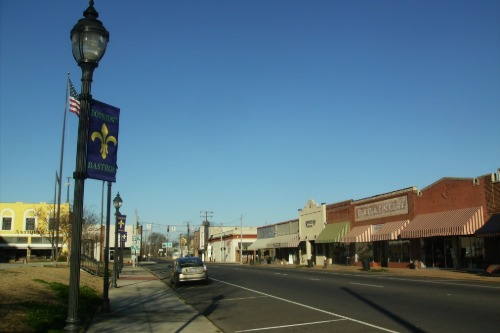
Bastrop rose around the paper mill operated by International Paper, which shut down in 2008 after decades as the economic anchor of the region. Though IP still exists, the specific mill operation and its corporate structure in Bastrop effectively dissolved, leaving a void that hasn’t been filled. The closure reshaped the region’s population, income levels, and sense of stability. Many residents still reference the mill to explain both past prosperity and current challenges.
The giant mill site remains a stark reminder of the town’s former identity, sitting partially redeveloped and partially abandoned. Economic revitalization projects often measure themselves against what the mill used to provide. Younger generations grow up hearing stories about a company that shaped daily life long before they were born. Bastrop remains deeply defined by something that technically isn’t there anymore.
7. Harriman, Tennessee
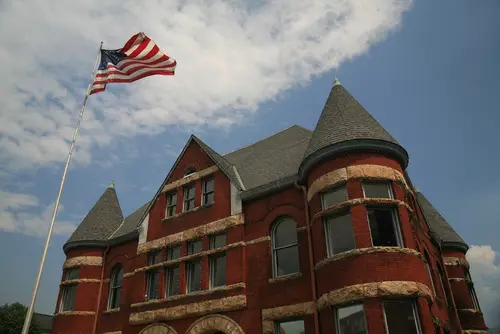
Harriman was founded in the 1890s by the East Tennessee Land Company, a utopian-style corporation that promised a temperance-based industrial town. When the company went bankrupt, the town was left with grand civic buildings but no clear economic future. Much of Harriman’s layout and architecture still reflect the optimistic planning of a corporation that disappeared almost immediately. Residents say the built environment feels like a promise that was never fully delivered.
Even now, revitalization efforts must contend with a downtown scaled for big dreams and insufficient capital. Local events often highlight the town’s unusual origin story, keeping the defunct company’s influence alive. Some buildings have been repurposed for small businesses and arts initiatives, but they still whisper the company’s lost ambition. Harriman embodies the idea of a corporate vision that outlasted the corporation itself.
8. Keweenaw Bay, Michigan (Assinins / Mining Satellite Towns)
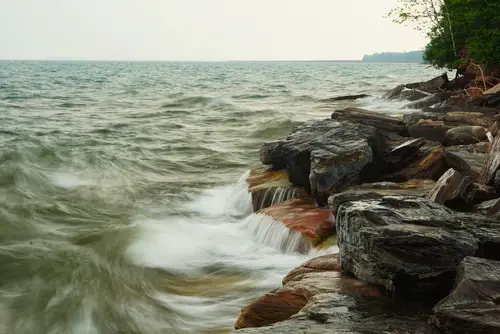
Small settlements near Keweenaw Bay grew around speculative mining corporations that rose and fell rapidly in the late 19th century. Many of those companies dissolved entirely, leaving behind towns with infrastructure built for short-lived booms. Residents still inherit roads, boundaries, and property divisions that follow corporate-era decisions. It gives the area a patchwork feel, as if it was planned by multiple hands that vanished mid-sentence.
Historic mining buildings remain scattered across the region, some preserved and others fading into the forest. Community groups often rally around restoring or interpreting these remnants to attract visitors. The past corporate presence still shapes economic hopes and cultural identity. The landscape is a reminder of how quickly industrial dreams can evaporate.
9. Anaconda, Montana
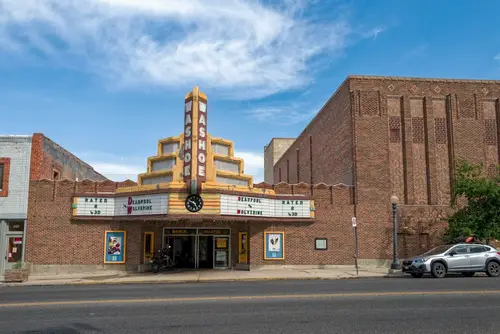
Anaconda grew around the Anaconda Copper Mining Company, which once defined Montana’s economy but later dissolved into mergers and reorganizations. The company’s smelter dominated the skyline and employment until it closed in 1980. That closure left the town grappling with environmental contamination and economic uncertainty. Residents still joke that the company is gone but the smokestack remains in charge.
The massive smelter stack is now a state park landmark, drawing visitors but also reminding locals of the costs of corporate extraction. Cleanup projects continue to shape land use decisions throughout the region. Many businesses lean into copper-related branding because the corporate history still draws attention. It’s a place where a vanished company feels physically present through its industrial footprint.
10. Kelly, Wyoming

Kelly was once tied almost entirely to the Kelly Warm Spring ranching and land enterprises run by a corporation that dissolved after a devastating 1927 landslide. When the slide destroyed most of the town, the company never fully reformed, leaving survivors to scatter or rebuild elsewhere. The loss of both the company and its infrastructure left Kelly as a small, loosely structured community. Residents still trace property boundaries and settlement patterns back to the corporate era.
Today Kelly sits quietly near Grand Teton National Park, shaped more by tourism than ranching. But the story of the company town wiped out by geology still permeates local identity. People often describe the landscape as both beautiful and haunted by the past. Even its open spaces reflect choices made by a company that no longer exists.
11. Kohler Village, Wisconsin
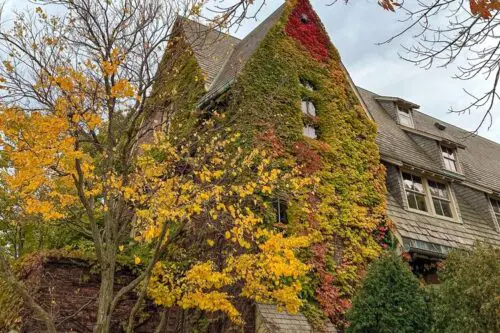
Kohler was built by the Kohler Company as a model industrial village, but many aspects of its early corporate governance no longer exist in modern form. Although the company still operates, the original corporate-town structure—complete with strict residential oversight—has been dissolved. Old planning principles still define the village’s curving streets and orderly layout. Some residents say it feels like living inside a faded blueprint of corporate vision.
Historic worker housing now serves as regular residences, but the company’s imprint remains unusually strong for something that’s technically gone. Village politics often revolve around balancing corporate heritage with modern independence. Local festivals and museums highlight the company-era aesthetic, keeping the old structure alive in subtle ways. It’s one of the rare places where a dissolved corporate model persists in cultural memory.
12. Haydenville, Ohio
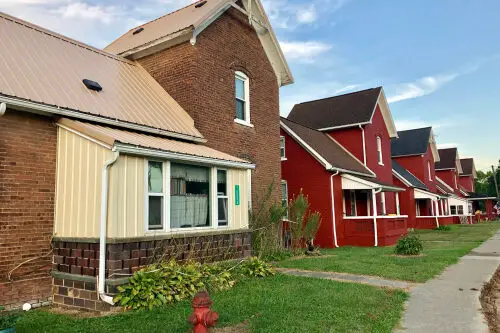
Haydenville was built in the 19th century by the Haydenville Mining & Manufacturing Company, which produced clay products and ran the town. When the company dissolved, the unique company-built homes—decorated with the clay tiles and bricks it manufactured—became quirky reminders of its influence. Residents still live in those homes, which often bear mismatched patterns from leftover materials. The town feels like a living catalog of the company’s craftsmanship.
Even as modern needs outgrow the old company infrastructure, the town clings to its handmade aesthetic. Preservation efforts focus on maintaining the distinctive architecture rather than erasing it. Locals say their identity is inseparable from the company’s long-gone creativity. It’s a quiet place where a dissolved corporation still shapes daily life through the walls themselves.
This post 12 Former Company Towns Still Shaped by a Corporation That Doesn’t Exist was first published on American Charm.